
Fly Control and Treatment in Nottingham
Professional fly treatment across Nottingham and surrounding areas. Whether you are dealing with cluster flies in the loft, drain flies in the bathroom, or a full-blown house fly infestation, we identify the species, find the source, and eliminate the problem.

- Same-day response available
- No call-out fee
- Species identification and source detection
- PROMPT Verified technicians
- Domestic and commercial properties
- Results guaranteed
Signs You Have a Fly Problem
A few flies finding their way indoors is normal, especially in warmer months. But when you are seeing large numbers regularly, or flies keep appearing in the same room despite keeping windows closed, there is usually a breeding source nearby that needs dealing with.
Common signs of a fly infestation include:
- Large numbers of flies gathering at windows, particularly in upper rooms or loft spaces
- Flies appearing indoors even when doors and windows are shut
- Small dark spots (fly droppings) on walls, ceilings, light fittings, or window frames
- Maggots found near bins, drains, or in food waste areas
- A persistent musty or decaying smell that you cannot locate
- Tiny moth-like flies around sinks, baths, or shower drains
The type of fly and where it is appearing tells us a lot about the source. Getting the species right is the first step to solving the problem properly.
Common Fly Species We Treat
House flies are the most familiar species. They breed in decaying organic matter, food waste, and animal faeces. They mature rapidly, with some species going from egg to adult in as little as seven days. House flies are a genuine health risk as they land on food and surfaces, spreading bacteria including salmonella and E. coli.
Cluster flies are a common problem in Nottingham properties, particularly older homes with loft spaces. They enter buildings in autumn to hibernate over winter and emerge in large numbers on warm days, often gathering at windows in upper rooms. They are not a health risk but can appear in alarming numbers. Cluster flies require a different treatment approach to house flies.
Drain flies (moth flies) are small, fuzzy, moth-like flies that breed in the organic film that builds up inside drains, overflow pipes, and U-bends. They are common in bathrooms and kitchens and indicate a drainage hygiene issue rather than a structural problem.
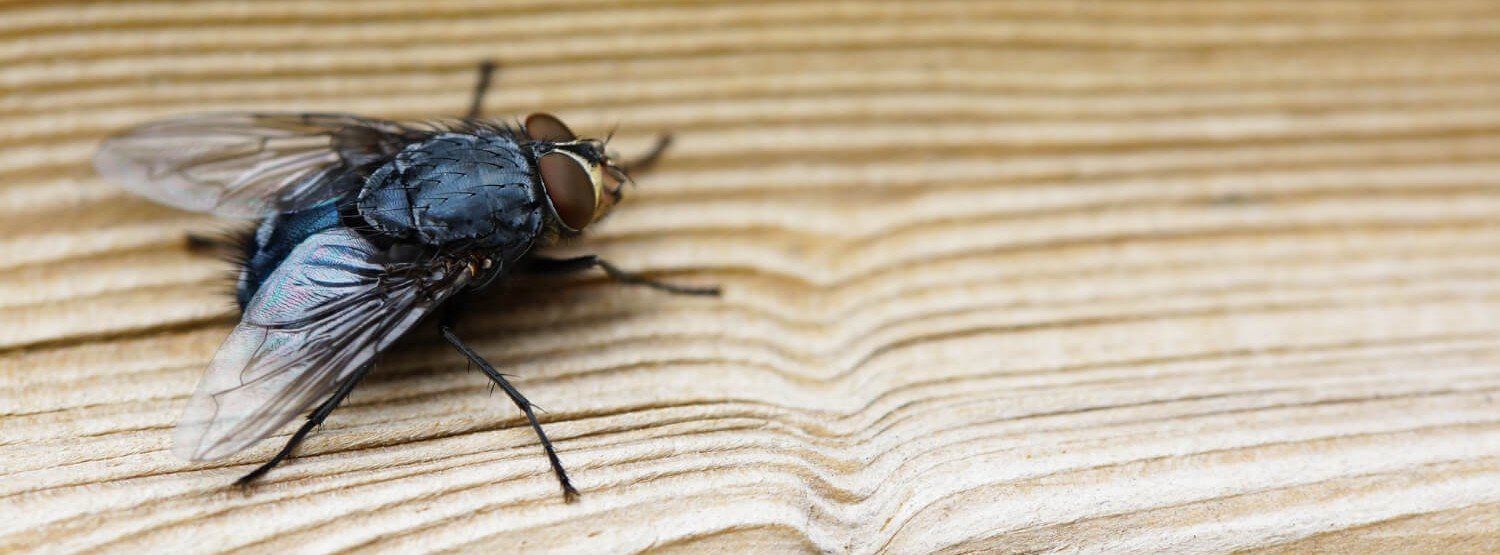
Bluebottles and greenbottles are metallic-coloured flies that breed in dead animals, meat, and rotting organic matter. A sudden appearance of bluebottles indoors, particularly in winter, often indicates a dead bird or rodent in a wall cavity, loft, or under floorboards.
Fruit flies are tiny flies attracted to fermenting fruit, sugary spills, and damp organic matter. They breed rapidly and are common in kitchens, bars, and food preparation areas.
What our clients say
Dave R., Sherwood
“We kept finding dozens of flies in the spare bedroom every morning, even with the window shut. Gino came out and identified them as cluster flies coming in through gaps in the roof tiles. He treated the loft space and within a couple of days the problem was completely gone. Really knowledgeable and explained everything clearly.”
Jen L., West Bridgford
“Had a horrible bluebottle problem in the kitchen. Turned out something had died under the floorboards. Gino found the source, dealt with the flies, and gave us advice on getting the carcass removed. Not a pleasant job but he handled it brilliantly.”
Priya M., Lenton
“Tiny flies kept appearing around the bathroom sink no matter how much I cleaned. Gino identified them as drain flies and treated the drains. Problem solved in one visit. I had no idea drain flies were even a thing.”
Our Fly Treatment Process
Identification: We identify the species on site. This determines the treatment method and helps us locate the breeding source, which is the key to a lasting solution.
Source detection: Killing adult flies without addressing the source is pointless. We trace the problem to its origin, whether that is a blocked drain, a dead animal, a drainage issue, or an entry point in the roof space.
Treatment: Depending on the species and situation, we use residual sprays, ULV fogging, fly traps, or drain treatments. For cluster flies in loft spaces, we apply a residual treatment that also protects against reinfestation the following season.
Prevention: We advise on proofing measures, hygiene improvements, and ongoing prevention to reduce the chances of the problem returning.
Areas We Cover
We provide fly control across Nottingham and the surrounding areas, including:
Nottingham city centre, West Bridgford, Beeston, Arnold, Carlton, Mapperley, Gedling, Bulwell, Hucknall, Bestwood, Clifton, Wilford, Lenton, Hyson Green, Sneinton, Sherwood, Woodthorpe, Radford, Basford, Aspley, Wollaton, Dunkirk, and surrounding villages.
Fly Control for Commercial Properties
For businesses that handle food, including restaurants, cafes, takeaways, bakeries, care homes, and food manufacturers, fly control is not optional. Flies in food preparation or serving areas can lead to enforcement action, failed hygiene inspections, and serious reputational damage.
We provide commercial fly control solutions including electric fly killers (EFKs), regular monitoring visits, and rapid response callouts. We understand the urgency and discretion required when dealing with fly problems in a commercial setting.
Frequently Asked Questions
How quickly can you attend?
We offer same-day callouts across Nottingham. Call us on 07999 935 929 to arrange a visit.
How much does fly treatment cost?
Pricing depends on the species, the severity of the problem, and whether we are treating a domestic or commercial property. We provide a fixed quote on site with no call-out fee and no hidden charges.
Why do I keep getting flies in my loft/spare room?
This is almost always cluster flies. They enter roof spaces in autumn to overwinter and emerge on warmer days, often gathering at windows. A loft treatment in late summer or early autumn is the most effective way to prevent this.
I have tiny flies around my drains. What are they?
These are likely drain flies (also called moth flies). They breed in the organic buildup inside drains and overflow pipes. We treat the drains directly to eliminate the breeding source.
Could the flies mean something has died in my house?
A sudden appearance of bluebottles or greenbottles, especially in a room you do not use often, can indicate a dead bird or rodent in a cavity, loft, or under floorboards. We can help locate and address the source.
Are flies a health risk?
Yes. House flies in particular are known carriers of bacteria including salmonella, E. coli, and campylobacter. They pick up pathogens from waste and transfer them to food and surfaces. In commercial food settings, fly contamination is a serious food safety concern.
Ready to Solve Your Pest Problem?
Call now for a same-day response or fill in the form for a free, no-obligation quote.
How It Works
Step 1: Contact Us
Call us or fill in the form. We respond within the hour, 7 days a week.
Step 2: Assessment
We visit in an unmarked vehicle, survey the problem, and give you a fixed quote on the spot. No hidden fees.
Step 3: Solution
Our technicians eliminate the infestation, proof entry points to stop them returning, and follow up until the problem is fully resolved.
Why Choose Urgent Pest Control
PROMPT Verified
Fully trained, certified technicians who know exactly how to deal with your pest problem.
Same-Day Response
Emergency callouts 7 days a week. We'll be there when you need us.
Discreet Service
Unmarked vehicles and plain clothes. Your neighbours won't know we've visited.
Results Guaranteed
If pests return within the guarantee period, we come back free of charge.

Rapid response and solutions to your pest problems
Local pest control, quick response, flexible approach and competitive pricing, get in touch for more information.