
1.Our statement of intent
Pest control means professional pesticides, stinging insects, work in lofts and at height, and animals that can carry disease. At Urgent Pest Control Ltd we aim to do every job in a way that keeps our technicians, our customers, their children and pets, their neighbours and the public safe. We also meet our duties under the Health and Safety at Work etc. Act 1974 and the regulations made under it.
Our director has overall responsibility for health and safety. Everyone who works for us has to follow this policy and look out for others. If something isn’t safe, they stop work.
2.Planning the work: risk assessments
- We keep written risk assessments and method statements for each type of treatment we carry out. Commercial clients can ask for a copy.
- When the technician arrives, they check the site itself: who lives or works there, whether there are children, pets, fish tanks or food nearby, access to lofts and roofs, and the weather. If something doesn’t look right, they change the plan or stop.
- Before any treatment, the technician explains what they will use, where, and what you need to do afterwards.
3.Pesticides and hazardous substances (COSHH)
- The products we use are assessed under the Control of Substances Hazardous to Health Regulations. We use the least hazardous option that will do the job.
- We only use biocides and pesticides that are authorised for use in Great Britain (see the HSE’s biocides guidance), and we follow the product label every time. The label is a legal requirement, not a suggestion.
- Safety data sheets are available on request. Ask your technician or email us and we’ll send the sheet for any product used at your property.
- Products are stored locked and labelled in our vehicles, and never left unattended where a child or animal could reach them.
4.Rodenticides and stewardship
- Professional rodenticides are used under the UK Rodenticide Stewardship Regime, run by the Campaign for Responsible Rodenticide Use (CRRU). Under the regime, professional rodenticides are only supplied to users who can show they are competent to use them, for example through a stewardship-approved qualification.
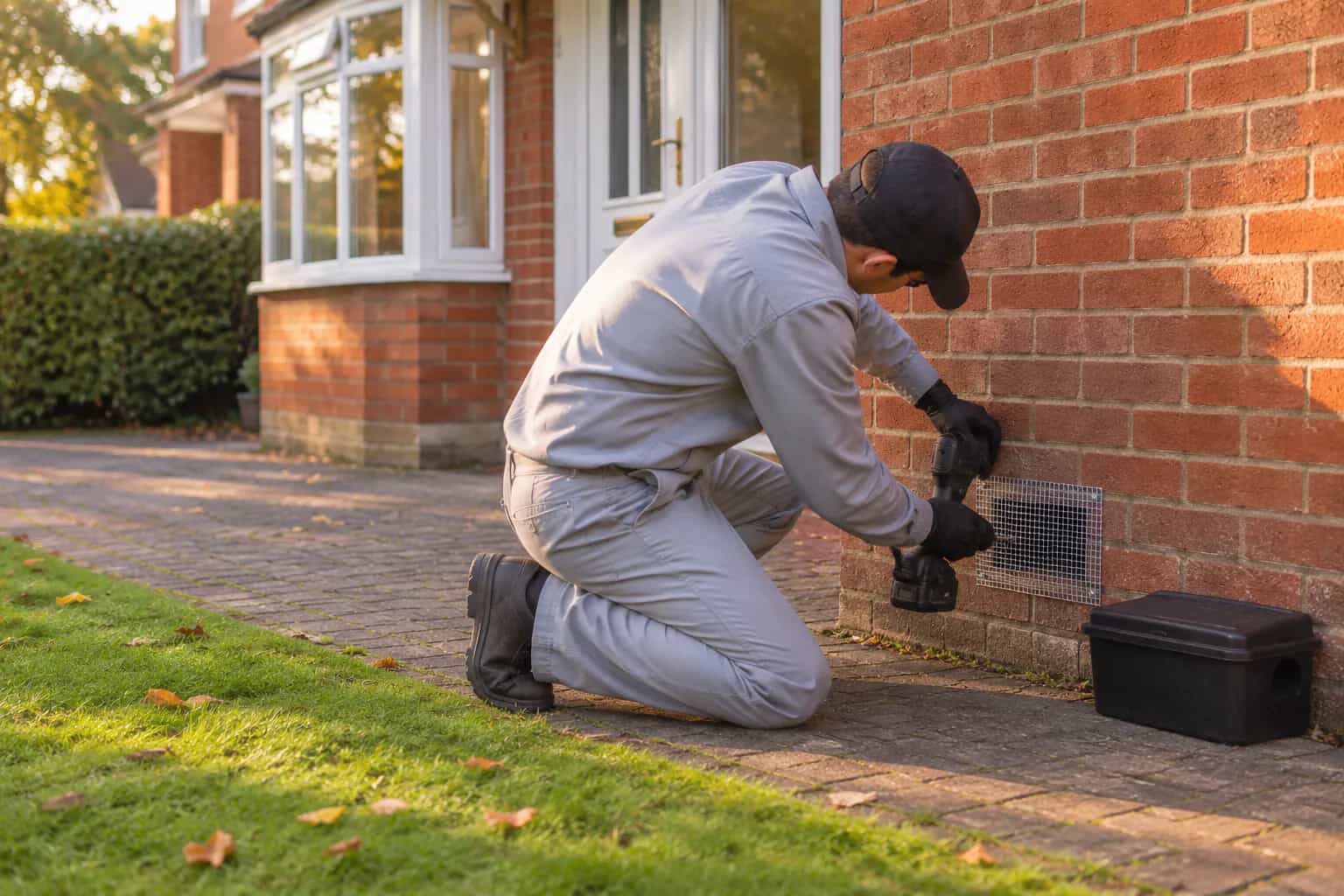
- Bait is placed in tamper-resistant, secured bait stations, never loose where children, pets or wildlife could get to it.
- We record where every bait station is, check them on follow-up visits and remove remaining bait when the treatment is finished.
- Read our full rodenticide stewardship policy.
5.Children, pets and treated areas
- Please keep children and pets out of rooms or areas while we treat them, and until the technician says it is safe to go back in.
- Cover or remove fish tanks and switch off their pumps before an insecticide treatment, and move pet bowls and bedding out of the room.
- Leave bait stations exactly where we have put them. Don’t open or move them.
- After a wasp nest treatment, keep away from the nest entrance for 24 hours.
- For flea treatments, your pets need treating by your vet at the same time, or the infestation can come straight back. We never apply products to animals.
- If you think a child or pet has touched or eaten a product, contact NHS 111 or your vet straight away and tell them the product name.
6.PPE and hygiene
- We give our technicians the right protective kit for each job and train them to use it, including gloves, eye protection, masks and bee suits.
- Our team is briefed on diseases linked to pests and their droppings, including leptospirosis (Weil’s disease) from rats, and on washing and decontamination. Every van carries hand-washing supplies and a first aid kit.
- We clean up after ourselves, including any droppings, dead pests or nest material we disturb.
7.Working at height (wasp nests, lofts and roofs)
- Wasp nests are often in eaves, roof tiles and lofts. We follow the Work at Height Regulations 2005 and use extension lances to treat nests from the ground wherever we can.
- Ladders are only for short, low-risk jobs on firm, level ground. We inspect the ladder first and secure or foot it.
- If a nest or bird-proofing job can’t be reached safely from a ladder or the ground, we bring suitable access equipment or tell you it is needed.
- In lofts, we only step on joists or boarded areas and use proper lighting.
8.Lone working
- Technicians working alone stay in regular contact with the office. We know where they are and when they expect to finish.
- Jobs that need two people, such as some work at height, are never tried alone.
- A technician can walk away from any situation where they feel unsafe, including aggressive or threatening behaviour. No questions asked.
9.Vehicles, tools and equipment
- Vans, sprayers, dusters, heaters and ladders are maintained and inspected as the manufacturer says.
- Faulty kit comes out of use until it’s repaired.
- Products and equipment are secured in transit, and we expect our drivers to drive safely and legally.
10.Training and competence
Everyone gets an induction, training for the treatments they carry out and supervision until they’re competent. We hold regular toolbox talks so safety stays on everyone’s mind. Any subcontractor we use has to show they work safely and are properly insured.
11.Keeping customers and the public safe
- If we find a hazard, such as a damaged ceiling, exposed wiring in a loft or a nest near a doorway, we tell you before we leave.
- If a treatment needs more than one visit, we leave the site safe and explain what happens next.
- Waiting for us to arrive? Don’t try to remove a wasp nest yourself, and see our emergency pest control advice.
12.Accidents, incidents and near misses
We record and look into every accident, incident and near miss so it doesn’t happen again. Where the law says we must, we report incidents to the Health and Safety Executive under RIDDOR. Anyone can raise a safety concern with us at any time. We’d always rather hear about it.
13.Review
We review this policy at least once a year, and any time our work, our products or the law changes. The date at the top shows the last review. Signed on behalf of Urgent Pest Control Ltd by its director.
Questions about this page?
Call 07999 935 929 or email [email protected].