
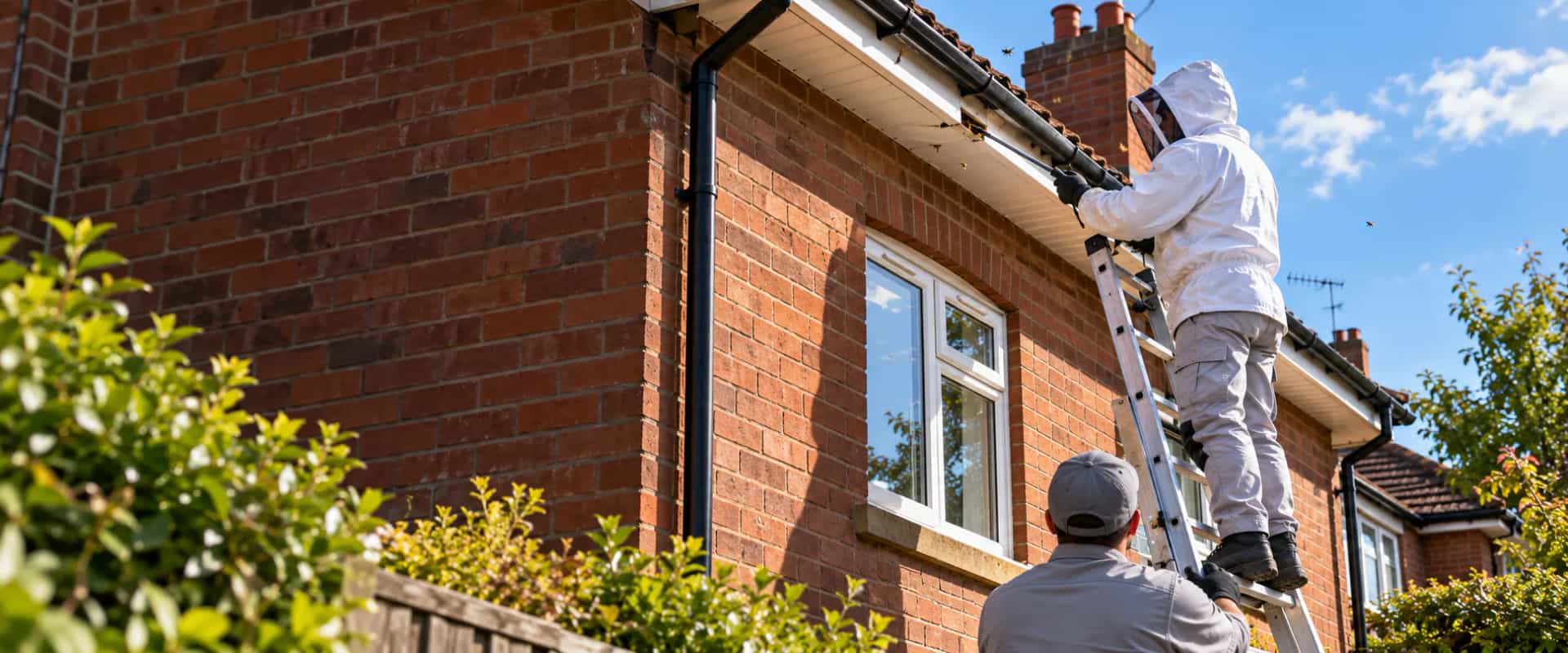
Wasp Nest Removal Across the East Midlands
Wasps & Bees
Wasp Nest Removal In Nottingham, Derby & Leicester
Fast, Safe Wasp Nest Treatment For Homes And Businesses
We treat and remove wasp nests in lofts, roof eaves, wall cavities, sheds and gardens across Nottinghamshire, Derbyshire, Leicestershire and Lincolnshire, including Nottingham, Derby, Leicester and Lincoln. A treatment usually takes 15–30 minutes, and same-day visits are often available, 7 days a week, 6am–8pm. Prices depend on where the nest is, the property and the time of the visit, and we'll explain the likely cost before any work starts.
- Free quoteClear advice on cost before we start
- 7 days a week6am–8pm, weekends included
- 5.0 on GoogleFrom 194 customer reviews
- 4 countiesNotts, Derbys, Leics & Lincs
On this page
Is it a wasp, a hornet or an Asian hornet?
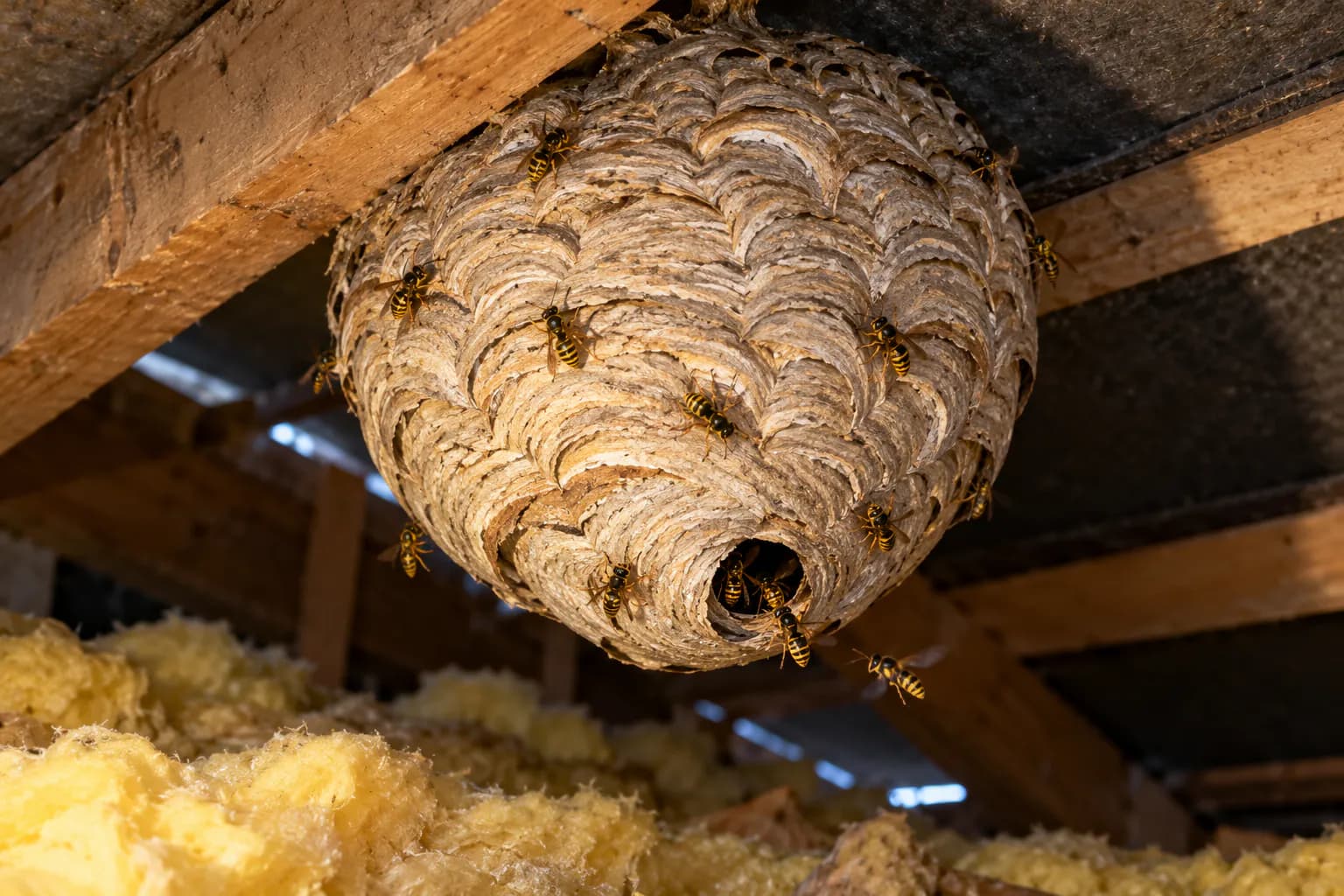
Most nests we treat belong to the common wasp (Vespula vulgaris) or the German wasp (Vespula germanica). Both are around 12–17mm long with bright yellow and black bands, and they build grey, papery nests in lofts, under roof tiles and soffits, in wall cavities, bird boxes, sheds and holes in the ground.
The European hornet (Vespa crabro) is a native species and much bigger, with chestnut-brown and yellow markings. Hornets are less aggressive than wasps unless the nest is disturbed, but a nest near a door or window still needs dealing with.
The Asian hornet (Vespa velutina) is an invasive non-native species that preys on honeybees. It is slightly smaller than our native hornet, mostly dark brown or black with a single yellow-orange band near the end of the abdomen and yellow tips to its legs. If you think you've seen one, don't approach the nest: report it through the Asian Hornet Watch app or the online form on the GB Non-native Species Secretariat website (nonnativespecies.org), ideally with a photo.
- Common / German wasp: 12–17mm, bright yellow and black, papery grey nest
- European hornet: up to about 35mm, brown and yellow, native and usually less aggressive
- Asian hornet: dark body, one yellow-orange band, yellow leg tips; report it, don't treat it yourself
- Honeybee or bumblebee? See our bee removal page; we don't destroy bees
When are wasp nests at their worst?
A single queen comes out of hibernation in spring and starts a nest the size of a golf ball. Through June and July the workers build it up quickly, and by August and September a nest can hold thousands of wasps. That's when we get the most calls, and when wasps become most defensive and start hunting for sugar around bins, picnics and pub gardens.
In autumn the new queens leave to hibernate and the rest of the colony dies off. Wasps don't reuse an old nest, so an empty nest found in winter doesn't need treating. If a nest is active and causing a problem, the earlier it's treated the smaller it is.
Are wasp stings dangerous?
For most people a sting is painful but harmless: a red, swollen and itchy lump that settles within a few days. The NHS advises washing the area with soap and water, using a cold compress and keeping the area raised. Unlike a honeybee, a wasp doesn't leave its sting behind, so it can sting more than once.
Some people have a severe allergic reaction (anaphylaxis). The NHS says to call 999 if someone has swelling of the lips, mouth or throat, difficulty breathing, a fast heartbeat, dizziness or feels faint after a sting. If anyone in your household is allergic, or a nest is near a doorway, a child's bedroom or a play area, tell us when you call and we'll prioritise it.
Why DIY wasp nest removal often goes wrong
Shop-bought foam sprays only reach the wasps they touch. Most of the nest is out of reach inside the roof void or wall, so the colony survives and the wasps that were sprayed become aggressive. Knocking a nest down, blocking the entrance or pouring water into a ground nest usually ends with multiple stings, and wasps blocked into a cavity can chew their way into the house instead.
Ladders, roof edges and loft hatches add a fall risk. We carry extension lances and the right protective kit, so most nests can be treated from the ground or from inside the loft without anyone climbing onto the roof.
How we treat a wasp nest
We find the entrance the wasps are using, then puff a professional insecticide dust into the nest through that entrance. The returning wasps carry the dust deep into the nest, which is what kills the colony, including the queen. The visit usually takes 15–30 minutes.
You'll see some activity for a few hours as foraging wasps come back. Keep children and pets away from the entrance for 24 hours and don't block the hole, because the wasps need to carry the dust inside. Where a nest is in a loft or shed and safe to reach, we can remove it once it's dead.
What our customers say
“We are having some work done on the roof, and the men erecting the scaffolding discovered a wasp nest. We called Urgent pest Control and they were with us in just over half an hour. After treating the nest, they said it could take up to 10 days for total result. We never saw anything after the first day, and today is day eight and the roofers have removed a large empty nest.” Pam, Google review, July 2025
“After finding a wasp nest in the dorma, tried doing it myself but multiple stings and expletives later conceded to call in the professional. Gino was recommended by a friend. Very honest, transparent and professional service with clear next steps on what I should/shouldn't see in terms of activity.” Riz, Google review, November 2024
Signs You Need Wasp Nests
- A steady stream of wasps flying in and out of one spot
- Wasps going under roof tiles, soffits or fascia boards
- Wasps inside the loft, bedrooms or around a light fitting
- A grey, papery ball in a loft, shed, garage or bird box
- A buzzing or scratching sound in a wall or ceiling
- Wasps coming out of a hole in the lawn or a bank
- Lots of wasps around the house from mid-summer onwards
Why Choose Us For Wasp Nests
- Same-day visits often available, 7 days a week, 6am–8pm
- Free advice over the phone or WhatsApp
- Most treatments take 15–30 minutes
- Lances and kit to reach eaves, soffits and loft nests safely
- Clear, upfront advice on cost
- Unmarked vehicles, so the neighbours needn't know
Our Wasp Nests Process
Call Or Book Online
Tell us where the wasps are going in and out. We'll give you a price and the earliest slot.
Find The Entrance
We confirm it's wasps (not bees) and locate the nest entrance, inside or out.
Treat The Nest
Insecticide dust goes into the nest entrance for the wasps to carry inside.
Aftercare
Stay clear for 24 hours and leave the entrance open. Call us if activity hasn't died down.
Get a price for wasp nests
Clear advice on costRequest A Callback About Wasp Nests
We'll call you back with a clear price, usually within the hour during opening times.
Frequently Asked Questions
Related Services
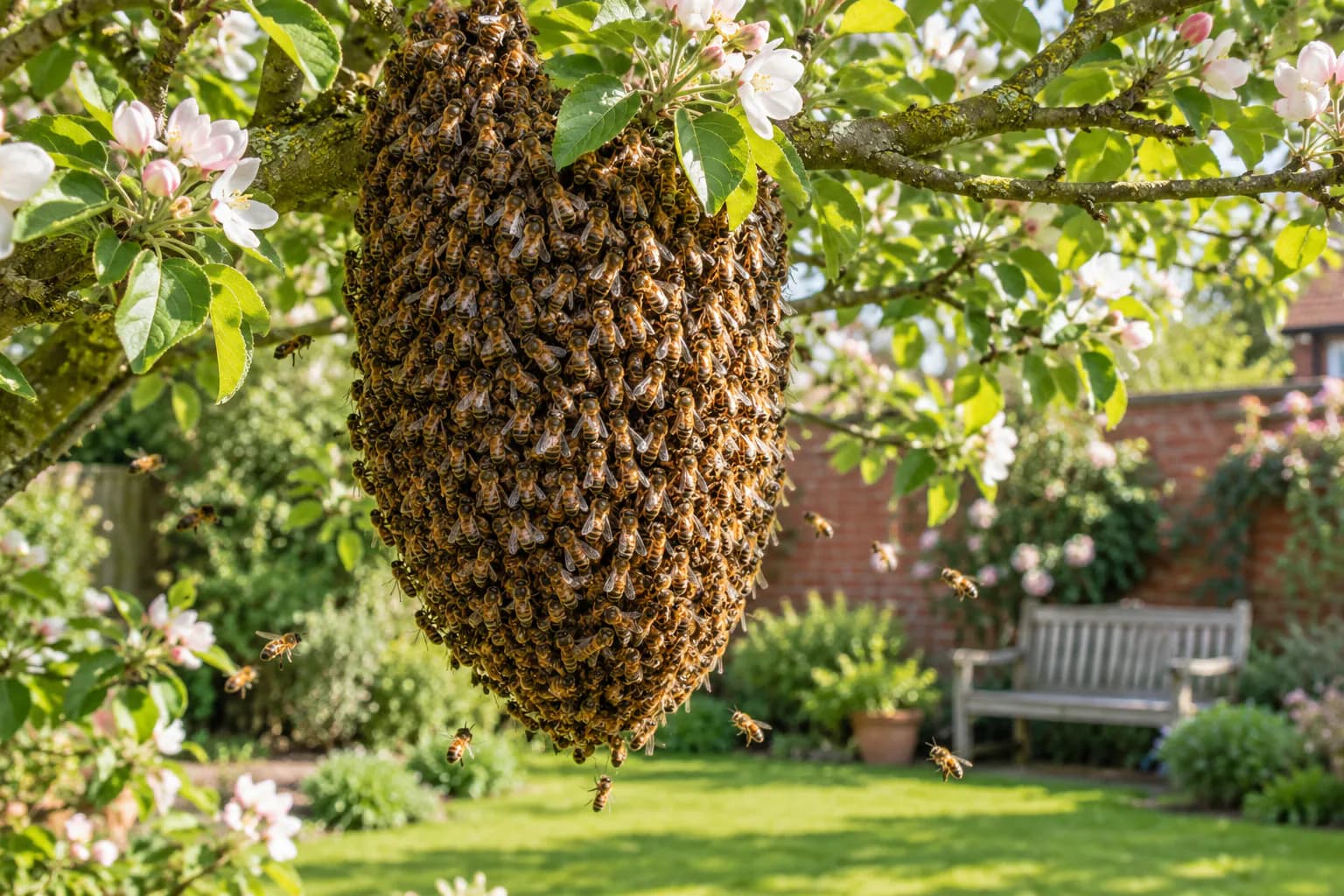 Bee RemovalHoneybee swarms and nests relocated with local beekeepers; free advice by phone.Learn More about Bee Removal
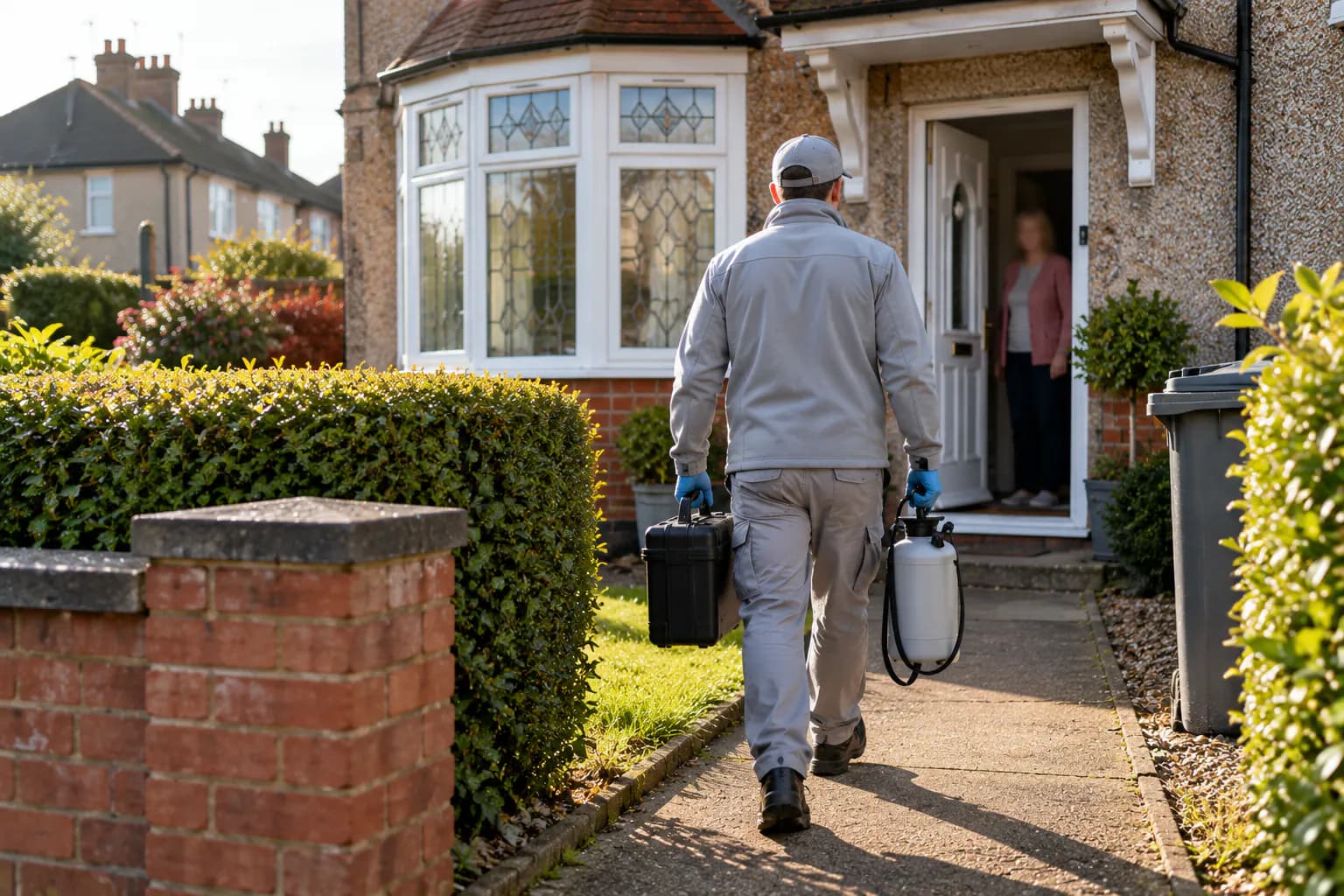 Emergency Pest ControlSame-day visits where possible, 7 days a week, with emergency call-outs 365 days a year.Learn More about Emergency Pest Control
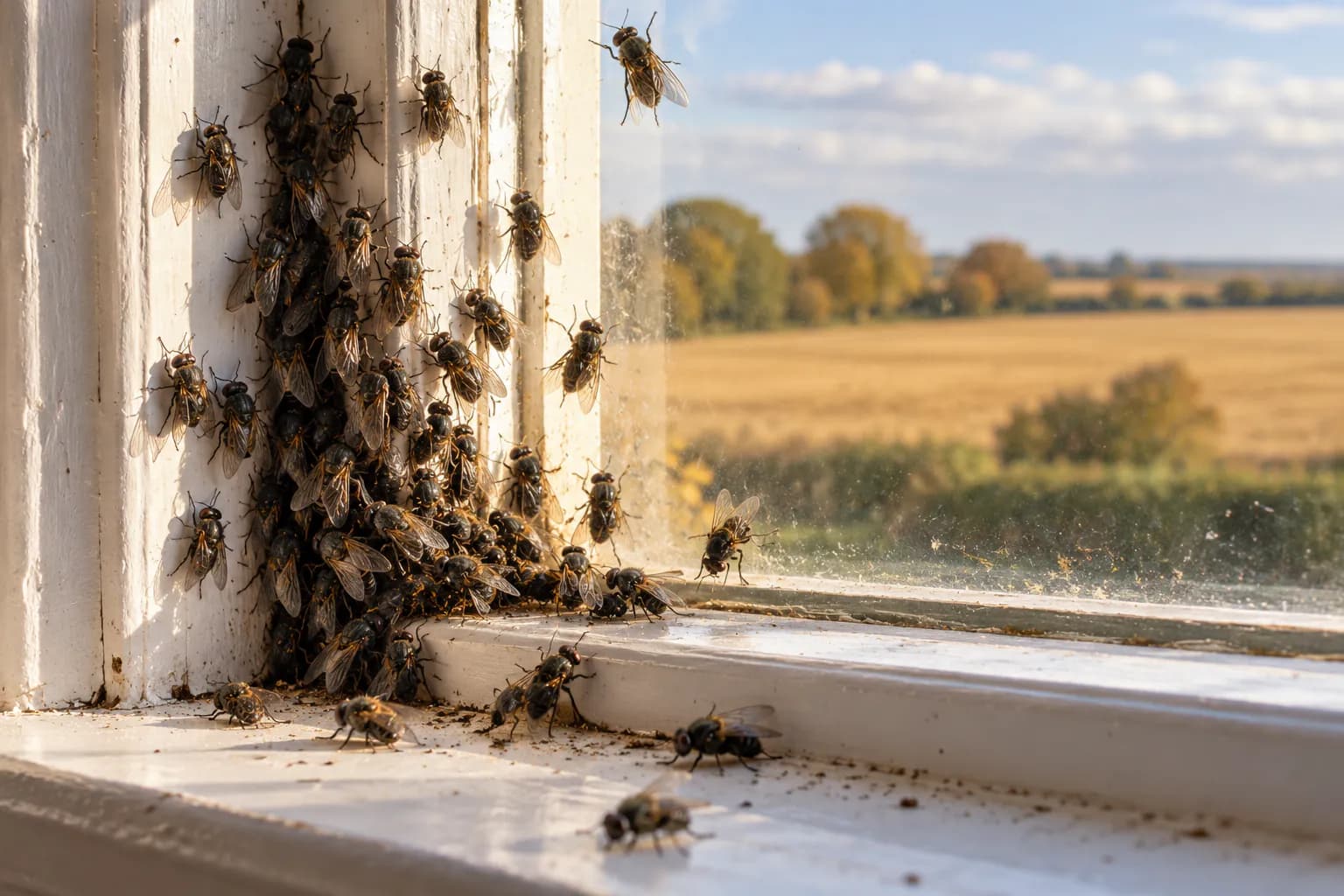 Cluster FliesLofts cleared of overwintering cluster flies, with preventative treatment each autumn.Learn More about Cluster Flies
Where We Offer Wasp Nests
We provide wasp nest removal in Nottingham and right across Nottinghamshire, Derbyshire, Leicestershire and Lincolnshire from our base in Southwell. Choose your area for local details.
Wasp Nests Near You
What Our Customers Say
5.0 from 194 Google reviews“Great service today to clear wasps from our loft. Arrived promptly, located the nest, explained what was happening, very knowledgable. Highly recommend.”
Alison StarbuckSeptember 2024 · Read on Google “Gino came within 24 hours of me reaching out to him, he was very professional and dealt with the issue swiftly. I am so glad the issue with wasps appearing in my bathroom has since disappeared. I…”
Sabiha IsmailNovember 2023 · Read on Google “Rang on a Sunday. Had wasps flying in the lounge coming through the fire. Both parents suffering with ill health and 1 being none mobile in the lounge so it had to be dealt with straight away. The…”
EmmaMay 2023 · Read on Google “1st class service! I contacted at 8am this morning, arrived by 4pm and job completed within the hour. Super friendly, professional and a genuinely lovely person. Cleared away remnants of dead wasps…”
Lisa TaylorSeptember 2022 · Read on Google “Thank you so much for coming out to save us from the wasps. Same day service, very friendly and helpful, went above and beyond to help us with our issue. Highly recommend.”
Steph DrewJuly 2022 · Read on Google “Just had Gino round to sort out a major wasp infestation in the loft very knowledgeable and professional all delt with very efficiently . I would highly recommend using this guy for your problems on…”
Paul GransburyJune 2022 · Read on Google “I cannot recommend Gino and his team highly enough. We developed a wasps nest over a weekend at our hair salon and I called him on the Monday morning needing his help as we had a full day of…”
Stones HairOctober 2026 · Read on Google “Excellent service. Contacted them on Sunday morning regarding a wasps nest in the loft. Said they would come tomorrow and would phone an hour before arrival. All went according to plan and the nest…”
D HJuly 2026 · Read on Google


1 / 8Google reviews
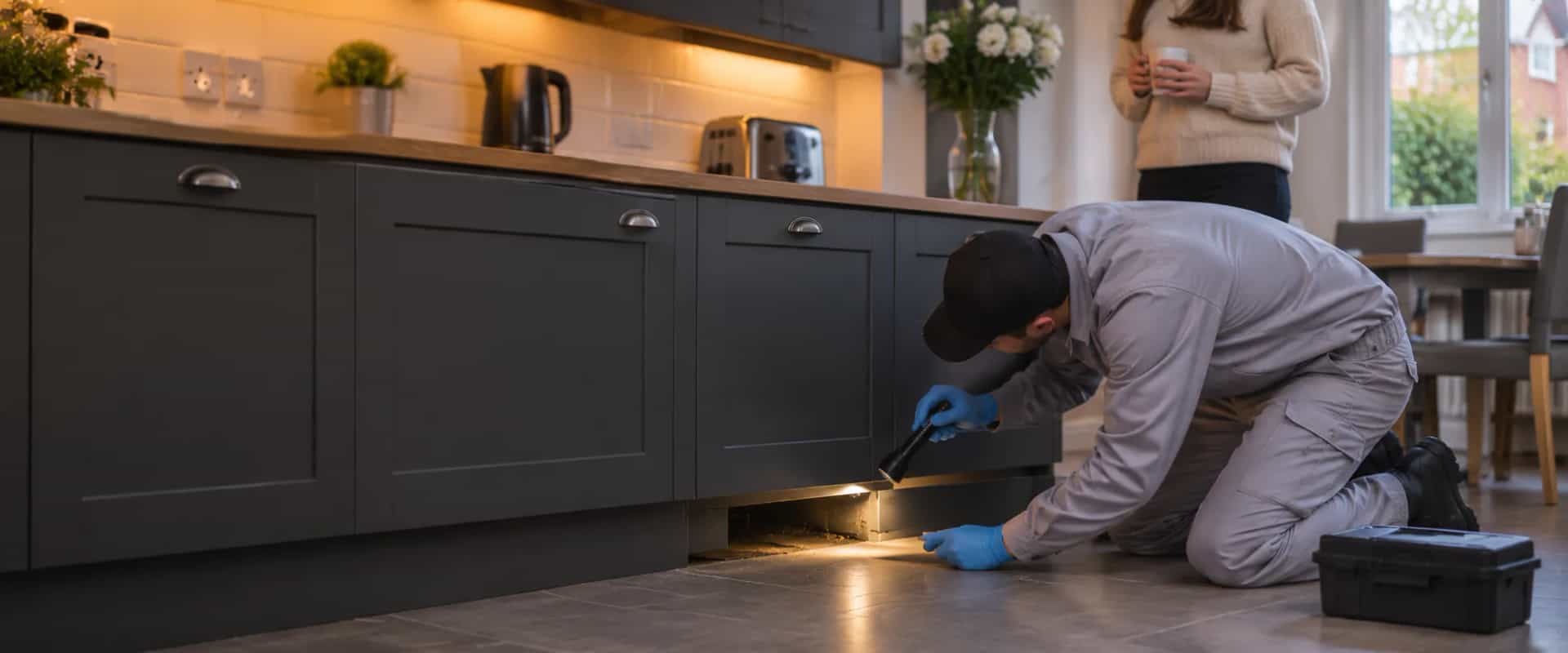
Need Wasp Nests?Book Online Or Call Us Today
Tell us what you've found and we'll sort it: wasp nests across Nottinghamshire, Derbyshire, Leicestershire and Lincolnshire, with clear advice on cost before we start.
 FAST * LOCAL * DISCREET * TRUSTED *
Book In Under A Minute
Book A Local Pest Controller In 3 Quick Steps
No long forms and nothing to pay online. Tell us what you've found and where, and we'll hold the earliest day for you. If it's urgent — a wasp nest by a door or rats indoors — call us instead.
- Free advice by phone or WhatsApp
- Clear, upfront advice on cost
- Discreet, unmarked vans
- Rated 5.0 on Google
- 01
Tap the pest
Rats, mice, wasps, bed bugs, fleas or something else — pick what you've found.
- 02
Add your address
Start typing and pick it from the list. We hold the earliest day for you.
- 03
Leave your name and number
No payment online. We confirm, and the technician calls when they're on the way.