Does Home Insurance Cover Pest Control?
Does home insurance pay for pest control or rat damage? Usually not, but wording matters. What ombudsman decisions show and what to check in your policy.

By the Urgent Pest Control team
Updated · 7 min read
The short answer
Usually not. Standard home insurance rarely pays for pest control itself, and many policies exclude damage caused by vermin such as rats, mice and squirrels, or only cover it under optional accidental damage. Some damage that pests cause, such as an escape of water from a gnawed pipe, may be claimable. Always check your policy wording first.
- Pest control treatment is rarely covered by standard home insurance.
- Many policies exclude vermin damage or only cover it under optional accidental damage, as Financial Ombudsman decisions show.
- Where policy wording is unclear, the ombudsman has found in favour of the policyholder.
- Tell your insurer quickly and before repairs: one claim failed partly because work was done before the insurer could assess it.
- A pest controller's written note of the pest and entry point, plus photos, strengthens any claim you do make.
On this page
- Does home insurance pay for pest control treatment?
- Does home insurance cover damage caused by rats, mice or squirrels?
- What counts as "vermin" in an insurance policy?
- Is it worth claiming for small pest damage?
- What pest-related problems might be covered?
- How do you give yourself the best chance of a successful claim?
- What if your claim is turned down?
- Who pays if you rent your home?
- How can you keep the cost down if insurance won't pay?
- When to call a professional
Usually not. Standard home insurance rarely pays for pest control treatment, and many policies exclude damage caused by vermin such as rats, mice and squirrels, or only cover it if you have bought optional accidental damage cover. Some consequences of pest damage, such as water escaping from a pipe a rat has gnawed, may be claimable depending on your policy. If you need treatment now, Urgent Pest Control's rat control starts from £200 (the final price depends on the job); ask us to note the pest and the entry point in writing if you plan to claim.
This guide explains what is and isn't usually covered, what recent Financial Ombudsman Service decisions show, and how to give yourself the best chance if you do claim.
Does home insurance pay for pest control treatment?
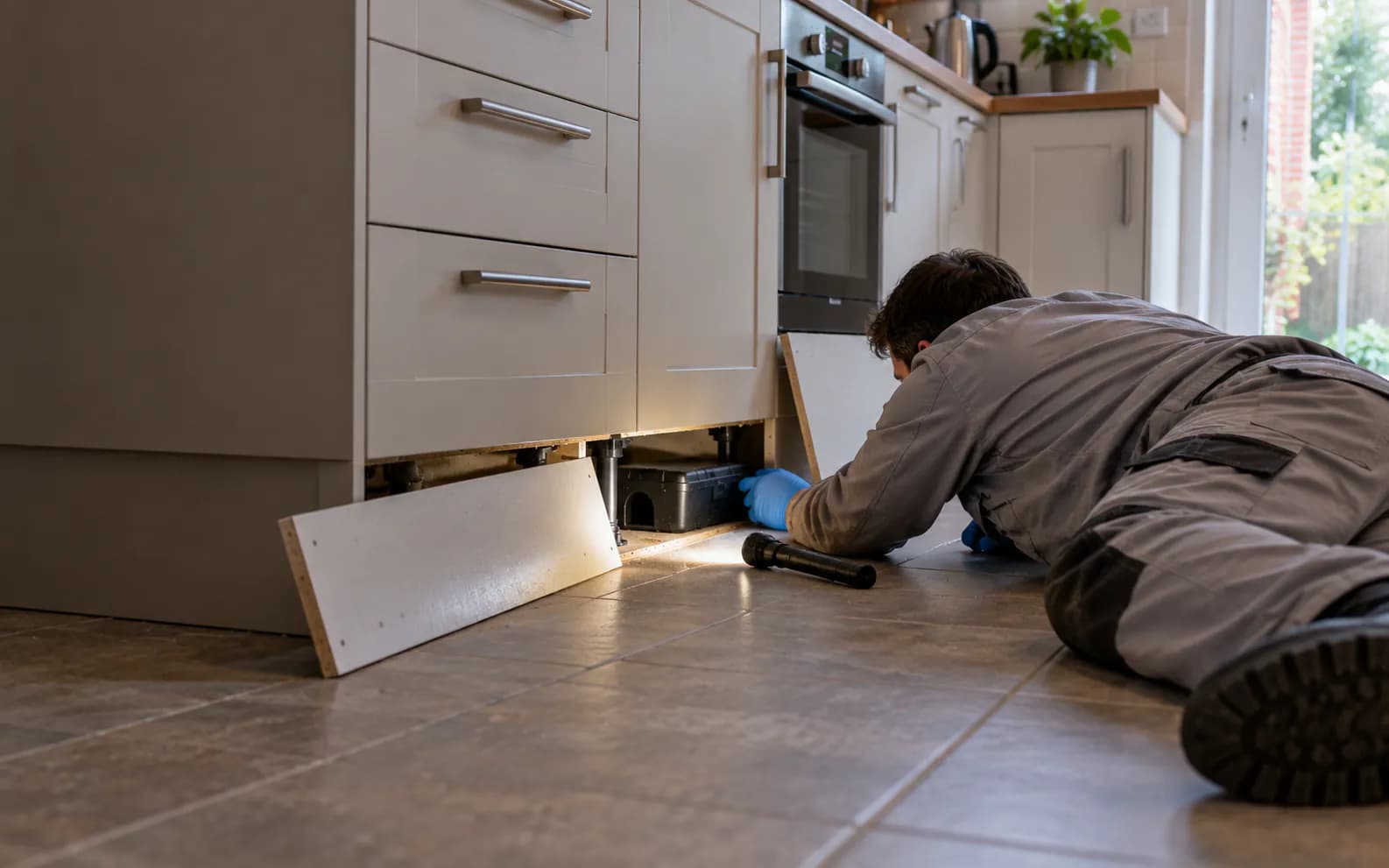
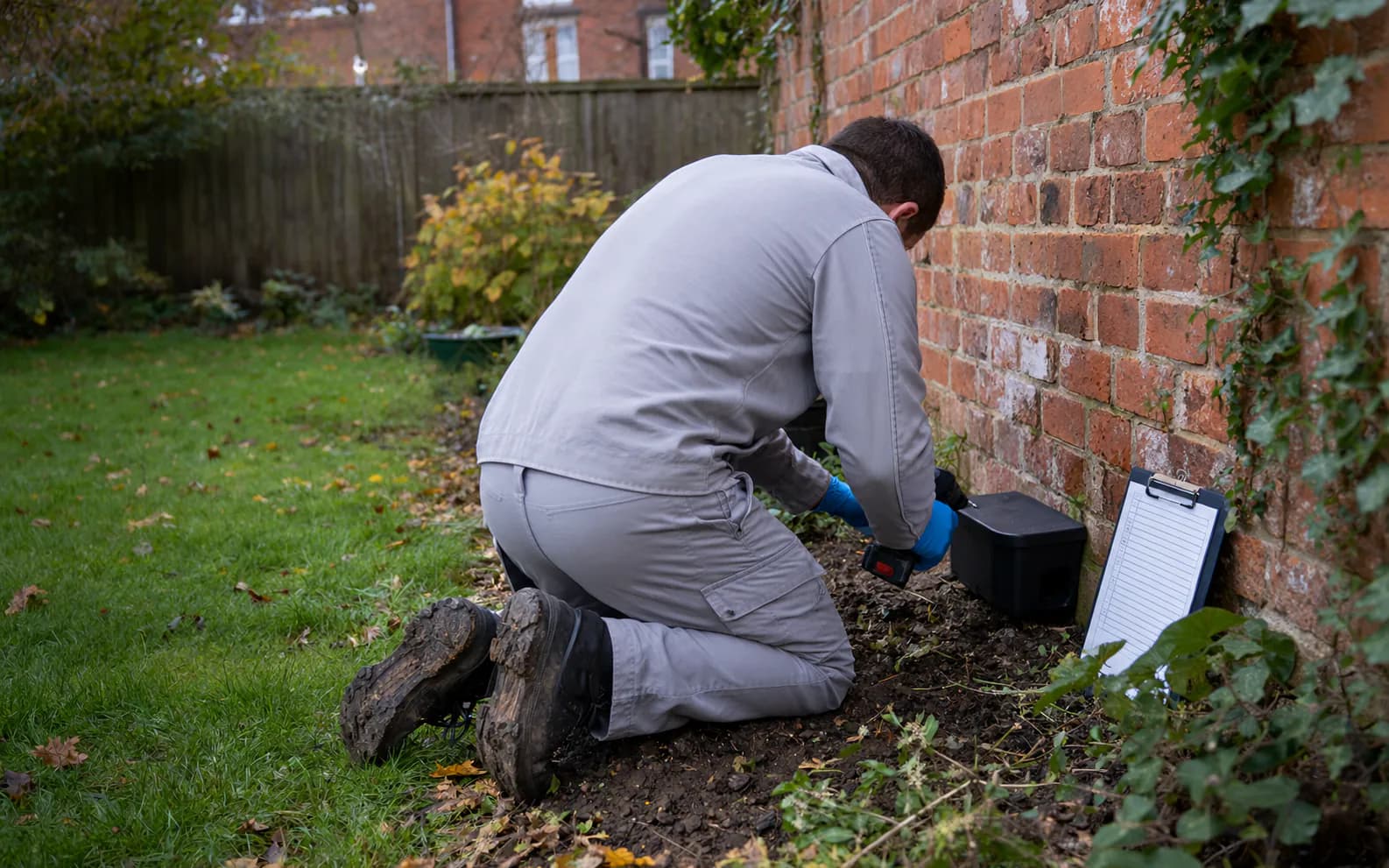
Generally no. Home insurance is designed to cover sudden and unforeseen events, such as a burst pipe, fire or storm. Pest control is usually seen as part of looking after your home, so the cost of a pest controller is not normally covered by buildings or contents insurance.
There may be exceptions. Some home emergency policies, add-ons, and landlord or commercial policies may include help with certain pests. Check your policy schedule for any home emergency cover, then read exactly which pests are included, what is excluded, and any limits on visits or cost.
Does home insurance cover damage caused by rats, mice or squirrels?
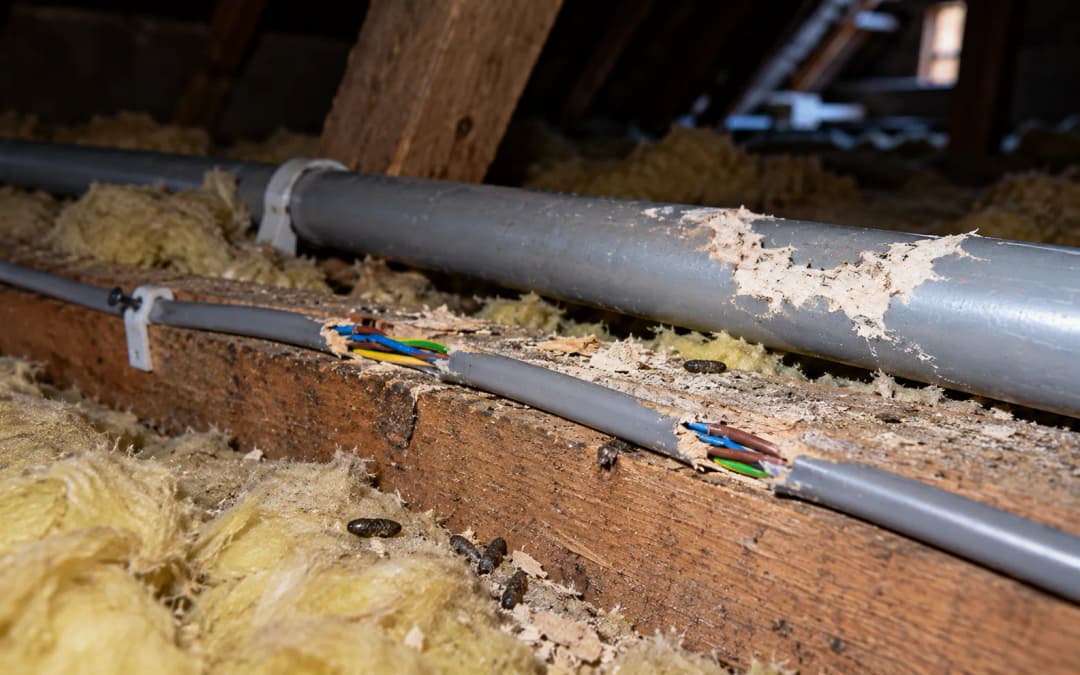
Often not: many policies exclude vermin damage or only cover it under optional accidental damage, but it depends on the wording, and policies differ a lot. Three published Financial Ombudsman Service decisions show the range.
| Decision | What the policy said | Outcome |
|---|---|---|
| DRN-4450367, AXA, mice chewed heating pipes | Excluded "damage caused by infestation (other than vermin)"; defined vermin as rats, mice, squirrels, wasps or hornets. Vermin damage was only described under the optional full accidental damage section | Upheld: the ombudsman said a reasonable person would understand vermin damage was covered, the terms weren't clear, and the insurer was told to pay the repair costs plus 8% interest |
| DRN-5871137, LV, rodent damage in a roof space | Standard accidental damage cover listed specific events that didn't include vermin; vermin was covered only under an optional additional accidental damage extra the policyholder hadn't bought | Not upheld: no insured cause covered the loss; chewing damage didn't count as "impact" by an animal |
| DRN-4586443, Red Sands, vermin chewed pipe joints causing a leak | Excluded damage caused by "vermin, moths, insects, rats, mice, squirrels, rodents"; required claims within 28 days | Not upheld: the claim was made late and repairs were done before the insurer could assess them; the policy did not cover preventative pipe replacement |
The decisions are about individual policies, so they don't set a rule for every insurer. But they show the questions that matter:
- Does your policy exclude vermin or infestation damage, and how does it define them?
- Is vermin damage covered only under optional accidental damage cover?
- Is there an insured event, such as escape of water, that the pest caused?
- Are there time limits or conditions for making a claim?
In the AXA decision, the ombudsman applied the principle that if there is doubt about the meaning of a policy term, the interpretation most favourable to the consumer should be adopted. If your policy wording is unclear, that is worth knowing.
What counts as "vermin" in an insurance policy?
Whatever your policy says it does. There is no single definition across insurers, which is why the wording matters so much. In the decisions above:
- the AXA policy defined vermin as "rats, mice, squirrels, wasps or hornets";
- the Red Sands policy excluded damage caused by "vermin, moths, insects, rats, mice, squirrels, rodents, fungus, damp, rust, wet or dry rot";
- the LV policy simply didn't list vermin among the events covered by standard accidental damage cover, so there was nothing to claim under.
Look in the definitions section at the front or back of your policy booklet, then search the exclusions for "vermin", "infestation", "rodents", "insects" and "animals". If the same word is defined one way in the definitions and used differently in a section, note it: unclear wording was the reason the AXA complaint succeeded.
Is it worth claiming for small pest damage?
Not always, because the excess and the effect on future premiums can outweigh a small repair. Policies have an excess, the amount you pay towards any claim; the Red Sands policy, for example, covered damage "over and above £350". A claim can also affect future premiums. For a small repair, such as a short length of chewed cable or a few square metres of loft insulation, paying yourself may cost less overall. For larger losses, such as a ceiling brought down by a leak, it is worth checking your cover carefully before deciding.
What pest-related problems might be covered?
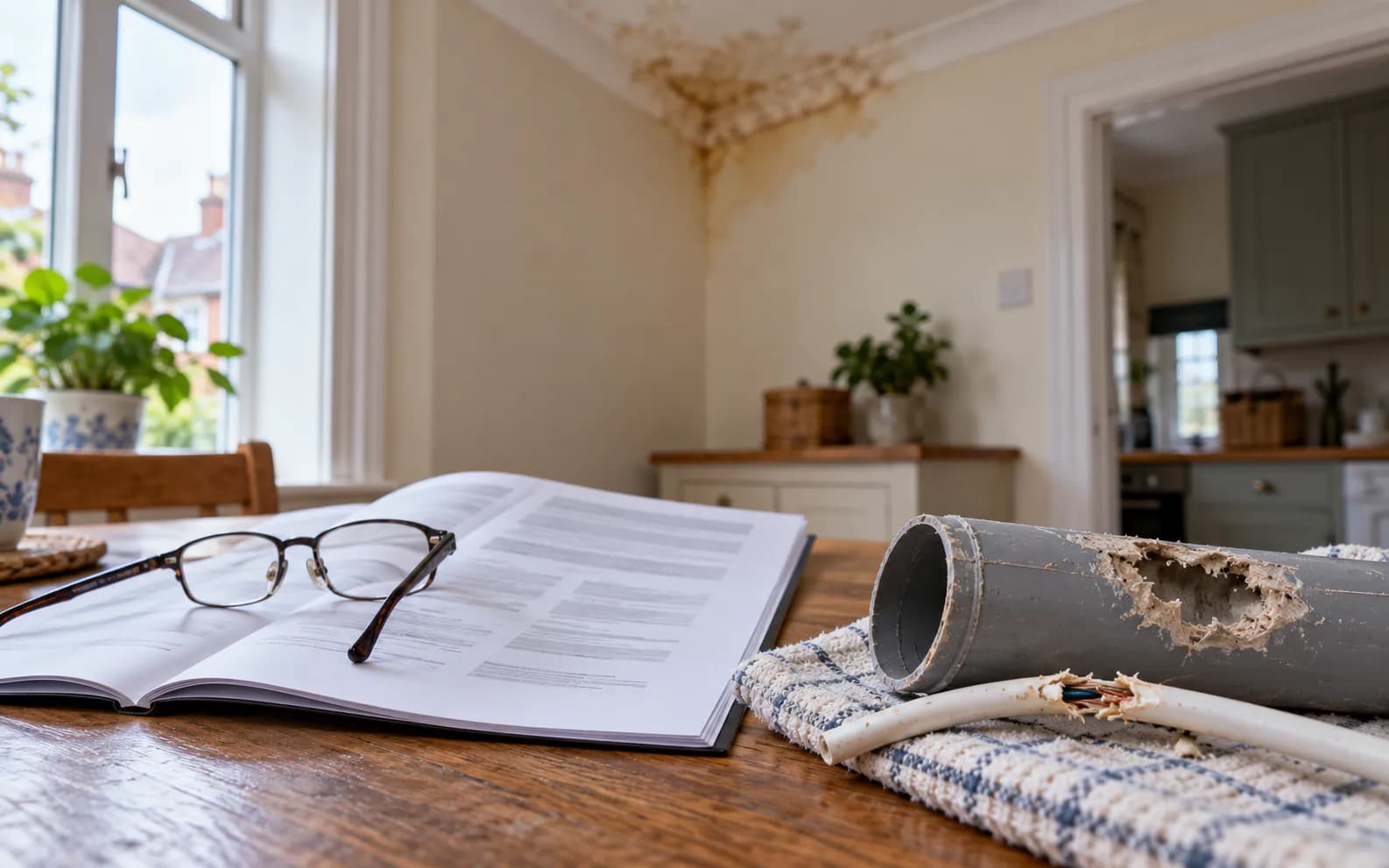
The consequences of pest damage, such as an escape of water, are more often covered than the pest control itself.
| Situation | Often covered? | What to check |
|---|---|---|
| Cost of a pest controller | Rarely | Home emergency cover or add-ons |
| Chewed cables, pipes, insulation (the damage itself) | Often excluded | Vermin or infestation exclusions; accidental damage cover |
| Water damage after a rat or mouse gnaws a pipe | Sometimes | Escape of water cover, and whether vermin exclusions apply to the resulting damage |
| Fire caused by gnawed wiring | Check carefully | Fire cover and any vermin exclusions |
| Replacing pipes or proofing to stop it happening again | Rarely | Insurers usually don't pay for preventative work |
| Damage by insects such as moths or woodworm | Often excluded | Infestation and gradual damage exclusions |
| Wasp nest removal | Sometimes, under home emergency | Which pests are listed, and any limits |
How do you give yourself the best chance of a successful claim?
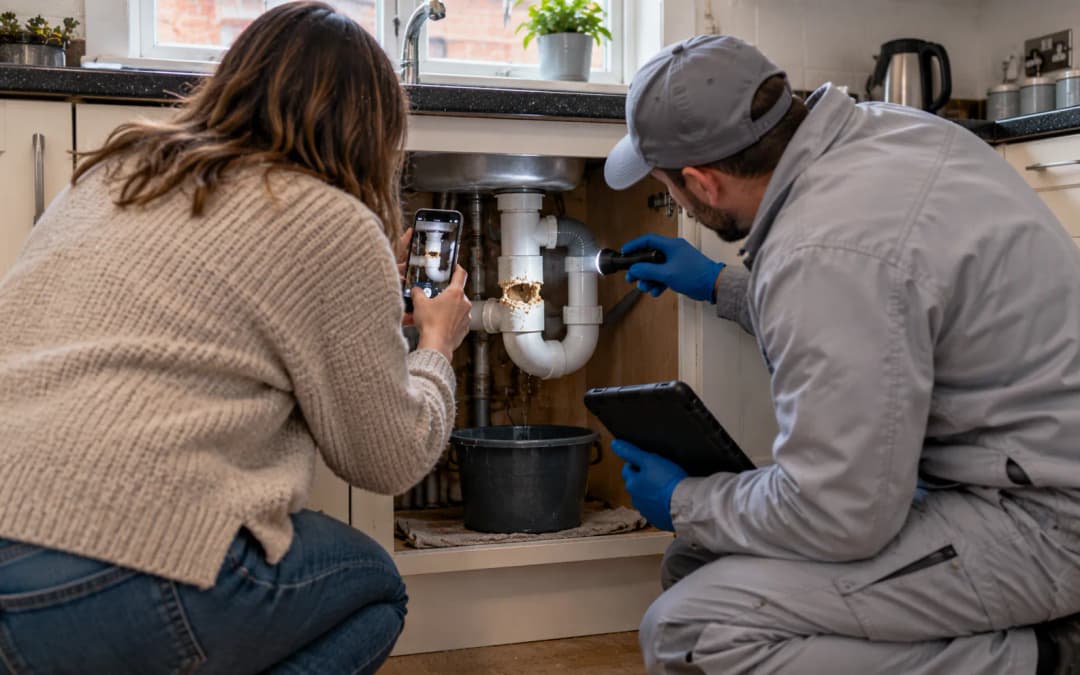
Tell your insurer quickly, keep evidence and don't repair before it has assessed the damage. If you think pest damage might be covered, the Red Sands decision is a useful warning. Follow these steps:
- Read your policy wording for vermin, infestation, accidental damage, escape of water and home emergency sections.
- Tell your insurer promptly. Many policies have time limits; the Red Sands policy said claims more than 28 days after becoming aware of the loss would not be considered.
- Prevent further damage, for example by turning off the water, but don't carry out full repairs before the insurer has had the chance to inspect.
- Take photos and keep evidence, including damaged pipes, cables and insulation.
- Get the cause in writing. A plumber's or electrician's report, and a pest controller's report confirming the pest and the entry point, help show what happened.
- Keep invoices for emergency work and treatment.
When we treat rodent damage, the evidence that matters is usually in the loft or under the floor: the gnawed pipe or cable, the droppings around it and the gap the animal used. Photograph them before anything is cleared, and ask your pest controller to put what they found in writing.
What if your claim is turned down?
Complain to the insurer, then to the Financial Ombudsman Service if you are not satisfied. Ask the insurer to explain which policy term it is relying on and complain in writing if you think that is unfair. The Financial Ombudsman Service says a business usually has up to 8 weeks to consider a complaint and send a final response, and that you then have 6 months from the date of that response to bring your complaint to the ombudsman. Its service is free, and you don't need to pay anyone to represent you.
Who pays if you rent your home?
If you rent, your landlord may be responsible for pest problems caused by the condition of the property, such as gaps, broken drains or disrepair, whatever your insurance says. Our guide to landlord or tenant: who pays for pest control explains the law.
How can you keep the cost down if insurance won't pay?
Act early and check whether your council still treats pests. Pests breed quickly and damage builds up, so the cheapest treatment is usually the earliest one. Find out whether your council still treats pests; our guide to council pest control charges lists each council in our area, and some offer free or reduced treatments for residents on benefits. Compare quotes fairly using our guides to pest control costs in the UK and rat removal cost.
When to call a professional
Call a professional as soon as you see signs of rats, mice or squirrels, especially if they are near cables, pipes or the water tank. Getting pests out quickly limits the damage, which matters whether or not you can claim. If a pest has already damaged pipes or wiring, call a plumber or electrician first for safety, then a pest controller to stop it happening again.
Rat control starts from £200 and mice control from £200, with follow-up visits included. Squirrel control starts from £240. The final price depends on the pest, the property and the time of the visit, and we'll explain the likely cost before any work starts. See our pest control prices.
Urgent Pest Control covers Nottingham, Derby, Leicester, Lincoln and the surrounding counties, 7 days a week from 6am to 8pm. Book online, or call or WhatsApp 07999 935 929.
Sources
Frequently Asked Questions
About the author
The Urgent Pest Control team
A family-run pest control company based in Southwell, treating homes and businesses across Nottinghamshire, Derbyshire, Leicestershire and Lincolnshire since 2020. Our guides are written from the jobs we do and checked against UK sources. More about us
Cite this guide: “Does Home Insurance Cover Pest Control?”, Urgent Pest Control, 4 November 2026. https://urgentpestcontrol.uk/blog/does-home-insurance-cover-pest-control