Bed Bug Bites vs Flea Bites: How to Tell the Difference
Bed bug bites appear on skin exposed in bed, often in a line; flea bites cluster below the knees. How to tell them apart, and the evidence to look for.

By the Urgent Pest Control team
Updated · 8 min read
The short answer
Bed bug bites usually appear on skin exposed while you sleep, such as the face, neck and arms, often in a line or group. Flea bites are usually found in groups below the knees, according to the NHS. Then check for evidence: blood and brown spots on bedding point to bed bugs; a scratching pet points to fleas.
- The NHS says bed bug bites are often on skin exposed while sleeping, such as the face, neck and arms, and are often in a line or grouped together.
- The NHS says flea bites are usually found in groups below the knees.
- Bites look similar, so confirm with evidence: blood spots and brown spots on bedding for bed bugs, a scratching pet and jumping insects for fleas.
- Most bites settle on their own; the NHS says bed bug bites usually clear up in a week or so.
- Call 999 if lips, mouth, throat or tongue swell suddenly or you are struggling to breathe after a bite.
On this page
- How can you tell bed bug bites from flea bites?
- What do bed bug bites look like?
- What do flea bites look like?
- Do bites look different on darker skin?
- What else could the bites be?
- What evidence should you check before booking a treatment?
- Where do bed bugs and fleas come from?
- What should you avoid doing?
- How do you treat bed bug and flea bites?
- When is a bite an emergency?
- When to call a professional
Bed bug bites usually appear on skin exposed while you sleep, such as the face, neck and arms, often in a line or group. Flea bites are usually in groups below the knees. That's the NHS's guide, but bites alone can mislead, so check the bed and the pets before booking bed bug treatment or flea treatment.
Getting the answer right matters, because the treatments are different. Bed bugs live in and around the bed; fleas live on pets and in carpets. This guide compares the two side by side, using NHS guidance, and lists the evidence that settles the question.
How can you tell bed bug bites from flea bites?
Start with where the bites are, then look for evidence. The table brings together the NHS bedbugs page, the NHS insect bites and stings page and veterinary guidance on fleas.
| Clue | Bed bug bites | Flea bites |
|---|---|---|
| Where on the body | Skin exposed while sleeping, such as the face, neck and arms (NHS) | Usually in groups below the knees (NHS) |
| Pattern | Often in a line or grouped together (NHS) | In groups; the NHS photo shows large, red, raised groups of bites |
| Look and feel | Raised and itchy (NHS) | Red, raised and itchy |
| When you notice them | Usually on waking | Often after walking around the house or sitting on carpet or a sofa |
| Evidence in the home | Spots of blood on bedding; small brown spots (bed bug poo) on bedding or furniture (NHS) | Pets scratching; small dark insects about 2mm long jumping on floors or socks |
| Who gets bitten | People who sleep in the affected bed or sofa | Anyone walking through affected rooms; pets |
| Typical source | Luggage, second-hand furniture, clothing from an infested place (NHS) | A cat or dog, or cocoons left in a previously occupied home |
The flea size is from Adur & Worthing Councils, which describe the cat flea as about 2mm long and dark brown. The MSD Veterinary Manual says newly emerged, unfed fleas are what infest animals and bite humans, which is why people get bitten even when the pet is treated.
What do bed bug bites look like?
The NHS says bed bug bites can be raised and itchy, and are often in a line or grouped together. They tend to be on skin that is uncovered in bed: the face, neck, arms and hands, and sometimes the shoulders or legs if they stick out from the covers.
The bites alone don't prove bed bugs. What usually confirms them is the evidence the NHS lists:
- spots of blood on your bedding, from the bites or from a squashed bed bug;
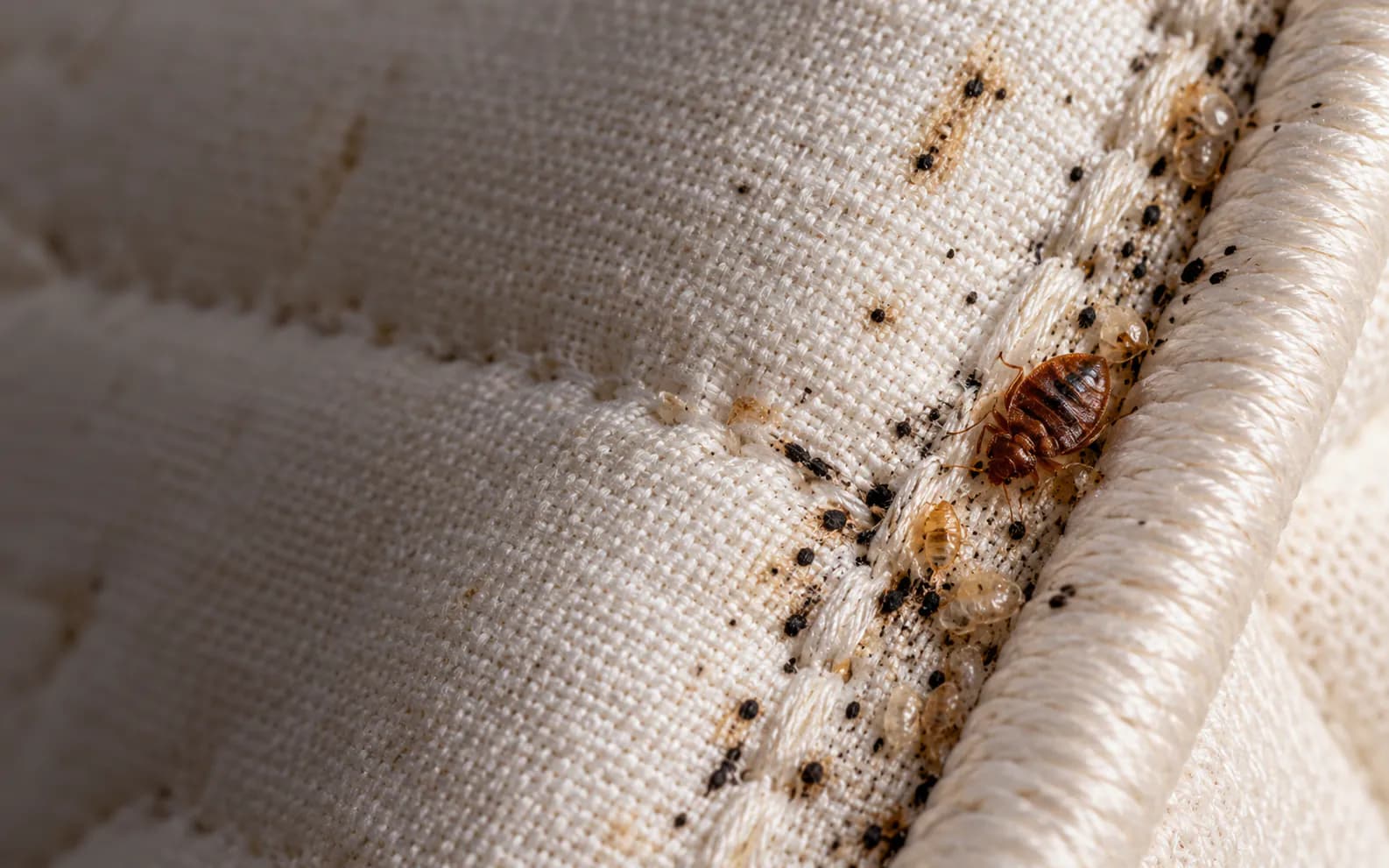
- small brown spots on bedding or furniture, which are bed bug poo;
- live bed bugs in mattress seams, the bed frame or the headboard.
Our guide on how to check for bed bugs shows exactly where to look, and our pest identifier helps if you have caught an insect and aren't sure what it is.
What do flea bites look like?
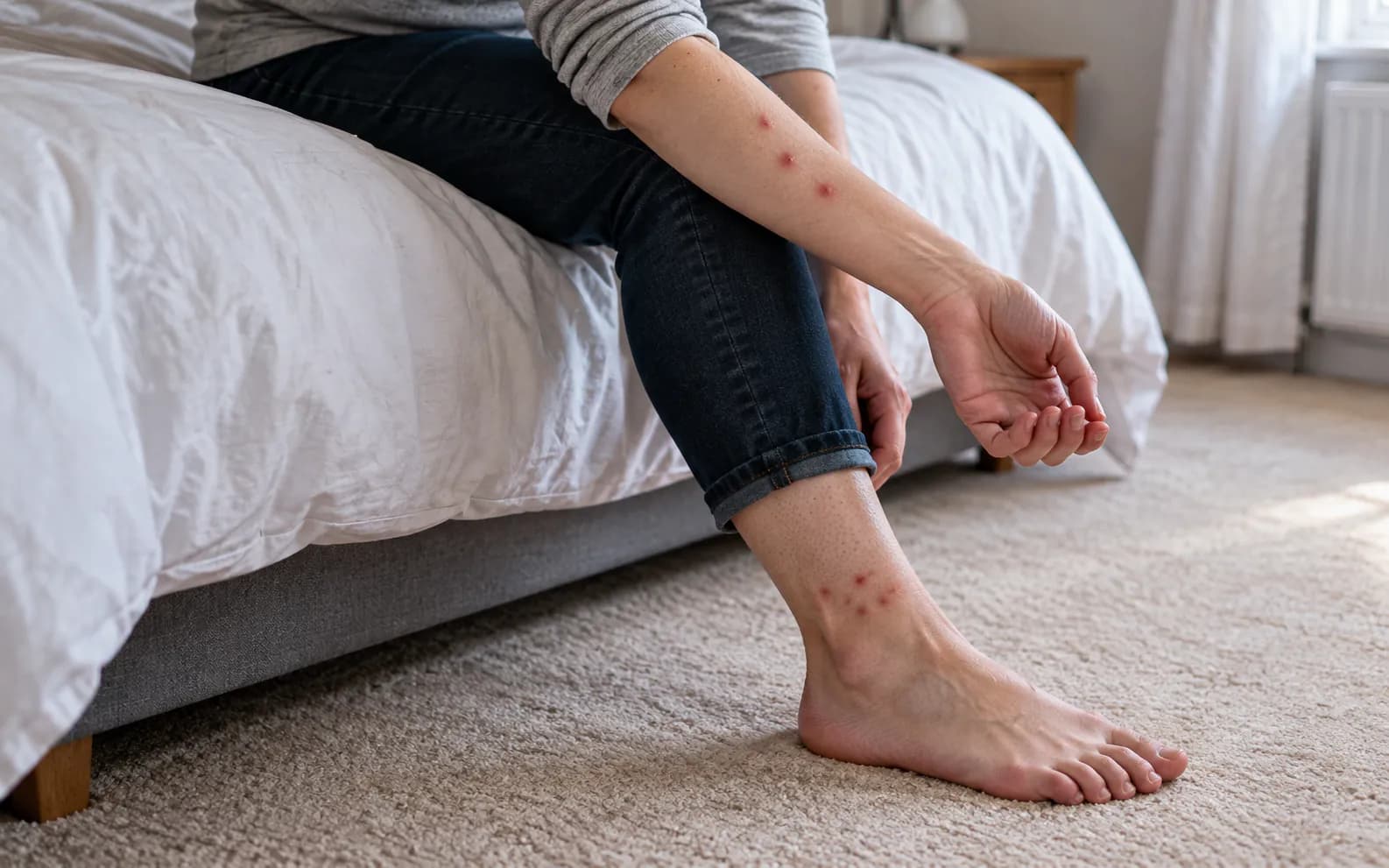
The NHS says flea bites are usually found in groups below the knees, and its photo shows large, red, raised groups of bites. They are typically around the ankles and lower legs, because fleas jump up from carpets, rugs and furniture.
Flea bites usually come with other clues: a cat or dog that is scratching, small dark insects jumping on pale socks or bedding, or bites that started soon after moving into a home where a pet used to live. Our guide to how long fleas can live without a host explains why fleas can appear in a house with no pets.
Do bites look different on darker skin?
They can be harder to see. The NHS says a bite or sting usually causes a small, swollen lump on the skin which may look red, and that it can be harder to see on black or brown skin, although you should still be able to feel it. On darker skin, the pattern and position of the lumps, and the itch, are often more useful than colour.
What else could the bites be?
Several other biters leave similar marks, so it helps to rule them out. The NHS describes:
- Mosquito bites: usually small, raised and itchy.
- Midge bites: usually small and raised, appearing in groups.
- Mite bites: very itchy lumps and sometimes blisters.
- Horsefly bites: large and painful, may bleed and often become infected.
Mosquitoes and midges are mostly a summer and outdoor problem. Bites that keep appearing overnight, indoors, in winter, point back towards bed bugs. Bites concentrated on the lower legs in a home with pets point towards fleas.
What evidence should you check before booking a treatment?
Run through this checklist. It takes ten minutes and tells a pest controller what to treat.
- Strip the bed and check mattress seams, piping and labels for blood spots, brown spots, pale shed skins or live bugs.
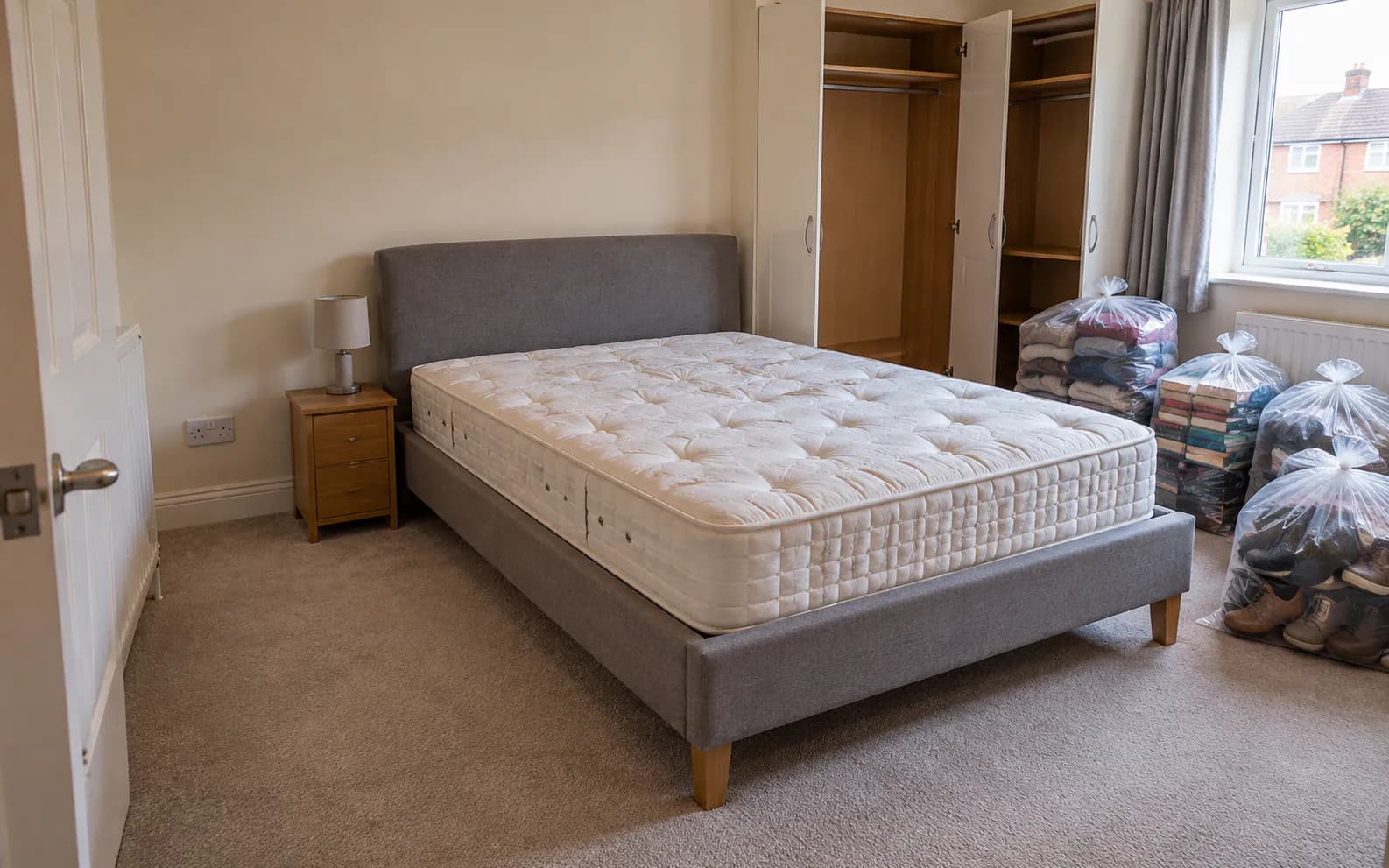
- Check the bed frame and headboard, especially joints, screw holes and where the headboard meets the wall.
- Check sofas where anyone sleeps or naps, including under the cushions.
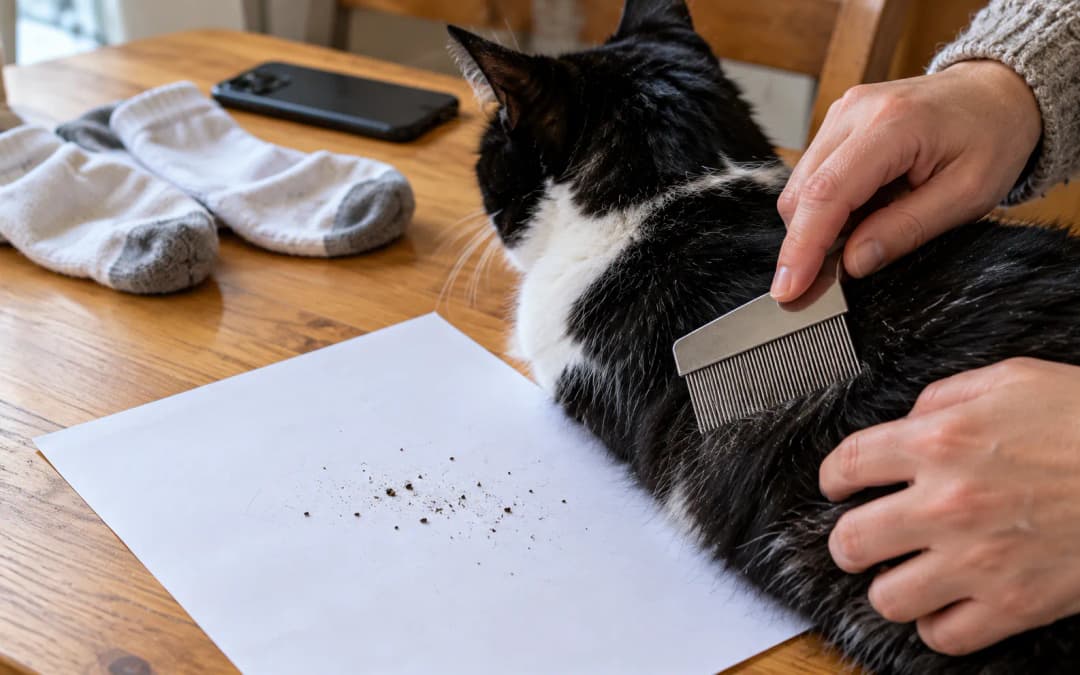
- Comb your pets with a fine flea comb over a white sheet of paper and look for fleas or dark specks.
- Walk across carpets in white socks, then check them for small dark jumping insects.
- Note where and when the bites appear: on waking, on the upper body (bed bugs), or after time downstairs, on the lower legs (fleas).
- Take photos of bites and anything you find, to show the technician.
If you find evidence of both, which can happen in homes with pets and visitors, tell us when you book so the visit covers both.
Where do bed bugs and fleas come from?
They arrive in completely different ways, which is another useful clue.
Bed bugs are carried in. The NHS warns against bringing second-hand furniture indoors without checking it first, and against bringing luggage or clothing indoors from places with known bed bugs without checking them carefully. It also says bed bugs are found in both clean and dirty places, so they are not a sign of a dirty home. Bites that start after a holiday, a hotel stay, a house guest or a second-hand bed or sofa point towards bed bugs.
Fleas usually come with a pet, or were already waiting. The MSD Veterinary Manual says flea eggs readily fall from the coat onto bedding, carpet or soil, where they hatch. Adur & Worthing Councils say flea pupae can lie dormant for many months and that a property empty for many months can suddenly become infested when somebody enters. Bites that start after a new pet arrives, or within days of moving house, point towards fleas.
What should you avoid doing?
A few common reactions make both problems worse:
- Don't throw out the mattress or sofa before it has been inspected; dragging it through the house can spread bed bugs, and it may not be the only place they are hiding.
- Don't move to another bedroom to escape bites, which can spread bed bugs to a second room.
- Don't keep clutter around the bed, which the NHS lists as something to avoid, as it gives bed bugs more places to hide.
- Don't treat the house for fleas without treating the pets through the vet, or the fleas return.
How do you treat bed bug and flea bites?
Most bites settle on their own. The NHS says bed bug bites usually clear up on their own in a week or so. For bed bug bites, the NHS advises:
- cool the area with a clean, damp cloth to ease itching and swelling;
- keep it clean and don't scratch, to avoid infection;
- ask a pharmacist about a mild steroid cream such as hydrocortisone (children under 10 and pregnant women should see a doctor first);
- ask about antihistamines if the bites are very itchy and you can't sleep.
For insect bites generally, including flea bites, the NHS insect bites page suggests using a cold pack on a swollen bite, keeping the area raised if you can, and not scratching, as the bite could get infected.
See a GP if bites stay very painful, swollen or itchy after trying treatments from a pharmacist, or if pain or swelling around the bites is spreading, as you may have an infection.
When is a bite an emergency?
Rarely, but know the signs. The NHS says call 999 if, after a bite or sting, the lips, mouth, throat or tongue suddenly become swollen, the throat feels tight or you are struggling to swallow, or you are breathing very fast or struggling to breathe. Also call 999 if someone becomes suddenly very confused, drowsy or dizzy, or faints and can't be woken.
When to call a professional
Call a professional once you have found evidence of bed bugs, or if flea bites carry on after your pets have been treated by the vet. The NHS says it is very difficult to get rid of bed bugs yourself and that they may be resistant to some insecticides. Fleas are easier to clear, but only if the pets and every room are treated together.
Councils rarely cover either pest. Leicester City Council treats fleas only in council properties (£90 for up to three bedrooms) and doesn't list bed bugs; Derby City Council charges £130 online for fleas in a home of up to three bedrooms and £218 online for a two-stage bed bug treatment (2026/27 fees).
For bed bugs, Urgent Pest Control offers heat treatment, residual insecticide or both; see how to get rid of bed bugs. For fleas, our flea treatment starts from £150, with the final price depending on the property and the size of the problem; see our pest control prices. We'll explain the likely cost before any work starts. We cover bed bug treatment in Leicester and homes in Nottingham, Derby, Chesterfield and Lincoln, 7 days a week from 6am to 8pm, with emergency call-outs 365 days a year. Call or WhatsApp 07999 935 929, or book online.
Sources
Frequently Asked Questions
About the author
The Urgent Pest Control team
A family-run pest control company based in Southwell, treating homes and businesses across Nottinghamshire, Derbyshire, Leicestershire and Lincolnshire since 2020. Our guides are written from the jobs we do and checked against UK sources. More about us
Cite this guide: “Bed Bug Bites vs Flea Bites: How to Tell the Difference”, Urgent Pest Control, 4 November 2026. https://urgentpestcontrol.uk/blog/bed-bug-bites-vs-flea-bites