Are Landlords Responsible for Pest Control? Landlord or Tenant
Are landlords responsible for pest control in England? How the Landlord and Tenant Act 1985, the Homes Act 2018, HHSRS and your tenancy decide who pays.

By the Urgent Pest Control team
Updated · 8 min read
The short answer
Often, yes. In England, landlords must keep the structure, drains and exterior in repair and keep the home fit for human habitation, and pests count. So infestations caused by disrepair, or present when the tenancy started, are normally the landlord's to fix. Pests caused by a tenant's own behaviour, such as rubbish left out, are usually the tenant's.
- Section 11 of the Landlord and Tenant Act 1985 makes landlords keep the structure, exterior, drains and external pipes in repair.
- The Homes (Fitness for Human Habitation) Act 2018 requires rented homes in England to be fit to live in, and pests are one of the hazards considered.
- HHSRS lists exposure to pests as a hazard; councils must act on Category 1 hazards.
- Landlords are not liable where the problem is mainly caused by the tenant's own behaviour or breach of the tenancy.
- Report pests in writing early, keep evidence and check your tenancy agreement.
On this page
- What does the law say about landlords and pests?
- How does the HHSRS deal with pests?
- When is the tenant responsible?
- Who usually pays? A scenario table
- What does your tenancy agreement say?
- What should tenants and landlords do when pests appear?
- Can a tenant take the landlord to court over pests?
- When to call a professional
Landlords are often responsible for pest control, but not always. In England, landlords must keep the structure, drains and exterior in repair and keep the home fit for human habitation, and pests are one of the hazards that count. So an infestation caused by disrepair, or one that was there when you moved in, is normally the landlord's to fix. Problems caused by a tenant's own behaviour, such as rubbish left to pile up, are usually the tenant's. Our commercial pest control service works with landlords and letting agents, and we can treat for tenants directly.
This guide explains the law in England, how your tenancy agreement fits in, who usually pays in common situations, and what to do if a pest problem isn't being dealt with. It is general information, not legal advice; Wales and Scotland have different rules. For bed bugs specifically, see are landlords responsible for bed bugs.
What does the law say about landlords and pests?
Three pieces of law decide most cases: the Landlord and Tenant Act 1985, the Homes (Fitness for Human Habitation) Act 2018 and the HHSRS under the Housing Act 2004.
The Landlord and Tenant Act 1985, section 11. For most residential tenancies, section 11 implies a duty on the landlord to keep in repair the structure and exterior of the home, "including drains, gutters and external pipes", and to keep installations for water, gas, electricity and sanitation in repair and working order. Gaps in walls, broken air bricks, rotten fascias and defective drains are classic ways pests get in, and they fall on the landlord's side of the line.
The Homes (Fitness for Human Habitation) Act 2018. This Act added section 9A to the 1985 Act. It implies a covenant that a rented home in England is fit for human habitation at the start of the tenancy and stays fit throughout. Under section 10, fitness takes account of matters including repair, drainage, facilities for preparing food and disposing of waste water, and any "prescribed hazard" under the Housing Act 2004. The government's guide for tenants lists "domestic hygiene, pests and refuse" among the problems that can make a home unfit.
The Housing Health and Safety Rating System (HHSRS). Under Part 1 of the Housing Act 2004, councils assess hazards in homes. The HHSRS regulations list "exposure to pests" under the hazard of domestic hygiene, pests and refuse.
How does the HHSRS deal with pests?
The HHSRS treats pests as a hazard the council can score and act on. The government's landlord and agent guide to the HHSRS, updated 16 September 2026, explains that the system has been revised in England. The number of hazards has been reduced from 29 to 21, and new baseline indicators act as a checklist of reasonable standards. Its pest management indicator asks whether "the property and structures and areas within the curtilage of the property is free of pest infestation".
Councils score each hazard. For Category 1 (high-risk) hazards, the guide says the council must take action; for Category 2 hazards, it has discretion. Actions can include improvement notices requiring the landlord to carry out works.
The same guide notes that Awaab's Law currently applies to social housing, that government has committed to extend it in 2026 to more hazards including hygiene hazards, and that it will consult on applying Awaab's Law to private rented housing.
When is the tenant responsible?
The tenant is usually responsible when their own behaviour caused the pests, such as food or rubbish left out or an untreated pet with fleas. The 1985 Act says the landlord's repair and fitness duties don't cover work the tenant is liable for because of the duty to use the property in a "tenant-like manner". Section 9A also says the landlord is not liable where unfitness is wholly or mainly caused by the tenant's own breach of the tenancy.
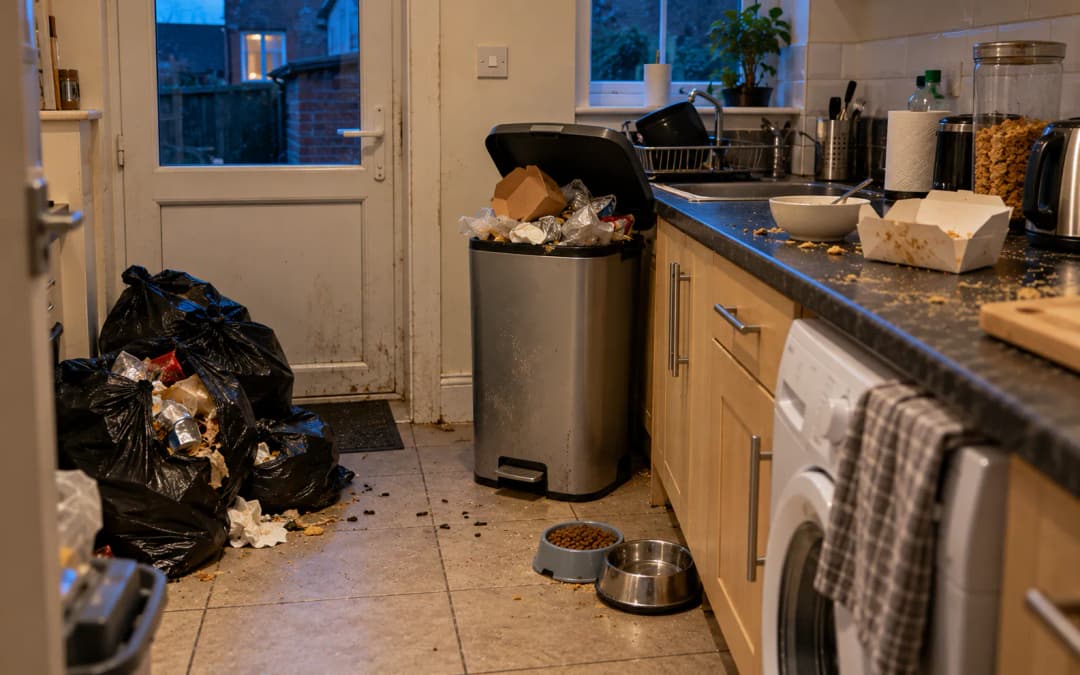
The government's tenant guide puts it plainly: the landlord may not have to fix problems caused by a tenant's irresponsible behaviour. Shelter says the same: you could be responsible only if you do something to encourage pests, such as leaving bins uncovered or not using flea treatment on your pets.
In practice, tenants are usually expected to:
- keep the home reasonably clean and not leave food or rubbish out;
- use bins properly and not let refuse build up;
- treat their own pets for fleas;
- report pests, damage and leaks promptly, so they don't get worse;
- let the landlord or pest controller in for treatment, with proper notice.
Who usually pays? A scenario table
Every case depends on the facts and the tenancy agreement, but this is how responsibility usually falls.
| Situation | Usually responsible | Why |
|---|---|---|
| Rats getting in from a broken or disused drain | Landlord (or water company for shared drains and sewers) | Drains are part of the landlord's repair duty under s11; Citizens Advice says shared lateral drains and sewers are the water company's |
| Mice getting in through gaps in walls, air bricks or pipework | Landlord | Structure and exterior repair; fitness for habitation |
| Pests present when the tenant moved in | Landlord | The home must be fit at the start of the tenancy |
| Squirrels in the loft through a damaged roof | Landlord | Structure and exterior repair |
| Mice or rats attracted by food or rubbish left out by the tenant | Tenant | Tenant's behaviour; tenant-like manner |
| Fleas from the tenant's own pet | Tenant | Caused by the tenant |
| Bed bugs brought in partway through the tenancy | Often the tenant, but depends on evidence | Bed bugs travel in luggage and furniture; the source can be hard to prove (see our bed bugs and landlords guide) |
| Wasp nest in the roof or wall | Depends on the agreement | No law names wasps; check what the tenancy says about pests |
| Pests in a block of flats' communal areas | Landlord or managing agent | Shelter says the landlord may be responsible if they own the whole building, and should report it to the owner if not |
If rats are coming from the drains, responsibility for the pipe depends on where the defect is. Our guide to rats in walls explains the drainage side, and our rats in drains service works with our sister company, Urgent Drainage Solutions, on CCTV surveys.
What does your tenancy agreement say?
Your tenancy agreement can add responsibilities, but it can't remove the landlord's legal duties. Most agreements include clauses about keeping the property clean, disposing of rubbish, reporting problems and allowing access. Some deal with pests specifically.
But a clause can't override the law. Section 9A(4) says any term that tries to exclude or limit the landlord's fitness obligations is void, and section 12 does the same for the section 11 repairing obligations. So a clause saying "the tenant is responsible for all pest control" doesn't make you pay for an infestation caused by the landlord's disrepair.
What should tenants and landlords do when pests appear?
Both should act quickly and in writing: the tenant reports, the landlord finds and fixes the cause.

Tenants:
- Report the problem to your landlord or letting agent in writing, with photos and dates.
- Do what you reasonably can: store food in sealed containers, keep bins closed, and treat pets for fleas.
- Allow access for inspection and treatment.
- Keep paying rent. Shelter says don't stop paying, and if you pay for pest control yourself, try to agree a rent reduction instead.
- If nothing happens, contact your council's private housing or environmental health team. The tenant guide says councils have powers to take action on your behalf at no cost to you.
Landlords:
- Act quickly; a small problem is cheaper to fix.
- Get a professional survey to find the cause, especially the entry point.
- Fix disrepair such as gaps, air bricks and drains, not just the symptoms.
- Keep records of reports, treatments and repairs, which help if there is a dispute.
Councils can also act directly on rats and mice, and some still treat them cheaply or free. Leicester City Council treats rats in homes free of charge, and Nottingham City Council treats rats and mice free for residents on Council Tax Support. Section 4 of the Prevention of Damage by Pests Act 1949 lets them serve notice on an owner or occupier, or both, to deal with rats or mice, including structural repairs.
Can a tenant take the landlord to court over pests?
Yes, as a last resort, under the Homes (Fitness for Human Habitation) Act 2018. The government's tenant guide explains that if a rented home is not fit for human habitation, tenants can take the landlord to court under the Homes Act. The court can order the landlord to carry out repairs or put right health and safety problems, and can award compensation, with no fixed limit.
The guide says you will need to show you tried to sort out the problem with your landlord first, so write to them, keep copies, and gather evidence such as photos, pest control reports and any medical advice. If you are worried about being evicted for complaining, it advises contacting your council as soon as possible. Citizens Advice, Shelter and your council can help before you consider court.
When to call a professional
Call a professional when pests are inside the home, keep coming back, or when landlord and tenant need an independent view of the cause. A pest controller's survey, showing the pest, the entry point and any contributing factors, often settles who should pay.
Urgent Pest Control works with landlords, letting agents and tenants across Nottingham, Leicester, Derby and Lincoln. Rat control starts from £200 and mice control from £200, with follow-up visits included; the final price depends on the job, and we'll explain the likely cost before any work starts. Discreet, unmarked vehicles mean neighbours needn't know. See our guides to rat removal cost and does home insurance cover pest control, or the signs of rats in the house, and our pest control prices.
We work 7 days a week, 6am to 8pm, with emergency call-outs 365 days a year. Book online, or call or WhatsApp 07999 935 929.
Sources
- Landlord and Tenant Act 1985, section 11 (legislation.gov.uk)
- Landlord and Tenant Act 1985, section 9A (legislation.gov.uk)
- Gov.uk: Guide for tenants, Homes (Fitness for Human Habitation) Act 2018
- Gov.uk: Landlord and agent guide to the HHSRS
- Housing Health and Safety Rating System (England) Regulations 2005, Schedule 1 (legislation.gov.uk)
- Homes (Fitness for Human Habitation) Act 2018 (legislation.gov.uk)
- Prevention of Damage by Pests Act 1949, section 4 (legislation.gov.uk)
- Shelter England: pests and vermin infestations in rented homes
- Citizens Advice: who is responsible for repairing drains and sewers
- Leicester City Council: pest control
Frequently Asked Questions
About the author
The Urgent Pest Control team
A family-run pest control company based in Southwell, treating homes and businesses across Nottinghamshire, Derbyshire, Leicestershire and Lincolnshire since 2020. Our guides are written from the jobs we do and checked against UK sources. More about us
Cite this guide: “Are Landlords Responsible for Pest Control? Landlord or Tenant”, Urgent Pest Control, 4 November 2026. https://urgentpestcontrol.uk/blog/landlord-or-tenant-who-pays-for-pest-control