Wasp Nest in the Loft, Roof or Wall: What to Do
Found a wasp nest in your loft or roof? When you can leave it, why you shouldn't block the hole, and how a nest under tiles or soffits is treated.

By the Urgent Pest Control team
Updated · 7 min read
The short answer
A wasp nest in a loft or roof can be left if wasps aren't getting into the house and nobody needs the loft, because the colony dies in autumn. Otherwise have it treated: insecticide dust is applied at the outside entrance or at the nest, and it dies within days. Never block the hole; trapped wasps chew their way indoors.
- Lofts, roof spaces and wall cavities are among the most common places for wasp nests; small gaps in the roof are the usual way in.
- If wasps aren't coming indoors and nobody uses the loft, a nest can often be left to die off in autumn.
- Never block the entrance or seal the gap while the nest is active; the wasps look for another way out, sometimes into rooms.
- Most roof nests are treated from the outside at the entrance, so we rarely need to go into the loft or onto the roof.
- Once dead, the nest can stay in the loft; wasps don't reuse old nests, though a new queen may build nearby.
On this page
- Why do wasps build nests in roofs and lofts?
- Should you leave a wasp nest in the loft alone?
- Why should you never block the entrance?
- What about a wasp nest in a wall?
- What should you do if wasps are getting into rooms?
- How is a wasp nest in a roof or loft treated?
- What if you're stung in the loft?
- Do you need to remove the nest afterwards?
- What about roofers, scaffolders and loft conversions?
- How do you stop wasps nesting in the roof again?
- When to call a professional
A wasp nest in the loft or roof can usually be left if wasps aren't getting indoors and nobody uses the loft, because the colony dies off in autumn. If they're coming inside or the entrance is by a window or door, have it treated. Never block the hole. Urgent Pest Control's wasp nest removal service treats most roof and wall nests from outside, from the ground or a ladder.
This guide explains why wasps choose roofs and wall cavities, when you can leave the nest, what to do if wasps are getting into rooms, and how a roof or loft nest is treated.
Why do wasps build nests in roofs and lofts?
Because a roof space is dry, sheltered and warm, and there is usually a small gap to get in. The Wildlife Trusts note that common wasps live "in large groups in gaps in houses and roofs." North West Leicestershire District Council lists roof spaces and wall cavities among the common nest sites, and says small holes and gaps in the loft are the most common way in.
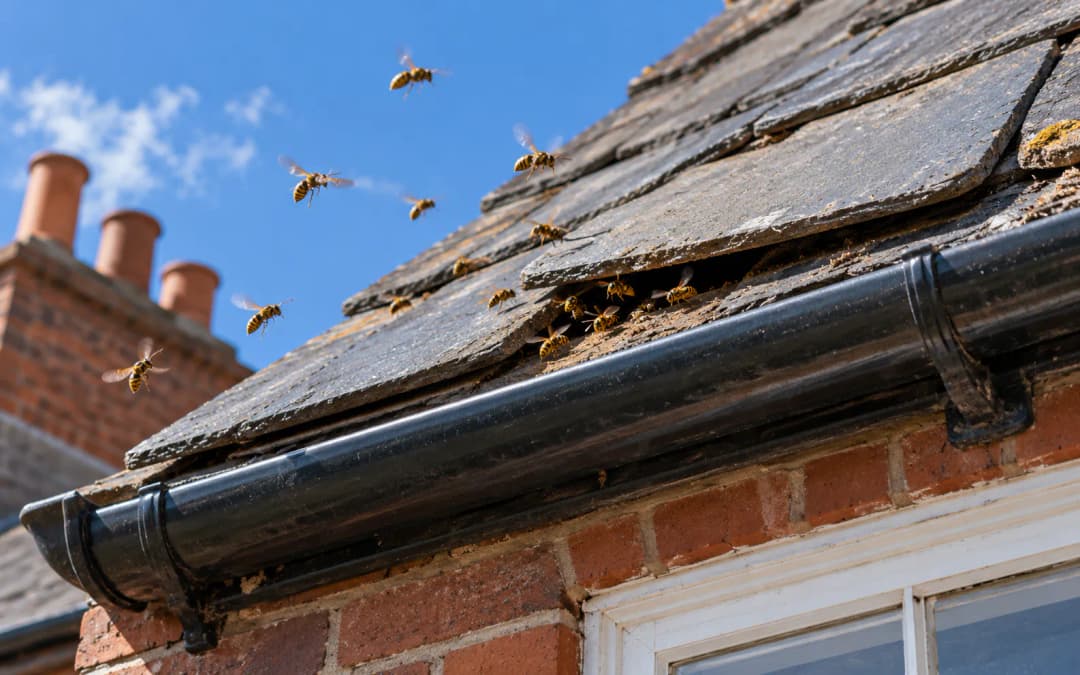
The usual entry points are:
- gaps under roof tiles or slates, especially at the eaves;
- damaged or loose soffits and fascia boards;
- gaps around dormer windows and lead flashing;
- holes where cables, pipes or flues pass through;
- ventilation gaps and airbricks.
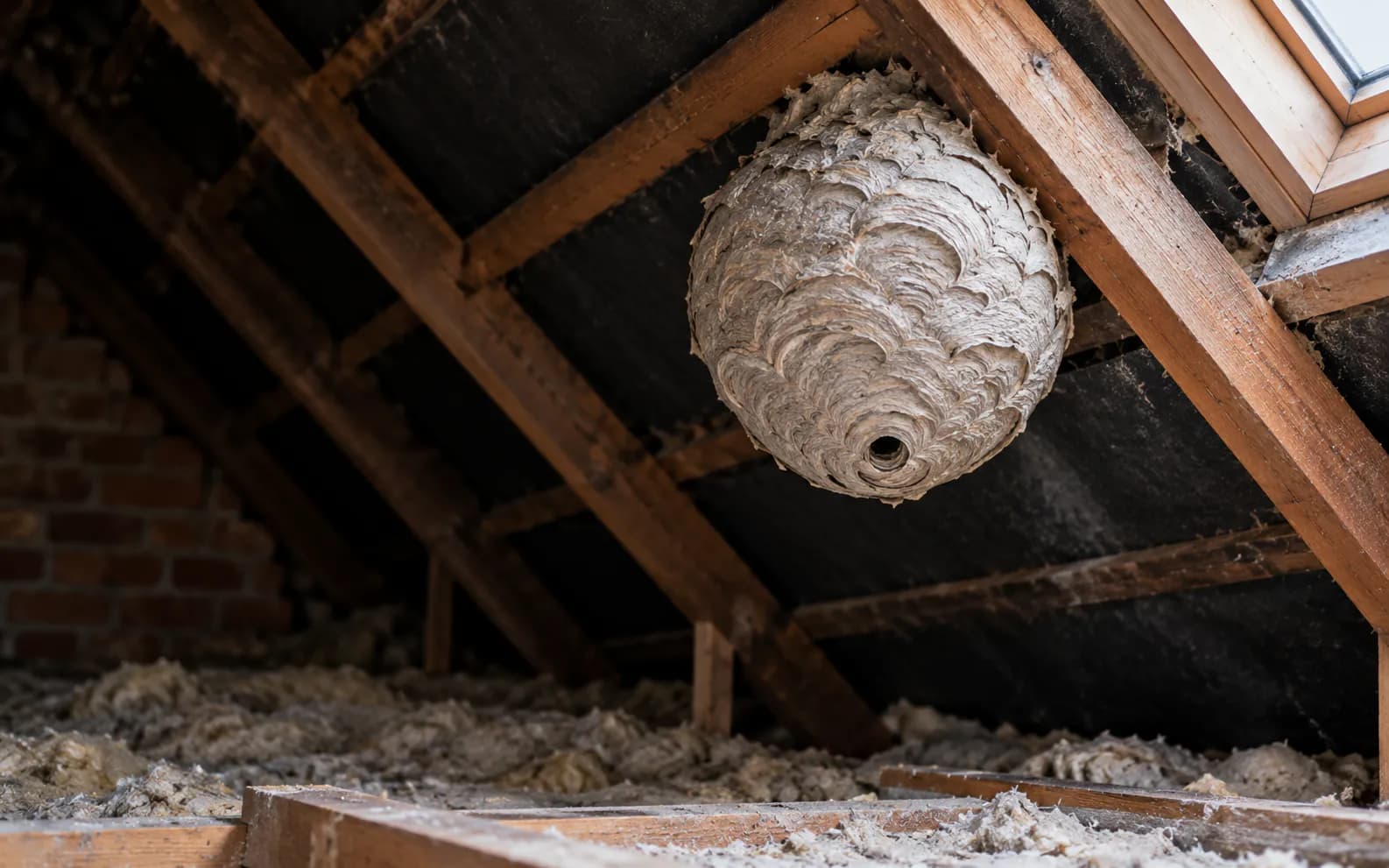
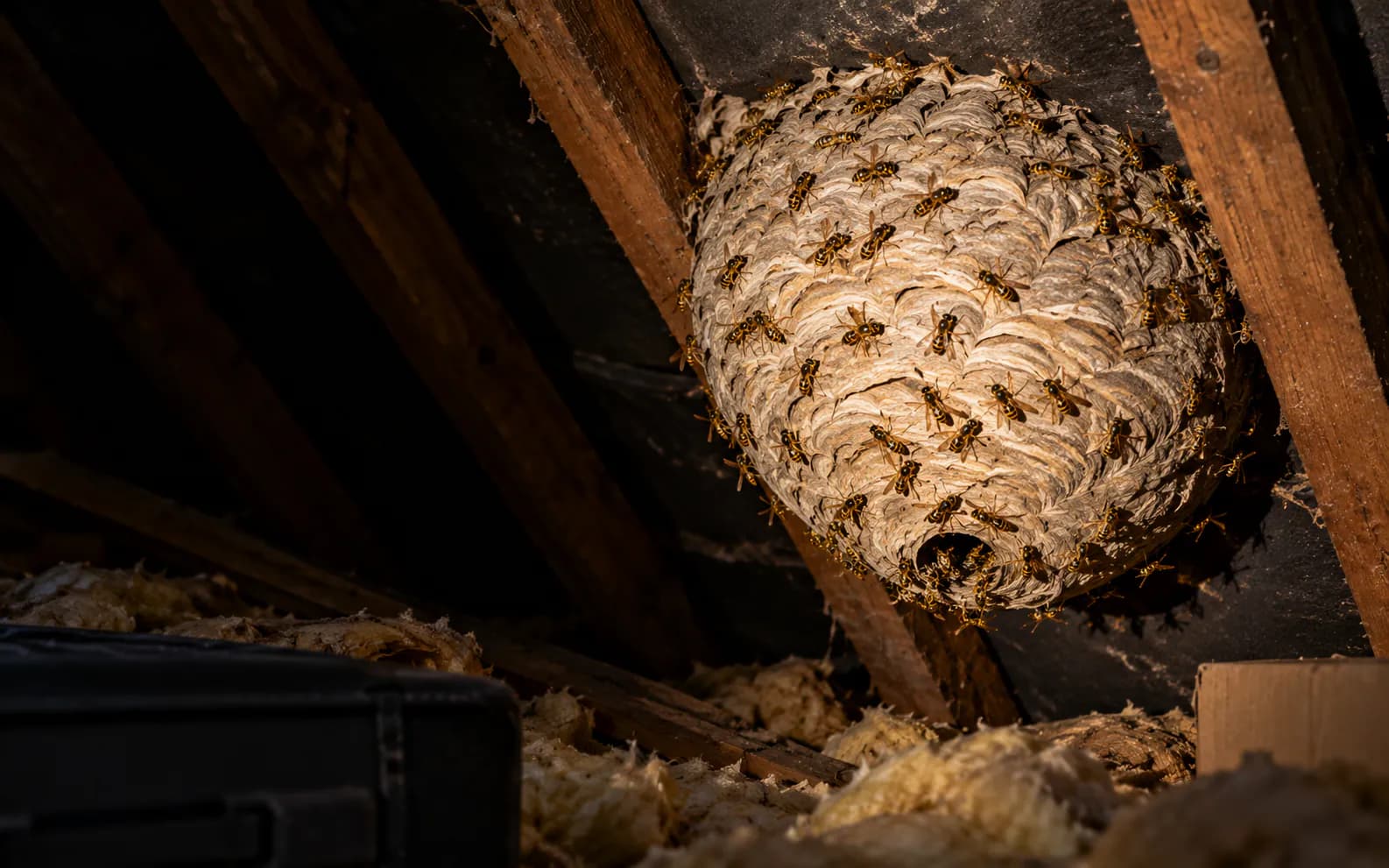
A queen starts the nest alone in spring. By late summer a nest can hold 3,000 to 5,000 wasps and measure more than 30 cm across, according to the same council.
Should you leave a wasp nest in the loft alone?
Often you can, and it is one of the most common questions we're asked. Use this checklist:
| Question | If yes |
|---|---|
| Are wasps appearing inside rooms? | Treat it |
| Is the entrance next to a window, door, balcony or path? | Treat it |
| Does anyone need to use the loft, or is building work planned? | Treat it |
| Is anyone in the household allergic to stings? | Treat it |
| Is it spring or early summer, with months of growth ahead? | Treat it now while it's small |
| Late September or later, entrance out of the way, wasps not indoors? | It can usually be left to die off |
Hastings Borough Council explains that in autumn all wasps die except the new queens, which go off to hibernate, and that old nests are not re-colonised the following year. A nest you can live with until then will not come back to life.
Why should you never block the entrance?
Because the wasps inside don't die quickly; they look for another way out. In a roof space that can mean chewing through plasterboard or finding gaps around ceiling lights, loft hatches and extractor fans, and ending up in a bedroom or landing. It also leaves the colony alive and agitated.
Leave the outside hole open until the nest has been treated and has stopped being active. Seal it afterwards, once you're sure the colony has died, to make the spot less attractive to next year's queens.
What about a wasp nest in a wall?
Treat a wall nest the same way as a roof nest: from the entrance, never by filling the hole. North West Leicestershire District Council lists wall cavities among the common nest sites. The usual sign is wasps flying in and out of an airbrick, a gap in the mortar or a hole around a pipe or cable, sometimes with a faint rustling behind the plaster.
Filling the hole with sealant or expanding foam while the nest is active traps the colony inside the cavity, and the wasps look for another way out, often through a light switch, socket box or skirting board. Dust applied into the entrance reaches the nest without opening up the wall.
What should you do if wasps are getting into rooms?
Act quickly, but calmly:
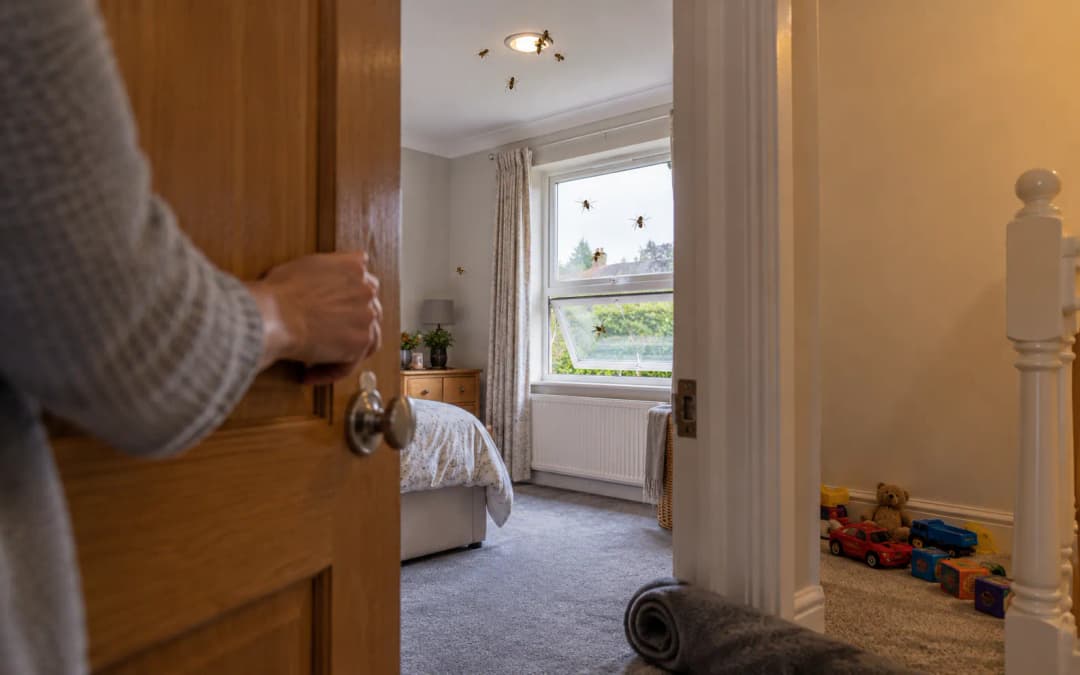
- Shut the door of the affected room and keep children and pets out.
- Open the window in that room if it's safe, so wasps can leave.
- Look for the gap: ceiling roses, downlighters, the loft hatch, extractor fans and gaps around pipes.
- Don't go into the loft to look for the nest, especially in late summer.
- Don't block the outside entrance.
- Book a treatment. Wasps coming indoors is the clearest sign the nest needs dealing with.
How is a wasp nest in a roof or loft treated?
Most roof nests are treated at the entrance from outside. The technician watches the wasps' flight path to find the gap, then applies insecticidal dust into it with a duster, often on an extension lance so it can be done from the ground or a ladder. Returning wasps carry the dust into the nest. If the nest is visible inside the loft, it can be treated directly instead.
A domestic treatment usually takes 15 to 30 minutes. Afterwards:
- keep away from the entrance for 24 hours;
- expect more wasps around the hole for the first day as foragers return;
- keep windows near the entrance shut;
- don't go into the loft until activity has stopped.
Redbridge Council says a treated nest "will then slowly die over a period of 2 to 4 days", and that large numbers of wasps still going in and out after 7 days should be reported. Our guide to whether a wasp nest is still active explains the signs to look for.
One customer had a nest found by scaffolders before a roofing job:
"We called Urgent pest Control and they were with us in just over half an hour. After treating the nest, they said it could take up to 10 days for total result. We never saw anything after the first day, and today is day eight and the roofers have removed a large empty nest." — Pam Hall, Google review, July 2025
What if you're stung in the loft?
Get out of the loft first, slowly and carefully, and close the hatch behind you; a fall from a loft ladder is a bigger risk than most single stings. Then follow the NHS advice: if a stinger is left in the skin, scrape it out sideways with a fingernail or the edge of a bank card rather than tweezers, wash the area with soap and water, and use a cold pack on any swelling.
Call 999 if your lips, mouth, throat or tongue suddenly swell, your throat feels tight, or you're struggling to breathe. The NHS also says to see a GP or call 111 if you were stung more than once, stung in the mouth or throat or near the eyes, or have had a serious allergic reaction to a sting before. Being stung several times in a confined loft is exactly the situation to avoid, which is why we advise against going up to look for a nest in late summer.
Do you need to remove the nest afterwards?
No. Because wasps don't reuse old nests, a dead nest can stay in the loft. Redbridge Council advises that if you do want to remove it, leave it for at least two weeks so all the wasps are dead, and only take it down if it is safe to do so. Bag it and put it in the bin.
Hastings Borough Council adds a useful caveat: although old nests are not re-colonised, "a new nest may be established next to an existing nest." A sheltered roof space that suited one queen can suit another, which is why sealing the gap once the nest is dead is worthwhile.
What about roofers, scaffolders and loft conversions?
A nest in the roof is a real hazard for anyone working up there. If you have roofing, solar panel, insulation or loft conversion work booked between late spring and early autumn, it's worth having the roof space checked and any nest treated a few days before work starts, so the trades aren't working beside an active colony.
How do you stop wasps nesting in the roof again?
- Check the loft in April and May, when a new nest is the size of a golf ball and the queen is on her own.
- Repair soffits, fascias and lifted tiles, and fit eaves combs or mesh where appropriate.
- Seal old entrance holes once the previous nest is dead.
- Add light where you can; North West Leicestershire District Council notes wasps avoid light.
When to call a professional
Call a professional if wasps are getting into rooms, the entrance is near a window, door or busy path, the nest is high on the roof, anyone at home is allergic to stings, or you need the loft for work. If the nest is out of the way and it's already autumn, it may be cheaper and just as safe to wait; our guide to when wasps die off explains the timing, and wasp nest removal costs covers what you might pay.
We treat roof and loft nests across Nottinghamshire, Derbyshire, Leicestershire and Lincolnshire, including wasp nest removal in Nottingham, Derby and Leicester, and towns such as Southwell, Lincoln and Melton Mowbray. We work 7 days a week, 6am to 8pm, with emergency call-outs 365 days a year.
Call or WhatsApp 07999 935 929, or book online. Phone advice is free, and we'll explain the likely cost before any work starts; our pest control prices page explains what affects it. Not sure it's wasps? Try the pest identifier.
Sources
Frequently Asked Questions
About the author
The Urgent Pest Control team
A family-run pest control company based in Southwell, treating homes and businesses across Nottinghamshire, Derbyshire, Leicestershire and Lincolnshire since 2020. Our guides are written from the jobs we do and checked against UK sources. More about us
Cite this guide: “Wasp Nest in the Loft, Roof or Wall: What to Do”, Urgent Pest Control, 20 October 2026. https://urgentpestcontrol.uk/blog/wasp-nest-in-roof-or-loft