How to Get Rid of a Wasp Nest (and Wasps) Safely
How to get rid of a wasp nest or wasps without getting stung: what kills wasps fast, when to leave a nest, why DIY goes wrong and NHS sting advice.

By the Urgent Pest Control team
Updated · 8 min read
The short answer
To get rid of a wasp nest, have insecticidal dust puffed into the entrance at dusk, then stay clear while the colony dies over 2 to 4 days. Wasp sprays kill single wasps but not the nest. A nest nobody goes near can be left; it dies in autumn and is never reused. Anyone allergic should stay away.
- Insecticidal dust puffed into the entrance is the treatment that kills a nest; returning wasps carry it to the queen and grubs.
- Redbridge Council says a treated nest slowly dies over 2 to 4 days; heavy traffic after 7 days means it needs re-treating.
- Aerosol wasp sprays and traps kill the wasps they hit, not the nest, so wasps keep coming.
- A nest away from doors, windows and paths can be left; the colony dies in autumn and old nests are not reused.
- The NHS says call 999 if lips, mouth, throat or tongue swell or breathing becomes difficult after a sting.
On this page
- Should you get rid of a wasp nest or leave it alone?
- Why is DIY wasp nest removal risky?
- What kills wasps instantly?
- What should you do if you're stung?
- What is anaphylaxis and who is at risk?
- How does a professional get rid of a wasp nest?
- When is the best time to deal with a wasp nest?
- How can you stop wasps nesting again?
- How much does it cost to get rid of a wasp nest?
- When to call a professional
The safest way to get rid of a wasp nest is to have insecticidal dust puffed into the entrance, then leave the nest alone while the colony dies over a few days. If nobody goes near it, you can simply leave it until autumn. Shop wasp sprays kill the wasps they hit, not the nest. Urgent Pest Control's wasp nest removal service treats nests across the East Midlands 7 days a week, and phone advice is free.
This guide covers what kills wasps fast, when a nest is better left alone, why the popular DIY methods go wrong, what the NHS says about stings and anaphylaxis, and what happens when a pest controller treats a nest.
Should you get rid of a wasp nest or leave it alone?
Leave it if nobody needs to go near it. Wasps hunt caterpillars and other insects in the garden, and the colony is temporary: Hastings Borough Council says that in autumn all wasps die except the new queens, which hibernate and start fresh nests the following spring. Old nests are not re-colonised.
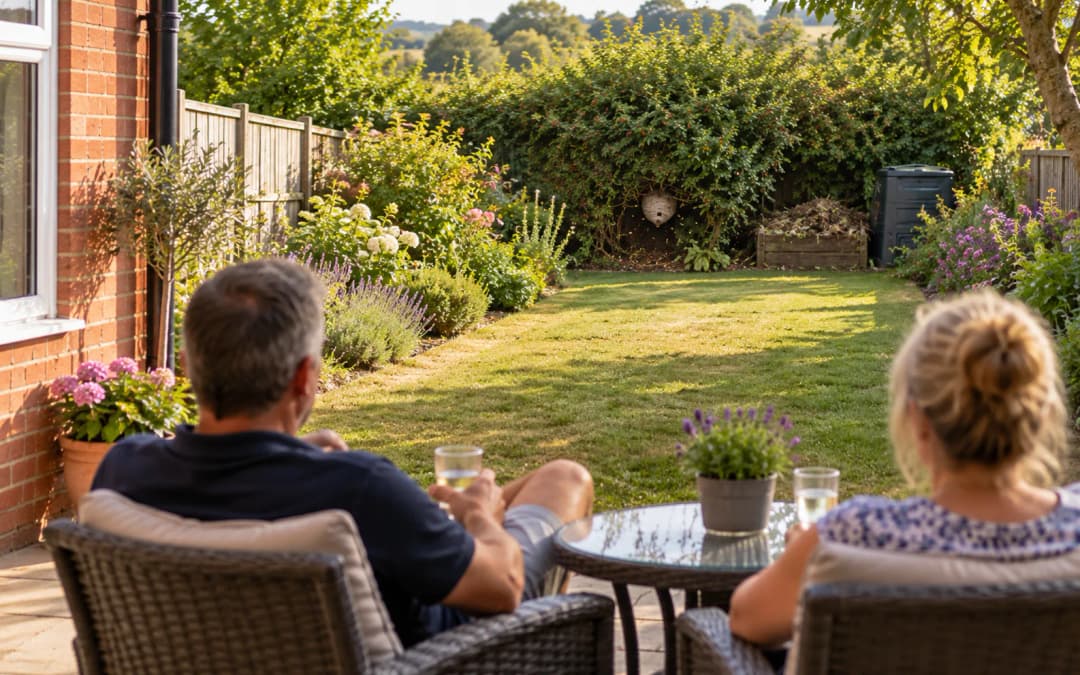
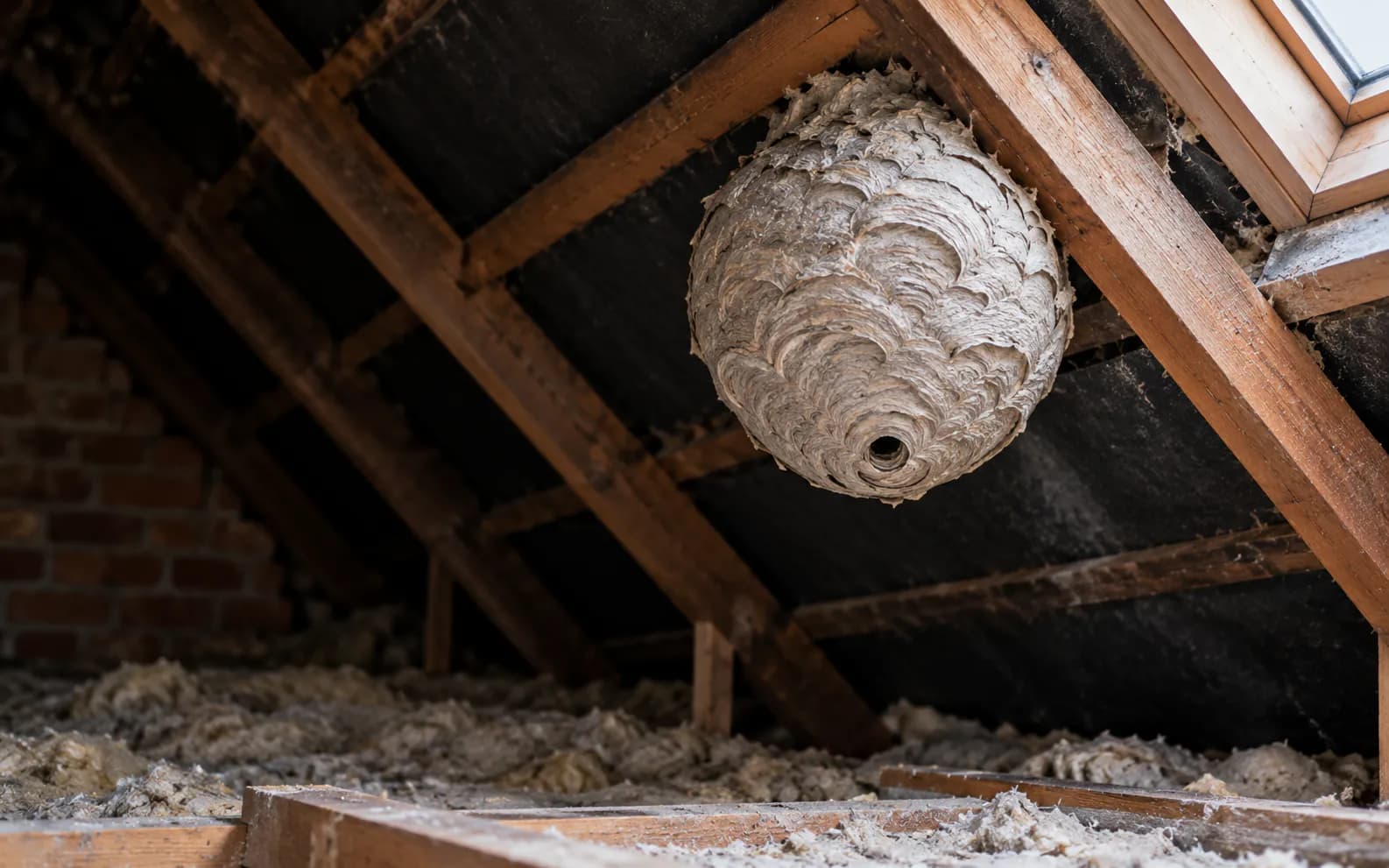
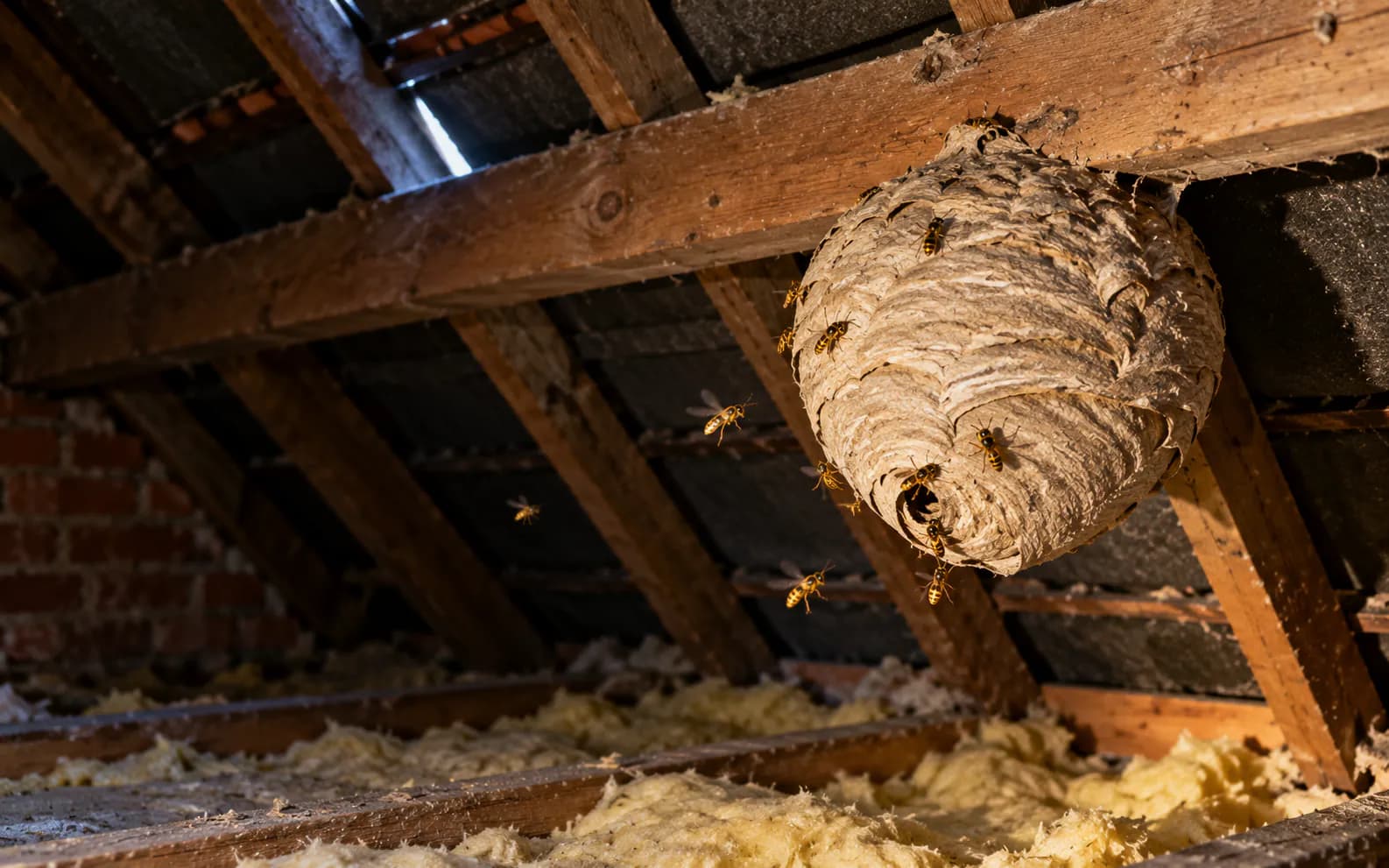
Treat it if the nest is close to where people live, work or play. A nest can hold 3,000 to 5,000 wasps and grow to more than 30 cm across, according to North West Leicestershire District Council, and the wasps defend it.
| Where the nest is | Usual advice |
|---|---|
| Hedge, tree or shed at the far end of the garden, no foot traffic | Leave it; the colony dies off in autumn |
| Next to a door, window, bin store or path | Treat it |
| In a loft, roof space, soffit or wall cavity | Treat it, especially if wasps are getting indoors |
| In the ground in a lawn, play area or by a patio | Treat it; mowers and children's feet disturb it |
| Anyone in the household allergic to stings | Treat it, and keep that person well away |
| Business premises with customers or staff passing | Treat it promptly |
If you're not sure whether the nest is still in use, our guide to whether a wasp nest is active explains what to look for.
Why is DIY wasp nest removal risky?
Because the moment you disturb a nest, the wasps defend it, and you are usually standing on a ladder, in a loft or right next to the entrance when they do. One sting is painful. Dozens at once are dangerous, and for someone with an allergy a single sting can trigger anaphylaxis.
The methods people try at home tend to make things worse:
- Knocking the nest down or hitting it releases hundreds of angry wasps at once.
- Spraying from close range with a fly spray rarely reaches the comb inside and provokes the colony.
- Burning the nest risks setting fire to roof timbers, fascias, sheds and hedges.
- Flooding it with water or pouring boiling water usually fails and leaves you within range.
- Blocking the entrance in a loft, soffit or wall can force the wasps to chew a new way out, sometimes into the house.
- Working at height on a ladder while being stung is a fall risk in its own right.
Some councils do publish limited DIY advice. Hastings Borough Council says to use only a dust labelled for wasps, follow the product label, and apply it at the entrance "preferably after dusk when the wasps have returned to the nest and are less active." If you choose to do that, wear long sleeves, keep children and pets indoors, and have a clear way back. Never attempt it if you have had a reaction to a sting before.
One of our customers put it plainly:
"After finding a wasp nest in the dorma, tried doing it myself but multiple stings and expletives later conceded to call in the professional." — Riz Patel, Google review, November 2024
What kills wasps instantly?
An aerosol insecticide labelled for wasps kills a wasp on contact, but only the wasps it hits. The queen and grubs inside the nest survive, so new workers keep coming out. To kill the nest, insecticidal dust has to go into the entrance, where returning wasps carry it inside; Redbridge Council says a treated nest then dies over 2 to 4 days.
| What people try | Kills wasps? | Gets rid of the nest? |
|---|---|---|
| Aerosol wasp spray | Yes, on contact | No; the queen and grubs survive |
| Sweet-bait wasp trap | Catches some foragers | No; it can draw more wasps in |
| Boiling water, fire or knocking it down | Some | Rarely, and with a high risk of stings or fire |
| Insecticidal dust in the entrance | Yes, over hours to days | Yes, when it reaches the nest |
If wasps are bothering you but there is no nest on your property, they are foraging from a nest nearby. Lidded bins, covered food and drinks, and picking up fallen fruit make the biggest difference in late summer, and the problem fades once the colonies die off in autumn; our guide to when wasps die off explains the timing.
What should you do if you're stung?
For most people a sting is painful but settles. The NHS advises:
- If a stinger is left in the skin, brush or scrape it sideways with a fingernail or the edge of a bank card; do not use tweezers.
- Wash the area with soap and water.
- Use a cold pack on any swelling and raise the area if you can.
- Don't scratch, as the sting could become infected.
Call 999 if your lips, mouth, throat or tongue suddenly swell, your throat feels tight or you're struggling to swallow, or you're breathing very fast or struggling to breathe. See a GP or call 111 if you were stung in the mouth or throat or near the eyes, were stung more than once, or have had a serious allergic reaction to a sting before.
What is anaphylaxis and who is at risk?
Anaphylaxis is a severe, life-threatening allergic reaction. The NHS anaphylaxis page lists insect stings, "such as wasp and bee stings", among the common triggers, and says reactions usually start within minutes. If you have an adrenaline auto-injector, use it, then call 999 and say you think it is anaphylaxis. If symptoms have not improved after 5 minutes, the NHS says to use a second auto-injector.
That is why Urgent Pest Control asks on the phone whether anyone in the house is allergic. If they are, we treat the nest while they stay indoors with windows shut or away from the property.
How does a professional get rid of a wasp nest?
A pest controller treats the nest rather than removing it. On a typical domestic visit we:
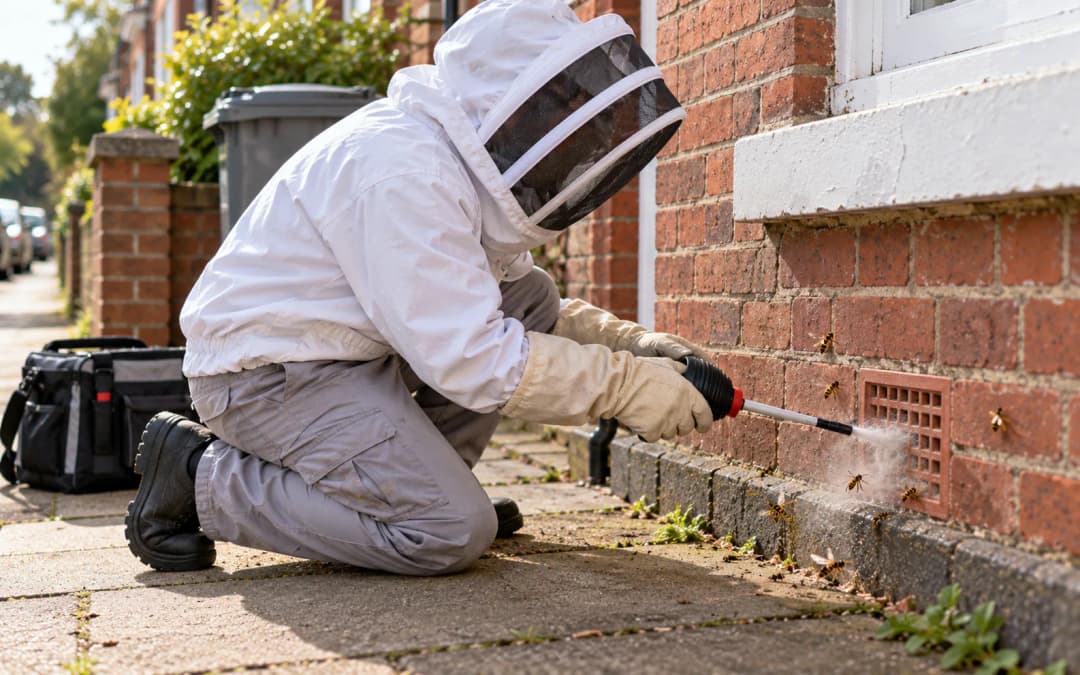
- Find the entrance. Wasps flying in and out of one gap usually show where it is, even when the nest itself is hidden in a cavity or under roof tiles.
- Apply insecticidal dust into the entrance with a duster or extension lance, so the nest can be reached from the ground in many cases. The job usually takes 15 to 30 minutes.
- Let the wasps do the rest. Returning foragers carry the dust deep into the nest, which is how it reaches the queen and grubs.
- Give aftercare advice. Keep away from the area for 24 hours, keep windows near the entrance closed, and don't block the hole.
Expect more wasp activity at the entrance for the first day, not less. Redbridge Council says a treated nest "will then slowly die over a period of 2 to 4 days", and that if large numbers of wasps are still entering and leaving 7 days after treatment it should be reported for re-treatment.
The nest itself doesn't need taking down afterwards, because it won't be reused. Our guide to a wasp nest in the roof or loft covers the extra points for nests in roof spaces.
When is the best time to deal with a wasp nest?
Early is easier. A nest started by a queen in spring holds only a handful of wasps; by late summer it can hold thousands, and the colony is at its most defensive. Nests peak in August and September, which is also when most people notice them.
Late in the season it can be worth waiting. Once the weather turns cold in autumn the colony dies naturally, so a nest found in October or November in a place nobody uses may not need treating at all. Our guide to when wasps die off sets out the season month by month.
How can you stop wasps nesting again?
You can't stop queens looking for nest sites in spring, but you can make your property less inviting:
- Check the loft and roof space in April and May for small, golf-ball-sized starter nests.
- Seal gaps in soffits, fascias, airbricks and around pipes where you can safely reach them.
- Keep bins lidded and food waste bagged, especially in late summer.
- Look at sheds, garages and bird boxes early in the season.
North West Leicestershire District Council also suggests adding light to areas where a nest was before, because wasps avoid light.
How much does it cost to get rid of a wasp nest?
It depends on where the nest is, how easy it is to reach and how many nests there are. We'll explain the likely cost before any work starts; evenings, weekends and emergencies can also affect the price. Our guide to wasp nest removal costs compares council charges in Derby, Nottingham and North West Leicestershire with typical market prices, and our pest control prices page lists our published starting prices.
When to call a professional
Call a professional if the nest is in a loft, roof, wall cavity or at height; near a door, window, path or play area; if wasps are getting inside; if anyone in the house is allergic to stings; or if you have already tried to treat it and the wasps are still busy. A bee nest is different: bees are relocated, not killed, so see our guide to bumblebee nests or try the pest identifier if you're not sure which you have.
We treat wasp nests across Nottinghamshire, Derbyshire, Leicestershire and Lincolnshire, including wasp nest removal in Nottingham, Derby and Leicester, and towns such as Mansfield, Newark and Loughborough. We work 7 days a week, 6am to 8pm, with emergency call-outs 365 days a year, and same-day visits are often available.
Call or WhatsApp 07999 935 929, or book online. Send a photo and we'll give you an idea of cost before we book the visit.
Sources
Frequently Asked Questions
About the author
The Urgent Pest Control team
A family-run pest control company based in Southwell, treating homes and businesses across Nottinghamshire, Derbyshire, Leicestershire and Lincolnshire since 2020. Our guides are written from the jobs we do and checked against UK sources. More about us
Cite this guide: “How to Get Rid of a Wasp Nest (and Wasps) Safely”, Urgent Pest Control, 20 October 2026. https://urgentpestcontrol.uk/blog/how-to-get-rid-of-a-wasp-nest