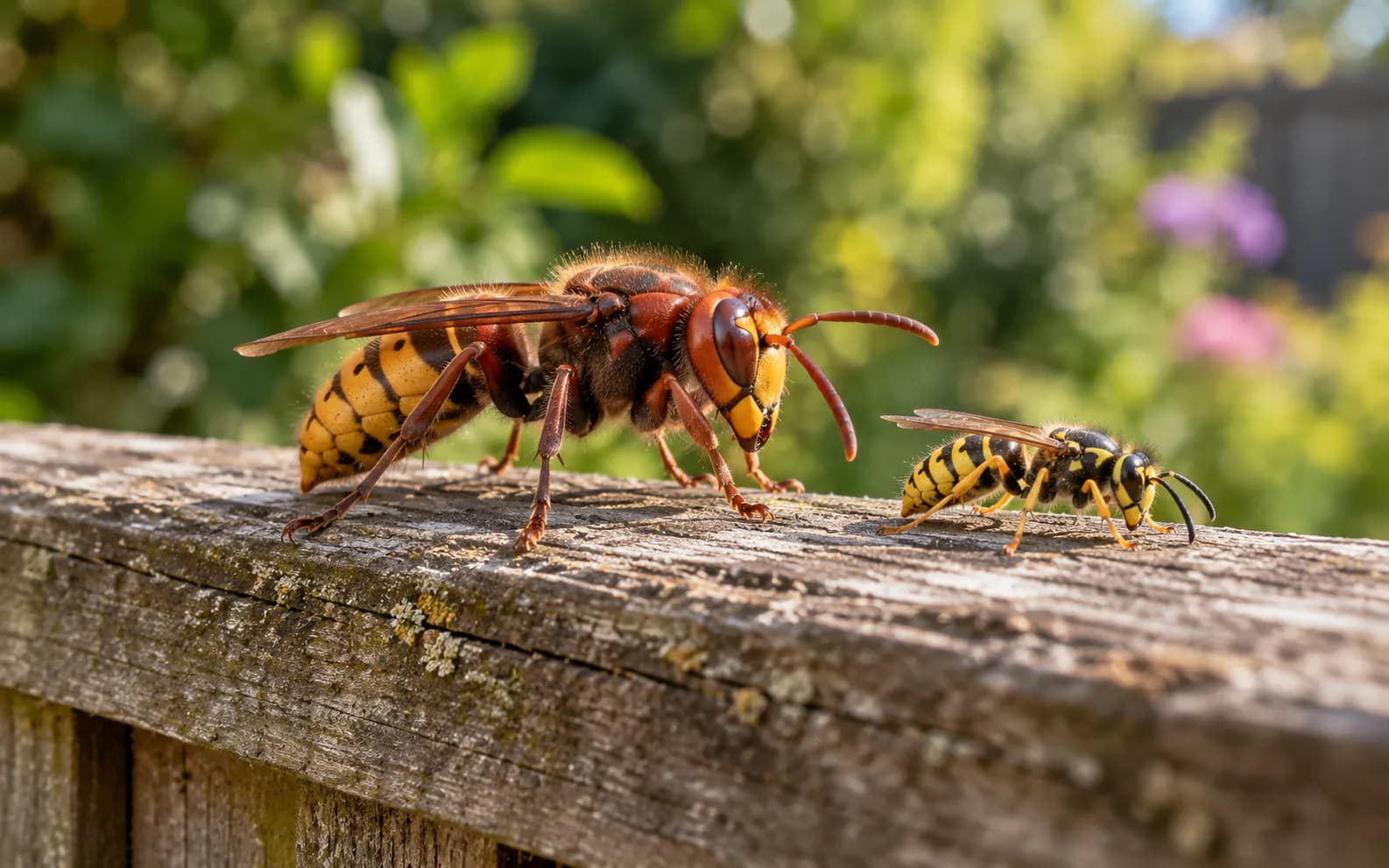
When Do Wasps Die Off in the UK?
When wasp season ends in the UK: why workers die in autumn, where queens go in winter, and whether you should treat a nest late in the year or let it die.

By the Urgent Pest Control team
Updated · 8 min read
The short answer
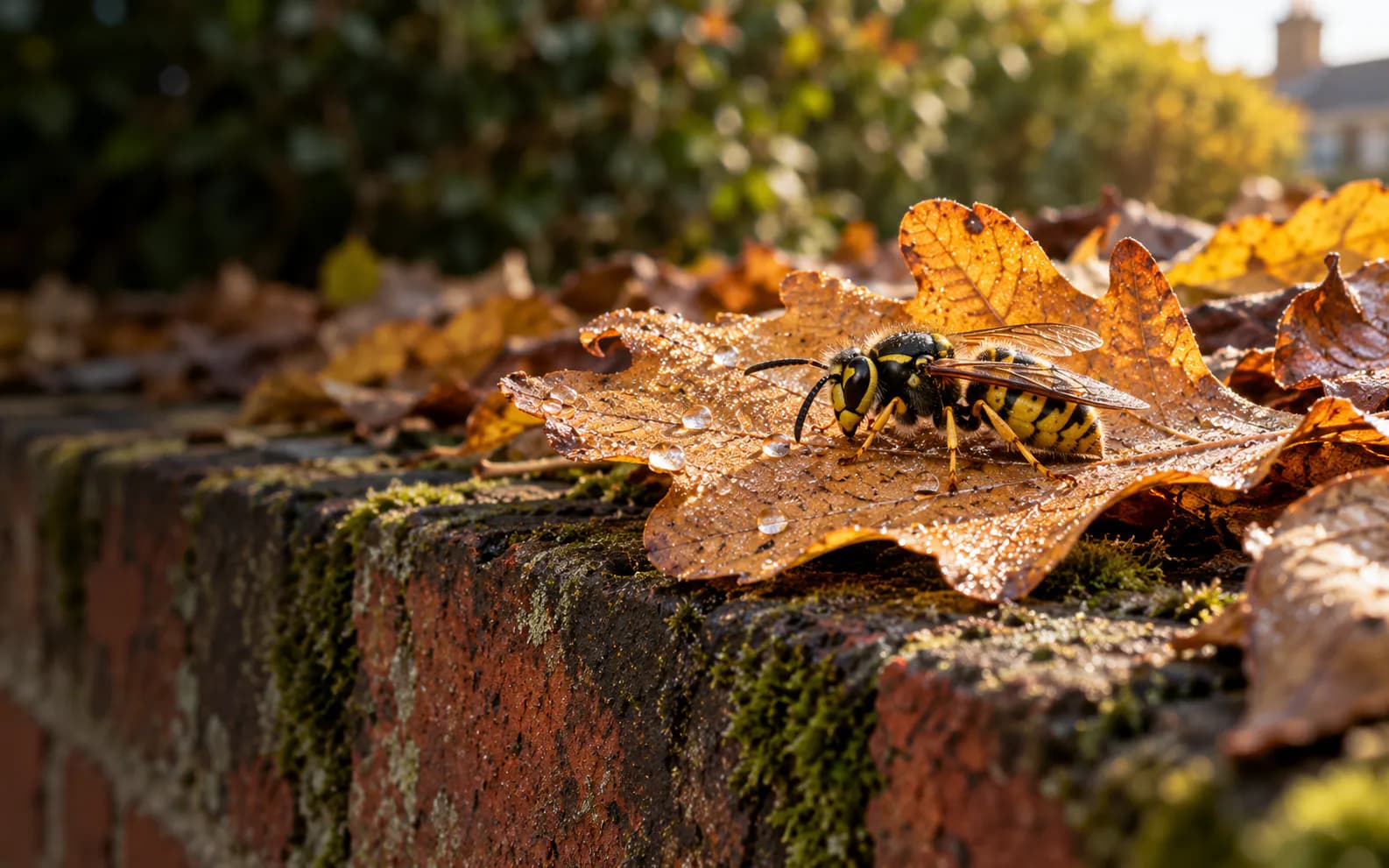
In the UK, worker wasps die off in autumn, usually from October into November as the weather turns cold. Only newly mated queens survive, hibernating in sheltered spots until spring. The old nest dies and is never reused. Common wasps are active from about April to October, and nests peak in August and September.
- Worker wasps and males die in autumn; only new queens survive the winter, hibernating in crevices and sheltered places.
- Old nests are not re-colonised the following year, so a nest found in winter is dead and can be left or removed.
- Queens come out of hibernation from early March to the end of May, when shade temperatures reach about 10°C.
- Wasps are most noticeable in late summer, when nests are at their largest and workers turn to sugary food.
- A late-season nest away from people can often be left to die; one by a door or getting indoors is still worth treating.
On this page
- When does wasp season start and end in the UK?
- What happens to a wasp nest month by month?
- Why do wasps get worse at the end of summer?
- Where do wasps go in the winter?
- How long do wasps live?
- Do wasps come back to the same nest next year?
- Should you treat a wasp nest late in the season?
- What about single wasps in winter or early spring?
- How can you keep wasps away in late summer and autumn?
- Can you be stung in autumn?
- When to call a professional
In the UK, worker wasps die off in autumn, usually from October into November as the weather turns cold. Only newly mated queens survive, hibernating in sheltered spots until spring, and the old nest is never reused. If a late-season nest is still causing trouble before then, Urgent Pest Control's wasp nest removal service can treat it, 7 days a week.
This guide explains how the wasp year runs month by month, how long wasps live, why wasps seem to get worse at the end of summer, where queens spend the winter, and when a late nest is worth treating.
When does wasp season start and end in the UK?
Wasp season runs roughly from spring to late autumn. The Wildlife Trusts give the common wasp's active period as April to October; native hornets fly from May to November. Nests reach their peak in August and September, which is when most people notice them and when we get the most calls.
The season ends because the colony is built to last one year. Hastings Borough Council puts it simply: "In Autumn all wasps die with the exception of the new queens that hibernate then emerge to build new nests the following Spring."
What happens to a wasp nest month by month?
The exact timing shifts with the weather each year, but the pattern is consistent:
| Time of year | What's happening | What it means for you |
|---|---|---|
| March to May | Queens leave hibernation and look for a nest site | Single large queens indoors or on windows; a golf-ball-sized starter nest |
| May to June | The queen raises the first workers, who take over building and foraging | Small nest, few wasps; quick to treat if it's in the wrong place |
| July | Nest grows fast as worker numbers climb | Steady traffic at the entrance; wasps around bins |
| August to September | Nests at their peak; new queens and males are raised | Most stings, most calls; wasps chasing sugar |
| October | Colony declines; new queens leave to hibernate | Fewer, slower wasps; nests far from people can usually be left |
| November to February | Workers and old queen dead; nest empty | A nest found now is dead and can be left or removed |
The British Pest Control Association (BPCA) says common wasp queens come out of hibernation from the beginning of March to the end of May, once temperatures in the shade reach about 10°C. North West Leicestershire District Council notes that larger queens may appear in early spring or during a mild winter.
Why do wasps get worse at the end of summer?
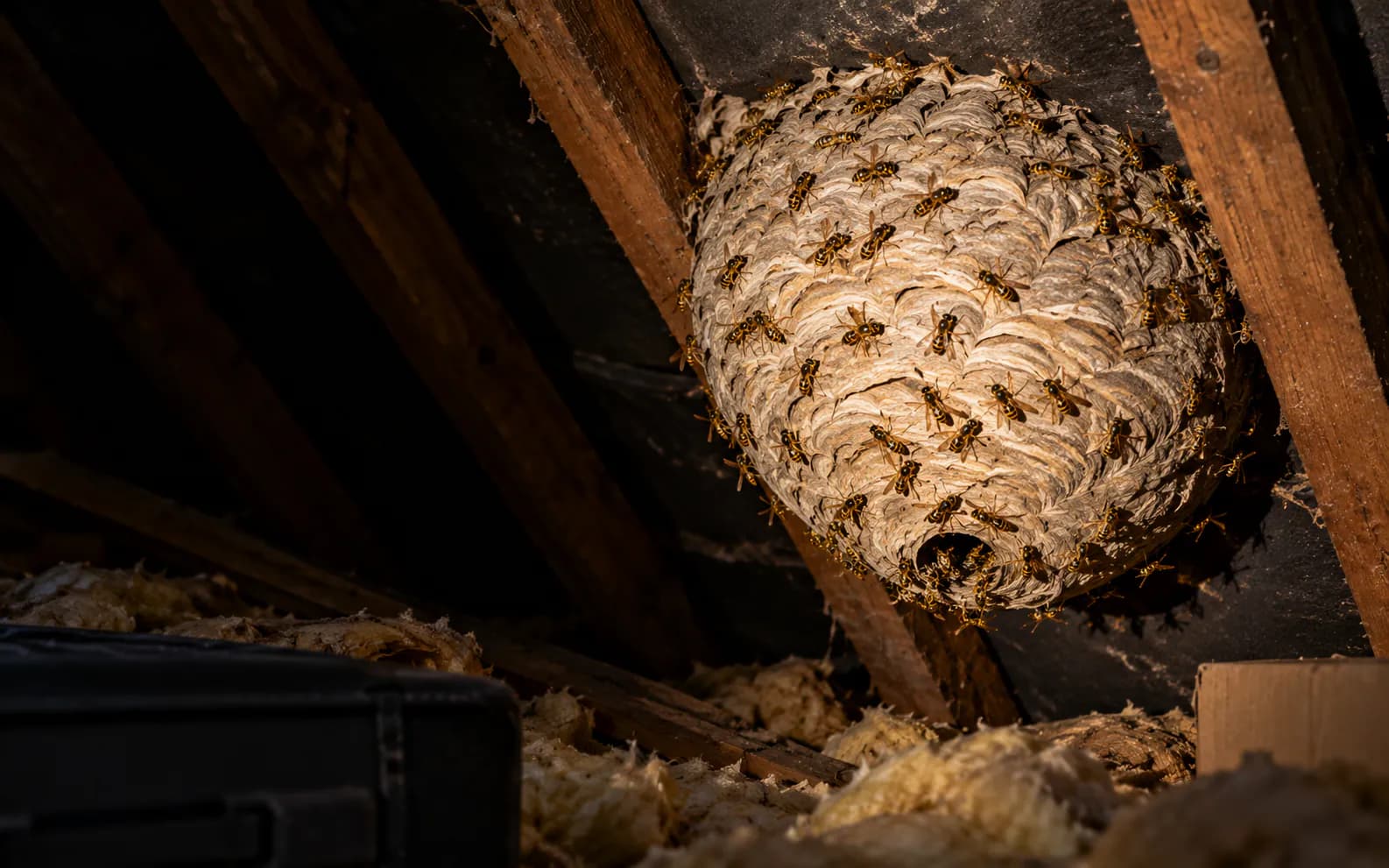
Because there are simply more of them, and their behaviour changes. A nest that started with one queen in spring can hold 3,000 to 5,000 wasps by late summer, according to North West Leicestershire District Council.

Through most of the summer, workers are busy collecting food and building material for the nest, and many of the insects they catch are garden pests. Late in the season the colony switches to raising new queens and males and then winds down, and the workers are increasingly seen around the high-energy foods the Wildlife Trusts list: "nectar, rotten fruit and sugary picnics". That's when they hover around bins, drinks and people.
Where do wasps go in the winter?
Only the new queens survive. After mating in late summer and autumn, they leave the nest and look for somewhere sheltered to hibernate. The BPCA says queens "will hibernate in crevices and sheltered places", and notes that spiders kill many of them there and warm winters cause high queen mortality.
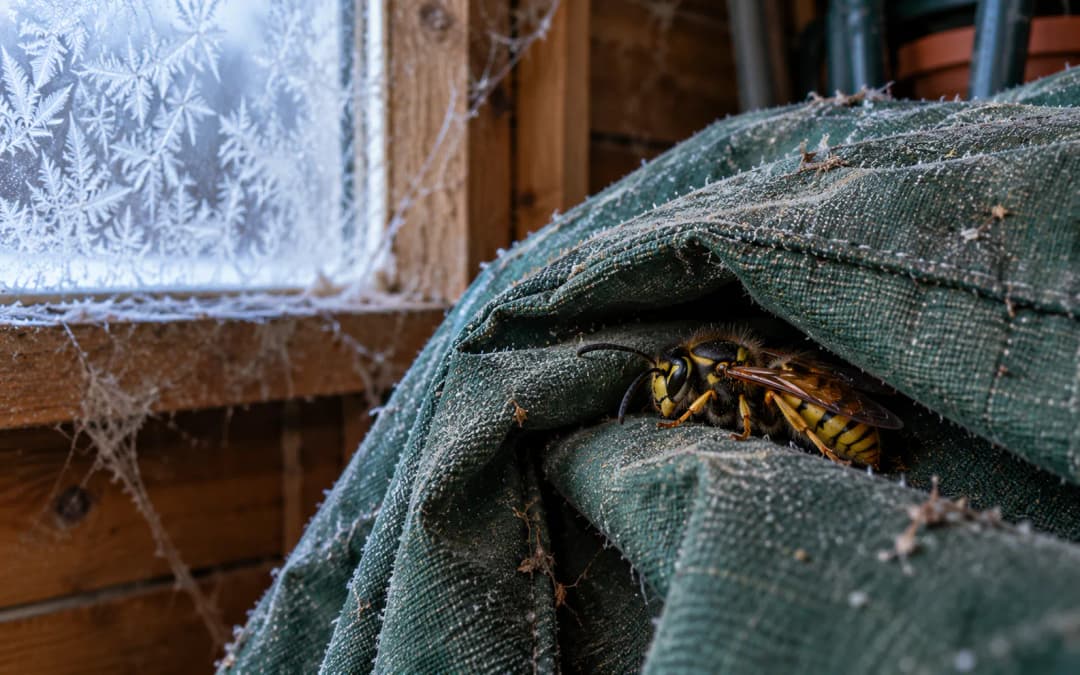
Typical winter spots include:
- loft timbers and roof spaces;
- sheds, garages and outbuildings;
- gaps in walls and behind loose bark;
- folds of curtains, stored fabric or garden furniture covers.
The workers, the males and the old queen all die. They don't hibernate and they don't move to a new nest. If you find a few sleepy queens in the loft while putting the Christmas decorations away, leave them be or move them somewhere cool outside.
How long do wasps live?
Most wasps live only a few weeks; a mated queen can live for up to a year. Buglife says that most wasps will only live for a few weeks, that the mated queen hibernates and may survive for up to a year, and that colonies last only one year: once the new queens leave, all the other wasps in the colony die.
| Wasp | Typical lifespan | What happens to it |
|---|---|---|
| Worker (the wasps you see at bins and picnics) | A few weeks | Replaced by new workers all summer; the last ones die in autumn |
| Male | A few weeks in late summer and autumn | Dies after the mating season |
| Old queen (founded this year's nest) | About a year | Dies in autumn with the colony |
| New queen (raised in late summer) | Up to a year | Hibernates over winter, starts a new nest in spring |
That is why a nest's population turns over constantly through the summer, and why a nest dies completely in autumn even if it was busy in September.
Do wasps come back to the same nest next year?
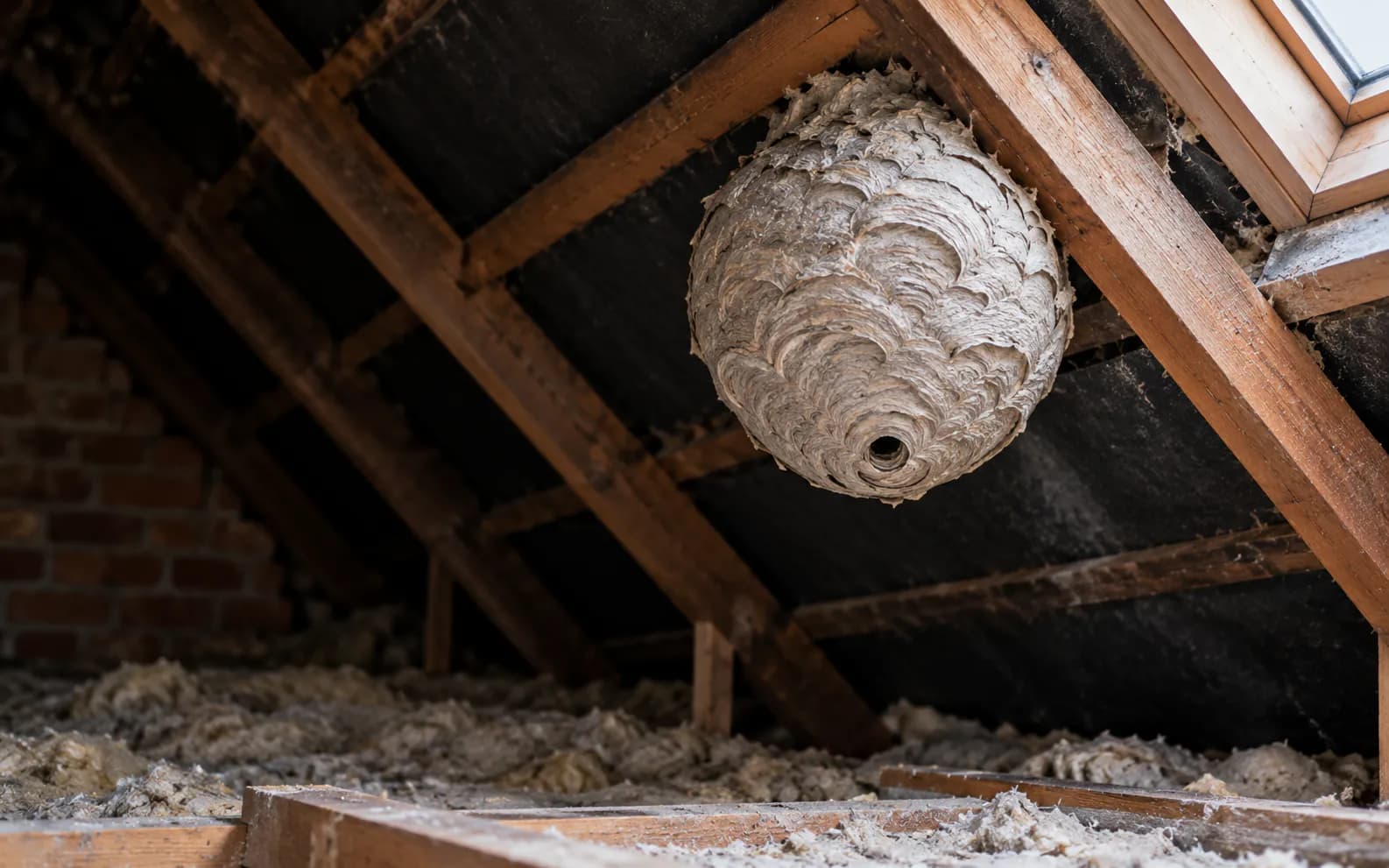
No. Hastings Borough Council says: "Old nests are not re-colonised the following year, although a new nest may be established next to an existing nest." So the paper nest you find in the loft in winter is finished, but the same sheltered roof space can attract a new queen in spring.
That's why the best time to fix the gap that let wasps in is late autumn or winter, once you're certain the nest is dead. Our guide to whether a wasp nest is active explains how to check.
Should you treat a wasp nest late in the season?
Not always. Use this simple test:
| Situation | Late-season advice |
|---|---|
| Nest in a hedge, tree or shed nobody uses | Leave it; it will die off |
| Wasps coming into rooms | Treat it; they stay active until the colony dies |
| Entrance next to a door, window or path you use every day | Treat it |
| Anyone in the household allergic to stings | Treat it |
| Building or roofing work planned before winter | Treat it before the trades start |
| Nest found in December to February with no activity | No treatment needed; it's dead |
Late nests can still be large and busy. One customer had us out to a big nest in November:
"Great service from Gino, came out last minute and got rid of a massive wasps nest within 30 mins" — Marissa Huffen, Google review, November 2024
What about single wasps in winter or early spring?
A large, slow wasp on a window in February or March is almost always a queen that has woken in the warmth of the house. The BPCA says pest controllers often get calls for "wasp nests" that turn out to be a few waking queens or queens looking for somewhere to hibernate, and that these queens "will quickly move on and are generally harmless to humans."
A single queen doesn't need a pest controller. Open a window and let her out, or cover her with a glass and a card and put her outside. If you see several wasps flying in and out of one gap in spring, that's a new nest being started, and it's easiest to deal with now.
How can you keep wasps away in late summer and autumn?
You can't stop a nest that's already established from running its course, but you can make your home and garden less interesting to foraging workers until it does:
- Keep bins lidded and rinse out recycling that held sweet drinks, jam or fruit.
- Pick up fallen fruit under apple, plum and pear trees, where wasps gather in September.
- Cover drinks and food outdoors, and check cans and glasses before drinking from them.
- Keep doors and windows screened or shut near a known nest entrance.
- Don't swat at wasps near the nest; move away calmly instead.
- Check sheds, garages and the loft in winter for old nests and gaps, and seal entrance holes once you're sure the nest is dead.
Most of these matter most in August and September, when nests are biggest and workers are looking for sugar. By late October, in most years, the problem is fading on its own.
Can you be stung in autumn?
Yes. Wasps don't lose their sting as the season ends, and late-summer workers around food and bins are a common cause of stings. Follow the NHS advice: wash the area, use a cold pack and keep it raised. Call 999 if the lips, mouth, throat or tongue swell or breathing becomes difficult.
When to call a professional
Call us if wasps are getting into your home, the nest is next to a door or path you use, anyone at home is allergic to stings, or you've got roofing or building work coming up. If the nest is out of the way and it's already October, it's often fine to let the colony die off on its own; we're happy to give that advice over the phone for free.
For more on wasp nests, see our guides on how to get rid of a wasp nest safely and wasp nests in the roof or loft.
We cover Nottinghamshire, Derbyshire, Leicestershire and Lincolnshire, including wasp nest removal in Nottingham, Derby and Leicester, and towns such as West Bridgford, Ilkeston and Boston. Call or WhatsApp 07999 935 929, or book online. Ask us for a price; it depends on the nest, the property and when you need us. See our pest control prices page for what affects the cost.
Sources
Frequently Asked Questions
About the author
The Urgent Pest Control team
A family-run pest control company based in Southwell, treating homes and businesses across Nottinghamshire, Derbyshire, Leicestershire and Lincolnshire since 2020. Our guides are written from the jobs we do and checked against UK sources. More about us
Cite this guide: “When Do Wasps Die Off in the UK?”, Urgent Pest Control, 20 October 2026. https://urgentpestcontrol.uk/blog/when-do-wasps-die-off