Are Pigeons Protected in the UK?
All wild birds, pigeons included, are protected in England. What the Wildlife and Countryside Act 1981 says, how general licences GL41 and GL42 work, and nests.

By the Urgent Pest Control team
Updated · 8 min read
The short answer
Yes. Feral pigeons and woodpigeons are wild birds, so the Wildlife and Countryside Act 1981 protects them, their eggs and nests in use. Natural England's general licences (GL41 and GL42) allow owners or occupiers to control them only for set purposes, such as public health or safety, and only within the licence conditions.
- All wild birds in England, including feral pigeons and woodpigeons, are protected by the Wildlife and Countryside Act 1981.
- It is an offence to take, damage or destroy a nest while it is in use or being built, or to take or destroy eggs, unless a licence allows it.
- Natural England's GL41 covers feral pigeons for public health or safety; GL42 covers feral pigeons and woodpigeons to prevent serious damage.
- General licences are reissued each year, so check the current version and its conditions before relying on one.
- Government guidance says to try non-lethal measures, such as proofing and removing food, before lethal control.
On this page
- What does the law say about pigeons?
- What is a general licence?
- What does GL41 allow for feral pigeons?
- What does GL42 allow?
- Do you have to try non-lethal methods first?
- Is it illegal to kill pigeons?
- Can you remove a pigeon nest?
- Is it legal to feed pigeons?
- What can a homeowner lawfully do?
- What about other birds on buildings?
- When to call a professional
Yes, pigeons are protected. Feral pigeons and woodpigeons are wild birds, and the Wildlife and Countryside Act 1981 makes it an offence to kill or take them, or to take, damage or destroy their nests in use or their eggs, unless a licence allows it. Killing a pigeon is illegal unless a licence covers it. Our bird control service uses proofing first, which keeps you within the law.
This guide explains what the Act says, how Natural England's general licences GL41 and GL42 apply to pigeons, the rules on nests, and what a homeowner or business can lawfully do about a pigeon problem.
What does the law say about pigeons?
The starting point is that every wild bird is protected. Section 1 of the Wildlife and Countryside Act 1981 makes it an offence to intentionally kill, injure or take any wild bird, to take, damage or destroy the nest of a wild bird while it is in use or being built, and to take or destroy its eggs.
Feral pigeons (Columba livia) and woodpigeons (Columba palumbus) count as wild birds for this purpose. Government guidance on preventing wild birds damaging your land or business puts it plainly: all wild birds in England are protected by law, and you cannot kill or capture them, or damage their eggs or nests, unless you follow a licence's conditions.
The exceptions come from section 16 of the Act, which lets the licensing authority issue licences for set purposes, including preserving public health or public safety and preventing serious damage. In England, that authority is Natural England.
What is a general licence?
A general licence is a standing permission that anyone who meets its conditions can rely on without applying. You don't register, and you don't pay. If you act outside the conditions, the licence doesn't protect you, and you may be committing an offence.
Natural England issues three general licences for wild birds in England:
| Licence | Purpose | Pigeon species covered |
|---|---|---|
| GL40 | Conserve wild birds, flora or fauna | Neither feral pigeon nor woodpigeon |
| GL41 | Preserve public health or public safety | Feral pigeon |
| GL42 | Prevent serious damage (for example to livestock foodstuffs, crops, fruit or vegetables) | Feral pigeon and woodpigeon |
The species and purposes above come from the 2026 versions of GL40, GL41 and GL42. The 2026 GL41 is valid from 1 January to 31 December 2026. General licences are reissued and can change from year to year, so always read the current version before relying on it.
What does GL41 allow for feral pigeons?
GL41 lets an authorised person kill or take feral pigeons, and take, damage or destroy their nests and eggs, to preserve public health or public safety. For feral pigeons, the 2026 licence lists three problems it covers: slips and falls, the spread of disease to humans, and safety problems caused by nesting.
The key conditions in the 2026 version are:
- only an "authorised person" may use it, which includes the owner or occupier of the land and anyone they authorise;
- people convicted of a wildlife offence on or after 1 January 2010 cannot use it unless the conviction is spent or discharged;
- any bird killed "must be killed in a quick and humane manner";
- trapping must follow the separate rules for cage traps;
- it does not replace any consent needed on a Site of Special Scientific Interest.
Natural England also recommends avoiding lethal control of adult birds during the breeding season where possible. It advises keeping written records, including the non-lethal measures tried and why lethal action was needed, for at least three years.
What does GL42 allow?
GL42 covers serious damage rather than health and safety. Under the 2026 licence, feral pigeons and woodpigeons can be controlled to prevent serious damage to livestock foodstuffs (or the spread of disease to livestock) and to crops, fruit and vegetables.
For woodpigeons, GL42 adds a condition: you must make reasonable efforts to solve the problem with other lawful methods first, unless those methods would be impractical, ineffective or disproportionate. That is why farm and allotment problems with woodpigeons usually start with scaring and netting.
GL42 is mostly relevant to farms, growers and food stores. For a homeowner with pigeons on the roof, GL41's public health and safety purposes, or simply proofing, are more relevant.
Do you have to try non-lethal methods first?
Government guidance says yes, as a starting point. The gov.uk guidance on wild birds tells you to try non-lethal management before lethal action: scaring birds, restricting food, netting roosting or nesting areas, physical barriers and keeping a human presence. It also says to rotate methods, because birds get used to them.
In practice, non-lethal proofing is the right answer for almost every house, shop and solar array:
- netting to close off balconies, courtyards and roof voids;
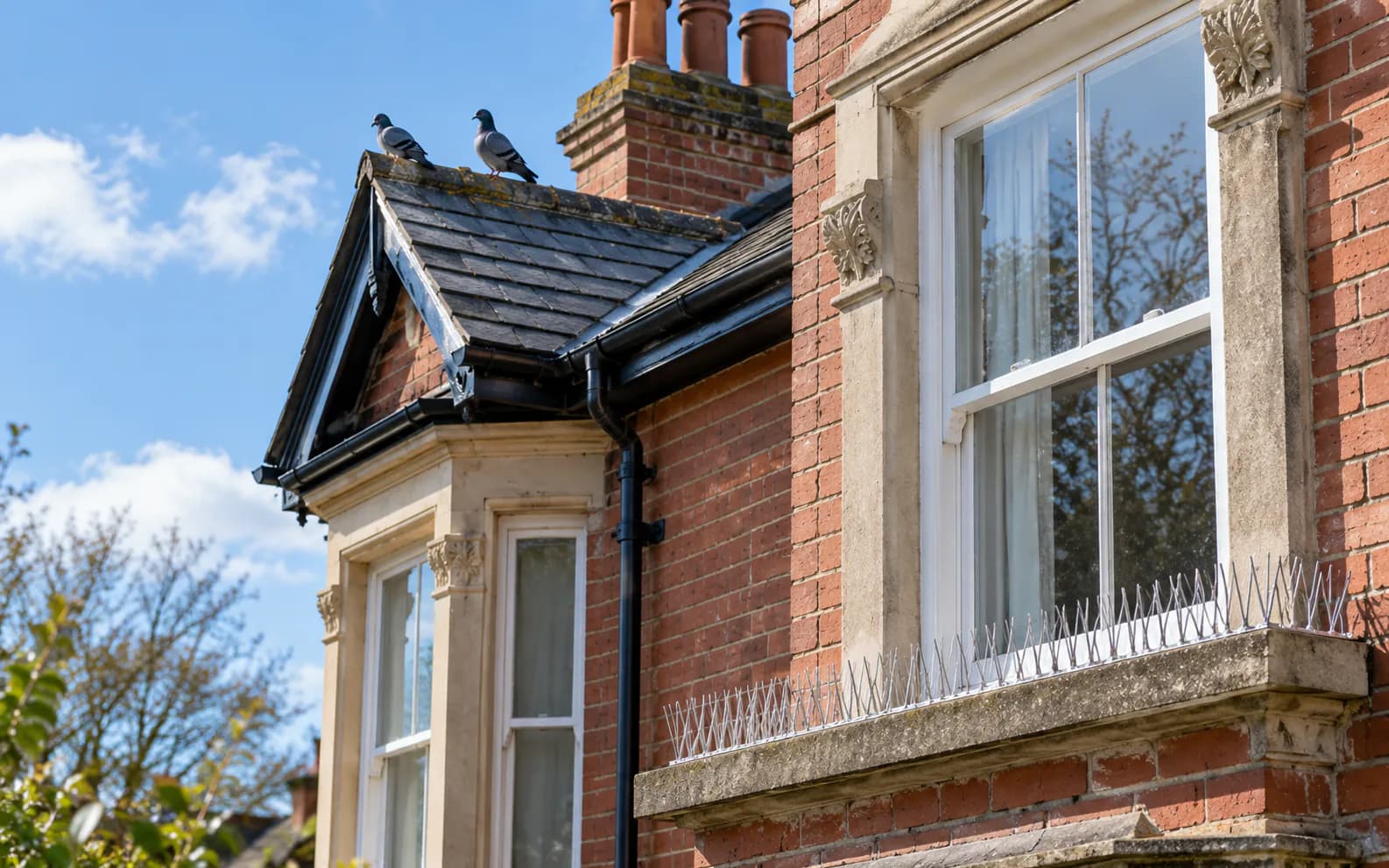
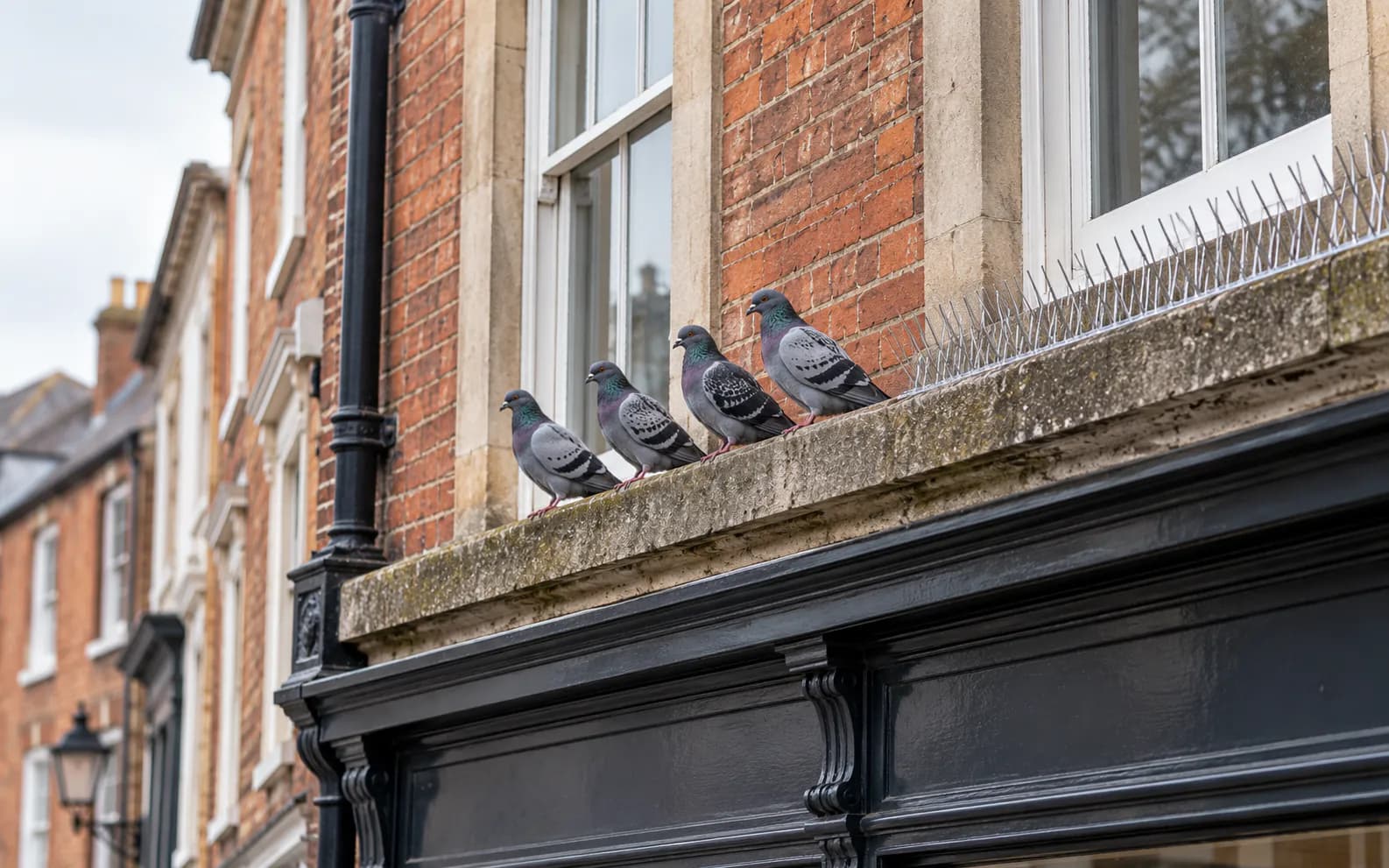
- spikes or post-and-wire on ledges, parapets and signs;
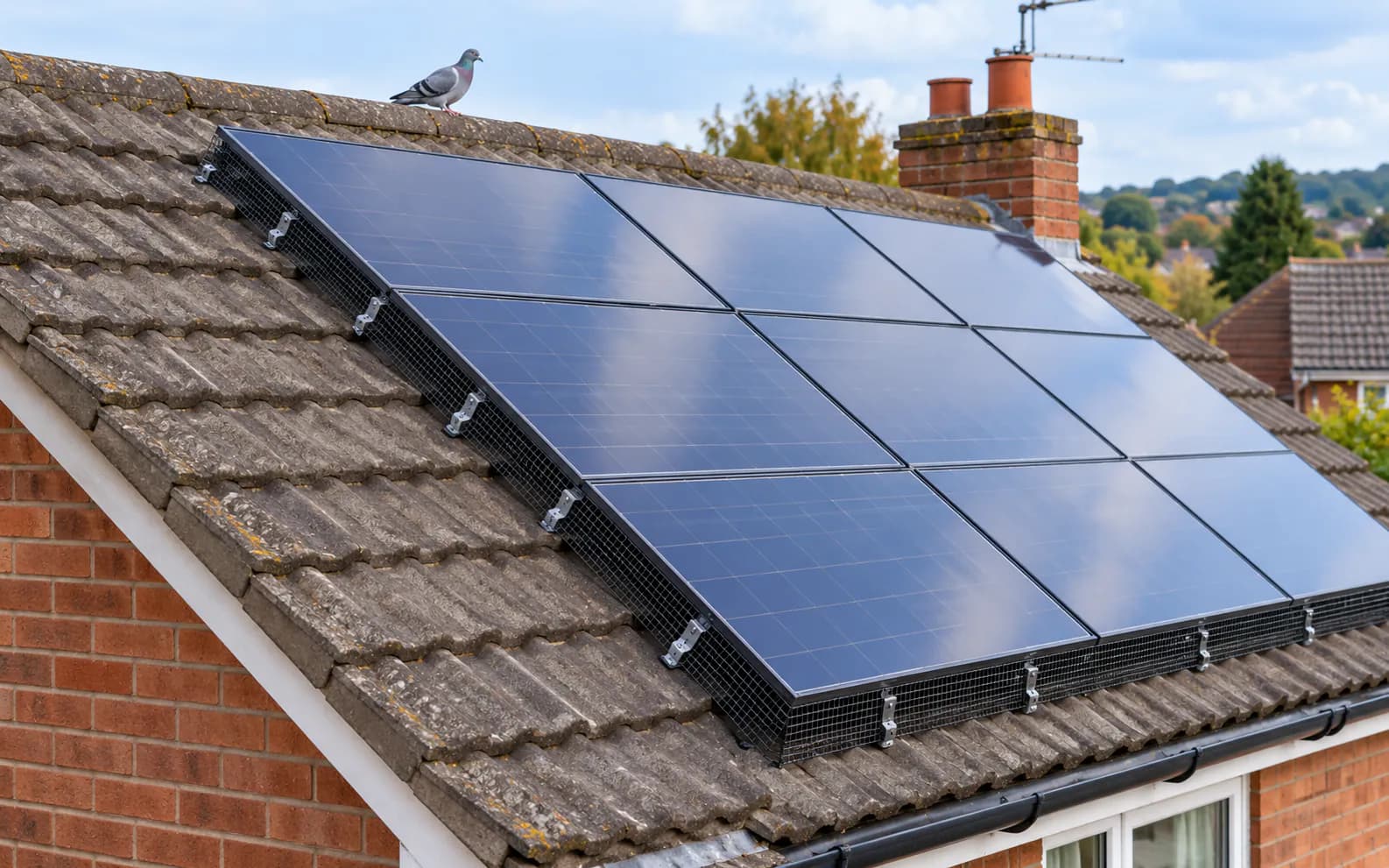
- mesh guards around solar panels (see our guide to pigeons under solar panels);
- removing food, including over-filled bird tables and spilt bins.
Killing birds doesn't stop new ones moving in if the ledge, roof void or food is still there. Proofing removes the reason they came.
Is it illegal to kill pigeons?
Yes, unless a licence covers what you do. Killing a feral pigeon or woodpigeon is an offence under section 1 of the Wildlife and Countryside Act 1981, and the only routes round it are a general licence or an individual licence from Natural England.
Even under a licence, the method matters. Section 5 of the Act makes it an offence to use poison, bird-lime or similar sticky substances, or gas to kill or take wild birds, and GL41 requires any bird killed to be "killed in a quick and humane manner". Breaking a licence's conditions can mean an unlimited fine, up to six months in prison, or both.
For a home or shop, lethal control is rarely the answer anyway: if the ledge or roof gap and the food are still there, new pigeons move in. Proofing is legal, lasting and doesn't need a licence.
Can you remove a pigeon nest?
You can remove a nest only when it is not in use. The Act protects a wild bird's nest while it is in use or being built, and its eggs. Government guidance says that if you are certain birds are no longer using a nest, you can remove or destroy it without a licence.
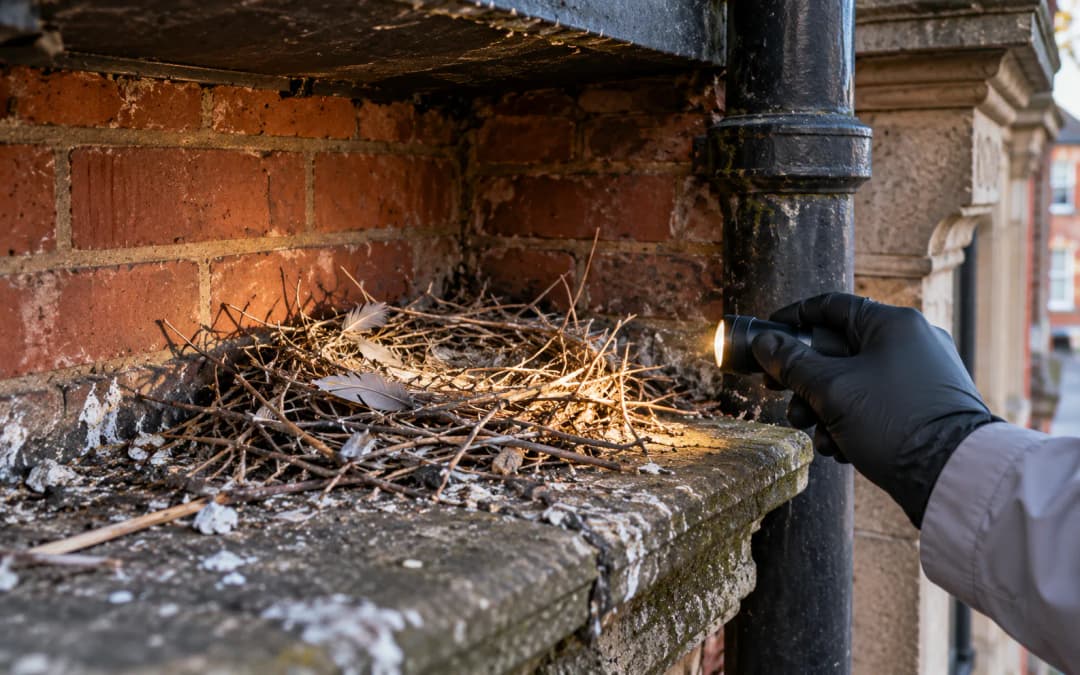
GL41 and GL42 do allow nests and eggs to be destroyed, but only by an authorised person, for a listed purpose and within the conditions. For most homeowners, the lawful approach is:
- check whether the nest has eggs or young;
- if it does, wait until the young have fledged, unless a general licence purpose genuinely applies;
- once it is empty, remove it, clean the area and proof the gap so birds can't return.
Feral pigeons breed often. Gravesham Borough Council notes a breeding pair with a regular food supply can produce a dozen eggs a year. So "wait for the season to end" isn't always a plan. Fitting proofing before nesting starts is far easier.
Is it legal to feed pigeons?
Feeding pigeons is not an offence in itself. Gravesham Borough Council says it is not an offence to feed pigeons, but advises against it because food thrown on the floor in public areas can encourage rodents. Councils generally agree that feeding draws more pigeons to an area. Some areas have local restrictions, so check with your council if you are unsure.
If a neighbour's feeding is causing the problem, a polite conversation is usually the first step. Proofing your own building still matters, because the birds will keep looking for somewhere nearby to roost.
What can a homeowner lawfully do?
Here is a quick checklist for staying within the law:
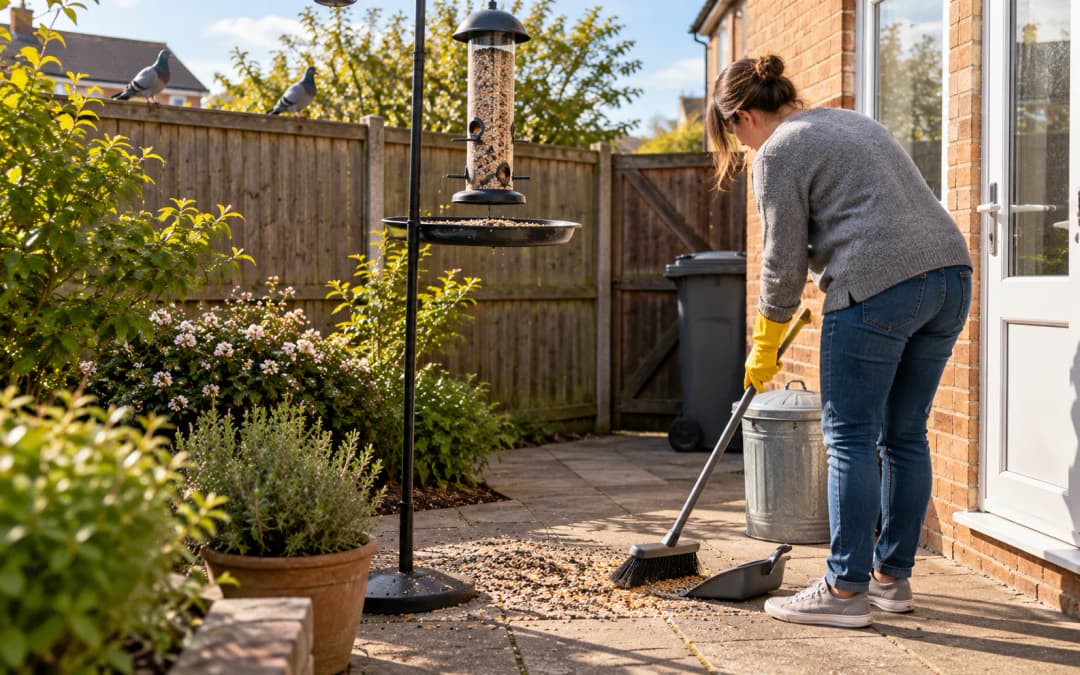
- Don't touch an active nest with eggs or chicks.
- Don't use poison, glue or any trap not allowed by the licence.
- Do remove food sources and stop feeding near the house.
- Do fit proofing, such as spikes, netting or solar panel mesh, when no birds are nesting behind it.
- Do clear out empty nests and droppings, wearing gloves and a mask.
- Do keep a note of what you tried, if you later need to rely on a general licence.
- Do use a professional if the work is at height or on a roof.
A pigeon trapped inside a chimney, loft or building is a different situation: it should be freed or removed humanely, and the gap closed afterwards. Our guide to how to get rid of pigeons covers trapped birds and the practical deterrents in more detail.
What about other birds on buildings?
The same protection applies to every wild bird, but the general licences cover only listed species. Gulls are a common example: government guidance says you cannot kill herring gulls or lesser black-backed gulls under a general licence. Starlings, sparrows and swifts nesting in roofs are protected too. If you are unsure which bird is involved, ask before you act.
If you can't tell which bird is nesting, our pest identifier is a quick first check.
When to call a professional
Call a professional if pigeons are nesting in a roof void, behind solar panels or on a ledge you can't safely reach, or if droppings have built up enough to need a proper clean-up. A professional can check whether nests are active, time the work around them and fit proofing that won't trap birds.
Urgent Pest Control's bird control service covers netting, spikes, solar panel bird proofing and guano clean-up. We use UV-resistant materials and stainless fixings, and the survey is free. We'll explain the likely cost before any work starts; prices depend on the property, the proofing needed and the time of the visit.
We work 7 days a week, 6am to 8pm, across Nottingham, Derby, Leicester, Lincoln and the surrounding counties. Book online, or call or WhatsApp 07999 935 929.
Sources
- Wildlife and Countryside Act 1981, section 1 (legislation.gov.uk)
- Wildlife and Countryside Act 1981, section 5 (legislation.gov.uk)
- Wildlife and Countryside Act 1981, section 16 (legislation.gov.uk)
- GL41: general licence to kill or take certain species of wild birds to preserve public health or public safety (gov.uk)
- GL42: general licence to kill or take certain species of wild birds to prevent serious damage (gov.uk)
- Wild birds: prevent damage to your land, farm, fishery or business (gov.uk)
- Gravesham Borough Council: feral pigeon advice
Frequently Asked Questions
About the author
The Urgent Pest Control team
A family-run pest control company based in Southwell, treating homes and businesses across Nottinghamshire, Derbyshire, Leicestershire and Lincolnshire since 2020. Our guides are written from the jobs we do and checked against UK sources. More about us
Cite this guide: “Are Pigeons Protected in the UK?”, Urgent Pest Control, 20 October 2026. https://urgentpestcontrol.uk/blog/are-pigeons-protected