Are Grey Squirrels Protected in the UK?
Grey squirrels are an invasive species, not a protected one. Why releasing a trapped grey is illegal, what the law expects, and how lofts are cleared.

By the Urgent Pest Control team
Updated · 7 min read
The short answer
No. Grey squirrels are a listed invasive alien species, not a protected one. The Invasive Alien Species (Enforcement and Permitting) Order 2019 and the Wildlife and Countryside Act 1981 make it an offence to release one into the wild. Welfare law still applies, so control must be humane and avoid unnecessary suffering.
- Gov.uk lists the grey squirrel as a widely spread invasive alien species, listed on 3 August 2016.
- Releasing a grey squirrel into the wild, or letting one escape, is an offence, so a trapped grey cannot be let go elsewhere.
- Gov.uk says a grey squirrel taken from the wild should be humanely killed if possible, or taken to a licensed facility.
- The Animal Welfare Act 2006 and Wild Mammals (Protection) Act 1996 still apply, so any control must be humane.
- Squirrel removal from lofts uses live-capture traps checked regularly, followed by proofing the entry point.
On this page
- What is the legal status of grey squirrels?
- Which laws apply to grey squirrels?
- Why is it illegal to release a grey squirrel?
- What happens to a grey squirrel once it is caught?
- Can rescue centres keep grey squirrels?
- What about red squirrels?
- Why do grey squirrels get into lofts?
- Can you trap a grey squirrel yourself?
- How do you stop squirrels getting back in?
- When to call a professional
No, grey squirrels are not protected in the UK. They are a listed invasive alien species, and the law makes it an offence to release one into the wild, so a trapped grey squirrel can't simply be let go somewhere else. Welfare law still applies, so any control must be humane. Our squirrel control service removes squirrels from lofts lawfully and proofs the way in.
This guide explains the laws that apply to grey squirrels, what happens to a squirrel once it has been caught, and what homeowners can and can't do.
What is the legal status of grey squirrels?
Grey squirrels (Sciurus carolinensis) are classed as an invasive alien species. The gov.uk page on invasive non-native animal species rules in England and Wales lists the grey squirrel as a "widely spread" listed species, with a listing date of 3 August 2016.
They came from North America. Chesterfield Borough Council notes they were introduced into Britain from America and are now common in towns, parks and gardens.
Being listed means the law restricts what people can do with live grey squirrels. It doesn't give them the protection that native wildlife such as the red squirrel has.
Which laws apply to grey squirrels?
Four main pieces of law apply, and they pull in slightly different directions: two restrict releasing or keeping grey squirrels, and two protect their welfare.
| Law | What it means for grey squirrels |
|---|---|
| Invasive Alien Species (Enforcement and Permitting) Order 2019 | Makes it an offence to keep, breed, transport, sell or release listed species without a permit or licence |
| Wildlife and Countryside Act 1981, section 14 | Offence to release, or allow to escape into the wild, certain non-native animals |
| Wild Mammals (Protection) Act 1996 | Cruelty offences apply to all wild mammals; killing in a reasonably swift and humane manner, and lawful traps, are exceptions |
| Animal Welfare Act 2006, section 4 | Offence to cause unnecessary suffering to a protected animal, which includes an animal under human control, even temporarily, such as one held in a trap |
In short: you must not release a grey squirrel, and you must not cause it unnecessary suffering.
Why is it illegal to release a grey squirrel?
Releasing grey squirrels is illegal because they are a listed invasive species. Gov.uk says you must not release listed animals into the environment or let them breed or escape, and that the Wildlife and Countryside Act 1981 also bans releasing animals not resident in Great Britain.
Before the 2019 Order, Natural England could license some releases. A March 2019 government update said that it was an offence to release grey squirrels without a licence under the Wildlife and Countryside Act 1981, and that Natural England would no longer issue release licences for grey squirrels once the Order came into force.
So "catch and release" in a wood down the road isn't an option. It moves the problem to someone else and breaks the law. Gov.uk lists the possible penalties as a warning, a fine, seizure of the animals, or imprisonment of up to 3 months for a summary offence and up to 2 years on indictment.
What happens to a grey squirrel once it is caught?
Once a grey squirrel has been taken from the wild, it can't be released. The gov.uk guidance says that if you catch a listed animal, you should humanely kill it if possible, or take it to a facility that holds the right licence or permit.
The same guidance says wildlife managers must be trained and equipped to set traps properly and should take reasonable steps to avoid catching non-target animals. An animal caught by accident in, for example, wire netting may be released.
In practice, a professional removing squirrels from a loft uses live-capture cage traps, checks them often and dispatches any grey squirrel caught quickly and humanely. Chesterfield Borough Council's advice is that traps must be inspected at least once a day and captured squirrels despatched humanely.
Can rescue centres keep grey squirrels?
Rescue centres can keep a listed animal for a limited time. Gov.uk says a rescue centre can keep a listed invasive alien animal for up to six weeks without a permit or licence, and longer only under a licence (IAS A01 in England), in a contained holding that prevents escape or breeding. The March 2019 update also said there was no requirement on vets to euthanise injured or healthy squirrels brought into rescue centres.
What a rescue centre can't do is release a grey squirrel back into the wild.
What about red squirrels?
Red squirrels are a different matter: they are a protected native species, and nobody should trap or harm one. Gov.uk technical guidance on protecting trees from grey squirrels says lethal traps must not be used where protected species are present or near known populations. Any professional should confirm the species before setting traps.
Why do grey squirrels get into lofts?
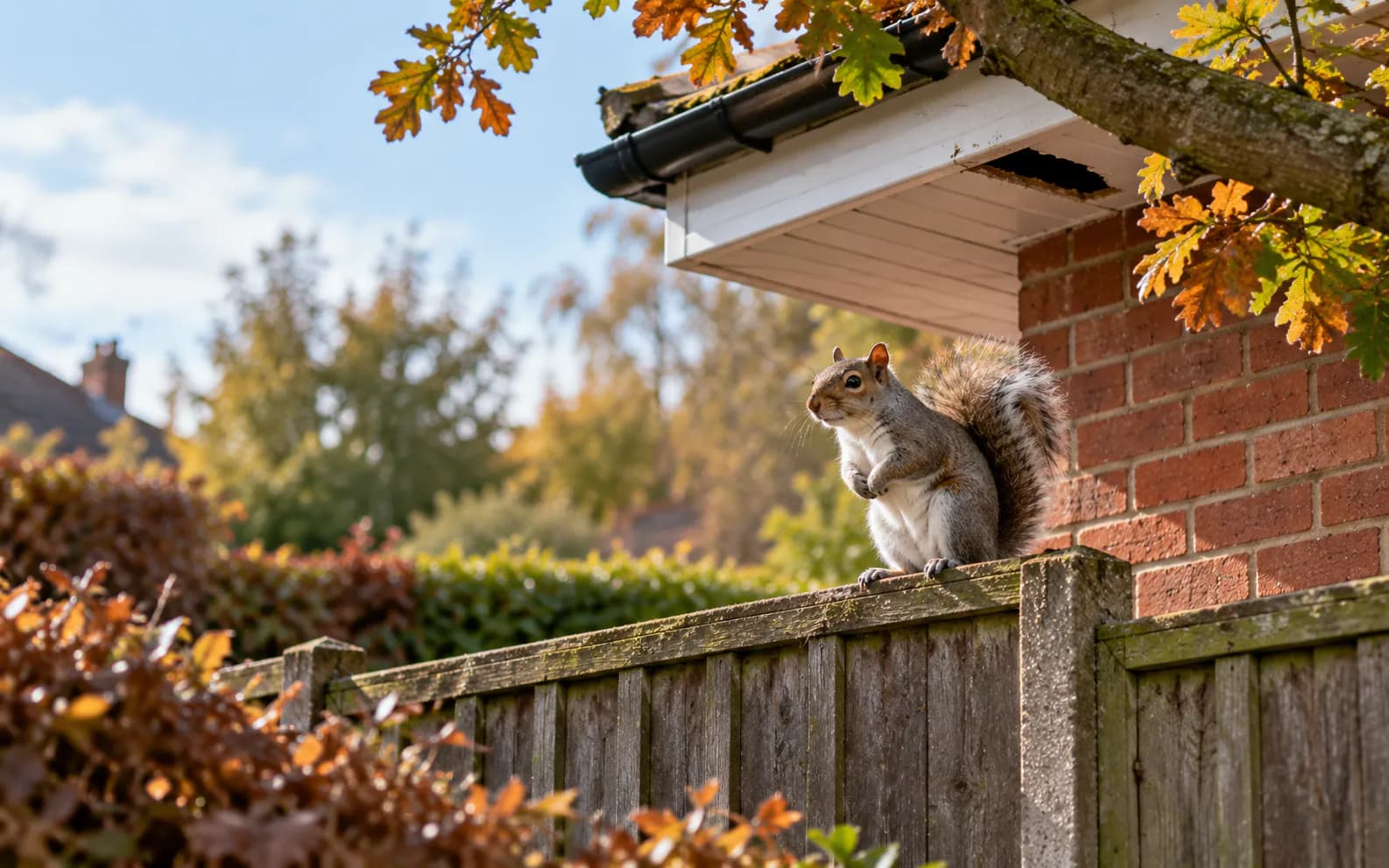
Grey squirrels get into lofts looking for a dry, warm nesting place, usually through gaps at the eaves, fascias, soffits or loose tiles. Chesterfield Borough Council describes the problems they cause in roof spaces: disturbance from their activity, damage to woodwork and insulation, and gnawing of electric cables.
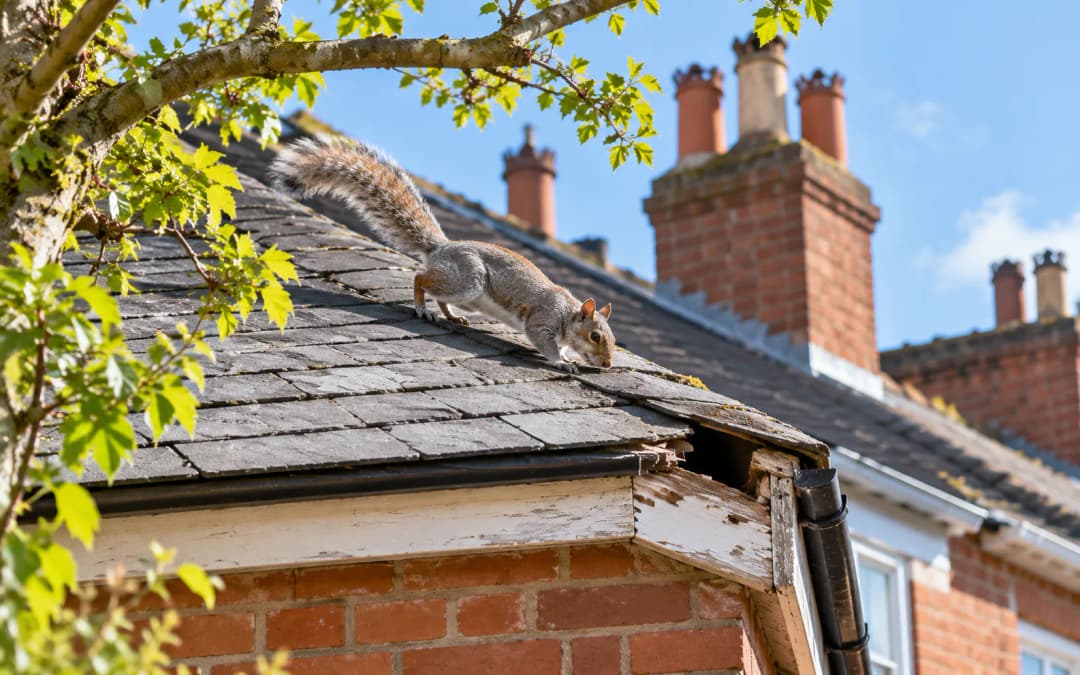
Signs to look out for:
- scratching, scampering or thudding in the loft during the day;
- chewed insulation, timber or stored items;
- a drey-like nest of insulation and leaves;
- squirrels running along the roof or disappearing at the eaves;
- gnawed gaps in fascias or soffits.
Gnawed cables are a reason not to wait. Get the loft checked rather than living with it.
Can you trap a grey squirrel yourself?
Yes, homeowners can legally trap grey squirrels on their own property, but it's harder than it sounds. Chesterfield says occupiers can trap grey squirrels, that cage traps baited with whole maize or acorns are preferred, that traps must be checked at least once a day, and that spring traps are unlikely to be suitable in urban situations. It adds that only professional users may use an approved poison, and only where there are no red squirrels.
The difficult parts are:
- checking traps at least daily, including in a hot loft;
- humanely dispatching a trapped squirrel, which you cannot release;
- finding and sealing every entry point without trapping a squirrel inside;
- avoiding non-target animals.
For most people, this is a job to hand over. Our practical guide to squirrels in the loft explains the signs and what removal involves, and our guide to rats in the loft helps if the noises come at night instead. For a different garden mammal with different rules, see how to get rid of foxes in the garden.
How do you stop squirrels getting back in?
Proofing the entry point is what stops squirrels coming back. Removing the squirrels in the loft without closing the gap leaves the space open to the next one, and grey squirrels are common in towns and gardens across the region.
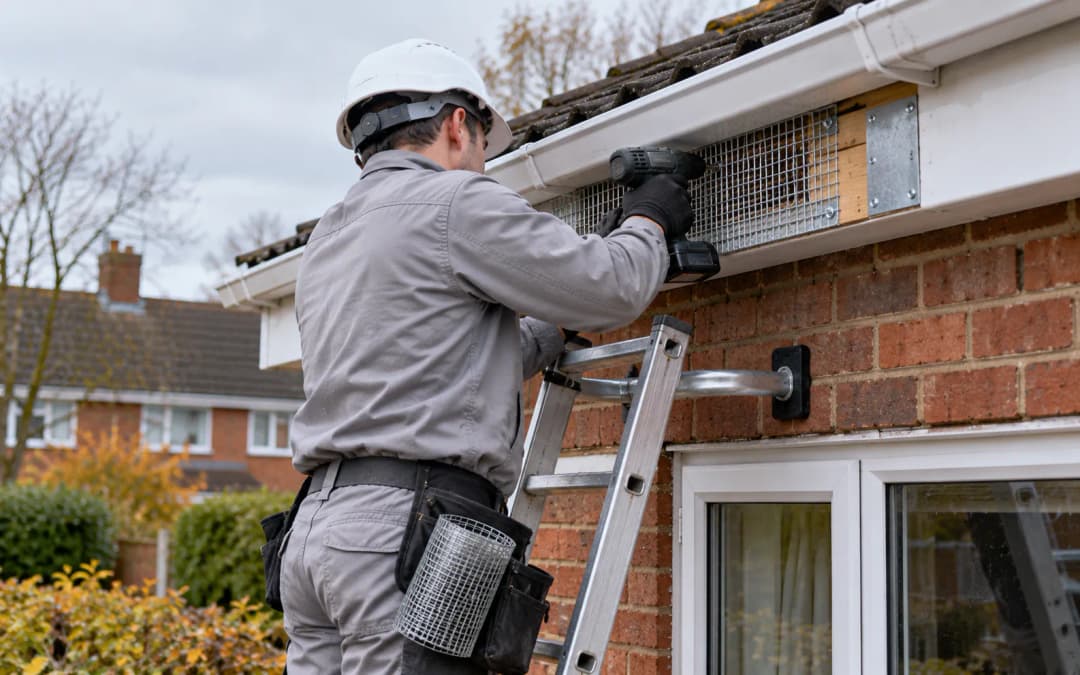
Good proofing follows a simple order:
- Confirm the loft is empty. Sealing a gap with a squirrel still inside traps it, which risks a welfare offence and a dead animal in the roof.
- Find every entry point. Squirrels often use more than one gap, especially along a run of eaves on terraced or semi-detached houses.
- Use materials squirrels can't chew. Galvanised mesh and steel plates hold up where timber, plastic or expanding foam do not.
- Deal with access routes. Branches overhanging the roof make it easy for squirrels to reach the eaves, so cutting them back helps.
- Check the loft afterwards. Look at insulation and wiring for damage, and ask an electrician to check any gnawed cables.
If you rent your home, tell your landlord, as repairs to the roof and eaves usually fall to them.
When to call a professional
Call a professional if you hear squirrels in the loft, see them going in at the eaves or find chewed cables or insulation. The work involves trapping, humane dispatch and proofing at height, and the law on release means it needs to be done properly.
Urgent Pest Control's squirrel control service uses live-capture traps checked daily, usually over three to seven days, then proofs the entry points with galvanised mesh and steel plates. It starts from £240; the final price depends on the property and the proofing needed, and we'll explain the likely cost before any work starts. Our pest control prices page lists our published starting prices, and the pest identifier helps if you're not sure what's in the roof.
"Gino came out the same day and laid a squirrel trap in the loft and a bait box in the garden. He returned to remove the squirrel and to clean and disinfect the loft." karen weston, Google review, August 2026
We work 7 days a week, 6am to 8pm, across Nottingham, Derby, Leicester, Lincoln, Southwell and the surrounding counties. Book online, or call or WhatsApp 07999 935 929.
Sources
- Invasive non-native (alien) animal species: rules in England and Wales (gov.uk)
- The Invasive Alien Species (Enforcement and Permitting) Order 2019 (legislation.gov.uk)
- Wildlife and Countryside Act 1981, section 14 (legislation.gov.uk)
- March 2019 update: invasive non-native species and grey squirrels (gov.uk)
- Wild Mammals (Protection) Act 1996, section 2 (legislation.gov.uk)
- Animal Welfare Act 2006, section 4 (legislation.gov.uk)
- Chesterfield Borough Council: squirrels
- Protecting trees from mammal damage: grey squirrel (gov.uk)
Frequently Asked Questions
About the author
The Urgent Pest Control team
A family-run pest control company based in Southwell, treating homes and businesses across Nottinghamshire, Derbyshire, Leicestershire and Lincolnshire since 2020. Our guides are written from the jobs we do and checked against UK sources. More about us
Cite this guide: “Are Grey Squirrels Protected in the UK?”, Urgent Pest Control, 4 November 2026. https://urgentpestcontrol.uk/blog/are-grey-squirrels-protected