How to Get Rid of Foxes in the Garden (Humanely and Legally)
How to get rid of foxes in the garden humanely: remove food, block dens at the right time, use approved deterrents and proof sheds and decking with buried mesh.

By the Urgent Pest Control team
Updated · 7 min read
The short answer
To get rid of foxes humanely, take away food and shelter. Secure bins and compost, stop food reaching the ground, and block gaps under sheds and decking with weld mesh once you're sure no cubs are inside. Only use repellents approved for foxes. Removing a fox rarely works, because another soon takes over the territory.
- Foxes are not protected under the Wildlife and Countryside Act 1981, but the Wild Mammals (Protection) Act 1996 makes cruelty an offence.
- Cubs are born in spring (March to April), so never block a den without checking it is empty.
- Only repellents approved for use against foxes may be used, following the label.
- Lambeth Council says if you remove one fox another will take over the territory within weeks, so deterrence works better.
- Weld mesh fixed to the base of a shed and dug about a foot into the soil stops foxes denning underneath.
On this page
To get rid of foxes in the garden humanely, take away the food and shelter that bring them in. Secure bins and compost, stop food reaching the ground, and block gaps under sheds and decking with weld mesh once you're sure no cubs are inside. Use only repellents approved for foxes. Our fox control service finds where foxes are denning and proofs them out legally.
Trying to remove a fox rarely solves the problem, because another moves into the empty territory. This guide explains why foxes visit, which deterrents work, how to deal with a den safely and what the law allows.
Why are foxes coming into my garden?
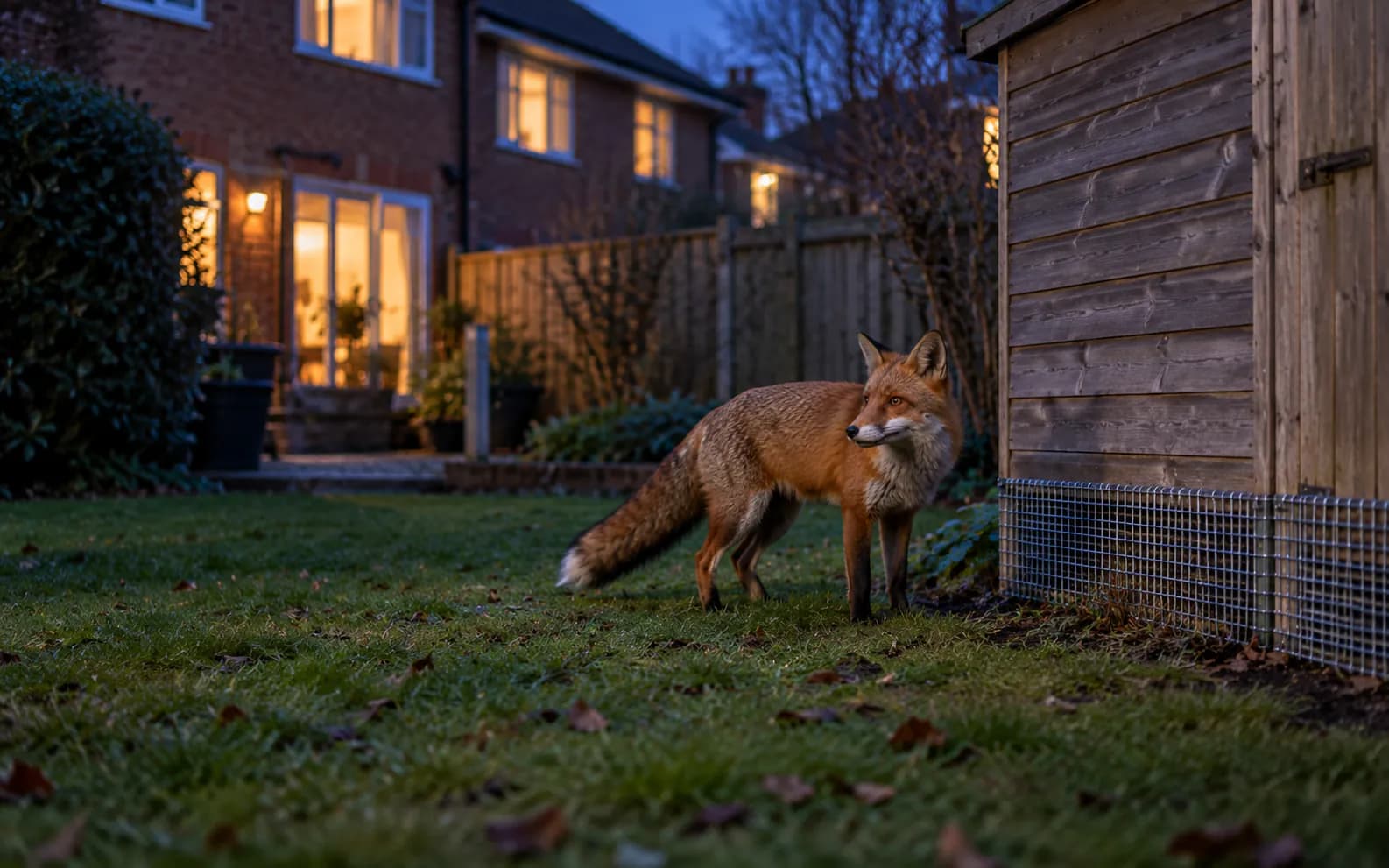
Foxes come into gardens for food and for shelter. Knowsley Council says foxes prefer suburban housing with large gardens, where they can shelter under shrubbery, sheds and in secluded corners. They eat birds, rabbits, small mammals, insects, worms, fruit and scavenged food, and often bury food to come back to later.
The RSPCA adds that urban foxes can den above ground, in spaces beneath sheds or other outbuildings. A dry, quiet gap under a shed or decking is ideal for them.
Common garden attractions include:
- bin bags left out or bins without secure lids;
- open compost heaps;
- fallen fruit and spilt bird food;
- pet food left outside;
- bonemeal or blood, fish and bone fertilisers;
- overgrown corners and gaps under sheds and decking.
Is it legal to get rid of foxes?
It is legal to deter foxes, and the law sets clear limits on how. The RSPCA says foxes aren't protected under the Wildlife and Countryside Act 1981, but mistreating them is covered by the Wild Mammals (Protection) Act 1996, and hunting them with dogs is illegal under the Hunting Act 2004.
The RSPCA's foxes in the garden advice says it is illegal to use any substance as a deterrent that hasn't been approved for that use. Knowsley Council says only repellents approved for use against foxes may be used, following the manufacturer's instructions. Poisoning a fox is never lawful, and the RSPCA says suspected poisoning should be reported to the Wildlife Incident Investigation Scheme.
| Approach | Legal? | Notes |
|---|---|---|
| Removing food and shelter | Yes | The most effective step on its own |
| Weld mesh under sheds and decking | Yes | Only when any den is confirmed empty |
| Fencing and prickly planting | Yes | The RSPCA mentions wildlife-friendly fencing and spiky plants |
| Repellents approved for foxes | Yes | Follow the label exactly |
| Home-made chemical mixtures or unapproved products | No | Using an unapproved substance as a deterrent is illegal |
| Poison | No | Never lawful against foxes |
| Trapping and releasing elsewhere | Not advised | A trapped fox is a protected animal under the Animal Welfare Act 2006, and another fox soon takes the territory |
| Blocking a den with cubs inside | No | Cruel and likely to cause unnecessary suffering |
Why doesn't removing a fox work?
Removing a fox doesn't work because the territory is quickly filled. Lambeth Council says that if you remove one fox, another will take over the territory within weeks, and that deterrence is cheaper, more effective and more humane. Knowsley Council says controlling urban foxes is difficult, expensive and rarely successful because of the number of breeding vixens.
Lambeth also points out that foxes have never been classified as vermin by Defra, so councils have no legal obligation to act against them. Knowsley says that unlike rats and mice, the council has no statutory duty to deal with foxes.
How do you stop foxes getting under a shed or decking?
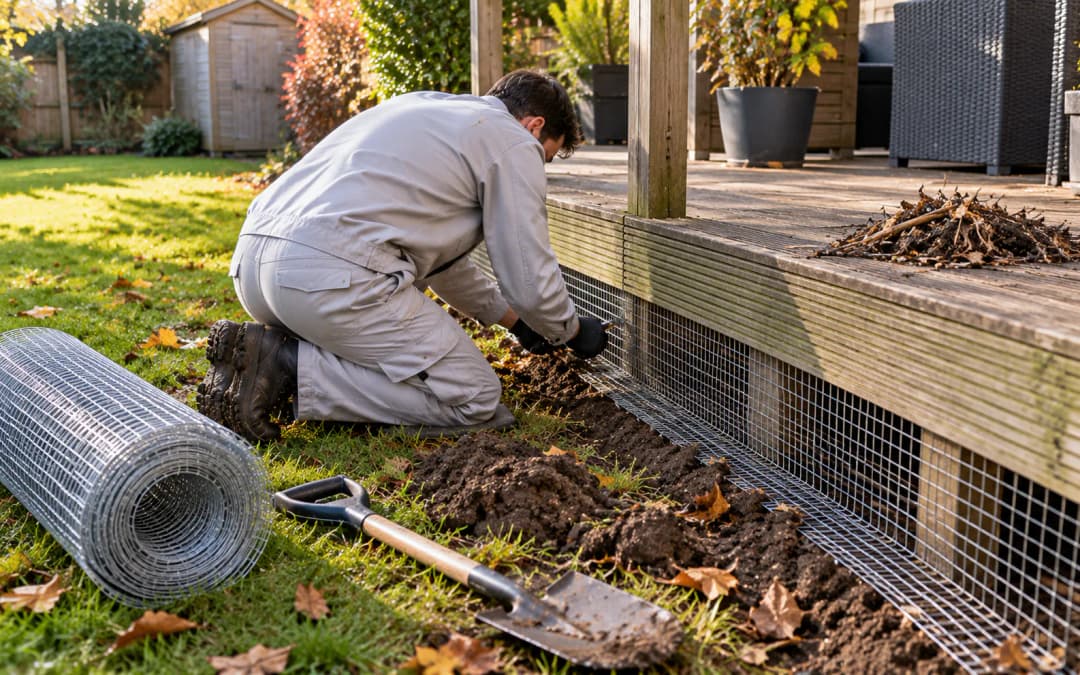
Fix weld mesh to the base of the structure and bury it, but only after checking nothing is living underneath. Knowsley Council recommends weld mesh secured to the bottom of the shed and dug into the soil to a depth of one foot, so foxes can't dig under it.
The RSPCA's check for whether a den is in use:
- Loosely cover the entrances with soil or sticks.
- Leave them for a few days.
- If they stay undisturbed, the den is likely empty, and you can pack the hole more firmly.
- If they are pushed aside, the den is in use. Leave it and wait.
The RSPCA says blocking is safest in autumn and winter, so cubs aren't trapped inside. If there are cubs, wait until they have left in late summer before doing any work.
Also check whether it's actually a fox. The RSPCA notes fox dens are often mistaken for badger setts: fur or feathers at the entrance suggest a fox, while bedding outside suggests a badger. Badgers and their setts are protected by the Protection of Badgers Act 1992, so if you think it's a badger, don't block it and get advice.
When are fox cubs born?
Fox cubs are born in spring. The RSPCA says foxes mate between December and February, the vixen is pregnant for around 53 days, and she gives birth in March or April. Litters average four or five cubs.

Cubs open their eyes at about two weeks, first leave the den at about four weeks, and are fully weaned by six to eight weeks. They leave to find their own territories around autumn, at about six months old.
That timing tells you when to act. Deterrents and proofing work best before the breeding and cub season. Lambeth notes December to February is one of the most common times for problems, and calls rise again in autumn when young foxes look for territories of their own.
How do you deter foxes from your garden?
You deter foxes by taking away food and shelter; scent repellents only help alongside that. Combining the RSPCA's and Knowsley Council's advice:
- use bird feeders that don't spill food on the ground, or a high bird table;
- clear fallen fruit, pet food and spilt seed;
- keep bins and composters securely closed;
- stop using bonemeal and fertilisers containing meat, fish, blood or bone, which can encourage digging;
- clear overgrown corners and piles of rubble that give cover;
- fence vegetable beds and fruit with solid weld mesh rather than flexible netting, which can tangle wildlife;
- keep rabbits and guinea pigs in secure hutches with weld mesh, a solid roof and floor and a secure lock;
- bring toys and shoes in at night, as Knowsley notes cubs like to chew and play with them;
- keep garage and shed doors shut;
- check air bricks under the house are in good repair.
Commercial repellents can add to these steps, as long as the product is approved for use against foxes and used as the label directs. Lambeth notes some products sold for cats may upset other pets.
Are foxes a danger?
Foxes pose little danger to people. Knowsley Council says the fox does not pose a danger to people and is not naturally aggressive to humans, but like any wild animal it may defend itself if it feels threatened. It also says incidents of foxes killing cats are extremely rare, though small pets like rabbits and guinea pigs are part of a fox's diet.
Don't hand-feed foxes or leave out large amounts of food: the RSPCA advises against encouraging them to depend on it.
Bins, compost and spilt bird food attract rats as well as foxes; our guide to how to get rid of rats in the garden covers that side. For other garden mammals, see our guides to how to get rid of moles and are grey squirrels protected?.
What if a fox looks ill or injured?
Don't try to catch or handle it. The RSPCA has advice on helping a sick, injured or orphaned fox, and it lists mange among the things that can severely shorten a fox's life. A fox that looks thin, with patchy fur, or that seems slow and unafraid, may need help rather than deterrence.
If you suspect a fox has been poisoned, the RSPCA says not to touch it and to report it through the Wildlife Incident Investigation Scheme. For fox cruelty in progress, call 999; for non-urgent reports, call 101.
When to call a professional
Call a professional if foxes are denning under a shed, decking or outbuilding, if you aren't sure whether cubs are present, or if you run a business, school or site where foxes are getting into bins or buildings. The work must be timed around cubs and done so no animal is trapped.
Urgent Pest Control's fox control service starts from £250. It finds where foxes are denning and why they are visiting, then uses humane, legal deterrence and proofing, such as buried mesh skirts around sheds and decking. If there are cubs, we wait until the den is empty. For other gaps around the house, our pest proofing service can help. Ask us for a price; it depends on the property and the proofing needed.
We work 7 days a week, 6am to 8pm, across Nottingham, Derby, Leicester, Lincoln and the surrounding counties. Book online, or call or WhatsApp 07999 935 929.
Sources
Frequently Asked Questions
About the author
The Urgent Pest Control team
A family-run pest control company based in Southwell, treating homes and businesses across Nottinghamshire, Derbyshire, Leicestershire and Lincolnshire since 2020. Our guides are written from the jobs we do and checked against UK sources. More about us
Cite this guide: “How to Get Rid of Foxes in the Garden (Humanely and Legally)”, Urgent Pest Control, 4 November 2026. https://urgentpestcontrol.uk/blog/how-to-get-rid-of-foxes-in-the-garden