Squirrels in the Loft: Signs and How to Get Rid of Them
Squirrels in the loft? The signs, why it is illegal to release a trapped grey squirrel, the damage they cause, and how removal and roof proofing work.

By the Urgent Pest Control team
Updated · 7 min read
The short answer
Squirrels in the loft usually mean loud running or scratching in the early morning and late afternoon, chewed fascias or vents, and shredded insulation. Grey squirrels are a listed invasive species: once caught, it is illegal to release one, and the government says trained trappers should humanely kill it. A professional traps them, then proofs the entry points.
- Grey squirrels are active in daytime, peaking early morning and late afternoon, which helps tell them from rats and mice.
- Grey squirrels are listed invasive alien species; you must not release one once caught, and gov.uk says trained trappers should humanely kill it.
- A trapped squirrel is a protected animal under the Animal Welfare Act 2006, so traps must be checked and it must not suffer unnecessarily.
- English Heritage notes rodents and squirrels damaging electrical wiring in attics, a fire risk.
- Our squirrel control starts from £240 (final price depends on the job): trapping over 3–7 days, then proofing with mesh and steel plates.
On this page
- How do you know it's squirrels in the loft?
- How do squirrels get into the loft?
- Can you release a squirrel caught in the loft?
- Why are squirrels in the loft a problem?
- How do you get rid of squirrels in the loft?
- How can you stop squirrels getting into the loft?
- Does the council deal with squirrels?
- When to call a professional
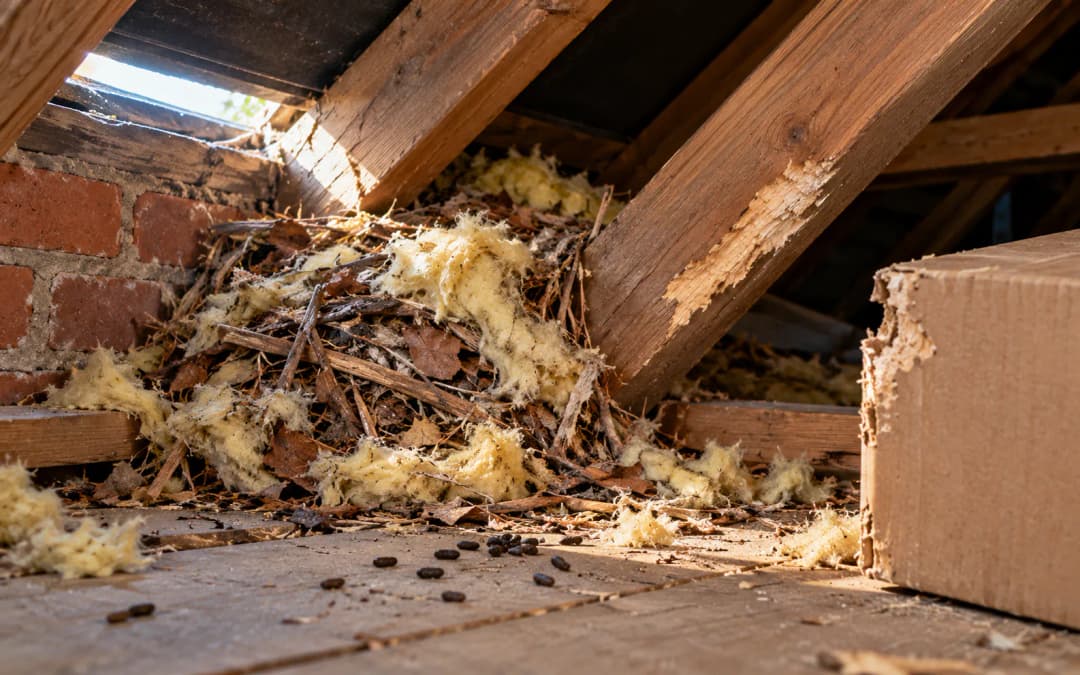
Squirrels in the loft usually reveal themselves through loud running, scratching or rolling noises in the early morning and late afternoon, chewed fascias, soffits or roof vents, and shredded insulation. Grey squirrels are a listed invasive species: once one has been caught it is illegal to release it, and government guidance says trained trappers should humanely kill it. Our squirrel control service, from £240, traps the squirrels and then proofs the entry points.
Winter is a common time to find them: squirrels want a warm, dry place, and the Mammal Society says they breed from mid-winter to summer. This guide covers the signs, how squirrels get into a loft (or attic), the damage they do and what removal involves. For the full legal position, see our guide to whether grey squirrels are protected.
How do you know it's squirrels in the loft?
Timing is the best clue. The Mammal Society says grey squirrels are diurnal, active during the day, with peaks of activity in the early morning and late afternoon. Rats and mice are mostly active at night.
| Clue | Grey squirrels | Rats | Mice |
|---|---|---|---|
| When you hear them | Early morning and late afternoon | Mostly at night | Mostly at night |
| Sound | Loud running, bounding, rolling, gnawing | Scurrying, thuds, gnawing | Light, quick scratching |
| Outside signs | Chewed fascias, soffits, vents, roof edges; squirrels on the roof | Burrows, runs, droppings near drains | Rarely visible outside |
| In the loft | Large nests of shredded insulation, chewed timber and cables | Runs through insulation, larger droppings | Small droppings, small nests |
Our rat vs mouse droppings guide helps if you find droppings. Other signs of squirrels include chewed stored items, a strong smell of urine near a nest, and squirrels going in and out of the same spot at the roofline. If you are hearing noises at night instead, read our guides to rats in the loft and can mice climb walls.
How do squirrels get into the loft?
Grey squirrels are expert climbers. The Mammal Society describes double-jointed ankles that let their feet face forwards or backwards when climbing, which is why they can run straight up brickwork, render and downpipes. The usual routes into a loft are:
- overhanging tree branches that let squirrels jump onto the roof;
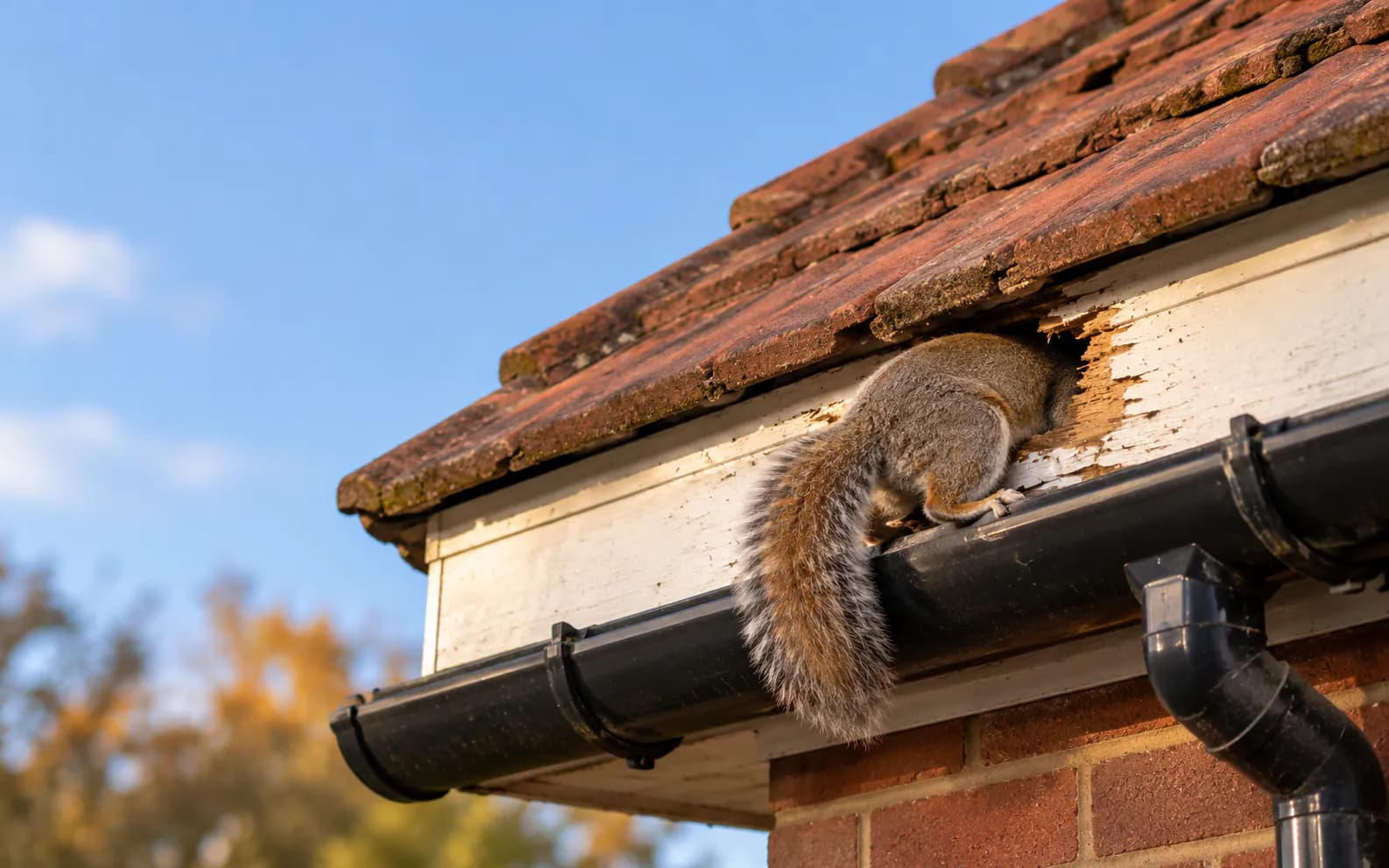
- gaps where the fascia or soffit has rotted or come away from the wall;
- gaps under the bottom row of tiles or at the ends of the ridge;
- plastic roof vents, which squirrels can chew through;
- gaps around satellite, aerial and broadband cables at the roofline.
Once one squirrel has found a way in, it will often enlarge the hole by chewing, and others may follow. Older houses with timber fascias and homes with mature trees close by are particularly prone.
Can you release a squirrel caught in the loft?
No. The grey squirrel (Sciurus carolinensis) is a listed invasive alien species, listed on 3 August 2016, according to gov.uk guidance on invasive non-native animal species. Under the Invasive Alien Species (Enforcement and Permitting) Order 2019 you must not release one, keep one or move one, and the same guidance says a trained trapper who catches one should humanely kill it if possible.
Welfare law still applies. Once a squirrel is in a trap it is under human control, which makes it a protected animal under section 2 of the Animal Welfare Act 2006, and causing it unnecessary suffering is an offence. The Wild Mammals (Protection) Act 1996 also bans cruelty to any wild mammal.
In practice, that means "catch and release in the woods" isn't legal, traps must be checked at least daily, and the squirrel must be dispatched quickly and humanely by someone trained to do it. Our guide to whether grey squirrels are protected explains the law in full.
Why are squirrels in the loft a problem?
Fire risk from chewed cables. English Heritage's rodent fact sheet notes particular problems with rodents and squirrels damaging electrical wiring in attics.
Structural damage. Squirrels chew fascias, soffits, roof timbers, pipe lagging and stored belongings, and tear up insulation to make nests, which reduces its effectiveness.
Water damage. Gnawed plastic pipes or tank lids in the loft can lead to leaks and contaminated water.
Breeding. The Mammal Society says grey squirrels breed from mid-winter to summer, with litters of three or four young after a 44-day gestation. Young are weaned at about 10 weeks, so a nest left alone in late winter can mean a family in the roof by spring.
How do you get rid of squirrels in the loft?
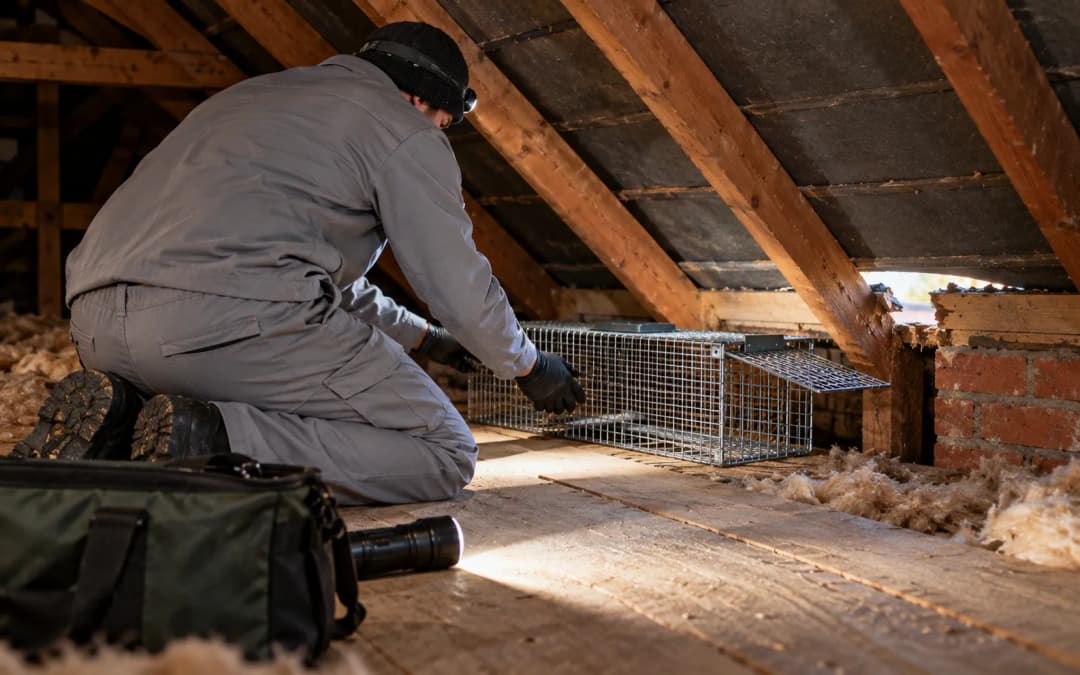
The lasting way to get rid of squirrels in the loft is to trap them, then seal every entry point once the loft is empty. Deterrents alone won't move a squirrel with a warm nest. This is how Urgent Pest Control does it:
- Survey. We inspect the loft and the outside of the roof to find where the squirrels are getting in, how many there are, and whether there are young.
- Live-capture trapping. We set cage traps in the loft or at the entry points and check them regularly over 3–7 days.
- Humane dispatch. Trapped grey squirrels are dispatched quickly and humanely, as the law requires; they cannot be released.
- Proofing. Once the squirrels are gone, we seal entry points with galvanised mesh and steel plates, and advise on cutting back branches that give squirrels access to the roof.
On a survey, the things a technician checks first are the roofline (chewed fascia corners, lifted tiles, gaps around cables), trees within jumping distance, the loft insulation for nests and tracks, and the cables and water tank for gnawing.
Sealing the entry points before every squirrel is out can trap animals inside, where they cause more damage trying to escape, or leave young to die. That is why we confirm the loft is clear before proofing.
How can you stop squirrels getting into the loft?
You can make your roof less inviting, but deterrents won't remove squirrels that are already nesting. Useful steps include:
- cutting back tree branches so they are well away from the roof;
- not overfilling bird feeders near the house, as squirrels eat peanuts and seeds from them, according to the Mammal Society;
- checking fascias, soffits and roof vents each autumn and getting damage repaired;
- making sure the water tank in the loft has a secure lid;
- storing items in the loft in sealed plastic crates rather than cardboard boxes.
Ultrasonic devices, smells and lights are widely sold but there is little evidence they move squirrels that have a warm nest.
Does the council deal with squirrels?
Very few councils in our area do. When we checked council websites on 18 October 2026, Rushcliffe Borough Council listed squirrels at £105 for a home (£54.90 for residents on qualifying benefits), and Derby City Council offered a £39 advice visit for squirrels inside the home. Many other councils give advice only. See our guide to council pest control charges for the full list.
When to call a professional
Call a professional as soon as you hear regular daytime noises in the loft or see squirrels using a gap in the roof. The longer squirrels stay, the more insulation and wiring they damage, and from late winter there may be young in the nest.
Squirrel control starts from £240, covering the survey, trapping and humane dispatch. Proofing is quoted separately once we know what is needed, and we'll explain the likely cost before any work starts. See our pest control prices, or use the pest identifier if you're not sure it's squirrels.
"I can't speak highly enough about Gino. He attended my problem with squirrels in my loft the same day, even though I had called in the afternoon. He professionally assessed the situation and talked me through all the options. The problem was dealt with rapidly and he returned to installed measures to prevent further incursions. Thank you Gino" Jim Milne, Google review, June 2023
We cover Nottingham, Derby, Leicester, Lincoln and the surrounding counties, 7 days a week from 6am to 8pm. Book online, or call or WhatsApp 07999 935 929.
Sources
- Mammal Society: Grey squirrel
- Gov.uk: Invasive non-native (alien) animal species, rules in England and Wales
- Invasive Alien Species (Enforcement and Permitting) Order 2019 (legislation.gov.uk)
- Animal Welfare Act 2006, section 2 (legislation.gov.uk)
- Wild Mammals (Protection) Act 1996, section 1 (legislation.gov.uk)
- English Heritage: Pest fact file 15, rodents
- Rushcliffe Borough Council: Pest control fees
- Derby City Council: pest control for householders
Frequently Asked Questions
About the author
The Urgent Pest Control team
A family-run pest control company based in Southwell, treating homes and businesses across Nottinghamshire, Derbyshire, Leicestershire and Lincolnshire since 2020. Our guides are written from the jobs we do and checked against UK sources. More about us
Cite this guide: “Squirrels in the Loft: Signs and How to Get Rid of Them”, Urgent Pest Control, 4 November 2026. https://urgentpestcontrol.uk/blog/squirrels-in-the-loft