Are Landlords Responsible for Bed Bugs? Rules for Renters
Who pays for bed bug treatment in a rented home: when the landlord must act, when the tenant may pay, and how the council can step in.

By the Urgent Pest Control team
Updated · 8 min read
The short answer
It depends on the cause. Shelter says landlords should deal with pests that were there when you moved in or that come from a repair they must fix. A tenant who caused or encouraged an infestation may have to pay. Check the tenancy agreement, report bed bugs to the landlord straight away and contact the council if nothing happens.
- Shelter says landlords should sort out pests that were present when a tenant moved in, or that come from a repair the landlord must fix.
- Citizens Advice says a tenant may be responsible if the infestation was caused by something they did or failed to do.
- A landlord's duty usually starts when they are told, so report bed bugs straight away and keep a record.
- Councils can serve notice on an owner or occupier of verminous premises under section 83 of the Public Health Act 1936.
- Whoever pays, treat early: the NHS says bed bugs are very difficult to get rid of yourself.
On this page
- Who is responsible for bed bugs in a rented home?
- What does the law say about pests in rented homes?
- What if the bed bugs were there when you moved in?
- What if the tenant brought bed bugs in?
- What about HMOs, flats and shared houses?
- What should tenants do about bed bugs?
- What should landlords do about bed bugs?
- How much does bed bug treatment cost a landlord?
- When to call a professional
Landlords are often, but not always, responsible for bed bugs. In England, Shelter says landlords should deal with pests that were there when the tenant moved in or that come from a repair the landlord must fix, while Citizens Advice says a tenant who caused the problem may have to pay. Whoever pays, bed bug treatment works best when it starts early.
This guide covers England and is general information, not legal advice. Your tenancy agreement, the facts of the infestation and any council involvement all matter. If you are in a dispute, Shelter and Citizens Advice can give free advice on your situation.
Who is responsible for bed bugs in a rented home?
There is no single rule for bed bugs. Responsibility follows the cause, the tenancy agreement and when the landlord was told. The table below sets out the usual position, based on guidance from Shelter and Citizens Advice.
| Situation | Usually responsible | Why |
|---|---|---|
| Bed bugs found when, or soon after, you moved in | Landlord | Shelter says pests present at the start of the tenancy are for the landlord to sort out |
| Infestation linked to a repair the landlord must fix | Landlord | Shelter says the landlord must deal with pests caused by a repair they are responsible for |
| Tenancy agreement says the landlord arranges pest control | Landlord | Citizens Advice says landlords are often responsible where the agreement says so |
| Infestation caused by something the tenant did or failed to do | Tenant | Citizens Advice says the tenant may be responsible in this case |
| Bed bugs in shared areas of a building the landlord owns | Landlord | Shelter says the landlord may be responsible if they own the whole building |
| Bed bugs coming from a neighbour's separate home | Not usually the landlord | Shelter says landlords don't usually have to deal with pests from neighbouring homes |
Two points cut across every row. First, Citizens Advice says a landlord is usually only responsible once they become aware of the problem, so the clock starts when you report it. Second, Citizens Advice says it doesn't matter whether the infestation was there when you moved in or appeared later; what matters is the cause and the agreement.
What does the law say about pests in rented homes?
Several laws can apply, and none of them mentions bed bugs by name.
- Fitness for human habitation. The Homes (Fitness for Human Habitation) Act 2018 requires landlords in England to make sure a rented home is fit for human habitation at the start of the tenancy and throughout it. A serious infestation can be relevant to whether a home meets that standard.
- Council hazard inspections. Shelter says the council can inspect a rented home, that pests can be a hazard, and that the council could require the landlord to fix the problem.
- Verminous premises. Under section 83 of the Public Health Act 1936, a council that is satisfied premises are verminous can serve a notice on the owner or occupier requiring cleansing and steps to destroy or remove the vermin. The notice can even require removal of wallpaper or other wall coverings.
- Statutory nuisance and hazards. Citizens Advice says that where an infestation is harmful to health it may be a statutory nuisance the council can make the landlord deal with, and that councils can also act under the Housing Health and Safety Rating System (HHSRS).
- Social housing. Citizens Advice says social housing tenants in England may be covered by Awaab's Law, which the government's HHSRS guide says came into force in the social rented sector on 27 October 2025. Where an infestation is an emergency hazard, the landlord must make the home safe within 24 hours or offer somewhere else to stay.
Notice that section 83 allows the council to serve notice on the owner or the occupier. That reflects the real world: sometimes the tenant needs to act, sometimes the landlord, and often both.
What if the bed bugs were there when you moved in?
Then the landlord should normally deal with them. Shelter says that where pests were there when you moved in, the landlord should sort this out, and you shouldn't have to pay for pest control the landlord is responsible for.
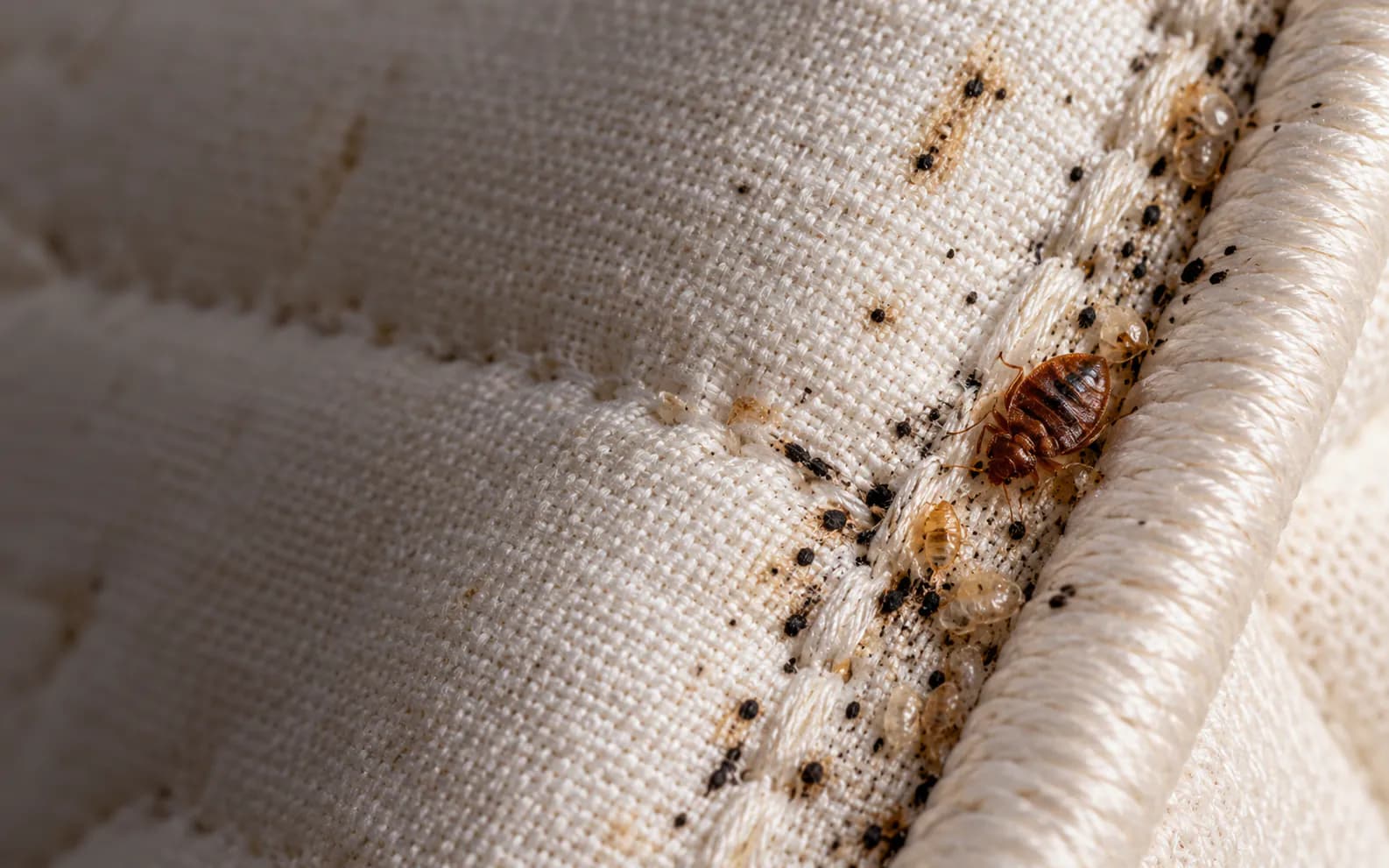
Bed bugs can hide in bed frames, furniture and the edges of carpets in an empty property, so signs can appear within days of moving in. The NHS lists the signs as bites on skin exposed while sleeping, spots of blood on bedding and small brown spots of bed bug poo on bedding or furniture. Our guide on how to check for bed bugs shows where to look.
If you spot them early in a tenancy, report it the same day in writing, with photos. A quick report makes it far easier to show the problem pre-dates you.
What if the tenant brought bed bugs in?
Then the tenant may be responsible. Citizens Advice says you might be responsible for dealing with an infestation if it was caused by something you did or failed to do.
Bed bugs are usually carried in, not caused by dirt. The NHS says bed bugs are found in both clean and dirty places, and warns against bringing second-hand furniture indoors without checking it first, or bringing in luggage and clothing from somewhere with known bed bugs without checking them carefully. A long-standing tenant who returns from a trip and starts getting bitten is in a different position from someone who found bed bugs in their first week.
In practice, proving where bed bugs came from is hard. Many landlords pay for treatment anyway, because a quick professional treatment costs less than a spreading infestation, an empty room between tenants or a council notice.
What about HMOs, flats and shared houses?
Shared buildings need a coordinated approach. Shelter says that for shared areas, the landlord may be responsible if they own the whole building, and if they don't, they should pass the problem to the owner.
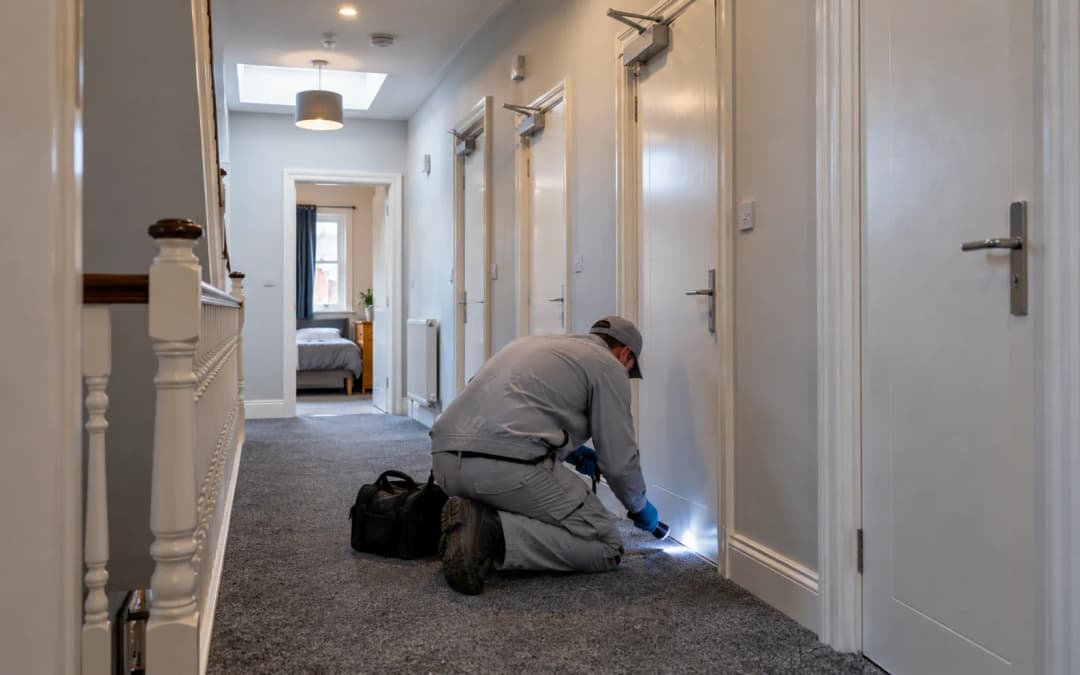
In a house in multiple occupation (HMO), a student let or a block of flats, treating one room while the room next door is left untreated risks the bed bugs simply returning. Shelter also says landlords don't usually have to deal with pests in a neighbouring property, so if bed bugs are coming from a separate flat next door, ask the neighbour first and contact the council if they ignore you. It is common trade practice to inspect neighbouring rooms when bed bugs are found in one, so the treatment plan covers everywhere they are active. Landlords of HMOs usually find it simplest to arrange and pay for a single treatment of the affected rooms, then agree any recharge separately.
What should tenants do about bed bugs?
Act early and keep a record. This checklist follows Shelter's and Citizens Advice's guidance on reporting pests.
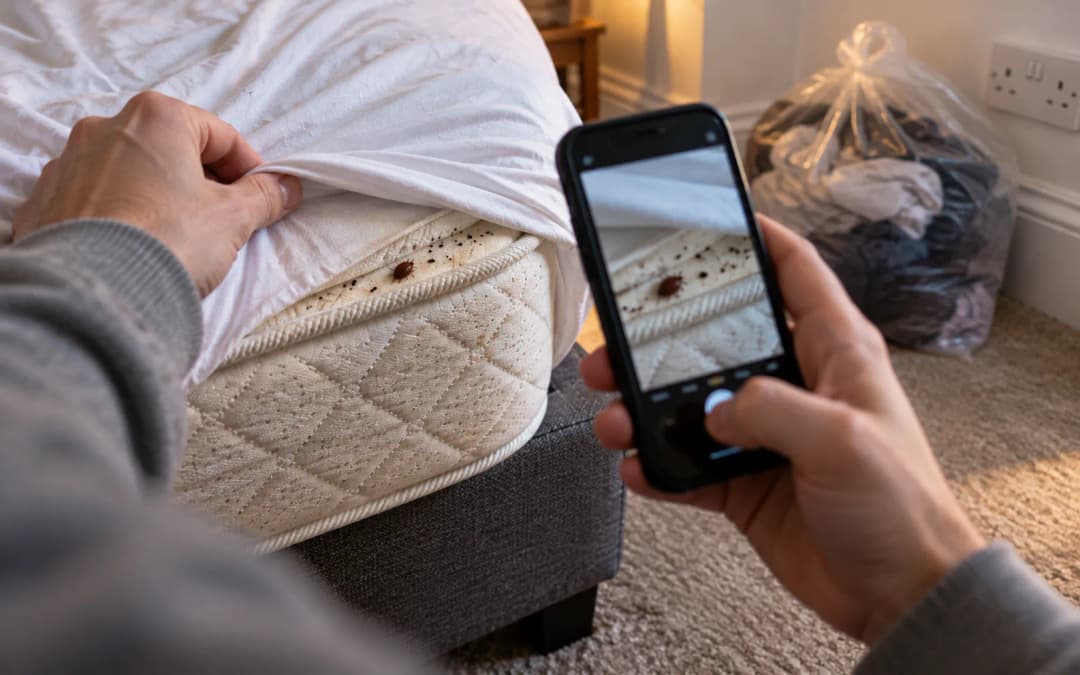
- Tell the landlord or agent straight away, in writing (email is fine). Describe what you have seen, any bites and any belongings damaged.
- Take dated photos of bites, blood spots, brown spots on the mattress seams and any live bugs.
- Keep paying rent. Shelter warns tenants not to stop paying rent; you could agree a rent reduction if you pay for treatment yourself.
- Don't move furniture or mattresses to other rooms or throw them out without bagging them, which can spread bed bugs.
- Follow the NHS steps while you wait: wash bedding and clothing on a 60C wash and tumble dry on a hot setting for at least 30 minutes, and freeze items that can't be washed in a bag for 2 to 3 weeks.
- Contact the council's environmental health team if the landlord doesn't respond. Shelter says you can complain to environmental health, and the council can inspect.
What should landlords do about bed bugs?
Respond quickly and get a professional inspection. The NHS says it is very difficult to get rid of bed bugs yourself and that they may be resistant to some insecticides, so supermarket sprays used by a tenant rarely solve the problem.
- Acknowledge the report in writing and arrange an inspection promptly.
- Book a professional treatment that covers every affected room, and ask for a written report.
- Give tenants the preparation sheet before the visit, so laundry, clutter and furniture are ready.
- Check neighbouring rooms or flats in shared buildings.
- Inspect between tenancies, especially in furnished lets, and check second-hand furniture before it goes in.
- Keep records of the report, the treatment and any follow-up visits.
How much does bed bug treatment cost a landlord?
It depends on the size of the property, the number of rooms affected and the method. For comparison, Derby City Council's 2026/27 fees list a two-stage bed bug treatment for three bedrooms or fewer at £218 booked online or £250 by phone, with an additional treatment at £102. Not every council treats bed bugs: Leicester City Council and Nottingham City Council don't list them on their pest control pages, so landlords in both cities normally use a private pest controller.
We offer heat treatment, residual insecticide, or both combined. We'll explain the likely cost before any work starts, and we use unmarked vehicles, which landlords of occupied lets often appreciate. Our guide to bed bug treatment cost compares the methods, and how to get rid of bed bugs explains what each involves.
"I would highly recommend Gino. He was prompt, reliable and erradicated the bed bugs from our bedrooms" — Meena John, Google review, September 2024
When to call a professional
Call a professional as soon as bed bugs are confirmed, whoever ends up paying. An infestation grows the longer it is left, and in shared buildings it can spread to other rooms, which makes the eventual bill larger for everyone. Landlords, letting agents and tenants can all book Urgent Pest Control; we provide a written report of what we found and did, which helps settle who pays, and we'll explain the likely cost before any work starts. Landlords with several properties can also use our commercial pest control service.
We treat bed bugs across Nottinghamshire, Derbyshire, Leicestershire and Lincolnshire, including bed bug treatment in Leicester and rented homes in Nottingham, Derby, Loughborough and Lincoln. We work 7 days a week, 6am to 8pm, with emergency call-outs 365 days a year. For pests other than bed bugs, see our guide to whether landlords are responsible for pest control. Call or WhatsApp 07999 935 929, or book online.
Sources
- Shelter England: pests and vermin infestations in rented homes
- Citizens Advice: if there are pests or vermin in your rented home
- Homes (Fitness for Human Habitation) Act 2018 (legislation.gov.uk)
- Public Health Act 1936, section 83 (legislation.gov.uk)
- NHS: bedbugs
- Derby City Council: pest control for householders, fees 2026/27
- Leicester City Council: pest control
- Nottingham City Council: pest control
- Gov.uk: landlord and agent guide to the HHSRS
Frequently Asked Questions
About the author
The Urgent Pest Control team
A family-run pest control company based in Southwell, treating homes and businesses across Nottinghamshire, Derbyshire, Leicestershire and Lincolnshire since 2020. Our guides are written from the jobs we do and checked against UK sources. More about us
Cite this guide: “Are Landlords Responsible for Bed Bugs? Rules for Renters”, Urgent Pest Control, 20 October 2026. https://urgentpestcontrol.uk/blog/bed-bugs-landlord-responsibility