How to Check for Bed Bugs: 7 Signs and Where to Look
How to check for bed bugs: the 7 signs, what bed bugs look like, where they hide and a torch-and-card checklist you can follow tonight.

By the Urgent Pest Control team
Updated · 8 min read
The short answer
To check for bed bugs, strip the bed and use a torch to search mattress seams, the bed frame, the headboard and nearby furniture joints. Look for the three signs the NHS lists: bites on skin exposed while sleeping, blood spots on bedding and small brown spots (droppings). Live bugs, shed skins or eggs confirm it.
- The NHS lists three signs of bed bugs: bites on skin exposed while sleeping, spots of blood on bedding and small brown spots of bed bug poo.
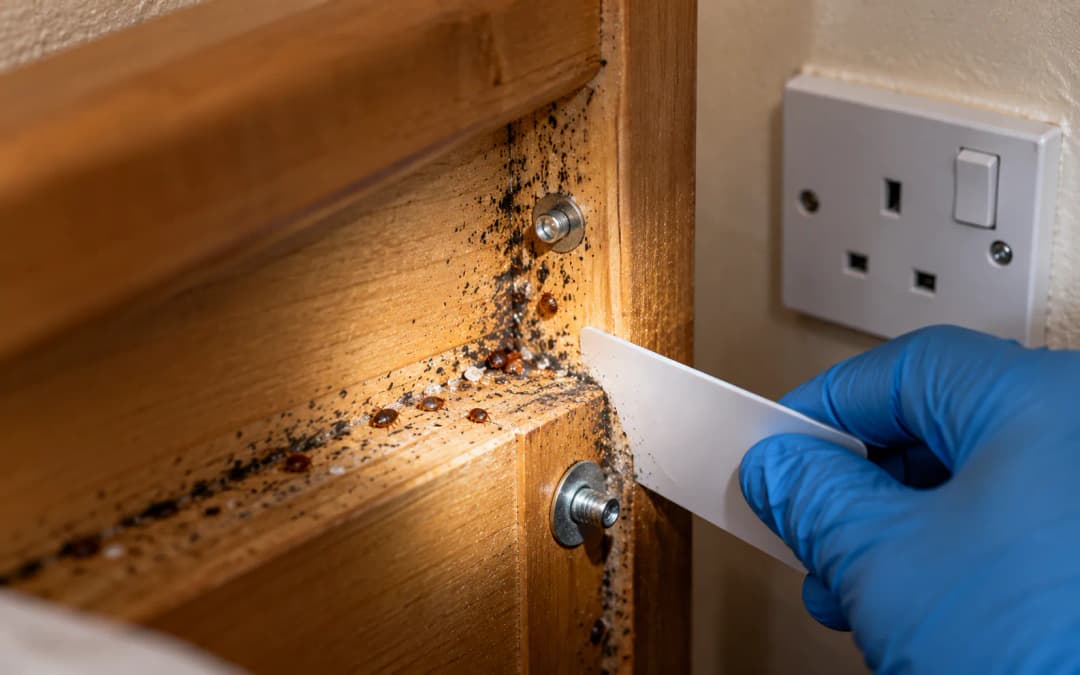
- Live bugs, pale shed skins and tiny pale eggs in seams and joints are the other four signs a technician looks for.
- Adult bed bugs are flat, oval, reddish-brown and visible to the naked eye; they crawl and cannot fly or jump.
- Check in daylight with a torch and a flat card, starting at the mattress seams and working outwards from the bed.
- The NHS says bed bugs are found in both clean and dirty places, so they are not a sign of a dirty home.
On this page
- What are the 7 signs of bed bugs?
- How do you check for bed bugs, step by step?
- What do bed bugs look like?
- What do bed bug bites look like?
- Where do bed bugs hide?
- Do bed bug monitors and traps work?
- Are bed bugs a sign of a dirty home?
- Could it be something other than bed bugs?
- Can you have bed bugs without being bitten?
- Where do bed bugs come from?
- What should you do if you find bed bugs?
- When to call a professional
To check for bed bugs, strip the bed and use a bright torch on the mattress seams, the bed frame, the headboard and nearby furniture joints. You are looking for the three signs the NHS lists (bites, blood spots and small brown spots) plus live bugs, shed skins and eggs. Two or more signs together mean it is time to book an inspection for bed bug treatment.
This guide gives the seven signs, what bed bugs look like, a step-by-step check you can do tonight, and how to rule out other causes of bites.
What are the 7 signs of bed bugs?
The seven signs are bites, blood spots, brown spots, live bugs, shed skins, eggs and clusters of marks along the mattress edge. The first three come from the NHS:
- Bites: "often on skin exposed while sleeping, like the face, neck and arms".
- Spots of blood on your bedding: "from the bites or from squashing a bedbug".
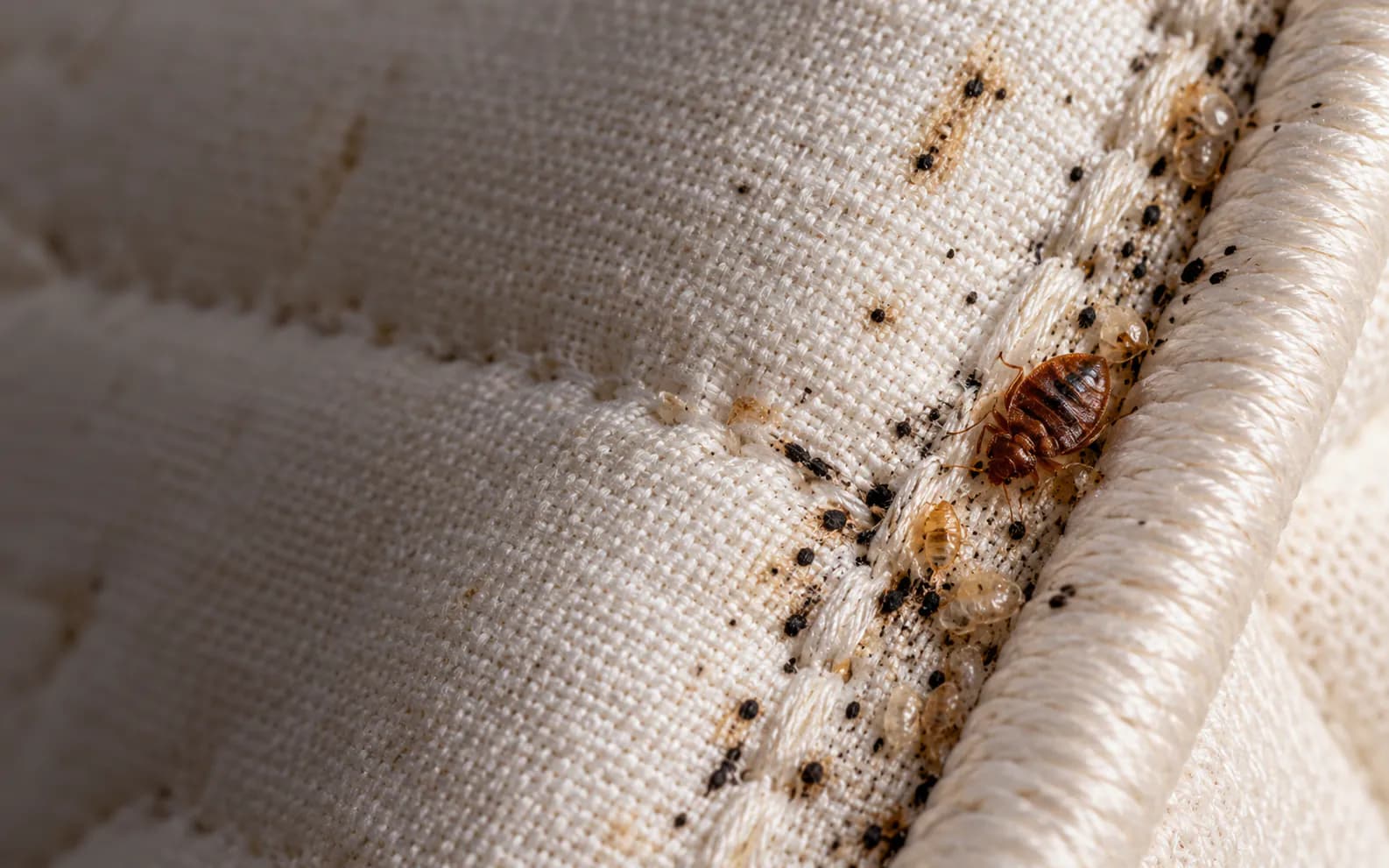
- Small brown spots on bedding or furniture: the NHS calls these "bedbug poo".
When a technician inspects a bed, these four confirm it:
- Live bugs in seams, joints and cracks close to the bed.
- Pale, empty skins that young bed bugs shed as they grow.
- Tiny pale eggs stuck in seams and crevices.
- Clusters of dark spots along the edge of the mattress, bed base or headboard, where bugs gather.
One sign on its own may be something else. Two or three together, especially blood spots and dark marks in the mattress seams, are a strong reason to get an inspection.
How do you check for bed bugs, step by step?
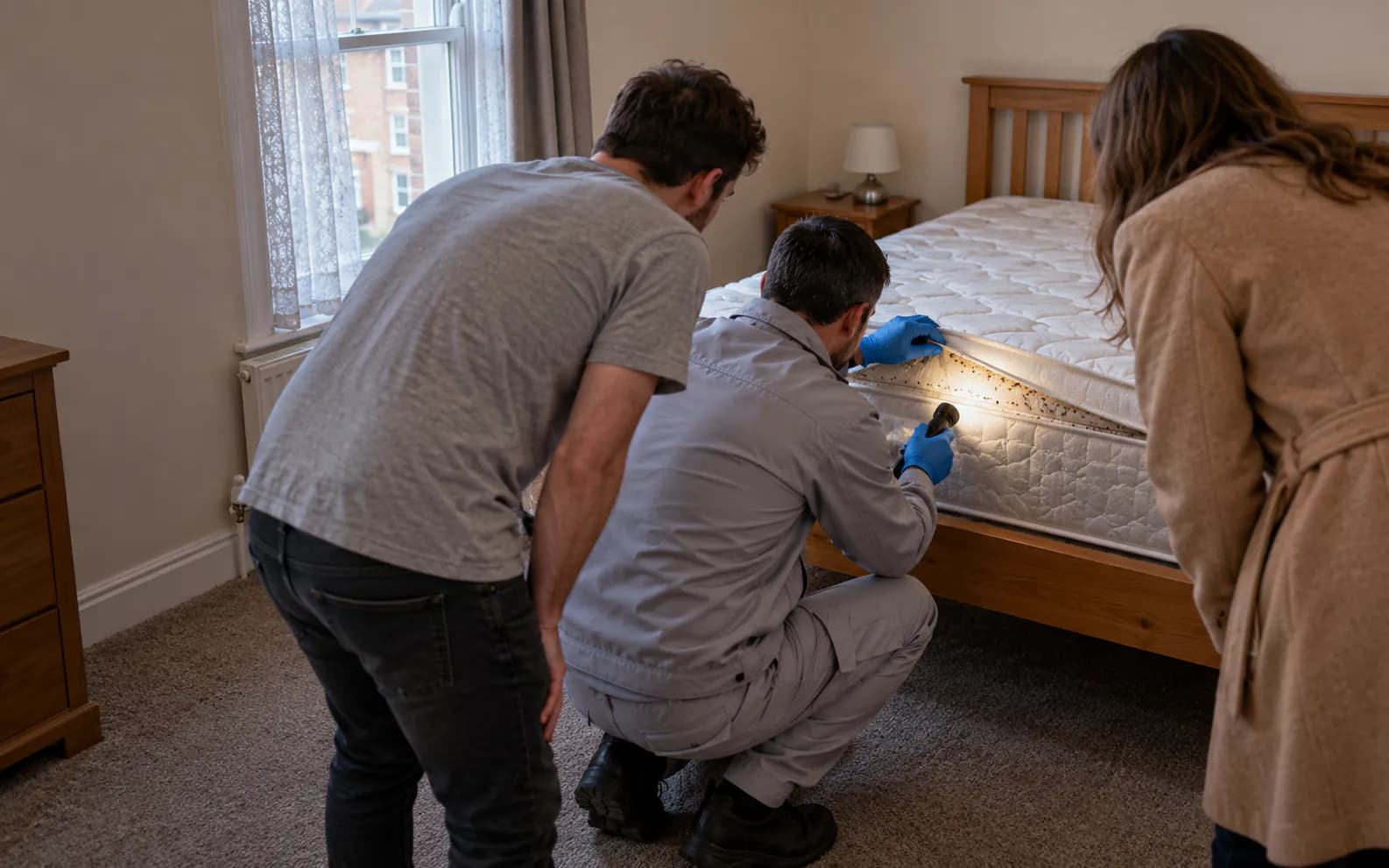
Work from the mattress outwards, in daylight, with a bright torch and a flat card such as an old bank card.
- Strip the bed and put the bedding straight into a bag for a 60C wash.
- Check the mattress seams, piping and labels first, running the card along each seam to push out anything hiding.
- Lift the mattress and check its underside and the corners of the bed base.
- Check the bed frame: joints, slats, screw holes and the back of the headboard where it meets the wall.
- Check furniture next to the bed: bedside tables, drawer runners and the joints underneath.
- Check skirting boards and carpet edges within a couple of metres of the bed.
- Check any sofa or chair someone sleeps on, under the cushions and along the frame.
- Photograph anything you find, close up and in focus, to show a pest controller.
What a technician looks for first is the mattress seam nearest the pillow end and the headboard joints. That is where clusters of dark spots usually show before live bugs are easy to find.
What do bed bugs look like?
Adult bed bugs are flat, oval, wingless insects, reddish-brown and big enough to see with the naked eye. After feeding they look darker, rounder and more swollen. Young bed bugs are smaller and paler, and can look almost see-through until they have fed. Eggs are tiny, pale and usually stuck in seams and cracks.
Bed bugs don't fly or jump. They crawl, which is why they are found close to where people sleep or sit for long periods. If you have caught something and aren't sure what it is, our pest identifier helps you narrow it down.
What do bed bug bites look like?
The NHS says bed bug bites "can be raised and itchy" and are "often in a line or grouped together". On white skin they usually look red or pink; on black or brown skin they may look brown, red or purple and be harder to see.
Reactions vary. Two people can share a bed and only one may notice bites. The NHS says the bites usually clear up on their own in a week or so, and that a pharmacist can advise on hydrocortisone cream or antihistamines if they are very itchy.
Bites are the sign most people notice first, but they are the least reliable on their own. Flea bites, mosquito bites and skin conditions can look similar. Our guide to bed bug bites vs flea bites compares them side by side.
Where do bed bugs hide?
Bed bugs hide in tight gaps close to where people sleep. Use this table as your checklist.
| Where to check | What to look for |
|---|---|
| Mattress seams, piping and labels | Dark spots, blood marks, shed skins, live bugs |
| Underside of the mattress and the bed base | Clusters of dark spots, especially at corners |
| Bed frame joints, slats and screw holes | Live bugs and eggs in the cracks |
| Headboard, especially where it meets the wall | Dark spots and bugs behind it |
| Bedside tables and drawers | Bugs in joints and under drawer runners |
| Skirting boards and carpet edges near the bed | Dark spots and shed skins |
| Sofas and chairs used for sleeping | Seams, cushions and the frame underneath |
| Curtains, picture frames and loose wallpaper | Bugs in folds and edges in heavier infestations |
If you rent or live in a flat, tell your landlord and neighbours, because bed bugs can spread between rooms and homes.
Do bed bug monitors and traps work?
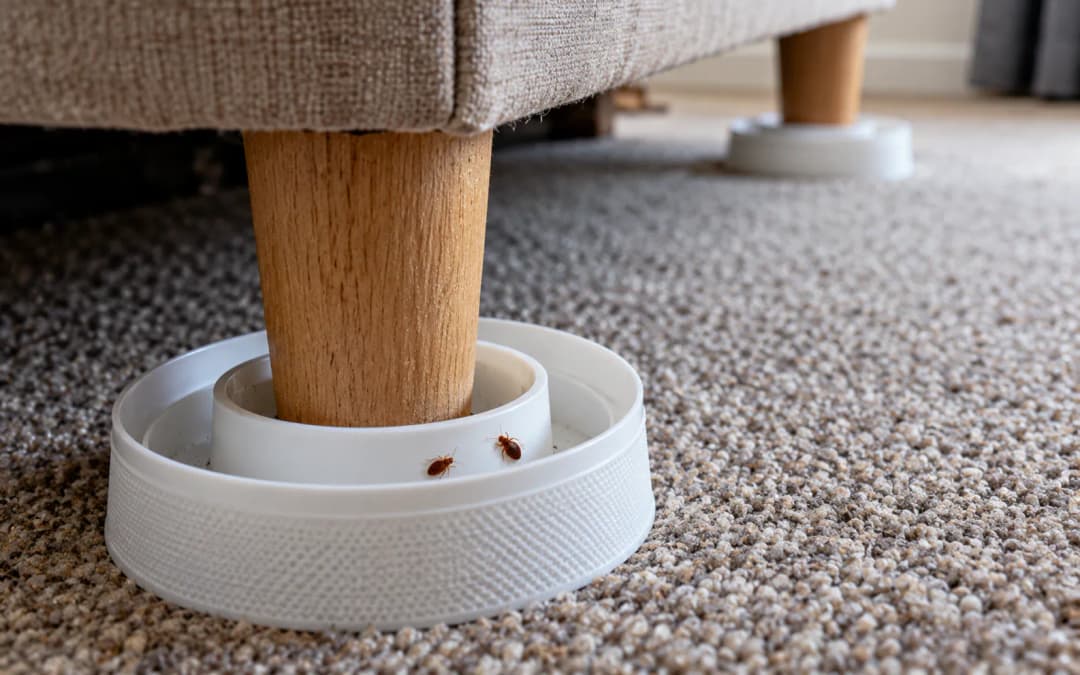
They help confirm a suspicion, but they don't clear an infestation. Monitors placed under the bed legs or near the headboard catch bugs travelling to and from the bed. Derby City Council sells a pack of three monitors for £30 online in its 2026/27 fees.
A professional inspection is still the most reliable check. A trained eye knows where bed bugs gather in each type of bed and sofa, and can tell bed bug marks from other stains.
Are bed bugs a sign of a dirty home?
No. The NHS says "bedbugs are found in both clean and dirty places", although regular cleaning helps you spot them early. They don't come from dirt; they arrive on people and their belongings.
The NHS advises:
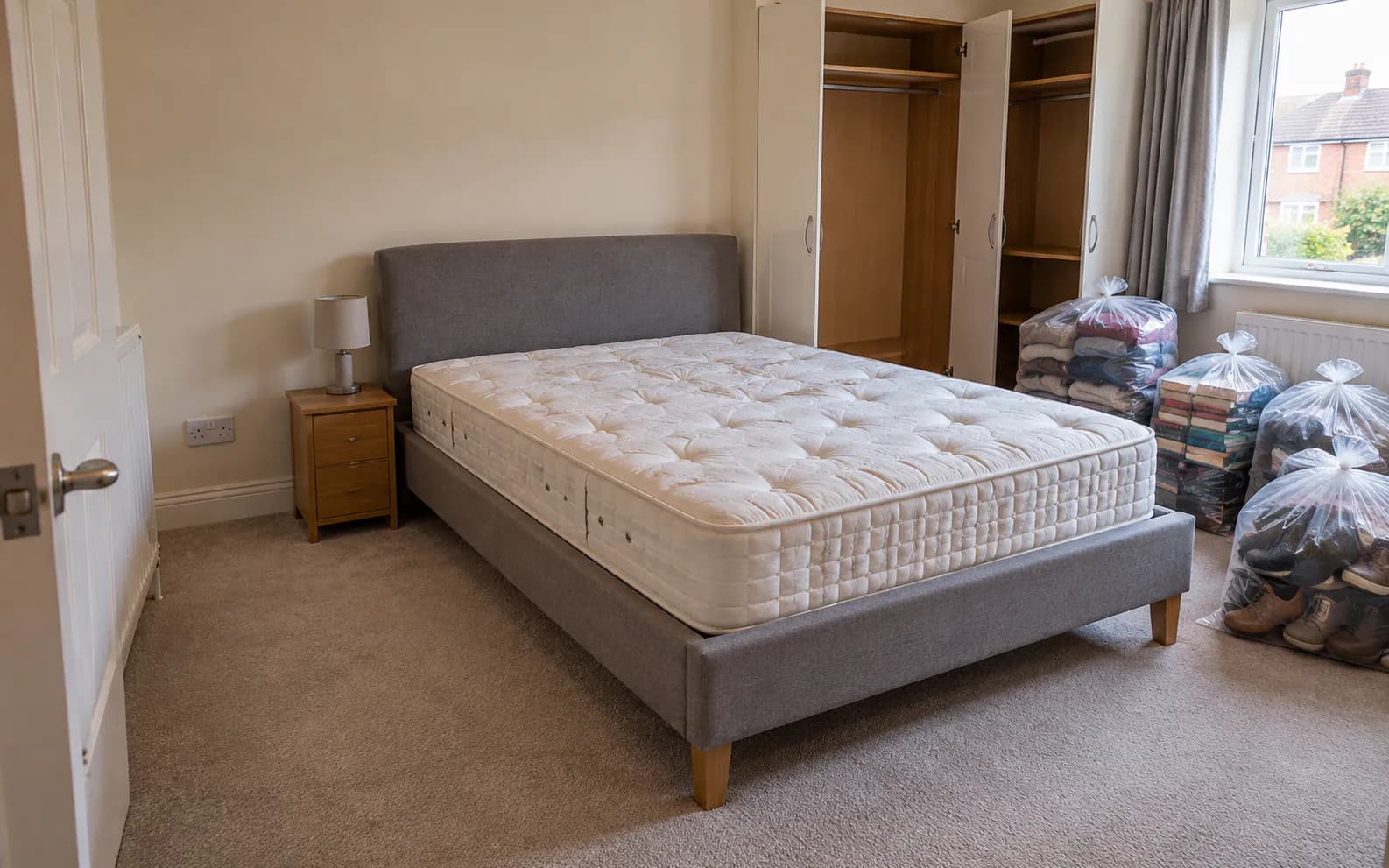
- not keeping clutter around your bed;
- not bringing second-hand furniture indoors without carefully checking it first;
- not taking luggage or clothing indoors without checking it carefully if you have come from somewhere with bed bugs.
Could it be something other than bed bugs?
Yes, so look for more than one sign before you decide. This table compares common causes of bites and marks in a bedroom.
| Sign | Bed bugs | Fleas | Other causes |
|---|---|---|---|
| Where bites appear | Skin exposed in bed: face, neck, arms (NHS) | Usually in groups below the knees (NHS) | Varies |
| Pattern | Often in a line or grouped together (NHS) | Groups | Often single |
| Marks on bedding | Blood spots, small brown spots | Small dark specks, often where pets sleep | Usually none |
| Insects seen | Flat, oval, crawling, in seams | Tiny, jumping, often on pets | Mosquitoes, midges or none |
| Pets involved | No | Usually | No |
If pets are scratching and the bites are on your ankles and lower legs, fleas are more likely. See our guide on how to get rid of fleas in the house.
Can you have bed bugs without being bitten?
Yes. Some people react strongly to bites and others show little or nothing, so a household can have bed bugs for weeks before anyone notices. That is why the marks on the mattress matter: blood spots and dark spots are there whether or not anyone reacts.
If one person in a shared bed has bites and the other doesn't, it can still be bed bugs. Check the bed for the other signs rather than assuming the bitten person picked them up elsewhere.
Where do bed bugs come from?
Bed bugs travel with people and their things. The NHS warnings point to the usual routes: second-hand furniture brought indoors without checking, and luggage or clothing from somewhere with bed bugs. In practice that means hotels and holiday lets, overnight stays, second-hand beds, sofas and headboards, and moving into a home where the previous occupants had them.
In flats, shared houses and student lets in cities such as Leicester and Nottingham, they can also spread between rooms. Citizens Advice lists bed bugs among the pests a landlord may need to deal with and says to report problems promptly. Our guide to bed bugs and landlord responsibility explains who pays.
What should you do if you find bed bugs?
Act quickly, but don't move everything around. The NHS says "If you think you have bedbugs, you should contact your local council or pest control service", and that it's very difficult to get rid of them yourself. In the meantime:
- keep sleeping in the same bed so you don't spread bugs to other rooms;
- wash bedding and clothing at 60C and tumble dry on hot for at least 30 minutes, as the NHS advises;
- bag items you can't wash and freeze them for 2 to 3 weeks;
- don't throw furniture out until it has been inspected;
- tell your landlord in writing if you rent.
Our guide on how to get rid of bed bugs explains the treatment options, and bed bug treatment cost sets out typical prices.
One customer who discovered bed bugs after moving home wrote:
"I had moved into a property and discovered that it had bed bugs, Gino came out same day and carried out the treatment, he is very knowledgeable and polite and always cleans up after him self, I highly recommend him for any pest issues." — Mαργαρίτα Τσουμπανά, Google review, September 2022
When to call a professional
Call a pest controller if you find live bugs, blood spots or dark spots in mattress seams, or if bites keep appearing after you've changed the bedding. An early inspection costs less than treating an infestation that has spread to several rooms or the flat next door.
Urgent Pest Control starts every bed bug job with an inspection of the bed, the furniture and neighbouring rooms, then uses heat above 56°C, residual insecticide over 2 to 3 visits, or both. We use unmarked vehicles, and we'll explain the likely cost before any work starts. We cover bed bug treatment in Leicester, Nottingham, Derby and Lincoln, 7 days a week from 6am to 8pm, with emergency call-outs 365 days a year.
Send photos by WhatsApp or call 07999 935 929, or book online.
Sources
Frequently Asked Questions
About the author
The Urgent Pest Control team
A family-run pest control company based in Southwell, treating homes and businesses across Nottinghamshire, Derbyshire, Leicestershire and Lincolnshire since 2020. Our guides are written from the jobs we do and checked against UK sources. More about us
Cite this guide: “How to Check for Bed Bugs: 7 Signs and Where to Look”, Urgent Pest Control, 20 October 2026. https://urgentpestcontrol.uk/blog/signs-of-bed-bugs