Biscuit Beetles (Drugstore Beetles) and Plaster Beetles in the Home
Tiny brown or black beetles in the kitchen or a new-build home? How to tell biscuit beetles from plaster beetles, why they appear and how to get rid of them.

By the Urgent Pest Control team
Updated · 7 min read
The short answer
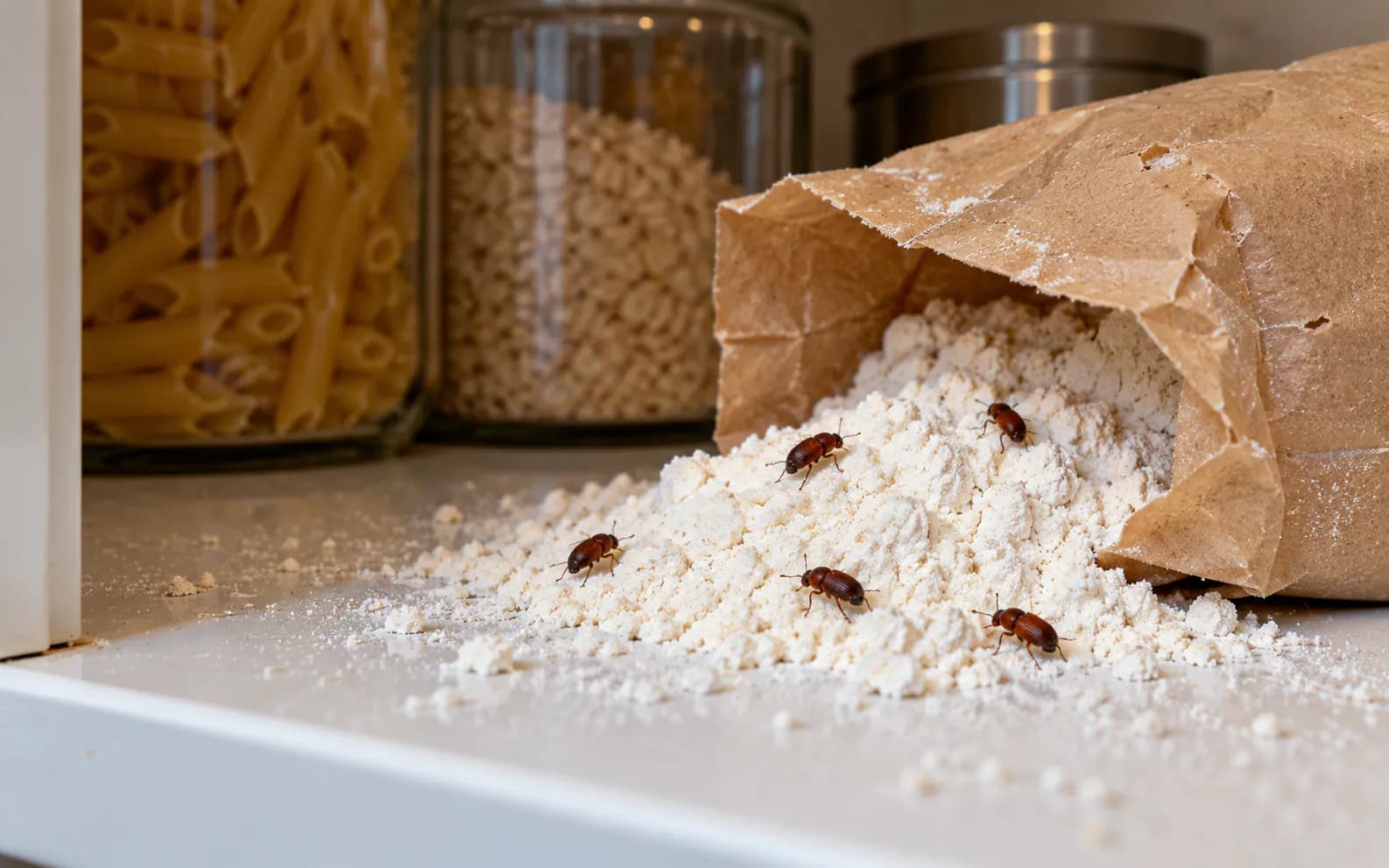
Biscuit beetles, also called drugstore beetles, are 2–4mm reddish-brown beetles that breed in old dry food such as flour, spices and biscuits; bin the infested food and clean the cupboard. Plaster beetles are tiny, almost black beetles about 2mm long that feed on mould on damp plaster, often in new builds; drying and ventilating the rooms ends them.
- Biscuit beetles (Stegobium paniceum, also called bread or drugstore beetles) live in stored dry food; finding and binning the source usually solves the problem.
- Biscuit beetles near fireplaces or vents with no food nearby may be coming from old bird or wasp nests in the loft.
- Plaster beetles are about 2mm, almost black, and feed on microscopic mould on damp plaster.
- In a new build, plaster beetles are a sign of damp; the fix is drying and ventilation, not just insecticide.
- The Natural History Museum says biscuit beetles are not harmful to health and do not eat wood; plaster beetles feed only on mould.
On this page
Biscuit beetles, also known as drugstore beetles, are small reddish-brown beetles, 2–4mm long, that breed in old dry food; plaster beetles are tiny, almost black beetles about 2mm long that feed on mould on damp plaster, often in new-build homes. Bin the infested food to stop biscuit beetles, and dry and ventilate the rooms to stop plaster beetles. If they persist, Urgent Pest Control's beetle treatment covers small household beetles in homes across Nottinghamshire, Derbyshire, Leicestershire and Lincolnshire.
Both beetles cause a lot of worry because they appear suddenly and in numbers, but neither is dangerous. This guide explains how to tell them apart, why they appear and how to get rid of each.
How do you tell biscuit beetles and plaster beetles apart?
Colour, location and what they are feeding on usually settle it. Biscuit beetles are reddish-brown and turn up in food cupboards; plaster beetles are almost black and turn up on walls, windowsills and in rooms with damp plaster.
| Biscuit (bread) beetle | Plaster beetle | |
|---|---|---|
| Size | 2–4mm | About 2mm |
| Colour | Reddish-brown | Almost black |
| Where found | Food cupboards, larders, near old dry food; sometimes near fireplaces and vents | Walls, windowsills and corners of rooms with damp plaster; new builds and damp older homes |
| What they eat | Flour, bread, spices, dried foods, drugs and many plant and animal products | Microscopic moulds and mildew |
| What it tells you | There is a forgotten food source | There is damp in the plaster |
| Fix | Find and bin the food source, clean the cupboard | Dry and ventilate the rooms |
Sources: Natural History Museum biscuit beetle guide and the BPCA's plaster beetle advice in Professional Pest Controller.
If you can't tell what you have, a clear close-up photo usually allows a pest controller to identify it, or try our pest identifier.
What are biscuit beetles (drugstore beetles)?
Biscuit beetles are stored-food beetles that breed in dry food in kitchen cupboards. The biscuit beetle, also called the bread beetle or drugstore beetle (Stegobium paniceum), is a common pest of stored food. The Natural History Museum describes adults as 2–4mm, reddish-brown, with fine grooves along the wing cases and the head mostly hidden under the thorax. It is found worldwide, in houses, stores, warehouses and kitchens across central and northern Europe, including the UK, "sometimes in very large numbers".
It feeds on a wide range of plant and animal products, including bread, flour, hot spices and drugs. The museum is clear that it "is not harmful to health and does not feed on wood", even though it looks like the furniture beetle (woodworm).
How do biscuit beetles breed so fast?
Warmth speeds them up. The museum says that below 15°C there is one generation a year, at moderate temperatures two, and above 23°C there may be five or more. Females lay eggs on or near food, and newly hatched larvae, under 1mm long, can bite into packaged or hidden food. Larvae grow to about 5mm, then pupate in a small cell made of food for at least nine days before emerging as adults.
A warm kitchen cupboard next to an oven or boiler is ideal for them, which is why a single forgotten bag of flour can produce dozens of beetles.
How do you get rid of biscuit beetles?
Find the food they are breeding in and throw it away. The museum says that if adults are found, you should "search thoroughly for the larvae's food source", that rarely used dried foods such as flour or spices are often the source, and that removing old, disused food should eliminate an infestation.
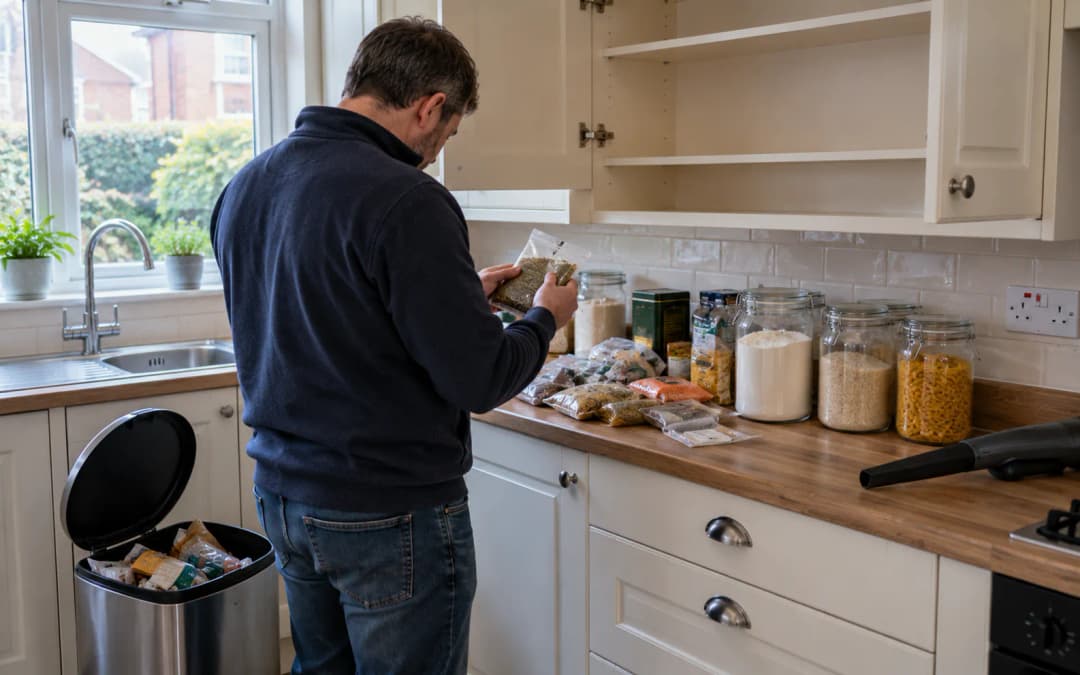
Work through the cupboard methodically:
- empty every shelf, including the back corners and any shelves above or below;
- check flour, spices, stock cubes, dried herbs, pasta, rice, cereal, biscuits, crackers, dried fruit, nuts, chocolate and pet food or bird seed;
- look inside opened and unopened packets for beetles, small larvae, holes or dusty residue;
- bag and bin anything infested, then take it outside;
- vacuum the shelves and crevices, including hinge gaps, then wipe them clean and let them dry;
- keep dry food in airtight glass or plastic containers from now on;
- buy smaller quantities of rarely used ingredients.
The Food Standards Agency's Safer Food, Better Business pest control guidance gives the same signs for food businesses: "moving insects, particularly in dry food, small maggots", and says food that pests may have touched should be thrown away.
What if there is no food nearby?
If biscuit beetles keep appearing near a fireplace or air vent with no food source in sight, look upwards. The Natural History Museum notes such beetles "may come from wasp or bird nests in the attic", and that birds can drop bread down chimneys. Clearing old nests, once they are no longer in use, and stopping birds getting into the loft should end it.
What are the small black beetles in a new build?
They are usually plaster beetles: tiny mould-feeding beetles that appear where plaster is damp. The BPCA's advice, published in Professional Pest Controller, says that "in a new house where plaster is still damp, or where damp plaster occurs in old property, very tiny, almost black beetles about 2mm long may be found", and that both adults and larvae feed on microscopic moulds and mildew.
They feed on the mould, not on food or the plaster itself. They are a symptom: there is enough moisture in the wall, ceiling or behind fittings for mould to grow.
Why do new builds get plaster beetles?
Because new homes are still drying out. New homes can hold a lot of moisture while plaster, screeds and paint dry out, and if the house is not ventilated well, mould grows on surfaces where you may not see it, such as behind kitchen plinths, inside cupboards or behind furniture against cold walls. Plaster beetles find that mould.
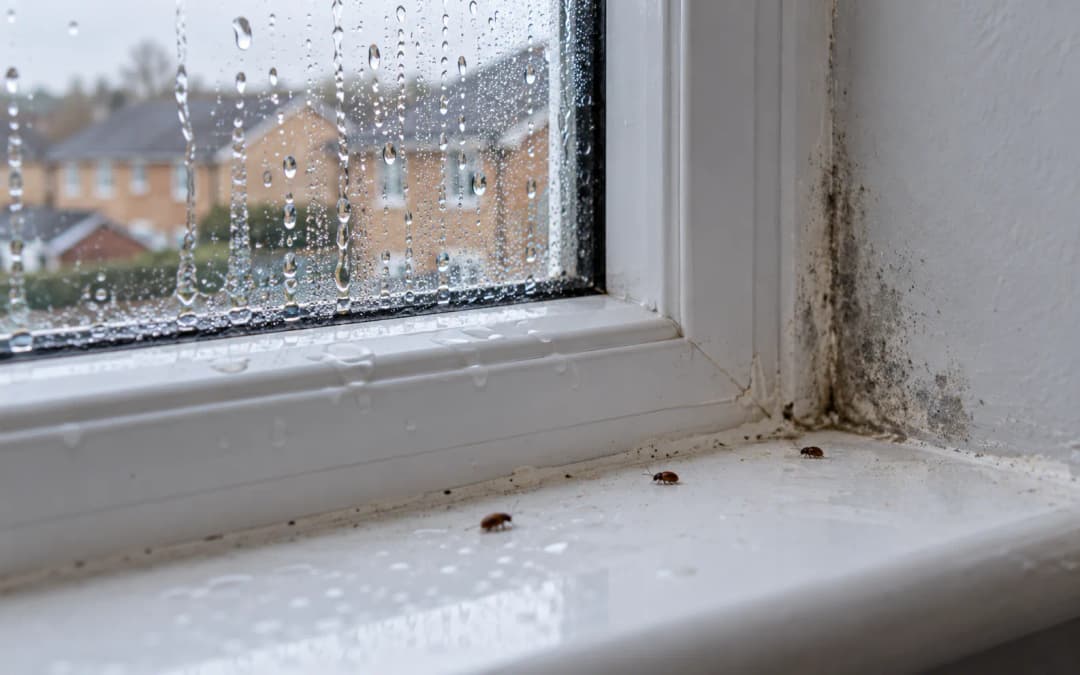
You are more likely to see them:
- in the first months after moving into a new home, especially over autumn and winter;
- in rooms that are kept closed, cold or with windows shut;
- behind or under kitchen units and bath panels;
- where there is a leak, a cold spot or condensation on external walls.
If beetles keep appearing alongside visible damp or mould, report it to your developer in writing, with photos and dates. Insecticide on its own won't fix a damp wall.
How do you get rid of plaster beetles?
Dry the rooms out and improve ventilation, and the beetles die out. The BPCA advice is that plaster beetles "will die out if the rooms are thoroughly dried and ventilated".
Practical steps, many taken from the government's guidance on damp and mould in the home:
- use kitchen and bathroom extractor fans, and check they are working;
- keep trickle vents open where fitted, and ventilate when cooking and after bathing;
- dry laundry outdoors where possible;
- heat the house steadily rather than leaving rooms cold;
- pull furniture slightly away from external walls;
- vacuum up the beetles and wipe mould off surfaces;
- find and fix any leak.
Expect it to take some weeks for a new house to dry out. On new-build estates around Nottingham, Derby, Leicester and Lincoln we typically find the beetles concentrated behind kitchen plinths, inside sink units and along cold external walls, which is where the moisture sits. A professional can treat the voids where the beetles are concentrated to reduce numbers while the building dries.
When to call a professional
Call a professional if you can't find the source, if beetles keep appearing after you have cleared the cupboards or improved ventilation, if they are in several rooms, or if you are not sure what they are. Several small beetles look alike, and the right treatment depends on the species: carpet beetles, for example, damage textiles and need a different approach (see our guide to carpet beetles).
We start by identifying the beetle and finding where it is breeding. For food beetles we help you locate the source and treat the cupboard voids; for plaster beetles we treat the voids where they gather and give clear advice on moisture and ventilation; for textile beetles we use our carpet beetle treatment with residual insecticide and monitoring traps over 4–6 weeks.
We'll explain the likely cost before any work starts; prices depend on the pest, the property and the time of the visit (see our pest control prices). We work 7 days a week, 6am to 8pm, across Nottingham, Derby, Leicester, Lincoln and the surrounding counties. Book online, or call or WhatsApp 07999 935 929 with a close-up photo. You may also find our guide to silverfish useful, since silverfish are another sign of damp.
Sources
- Natural History Museum: bread or biscuit beetle identification guide
- Natural History Museum: common insect pest species in homes
- Professional Pest Controller (BPCA): pest advice for controlling plaster beetle
- Food Standards Agency: Safer Food, Better Business, pest control
- GOV.UK: understanding and addressing the health risks of damp and mould in the home
Frequently Asked Questions
About the author
The Urgent Pest Control team
A family-run pest control company based in Southwell, treating homes and businesses across Nottinghamshire, Derbyshire, Leicestershire and Lincolnshire since 2020. Our guides are written from the jobs we do and checked against UK sources. More about us
Cite this guide: “Biscuit Beetles (Drugstore Beetles) and Plaster Beetles in the Home”, Urgent Pest Control, 20 October 2026. https://urgentpestcontrol.uk/blog/biscuit-and-plaster-beetles