False Widow Spiders in the UK: Are They Dangerous?
Are false widow spiders dangerous? What a noble false widow bite is really like, how to identify one, NHS first aid and when treatment is worth it.

By the Urgent Pest Control team
Updated · 7 min read
The short answer
False widow spiders are not dangerous to most people. The noble false widow, the UK's most talked-about species, bites only when trapped against skin. The Natural History Museum says its venom is not particularly potent, the pain usually lasts 1 to 12 hours, and it is often no worse than a wasp sting. Keep any bite clean.
- Six false widow species (genus Steatoda) live permanently in the UK; the noble false widow, Steatoda nobilis, is the largest and the one in the news.
- The Natural History Museum says bite pain ordinarily lasts 1 to 12 hours, rarely more than 24, and is often no worse than a wasp sting.
- Of over 650 UK spider species, only around 12 are recorded as having bitten humans (Natural History Museum).
- Severe reactions reported in the media are most likely a secondary bacterial infection of an unclean wound.
- Most false widows can be left alone or moved outside; treatment is worth it only where numbers build up in rooms people use.
On this page
- What is a false widow spider?
- Are false widow spiders dangerous?
- How do you identify a false widow spider?
- What does a false widow bite look and feel like?
- What should you do if a false widow bites you?
- Why do you see more false widows in autumn?
- How do you keep false widows out of your home?
- When to call a professional
False widow spiders are not dangerous to most people. The noble false widow can bite if it is trapped against skin, but the Natural History Museum says its venom is not particularly potent and the pain, which ordinarily lasts 1 to 12 hours, is often no worse than a wasp sting. Where numbers keep building up in a home or business, our spider control service can help.
This guide sets out the facts from the Natural History Museum (NHM) and the NHS without the scaremongering: how to identify false widows, what a bite is really like, what to do if you are bitten, and when treatment is worth paying for.
What is a false widow spider?
A false widow is one of six spider species in the genus Steatoda that live permanently in the UK. They take the name from their resemblance to the true black widows, which belong to a different genus.
The Natural History Museum says the three most common are:
- the noble false widow (Steatoda nobilis), the largest and the one most often in the news;
- the cupboard spider (Steatoda grossa), found mainly indoors;
- the rabbit hutch spider (Steatoda bipunctata), found commonly across the UK in sheds, gardens and outbuildings.
The noble false widow was first recorded in the UK in the 1870s, likely as a stowaway on cargo ships from its native Madeira and the Canary Islands. The museum says it gained a strong foothold only from the 1980s, forming established populations in the majority of southern counties, and has since spread northwards.
Are false widow spiders dangerous?
For healthy adults and children, no. The NHM says false widows are only known to bite when provoked or trapped against skin, and that the venom is "not particularly potent".
To put that in context, the museum says over 650 spider species live in the UK and only around 12 are recorded as having bitten humans. The noble false widow is one of those few, and it is the one behind most headlines. The museum also says males are more prone to biting, because they wander in search of females and often end up indoors.
The alarming stories of rotting flesh, the NHM explains, are usually not backed up by formal identification of the spider, and the extreme effects are most likely the result of a secondary infection, probably bacterial, when a wound is not kept clean. The museum's page does not report any deaths from false widow bites.
How do you identify a false widow spider?
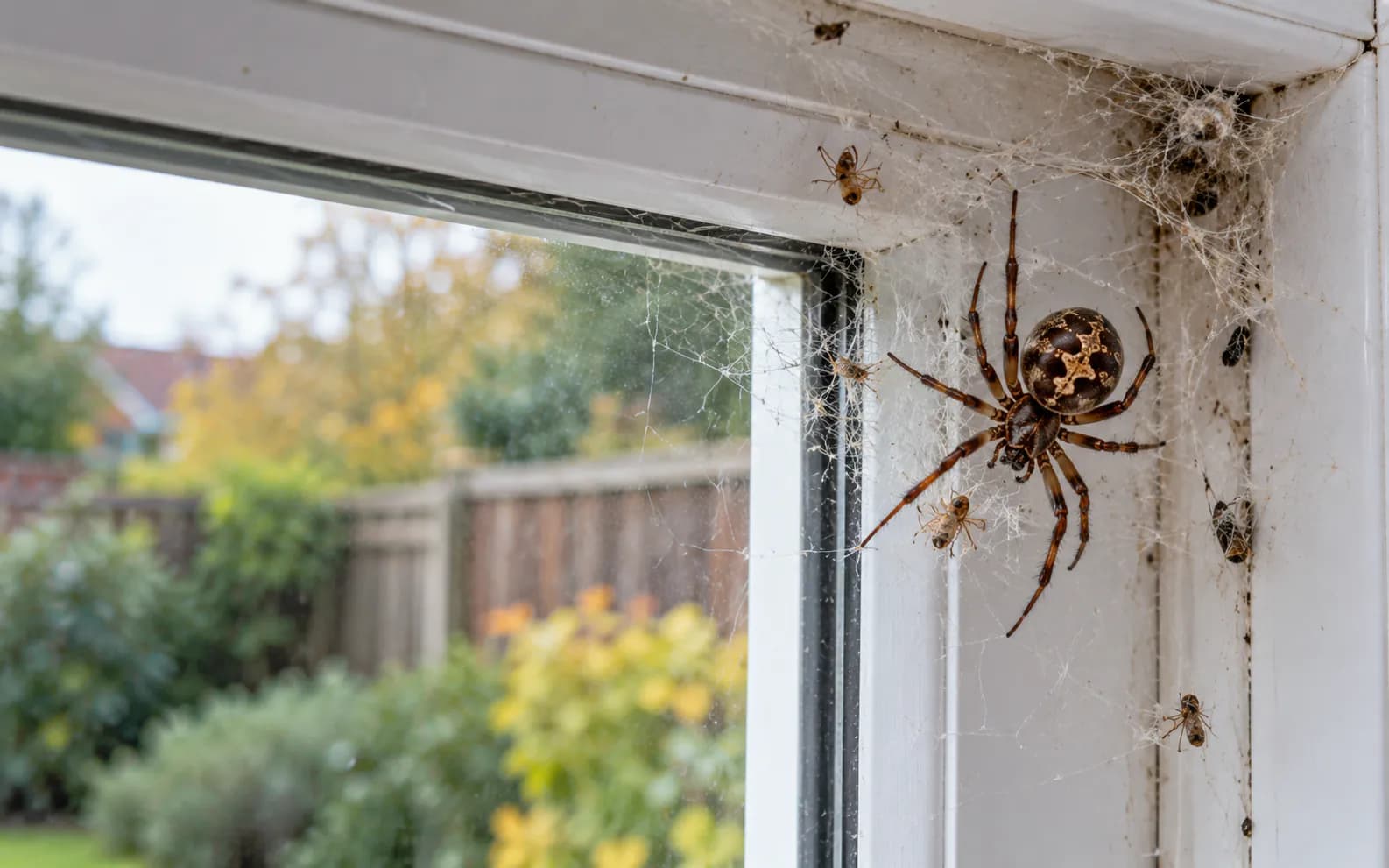
Look for a dark, round, shiny abdomen, fairly short reddish-brown legs and an untidy tangle of a web rather than a neat orb. The NHM's false widow identification guide gives these differences:
| Species | Body length | Key features | Where you find it |
|---|---|---|---|
| Noble false widow | Female 8.5 to 14mm, male 7 to 10mm | Dark body, uniformly red to brown legs; cream markings, clearer in males | Top corners of rooms, window frames, conservatories, outside walls |
| Cupboard spider | Female 6.5 to 10mm, male 4 to 6mm | Usually darker, purplish-brown; abdomen markings often faint | Low, hidden spots under furniture and in dark corners |
| Rabbit hutch spider | Female 4.5 to 7mm, male 4 to 5mm | Light band down the centre of the abdomen; striped legs | Sheds, pet hutches, garden clutter |
The museum notes that noble false widow webs are usually at least 1.5 metres off the ground, and that in homes they often prefer kitchens and conservatories. All false widows build a loose tangle of criss-cross threads.
Two common spiders are often mistaken for them. The lace web spider (Amaurobius) has a matt, hairy abdomen rather than a shiny one and is most often found outdoors on fences, sheds and walls. The missing sector orb weaver (Zygiella x-notata), common around window frames, builds a round orb web with one section missing. If you're still not sure, our pest identifier can help, or send us a photo.
What does a false widow bite look and feel like?
Usually like a sharp sting followed by pain at the site that may spread outwards, then settles. The NHM says the pain ordinarily lasts between 1 and 12 hours, rarely more than 24, and is often no worse than a wasp sting.
As with other bites, the skin may be red and a little swollen around the puncture. What should worry you is not the first few hours but what happens over the next few days: increasing redness, heat, swelling or pus are signs of infection, and that is when to get the bite checked.
What should you do if a false widow bites you?
Treat it like any other insect or spider bite, and keep it clean. The NHS advice on insect bites and stings is the guide to follow:
- Wash the area with soap and water to lower the risk of infection.
- Apply a cold pack or a cold, wet cloth to reduce swelling, and keep the area raised if you can.
- Take paracetamol or ibuprofen for pain, and consider an antihistamine or hydrocortisone cream for itching.
- Don't scratch it, and avoid home remedies.
The NHS says to see a pharmacist if the skin around a bite is hot, red, swollen or painful, or there is pus or fluid; to get an urgent GP appointment or call NHS 111 if symptoms get worse or don't improve; and to call 999 for signs of a serious allergic reaction, such as swelling of the lips, mouth, throat or tongue, or difficulty breathing. If you can, keep the spider, or a photo of it, so it can be identified.
Why do you see more false widows in autumn?
Reports peak every autumn, but false widows are present all year. The NHM says males leave the web in search of a mate, often venturing indoors, and that the spiders can actually be seen inside year-round.
A run of autumn headlines doesn't mean numbers have suddenly exploded in your street. It usually means more people are noticing spiders that were already there, often in conservatories, porches and window frames where outside lights draw in the flying insects they eat.
How do you keep false widows out of your home?
Make the house less attractive and deal sensibly with the ones already there. A technician checking a home for false widows looks first at window frames, conservatory roof joints, porch lights and the gaps where cables come in, because that is where webs and prey collect. Use the same checklist:
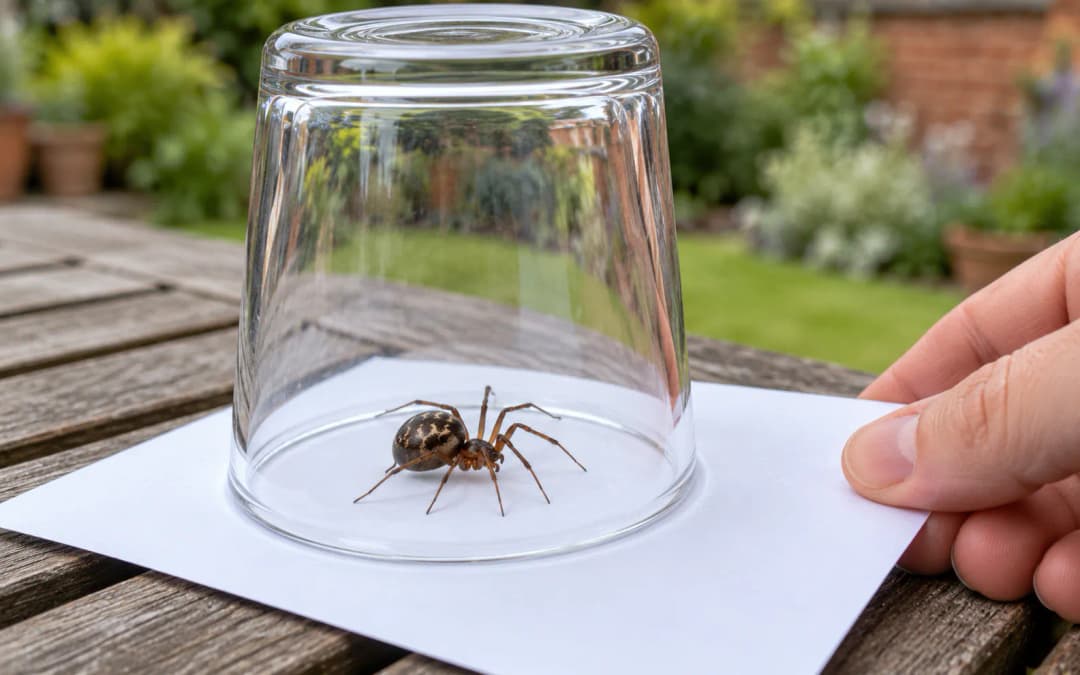
- Leave or relocate. The NHM suggests leaving them in peace or putting them out in a shed, using a glass and a piece of card.
- Check before you handle. Shake out clothing, towels and bedding that have been on the floor or drying outside, and wear gloves when clearing sheds, garages and garden clutter.
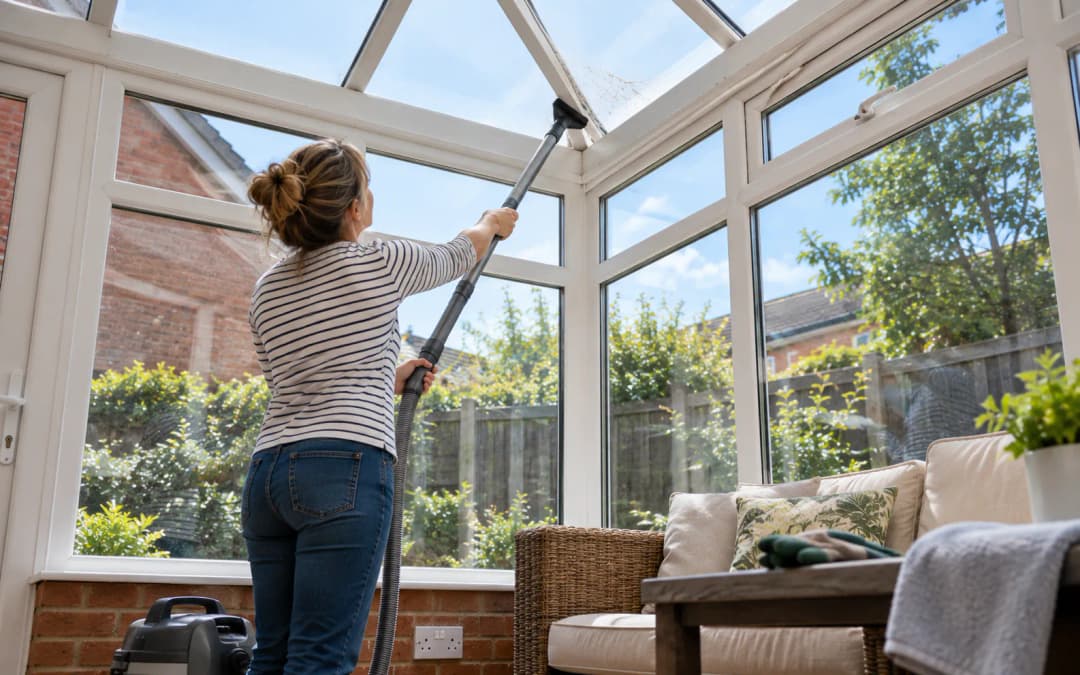
- Clear webs. Vacuum webs from window frames, conservatory roofs and high corners regularly.
- Reduce outdoor lighting by doors and windows. Lights attract flying insects, which bring spiders.
- Seal gaps. Fill gaps around window frames, doors and where pipes and cables enter.
- Cut back clutter. Keep garden rubbish, stacked pots and timber away from the house walls.
Spiders follow food. If autumn also brings swarms of flies into your loft and upstairs windows, our guide to cluster flies explains what may be drawing the spiders in.
When to call a professional
Most false widows don't need professional treatment. It is worth calling us if there are many in a room people use every day, in a child's bedroom or nursery, near someone vulnerable, or in a conservatory, office or business where they keep coming back after webs are cleared.
Urgent Pest Control's spider control service applies a residual barrier treatment at the entry points spiders use, such as window frames, doors, vents and conservatory edges, and gives practical advice on false widows. Prices depend on the property and the time of the visit; see our pest control prices page, and we'll explain the likely cost before any work starts. One customer wrote:
"Dealt with my spider problem very well and gave some great advice." — Olivia Richardson, June 2022, Google review
We work 7 days a week, 6am to 8pm, with emergency call-outs 365 days a year, across Nottinghamshire, Derbyshire, Leicestershire and Lincolnshire. Call or WhatsApp 07999 935 929 with a photo, or book online. For other household insects, see our guides to silverfish and carpet beetles.
Sources
Frequently Asked Questions
About the author
The Urgent Pest Control team
A family-run pest control company based in Southwell, treating homes and businesses across Nottinghamshire, Derbyshire, Leicestershire and Lincolnshire since 2020. Our guides are written from the jobs we do and checked against UK sources. More about us
Cite this guide: “False Widow Spiders in the UK: Are They Dangerous?”, Urgent Pest Control, 20 October 2026. https://urgentpestcontrol.uk/blog/false-widow-spiders