Cluster Flies: Why They Swarm in Your Loft and How to Get Rid of Them
Cluster flies gather in lofts and upstairs windows every autumn. What they are, why your house, how to tell them from house flies, and how to get rid of them.

By the Urgent Pest Control team
Updated · 8 min read
The short answer
Cluster flies are outdoor flies, usually Pollenia rudis, whose larvae live in earthworms. In autumn the adults look for somewhere to hibernate and crawl into lofts and wall voids through gaps around windows and eaves, often in their hundreds or thousands. They are a nuisance rather than a hygiene risk. A residual loft treatment and sealing gaps control them.
- The common cluster fly, Pollenia rudis, develops inside earthworms, not in rubbish or food, according to English Heritage.
- Adults gather on warm south- and west-facing walls in autumn, then enter lofts through gaps around windows and eaves.
- English Heritage says clusters can exceed 1,000 flies, and heating can wake them up in winter.
- Check for bats before any loft treatment: all UK bats and their roosts are protected by law.
- Treatment of the loft in late summer or early autumn, plus proofing, gives the best result.
On this page
- What are cluster flies?
- What is the cluster fly life cycle?
- Why do cluster flies choose my house?
- How do you tell cluster flies from house flies?
- Are cluster flies harmful?
- How do you get rid of cluster flies?
- Do you need to check for bats first?
- What can you do yourself?
- Which homes get cluster flies?
- Does the council treat cluster flies?
- When to call a professional
Cluster flies are outdoor flies, most commonly Pollenia rudis, whose larvae develop inside earthworms. Every autumn the adults look for somewhere to hibernate and crawl into lofts, wall voids and upstairs rooms through gaps around windows and eaves, often in their hundreds or thousands. They are a nuisance rather than a hygiene risk. Vacuum the flies you can see, then a residual treatment of the loft and sealing the gaps controls them; Urgent Pest Control's cluster fly treatment covers homes across Nottinghamshire, Derbyshire, Leicestershire and Lincolnshire.
October is peak cluster fly season. If you have found sluggish flies gathering on a sunny window, or a carpet of dead flies on the loft floor, this guide explains what is going on and what to do.
What are cluster flies?
Cluster flies are a group of flies in the genus Pollenia. English Heritage's cluster fly fact sheet describes the common cluster fly, Pollenia rudis, as a largish black fly with gold and silver hairs on the thorax, prominent eyes and clear wings. Rochdale Borough Council notes that the golden hairs rub off easily, so you may not see them.
Sources give different sizes: English Heritage gives 10–15mm for adults, while a BPCA PestWatch article describes P. rudis as about 7mm long. In practice they look like a slightly larger, slower house fly.
What is the cluster fly life cycle?
It is unusual: cluster fly larvae live inside earthworms, so the flies never breed in your house. According to English Heritage:
- In spring, adult flies leave the buildings where they spent the winter and lay eggs in grass.
- The larvae hatch, find earthworms and develop inside them as parasites.
- New adults emerge in late summer and autumn.
- As it cools, the adults look for somewhere to overwinter indoors.
Because the larvae live in earthworms, cluster flies don't breed in your house, your bins or your food. Homes near fields, lawns and grazing land are more likely to be affected.
Why do cluster flies choose my house?
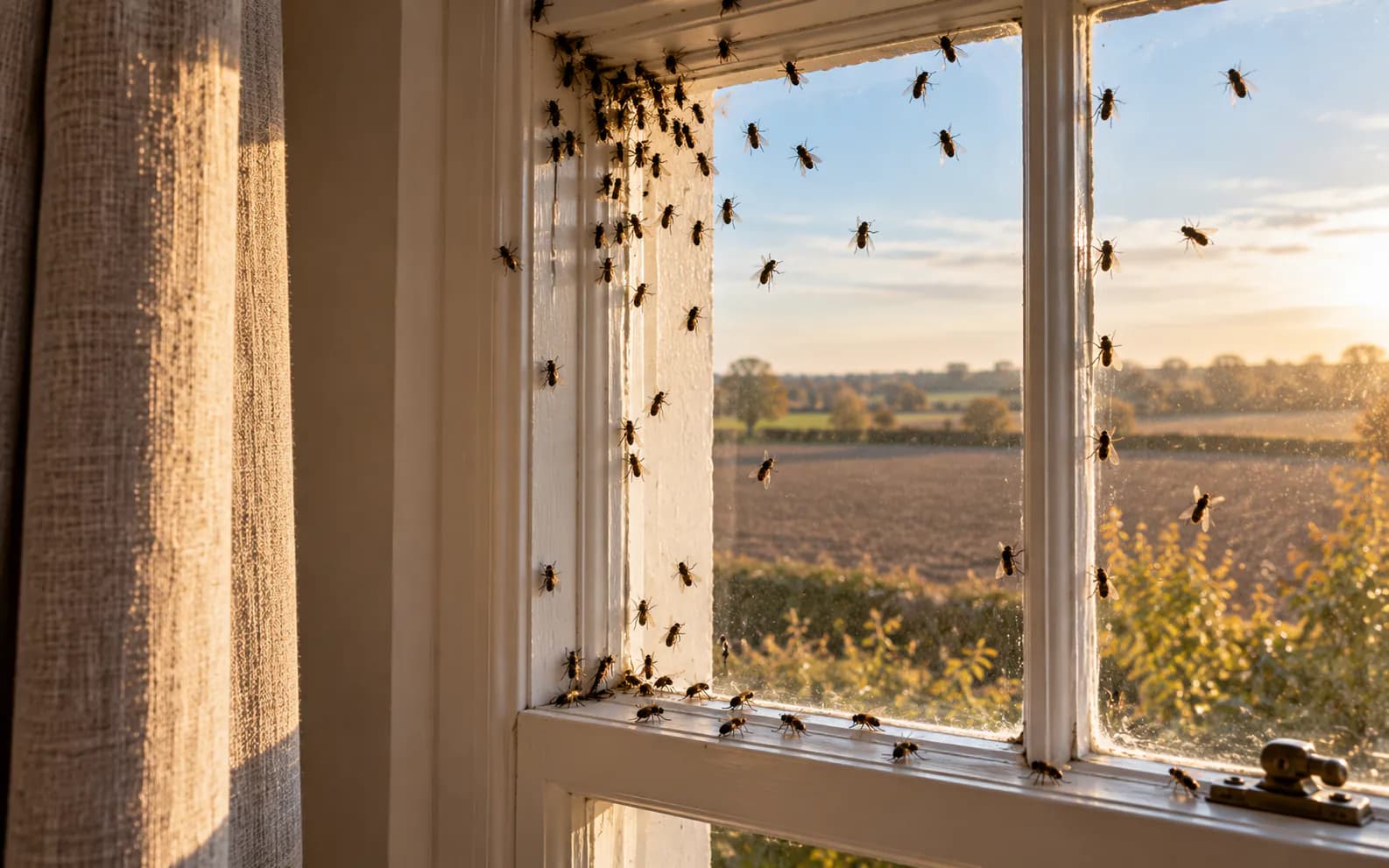
They are attracted to warmth and shelter. English Heritage says they are drawn to warm, sunny, south-facing walls, where they rest before climbing up to enter through gaps around windows or eaves. Rochdale Borough Council adds that in late autumn afternoons they gather on south- and west-facing walls, then move into the roof space or around windows in the evening.
Once inside, they hibernate in large clusters, which English Heritage says may be over 1,000 individuals, often in attics and voids. They stay there until spring. Warm conditions inside, for example when the heating comes on, can wake them up, which is why they appear at windows on sunny days in winter.
Rochdale Borough Council notes it is believed the flies leave a pheromone in the roof that attracts the next year's flies, which may explain why the same houses are affected every year.
How do you tell cluster flies from house flies?
| Feature | Cluster fly | House fly | Blowfly (bluebottle or greenbottle) |
|---|---|---|---|
| Look | Dark, with golden hairs on the thorax that rub off | Grey with a patterned, striped thorax | Larger, metallic blue or green |
| Behaviour | Slow, sluggish; gathers in groups on windows | Fast, active, lands on food | Loud, heavy buzzing |
| Season | Autumn to spring | Mainly summer | Spring to autumn |
| Where they breed | Inside earthworms, outdoors | Rotting refuse and organic waste | Dead animals and meat |
| What it means | Hibernating in your loft or walls | A breeding source nearby | Possibly a dead bird or rodent in a void |
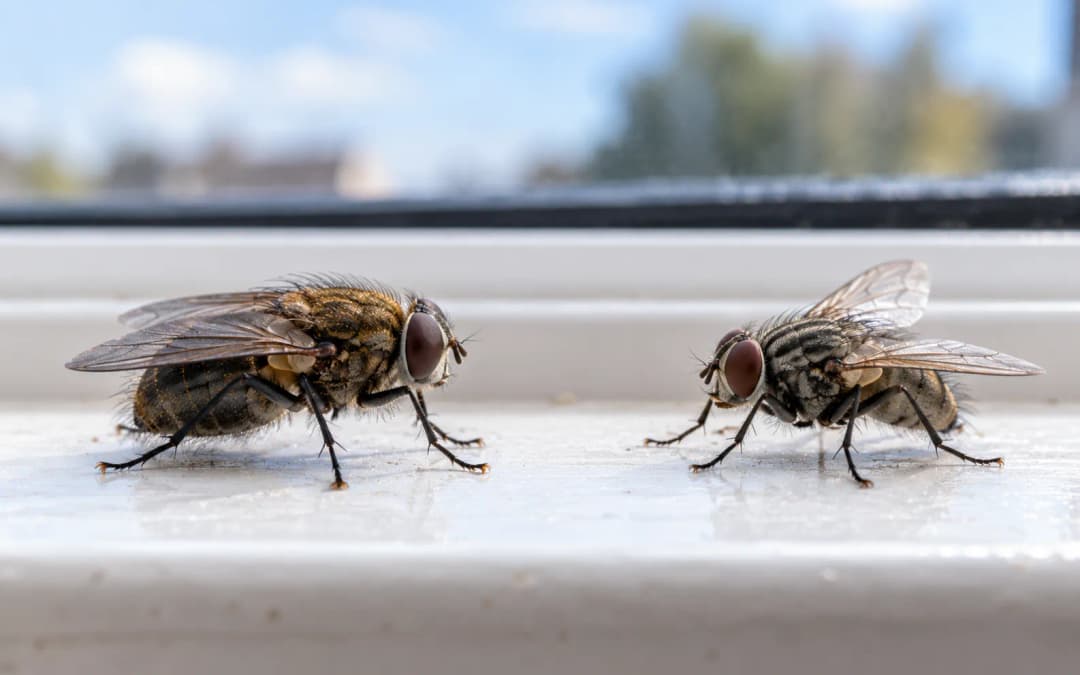
The breeding sites come from English Heritage's fact sheet. If you suddenly have lots of large metallic flies in one room, that usually points to a dead animal, such as a mouse or a bird, in a void or chimney. Our guides to how to get rid of mice and rats in the loft may help.
Are cluster flies harmful?
They are a nuisance, not a health hazard. They don't breed in rubbish or feed on your food. English Heritage says they cause some spotting and staining with fly vomit and excreta, but the main problem is annoyance as they slowly buzz around.
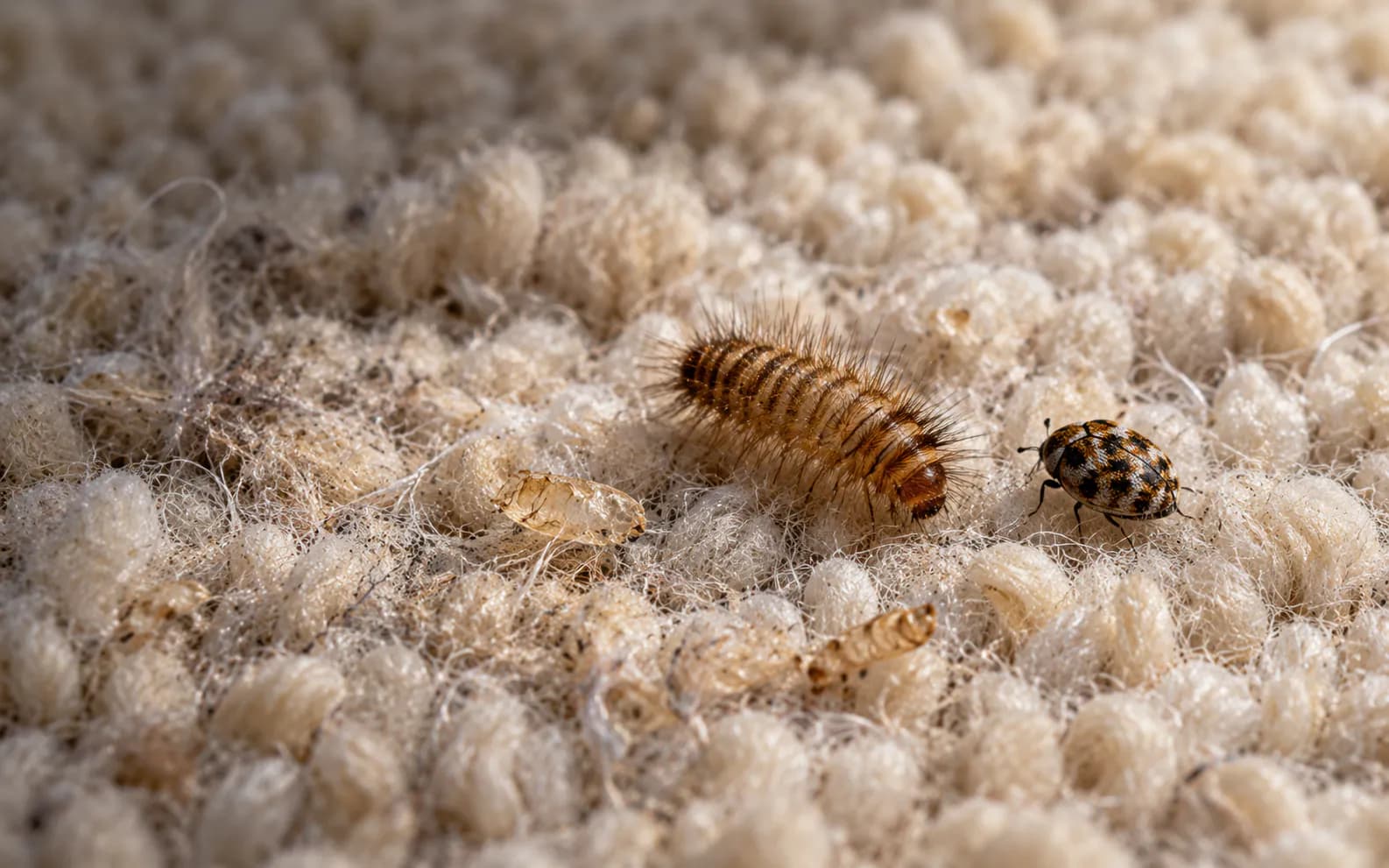
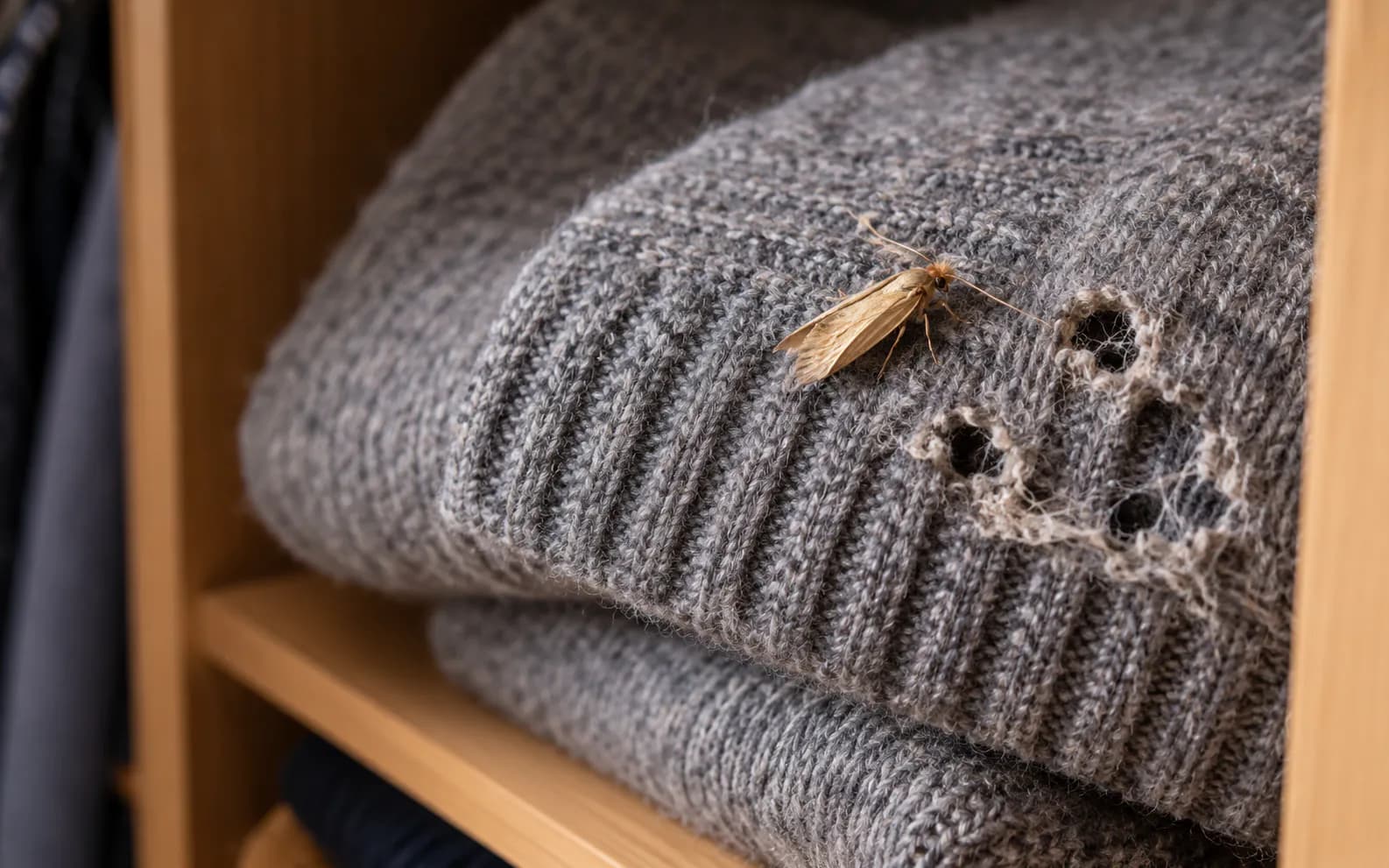
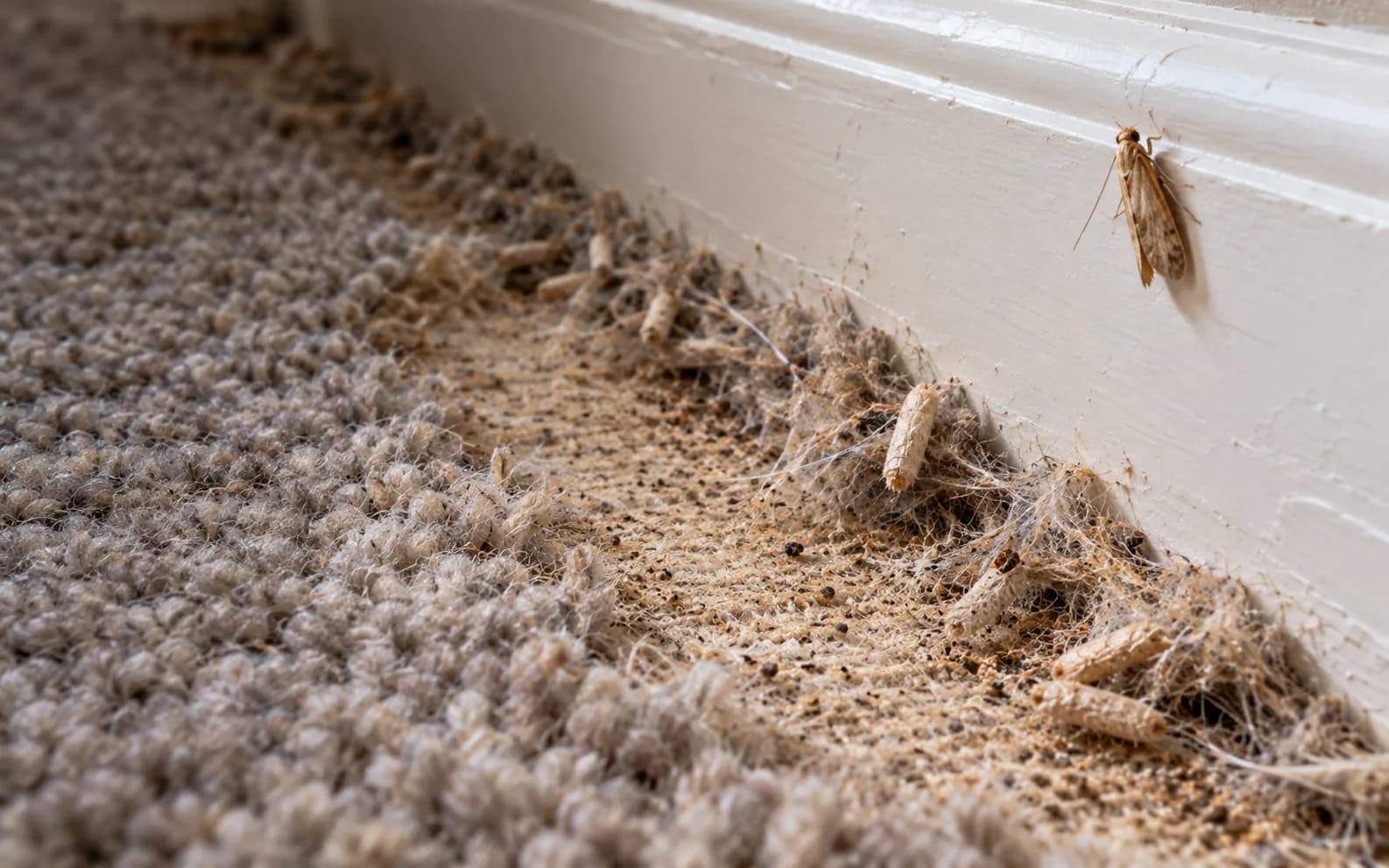
There is one knock-on risk. English Heritage and Rochdale Borough Council both note that dead cluster flies on the loft floor provide food for carpet beetles, whose larvae damage wool carpets, clothes and fabrics. Clear up dead flies regularly with a vacuum cleaner.
How do you get rid of cluster flies?
Vacuum up the flies you can see, treat the loft where the cluster is hibernating, and proof the gaps they use, ideally with a preventative treatment before they arrive next autumn.
Flies already inside. For flies on windows and in rooms, a vacuum cleaner is quick and effective; empty or seal the bag afterwards. English Heritage notes that aerosol sprays containing pyrethrins or pyrethroids will kill flies, and that UV fly-killer units with sticky boards can help in rooms where they are acceptable.
Flies hibernating in the loft. A professional residual insecticide treatment of the loft, sometimes with a fogging treatment of the roof void, deals with the cluster where it is. Rochdale Borough Council says a chemical insecticidal fog treatment in the roof void will significantly reduce the problem, but warns that a new lot of flies can arrive the following year.
Prevention. Our preventative treatment is applied in late August or early September, before the flies arrive, so that flies settling in the treated areas are killed.
Proofing. English Heritage says preventing entry is the most effective approach, though hard to achieve completely. Sash windows can be proofed with bristle strips, and mesh can be fitted in eaves gaps, as long as it does not restrict ventilation. North West Leicestershire District Council advises paying special attention to the south and west sides of the house, which get the most warmth.
Do you need to check for bats first?
Yes. Lofts that attract cluster flies can also be used by bats. Gov.uk guidance from Natural England and Defra says all bat species, their breeding sites and resting places are fully protected by law, and it is an offence to intentionally or recklessly disturb a bat in its place of shelter. Rochdale Borough Council says that if there is evidence of bats, you must not use insecticides.
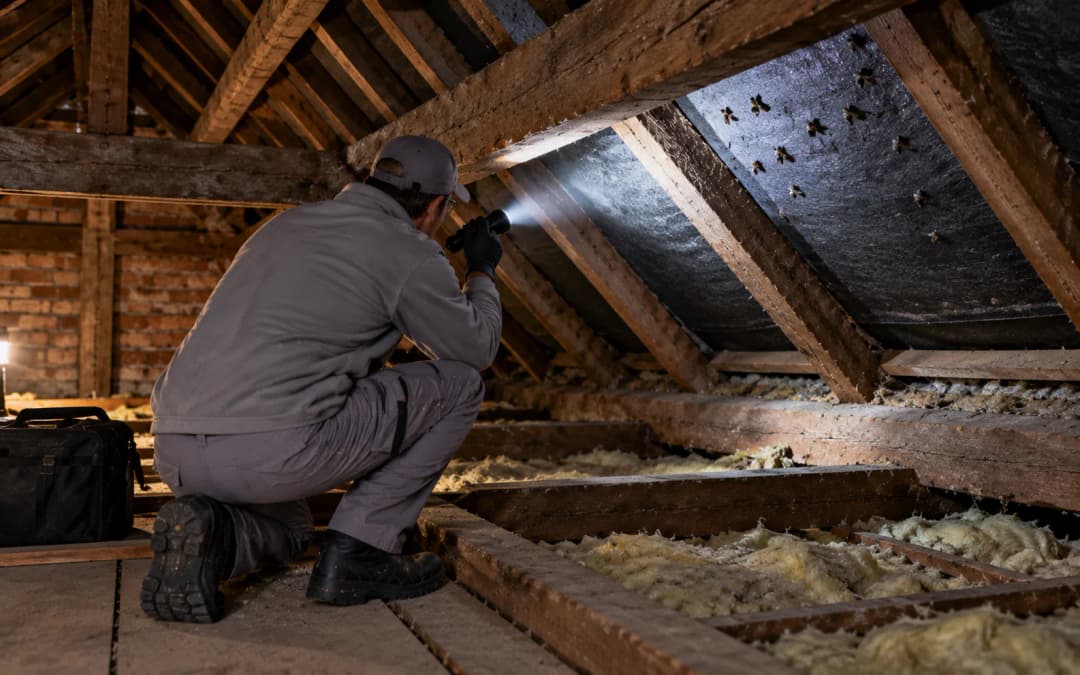
Before any loft treatment we check for signs of bats. If you think you have bats, the National Bat Helpline, run by the Bat Conservation Trust for Natural England, gives free advice.
What can you do yourself?
There is plenty you can do safely while you wait for a treatment, or if the problem is small:
- vacuum flies from windows, sills and the loft floor, then seal and bin the bag;
- keep upstairs windows closed on warm autumn afternoons when flies are gathering on the walls outside;
- fit brush strips to sash windows and check seals around window frames on the south and west sides;
- check the loft hatch closes snugly, so flies in the loft don't drift down into bedrooms;
- clear dead flies from the loft regularly to avoid feeding carpet beetles;
- use household fly sprays only in rooms, following the label, and never in a loft where bats may roost.
North West Leicestershire District Council notes that once flies are inside lofts or roof spaces, control is relatively simple with physical methods and insecticides, and that a vacuum cleaner can be used to great effect. What DIY can't easily do is reach the flies hibernating deep in cracks, voids and under insulation, which is where a professional residual or fogging treatment helps.
Which homes get cluster flies?
Homes near fields with sunny south- or west-facing walls. Any home can, but the same properties tend to be affected every year. Houses with large sunny south or west-facing walls, older houses with sash windows and gaps at the eaves, and homes on the edge of towns or villages close to fields and lawns are typical. Across rural Nottinghamshire, Lincolnshire, Leicestershire and Derbyshire, farmhouses, barn conversions and village homes, from the villages around Southwell and Newark to the Lincolnshire Wolds and rural Leicestershire, are typical. A tell-tale sign on inspection is a drift of dead flies along the loft floor under the eaves on the south side.
Does the council treat cluster flies?
A few still do, for a fee. When we checked council websites on 18 October 2026, Derby City Council listed cluster flies at £129 booked online or £147 by phone, and North West Leicestershire District Council listed them among its chargeable domestic treatments. Many other councils in our area don't treat any pests. See our guide to council pest control charges for the full list.
When to call a professional
Call a professional if flies keep appearing in upstairs rooms, you have large numbers in the loft, or the problem comes back every autumn. A loft treatment deals with the hibernating cluster, and a preventative treatment in late summer reduces the following year's problem.
We check for bats first, confirm they are cluster flies (a quick check with our pest identifier helps), treat the loft and affected voids, and advise on proofing windows and eaves. We'll explain the likely cost before any work starts, and we cover Nottingham, Derby, Leicester, Lincoln and rural Nottinghamshire, Derbyshire, Leicestershire and Lincolnshire, where homes near farmland are most affected. For a broader view of prices, see our pest control prices and pest control cost guide.
We work 7 days a week from 6am to 8pm. Book online, or call or WhatsApp 07999 935 929 with a photo of the flies.
Sources
- English Heritage: Pest fact sheet 6, cluster flies
- Rochdale Borough Council: How to identify and control cluster flies
- North West Leicestershire District Council: Cluster flies
- BPCA: PestWatch, cluster flies
- Natural England and Defra: Bats, protection, surveys and licences (gov.uk)
- Derby City Council: Pest control for householders
- MyJobQuote: Pest control costs (updated 8 October 2026)
Frequently Asked Questions
About the author
The Urgent Pest Control team
A family-run pest control company based in Southwell, treating homes and businesses across Nottinghamshire, Derbyshire, Leicestershire and Lincolnshire since 2020. Our guides are written from the jobs we do and checked against UK sources. More about us
Cite this guide: “Cluster Flies: Why They Swarm in Your Loft and How to Get Rid of Them”, Urgent Pest Control, 20 October 2026. https://urgentpestcontrol.uk/blog/cluster-flies