Clothes Moths: How to Identify and Get Rid of Them in Your Wardrobe
How to tell webbing and case-bearing clothes moths apart, the signs in wardrobes and stored clothes, their life cycle and how to protect woollens.

By the Urgent Pest Control team
Updated · 7 min read
The short answer
Clothes moths in UK homes are usually the webbing clothes moth, Tineola bisselliella, or the case-bearing clothes moth, Tinea pellionella. Their larvae eat wool, silk, fur and feathers in dark, undisturbed wardrobes and storage boxes, leaving irregular holes, silk webbing and gritty droppings. Freeze, hot wash or dry clean infested items, vacuum the wardrobe and store clean woollens airtight.
- Two species do most of the damage: the webbing clothes moth and the case-bearing clothes moth.
- The larvae cause the damage; adult clothes moths do not feed.
- Look for irregular holes, silk webbing, gritty frass and, for case-bearers, small portable silk cases.
- Clean clothes are less at risk: English Heritage notes larvae favour silk stained with sweat, and clean cotton is not normally attacked.
- Store woollens clean and airtight, and treat infested items by freezing at -20°C for a week.
On this page
- What are clothes moths?
- How do you tell webbing and case-bearing clothes moths apart?
- What are the signs of clothes moths in a wardrobe?
- Why do clothes moths choose some clothes and not others?
- What is the clothes moth life cycle?
- How do you get rid of clothes moths and protect your clothes?
- When to call a professional
Clothes moths in UK homes are almost always one of two species: the webbing clothes moth (Tineola bisselliella) or the case-bearing clothes moth (Tinea pellionella). Their larvae eat wool, silk, fur and feathers in dark, undisturbed places such as wardrobes, drawers and storage boxes. To get rid of them, freeze, hot wash or dry clean infested items, vacuum the wardrobe and store clean woollens airtight. If they have spread to carpets or several rooms, the moth treatment from Urgent Pest Control clears them with residual insecticide and monitoring over 4–6 weeks.
This guide covers how to identify clothes moths, read the signs in your wardrobe, understand their life cycle and get rid of them. For moths in carpets and rugs, see how to get rid of carpet moths.
What are clothes moths?
Clothes moths are small moths whose larvae are adapted to eat keratin, the protein in natural animal fibres. The Natural History Museum says "it is the immature larvae, rather than the adult moths, that cause the damage to natural fibres such as woollen clothing, upholstery, carpets and furs".
The adults don't eat at all. They emerge, mate and lay eggs within a day or two, which is why killing the odd moth you see flying makes little difference. The eggs are laid on the material the larvae will feed on.
How do you tell webbing and case-bearing clothes moths apart?
Look at the wing colour and, if you can find one, the larva. The webbing moth is plain golden with no pattern; the case-bearer is greyer with dark spots, and its larva carries a portable silk case. The details below are from the Natural History Museum's identification guide.
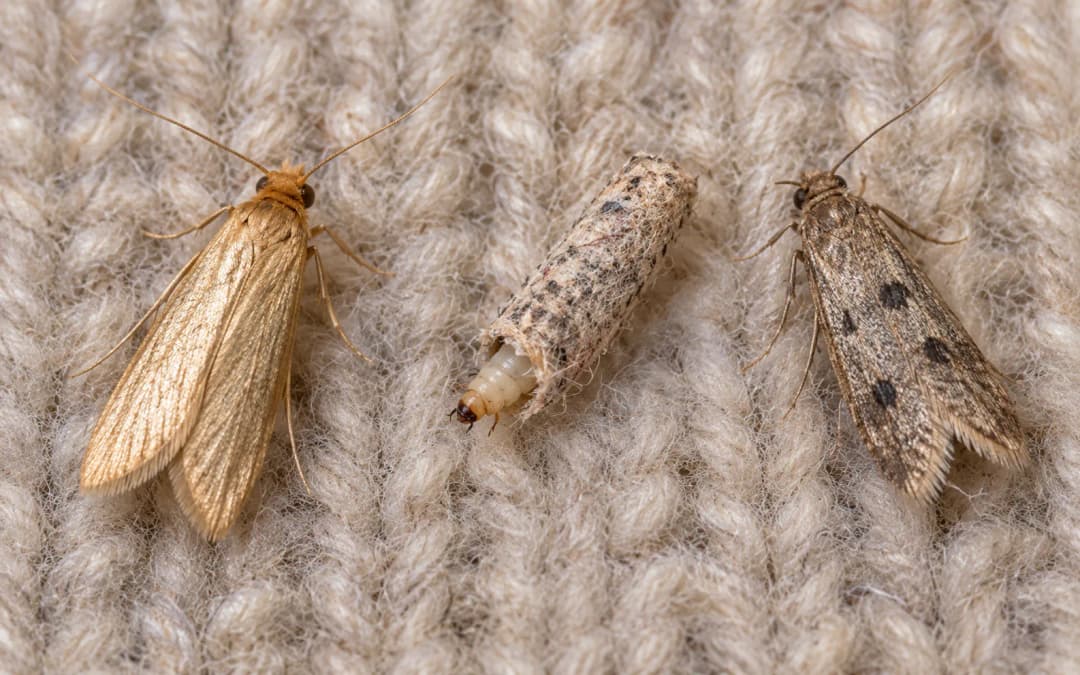
| Feature | Webbing (common) clothes moth | Case-bearing clothes moth |
|---|---|---|
| Latin name | Tineola bisselliella | Tinea pellionella |
| Wings | Golden, no pattern, held back behind the body | Silver grey-brown, held roof-like; brown forewings with one large and two smaller dark spots |
| Wingspan | 12–17mm | 9–16mm |
| Head | Coated with reddish hairs | Coated with grey hairs |
| Larva | Up to 13mm, white with a hardened brown head | Up to 12mm, white with a hardened brown head |
| Larval shelter | Spins silk tunnels and mats on the material | Carries a silk case made with fibres from the material |
English Heritage's webbing clothes moth fact sheet describes the adult as covered "with shiny whitish-gold scales" and with "a brush of orange hairs" on the head, around 8–10mm long. It also notes a similar-looking species, the white-shouldered house moth (Endrosis sarcitrella), which is not a clothes moth.
Kitchen moths are a different problem. The Indian meal moth, for example, is a stored-food pest whose larvae spin webbing over dry food, according to the Natural History Museum's common household pests guide. Moths around the larder point to food, not clothes.
What are the signs of clothes moths in a wardrobe?
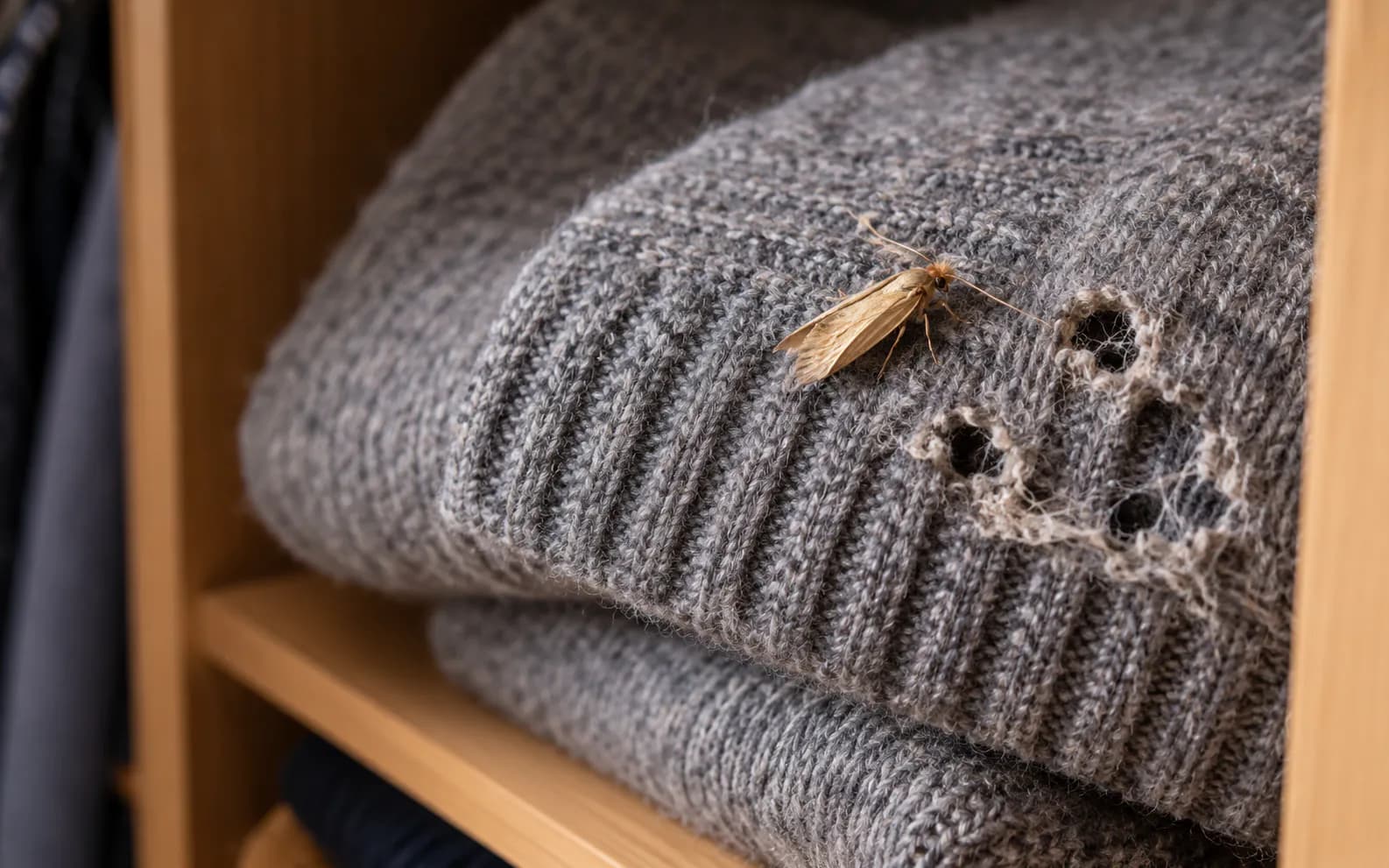
The main signs are irregular holes, silk webbing and gritty droppings, usually on wool items that haven't been worn for a while. English Heritage lists "irregular holes, silk webbing and gritty pellets of excreta, called frass" as the signs of attack, and the museum adds "trails of silk across woollen garments" and "hair removed from the base of fur coats".
Use this checklist when you go through a wardrobe or chest of drawers:
- holes in jumpers, scarves, coats or suits, especially on folds, cuffs, collars and under arms
- fine silk threads or tubes on the surface of the fabric
- tiny sand-like grains in folds or on the shelf below
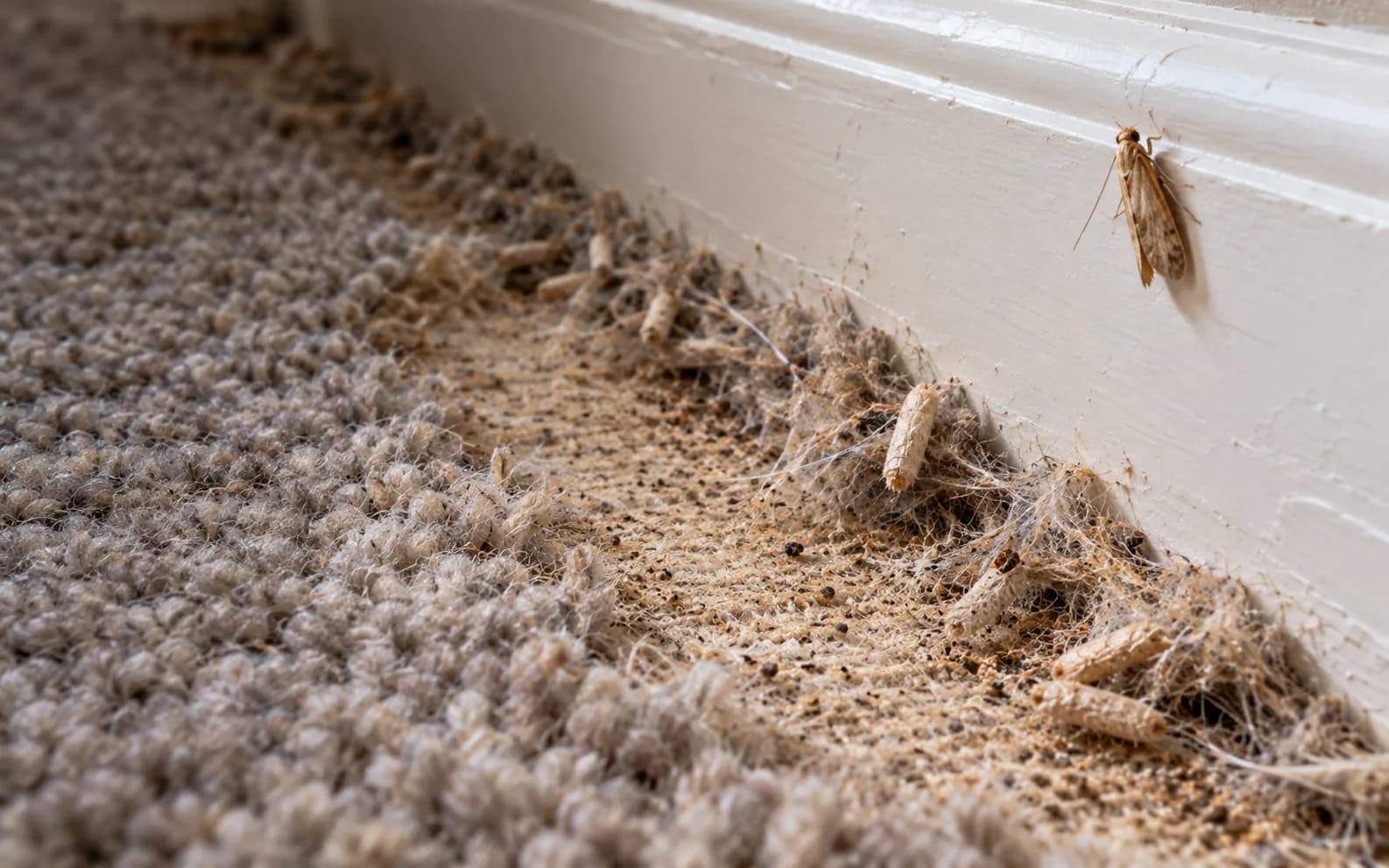
- small cases, often the same colour as the fabric, stuck to garments or walls (case-bearers)
- white larvae with a brown head when you unfold an item
- small moths that run or flutter out when you move hangers
- damage to wool or felt items at the back of the wardrobe, which are disturbed least
Larvae feed at night and shelter in their silk during the day, so the damage can be well established before you see any moths. Go through every item rather than spot-checking: one infested jumper at the bottom of a pile can seed the whole wardrobe, and moving or shaking items regularly is itself a deterrent, because larvae prefer places that are left alone.
Why do clothes moths choose some clothes and not others?
Larvae go for natural animal fibres that are dirty, dark and left alone. English Heritage notes the larvae "will graze on and make holes in woollen textiles, animal specimens, fur and feathers" and "will also attack silk textiles, particularly if these are stained with sweat". Clean cotton "is not normally attacked".
So the most vulnerable items are:
- wool, cashmere and mohair knitwear;
- wool suits, coats and blankets;
- silk, especially if worn and put away unwashed;
- fur, feather-filled items and felt hats;
- anything stored for a season in a cardboard box or under the bed.
The museum notes the larvae depend on moisture and dirt in the fabric, which is why cleaning items before storage makes such a difference.
What is the clothes moth life cycle?
Clothes moths go through egg, larva, pupa and adult, and the larval stage can last from a month to two years. The Natural History Museum gives these figures:
- eggs hatch in 4–10 days in summer, and up to three weeks in colder weather;
- larvae go through five stages and take one month to two years to develop;
- pupation lasts 10–50 days;
- adults don't feed, and mate and lay eggs one to two days after emerging.
Heating matters. English Heritage says that in unheated buildings larvae may take nearly a year to grow, with one emergence of adults in spring; in heated buildings there may be two cycles a year, with another emergence in autumn; and in very warm buildings three generations, with moths appearing at any time. A warm modern bedroom gives them a long breeding season, and case-bearing larvae can take nearly a year to develop according to English Heritage's case-bearing clothes moth fact sheet.
How do you get rid of clothes moths and protect your clothes?
Kill the larvae in the clothes (freeze, heat or dry clean), clean the wardrobe, then store everything clean and sealed and check it regularly. The Natural History Museum recommends storing clothing "in air tight bags and containers to prevent infestation", and says dry cleaning destroys pests and removes the moisture and dirt larvae need.
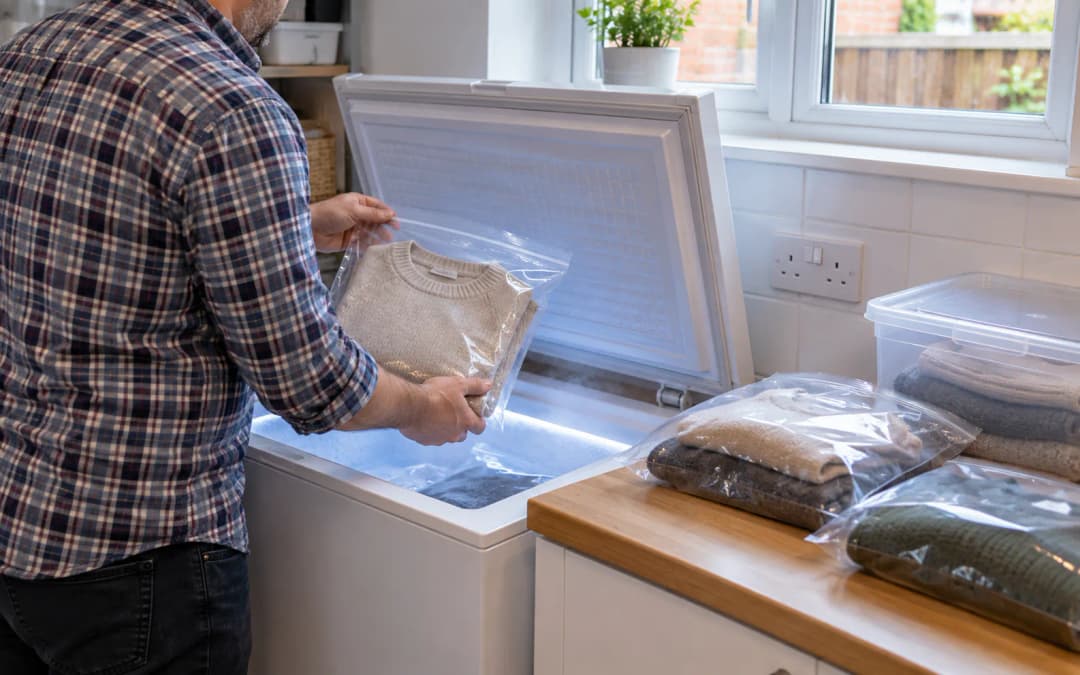
Treating items that already have larvae
- Freeze: the museum says freezing to -20°C for a week kills all life stages. Seal the item in a bag first and let it come back to room temperature before opening.
- Heat: heating fabric to 49°C for over 30 minutes also kills all life stages; a washing machine can do this for items that can take the temperature.
- Dry clean: for tailored and delicate items.
- Vacuum the wardrobe, drawers and the carpet underneath, then empty the vacuum outside.
Preventing a return
- Wash or dry clean wool and silk before putting it away for the season.
- Store in sealed bags or lidded plastic boxes, not open shelves or cardboard.
- Take out and shake stored woollens every few weeks; larvae prefer undisturbed places.
- Put a pheromone trap in the wardrobe as an early warning, as the museum suggests for monitoring.
- Check rarely moved corners: English Heritage regularly checks "dark and undisturbed areas around the edges of rooms or in the folds of clothing and curtains", according to its home pests blog.
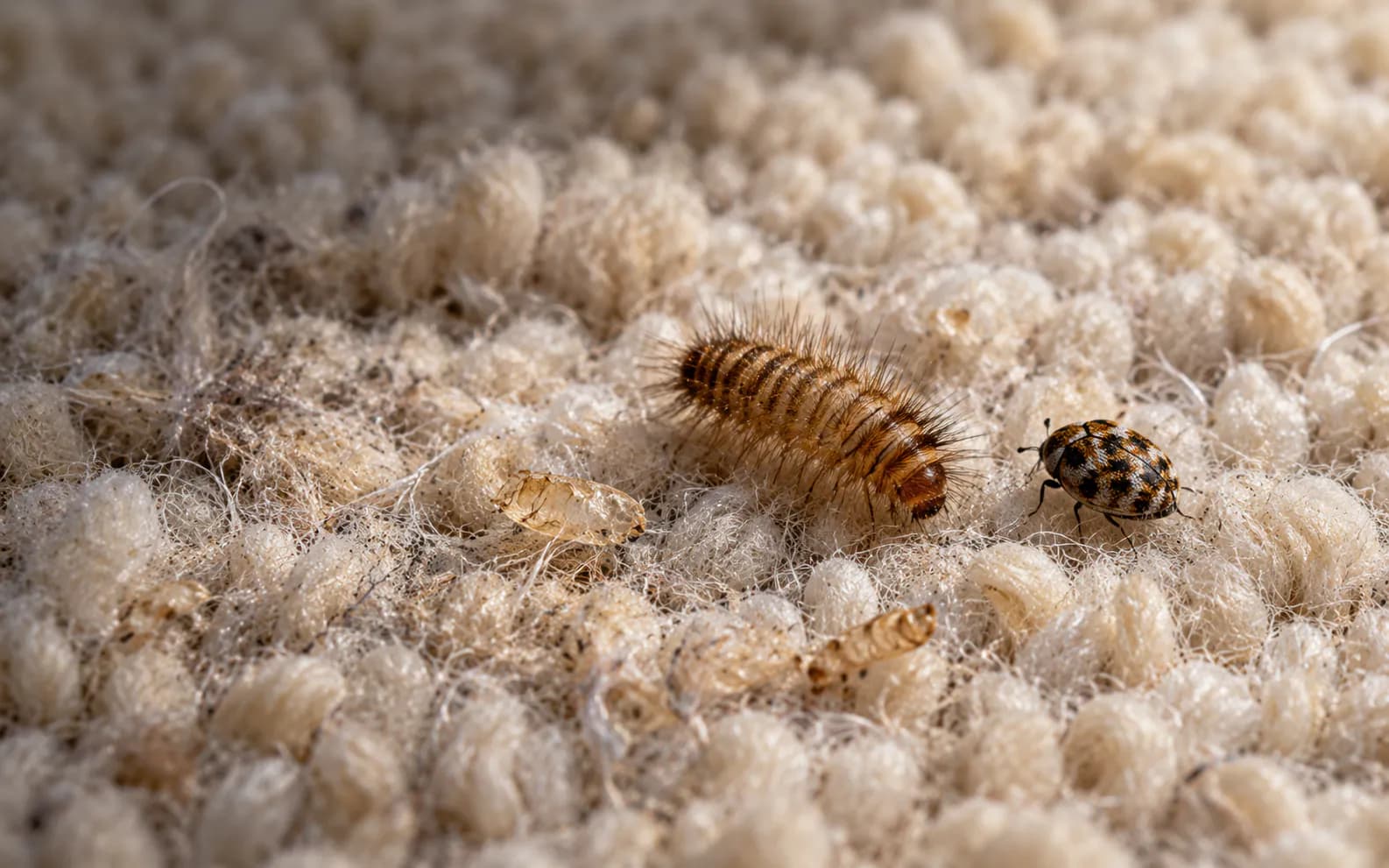
If you also find small, hairy larvae and clean round holes without webbing, you may have carpet beetles rather than moths, and the treatment is similar.
When to call a professional
Call a professional if moths keep appearing after you have cleaned, frozen and sealed your clothes, if the damage has spread into carpets, rugs or upholstery, or if several rooms are affected. At that point the larvae are usually in places you can't freeze or wash, such as fitted carpet edges, under built-in wardrobes or in the floorboards.
Our moth treatment starts with an inspection to confirm the species and find where the larvae are breeding. We then apply a residual insecticide to wardrobes, carpets and the other affected areas, set monitoring traps and return to check them, typically over 4–6 weeks, and tell you what to empty and wash beforehand. The most common source we find is a single wool item that has sat untouched for a season, at the bottom of a drawer or the back of the wardrobe. If the culprit turns out to be carpet beetles, we cover that with our carpet beetle treatment.
We'll explain the likely cost before any work starts; it depends on the infestation, the property and the time of the visit (see our pest control prices). We work 7 days a week, 6am to 8pm, across Nottingham, Derby, Leicester, Lincoln and the surrounding counties. Book online, or call or WhatsApp 07999 935 929. A photo of a moth or larva helps us identify it before we arrive, or try our pest identifier.
Sources
- Natural History Museum: clothes moths identification guide
- Natural History Museum: common insect pest species in homes
- English Heritage: pest fact sheet 4, webbing clothes moth (David Pinniger)
- English Heritage: pest fact sheet 5, case-bearing clothes moth
- English Heritage: how to protect your home from moths and beetles
Frequently Asked Questions
About the author
The Urgent Pest Control team
A family-run pest control company based in Southwell, treating homes and businesses across Nottinghamshire, Derbyshire, Leicestershire and Lincolnshire since 2020. Our guides are written from the jobs we do and checked against UK sources. More about us
Cite this guide: “Clothes Moths: How to Identify and Get Rid of Them in Your Wardrobe”, Urgent Pest Control, 20 October 2026. https://urgentpestcontrol.uk/blog/clothes-moths