How to Get Rid of Carpet Moths
How to find carpet moth larvae, clear them from carpets and rugs, and stop them coming back, with the freezing and heat figures museums use.

By the Urgent Pest Control team
Updated · 7 min read
The short answer
To get rid of carpet moths, find and remove the larvae, because they do the damage, not the flying adults. Vacuum carpet edges and under furniture thoroughly, freeze or heat small rugs and textiles, treat the affected carpet with a suitable insecticide, and use pheromone traps to check whether moths are still breeding.
- Carpet moths are clothes moth larvae feeding on wool and other natural fibres; the adults do not feed.
- Look where it is dark and undisturbed: under furniture, along skirting boards and at carpet edges.
- The Natural History Museum says freezing at -20°C for a week or heating to 49°C for over 30 minutes kills all life stages.
- Pheromone traps show whether moths are active; they don't clear larvae from a carpet.
- Our moth treatment combines residual insecticide with monitoring traps over 4–6 weeks.
On this page
To get rid of carpet moths, find the larvae and remove them: vacuum carpet edges and under furniture, freeze or heat anything small enough, treat the affected carpet, and use pheromone traps to check moths have stopped breeding. If they keep coming back, Urgent Pest Control's moth treatment combines a residual insecticide with monitoring traps over 4–6 weeks, across Nottinghamshire, Derbyshire, Leicestershire and Lincolnshire.
This guide explains what carpet moths actually are, where the larvae hide, what you can do yourself, and when it makes sense to call in a professional.
What are carpet moths?
Carpet moths are clothes moths whose larvae have found a wool carpet or rug. The Natural History Museum names two species that do this damage in UK homes: the common or webbing clothes moth (Tineola bisselliella) and the case-bearing clothes moth (Tinea pellionella).
The key point, in the museum's words, is that "it is the immature larvae, rather than the adult moths, that cause the damage". The larvae are adapted to feed on keratin, a protein found in natural fibres such as wool, fur and feathers. The adults do not feed at all; they mate and lay eggs within a day or two of emerging.
So the small, pale moths you see fluttering near the floor are a symptom. The problem is underneath them, in the pile. For help telling the two species apart, see our guide to clothes moths.
How do you know you have carpet moths?
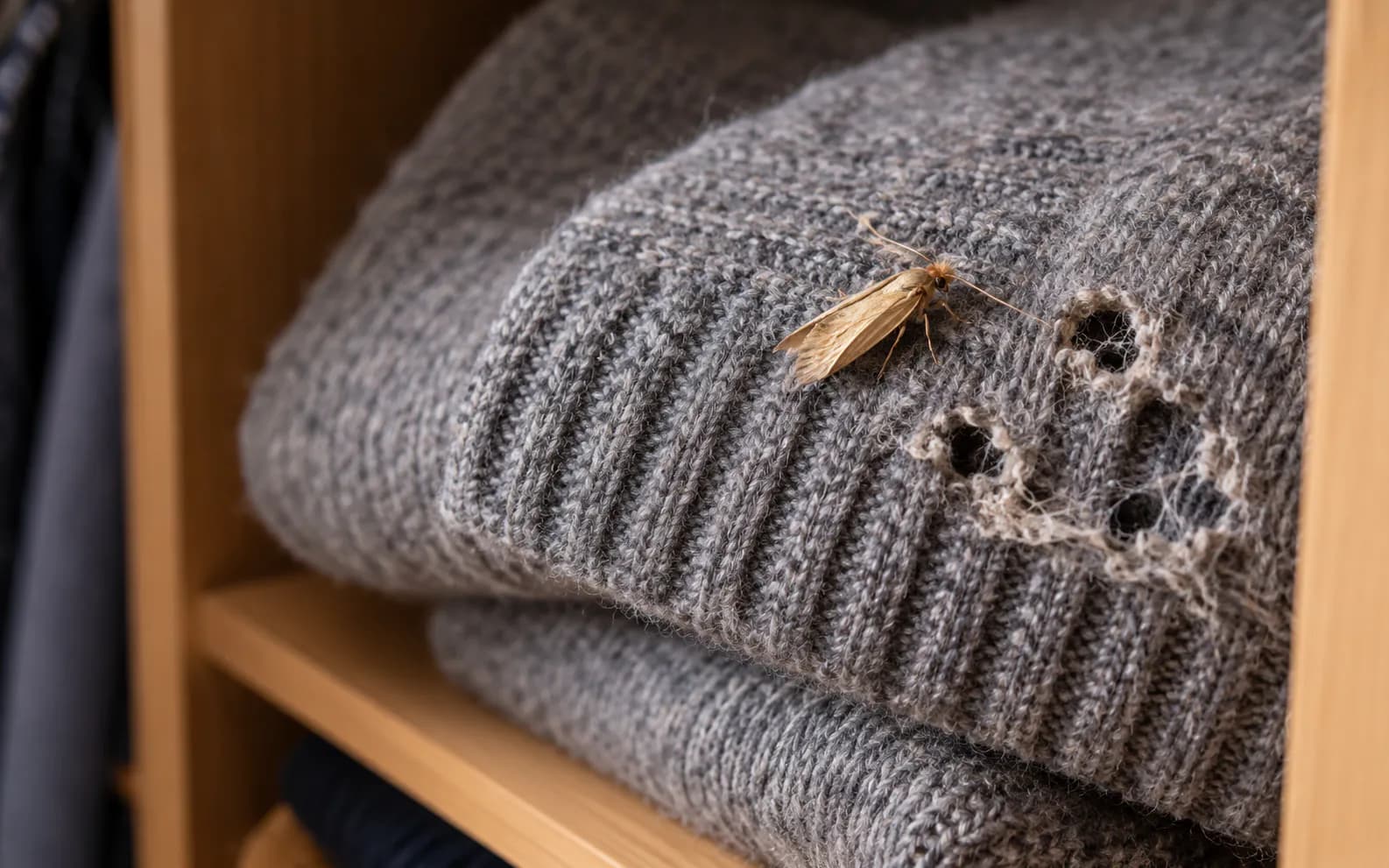
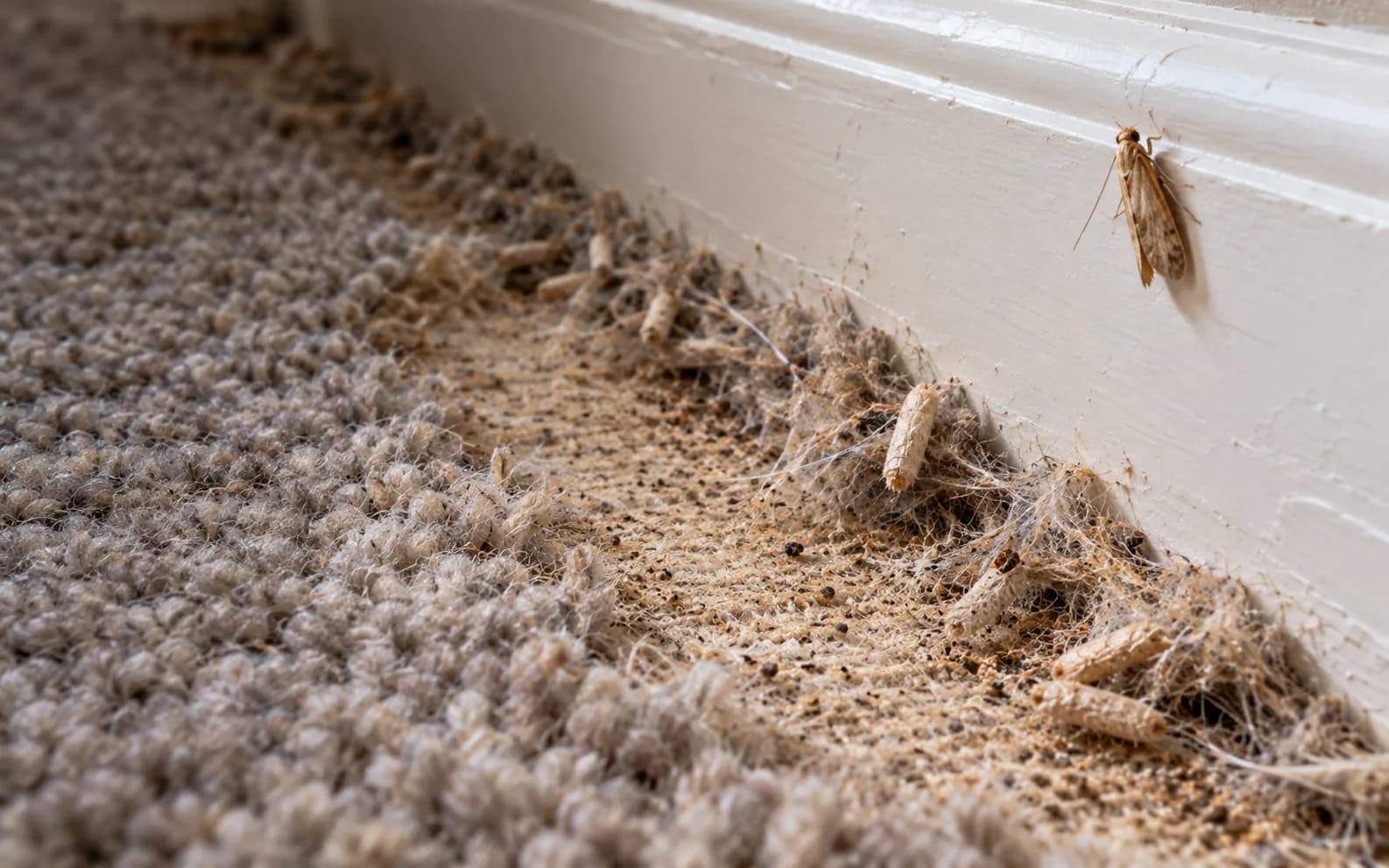
The signs are bare or thinning patches of pile, silk webbing and gritty droppings, usually at carpet edges and under furniture. English Heritage's fact sheet on the webbing clothes moth, written by entomologist David Pinniger, lists "irregular holes, silk webbing and gritty pellets of excreta, called frass" as the signs of moth attack.
Other things to look for:
- small moths, around 8–10mm long with shiny whitish-gold scales and a brush of orange hairs on the head, flying weakly or running across the floor (English Heritage);
- white larvae with an orange-brown head, often hidden inside tubes of silk webbing;
- for case-bearing moths, small silk cases the larvae carry, often coated with fibres from the carpet;
- carpet tufts that come away in your hand at the base.
It is worth ruling out carpet beetles at the same time, because their larvae damage the same carpets. The table below shows the difference.
| Sign | Clothes (carpet) moth | Carpet beetle |
|---|---|---|
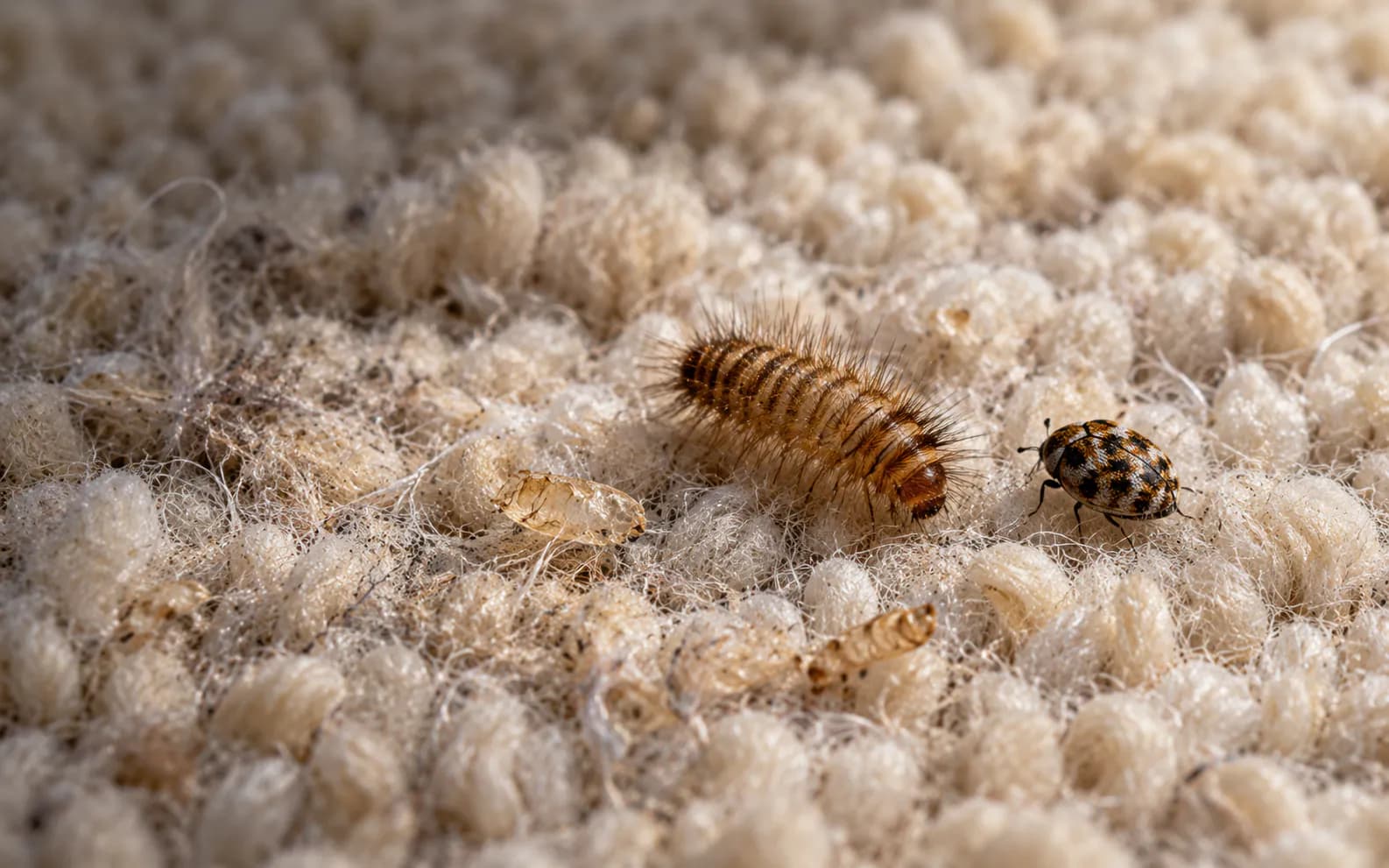
| Larvae | White, orange-brown head, up to about 10–13mm | Hairy "woolly bears", about 4–4.5mm (varied carpet beetle) |
| Silk webbing | Yes, tunnels or cases of silk | No webbing |
| Damage | Irregular grazed patches and holes | Small, clean holes |
| Debris | Gritty frass pellets | Powdery droppings and shed, striped larval skins |
| Adults | Small, plain golden or grey-brown moths | Tiny round beetles, often on windowsills |
Sources: Natural History Museum and English Heritage fact sheets. If you are finding hairy larvae rather than webbing, read our guide to carpet beetles.
Where do carpet moth larvae hide?
Larvae live where it is dark, undisturbed and rarely cleaned. English Heritage notes that moths "may be very visible flying around, but the larvae will be hidden away in dark and hidden places in folds and crevices", particularly "undisturbed places under furniture and at the edges of carpets".
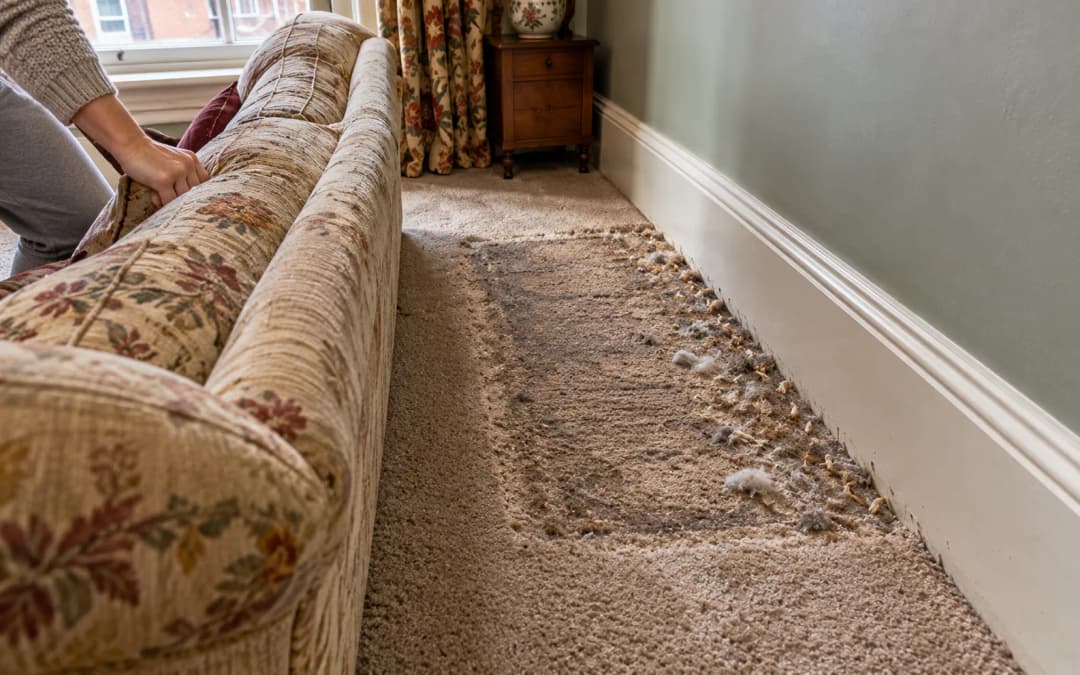
Check these places first:
- under beds, sofas, chests and bookcases that are rarely moved
- along skirting boards and in the gripper strip at carpet edges
- behind and under heavy curtains where they touch the floor
- stair carpet at the back of each tread
- rugs that have been rolled up or stored
- wardrobe floors and boxes of stored woollens
- unused chimney flues: English Heritage advises checking whether they are blocked by old bird nests, which can host moths
Tick off each area as you check it. One heavily infested spot under a wardrobe can keep re-seeding a whole room. When we inspect, the worst damage is usually under a bed or sofa that hasn't moved in years, or in the strip of carpet behind a door.
How do you get rid of carpet moths yourself?
Start with a thorough clean, then deal with everything that can be moved, then treat and monitor what is left. The Natural History Museum lists vacuuming, freezing, heating, dry cleaning and pyrethrin insecticides as control methods for clothes moths.
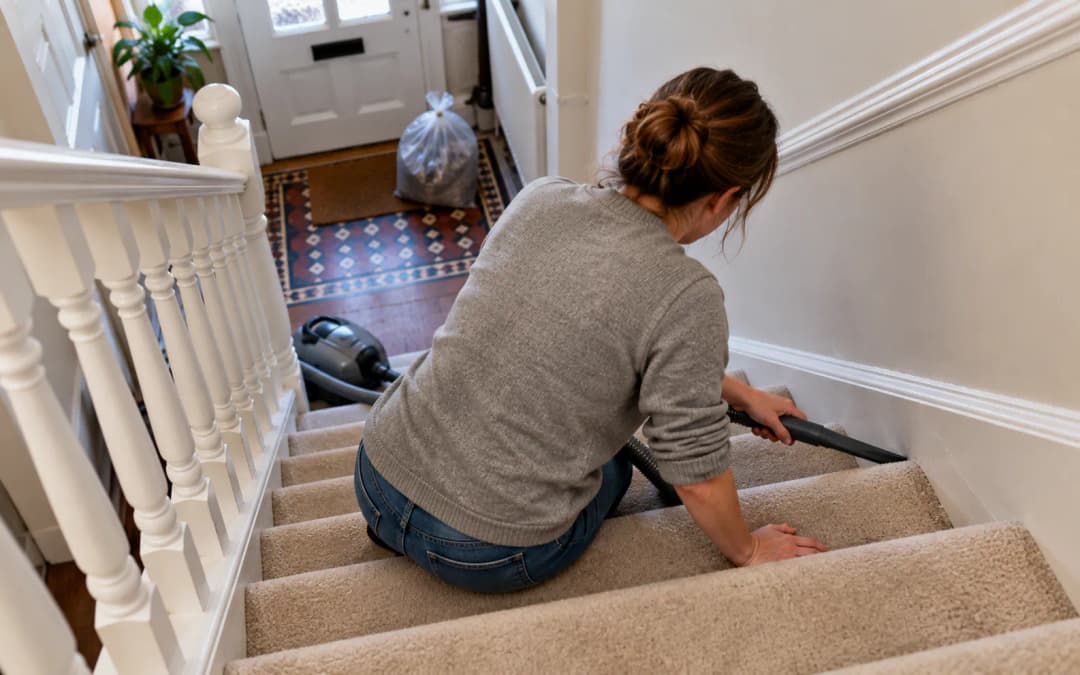
1. Vacuum thoroughly, then keep doing it
Move the furniture and vacuum the whole carpet, paying particular attention to edges, corners and under furniture. Use the crevice tool along the skirting. Empty the vacuum outdoors straight afterwards, or seal and bin the bag, so larvae and eggs don't simply move house into the cupboard. Repeat weekly for several weeks: eggs that survive will keep hatching.
2. Freeze or heat small items
For rugs, cushions and textiles small enough to move, the museum gives clear figures: "Freezing to -20°C for a week or heating fabric to temperatures of 49°C for over 30 minutes kills all life stages." Bag items before freezing so they don't get wet from condensation when they come out. Dry cleaning also works, because it destroys pests and removes the dirt and moisture larvae need.
3. Treat what can't be moved
Fitted carpet can't go in the freezer. The museum notes that pyrethrin insecticides can be sprayed on fabrics that cannot be frozen or cleaned. If you use a shop-bought moth spray, follow the label exactly, test on a hidden patch first, and keep children and pets out of the room until it has dried.
4. Monitor with pheromone traps
Pheromone traps attract adult male moths. The museum describes them as a way to monitor an infestation, and that is how to use them: put them out before you start, and check whether catches fall over the following weeks. A trap that keeps filling means moths are still breeding somewhere nearby.
How long does it take to clear carpet moths?
Expect weeks, not days. The Natural History Museum gives the clothes moth life cycle as: eggs hatching in 4–10 days in summer and up to three weeks in colder weather, larvae developing over anything from one month to two years, and pupation lasting 10–50 days.
That spread is why one treatment can seem to work and then moths reappear. English Heritage adds that in unheated buildings there may be one generation a year, in heated buildings two, and in very warm buildings three, with moths appearing at any time. Modern centrally heated homes give moths a long season, which is why we plan moth treatment over 4–6 weeks with monitoring rather than a single visit.
How do you stop carpet moths coming back?
Keep the places larvae like disturbed, clean and dry. English Heritage's advice for historic houses translates directly to homes: "vacuuming up dirt and debris regularly" removes food sources, and they "regularly check dark and undisturbed areas around the edges of rooms or in the folds of clothing and curtains".
Practical habits that help:
- move light furniture and vacuum underneath it at least every few weeks;
- clean wool rugs before rolling and storing them, and wrap them;
- store woollens clean, in airtight bags or containers, as the museum recommends;
- keep a pheromone trap in rooms with valuable wool carpets as an early warning;
- clear old bird nests from lofts and chimneys, which can harbour moths and other textile pests.
Mothballs and cedar are widely sold, but none of our sources recommends them as a way to clear an established infestation, so we don't rely on them.
When to call a professional
Call a professional if the damage is spreading across more than one room, the carpet is valuable or fitted wall to wall, you keep catching moths in traps after several weeks of cleaning, or you can't safely move heavy furniture to reach the larvae. Professional products also reach deep into the pile and the gripper strip in a way that household sprays often don't.
Our moth treatment starts with an inspection to confirm whether you have moths or carpet beetles, find the source and check the rest of the house. We then apply a residual insecticide to the affected areas, set monitoring traps and come back to check them, usually over 4–6 weeks, and tell you how long to keep pets and children out of treated rooms.
We'll explain the likely cost before any work starts; prices depend on the infestation, the property and when you need us (see our pest control prices). We work 7 days a week, 6am to 8pm, across Nottingham, Derby, Leicester, Lincoln and the surrounding counties, in unmarked vehicles. Book online, or call or WhatsApp 07999 935 929 with a photo of the damage or the larvae, or check it first with our pest identifier.
If you're also finding small beetles in the kitchen cupboards, our guide to biscuit and plaster beetles covers the other common household beetles.
Sources
- Natural History Museum: clothes moths identification guide
- Natural History Museum: carpet beetles identification guide
- English Heritage: pest fact sheet 4, webbing clothes moth (David Pinniger)
- English Heritage: pest fact sheet 5, case-bearing clothes moth
- English Heritage: how to protect your home from moths and beetles
Frequently Asked Questions
About the author
The Urgent Pest Control team
A family-run pest control company based in Southwell, treating homes and businesses across Nottinghamshire, Derbyshire, Leicestershire and Lincolnshire since 2020. Our guides are written from the jobs we do and checked against UK sources. More about us
Cite this guide: “How to Get Rid of Carpet Moths”, Urgent Pest Control, 20 October 2026. https://urgentpestcontrol.uk/blog/how-to-get-rid-of-carpet-moths