Bumblebee Nest: What to Do if You Find One
Found a bumblebee nest? Why the Bumblebee Conservation Trust says to leave it, how long it lasts, how to live with it, and when to get help.

By the Urgent Pest Control team
Updated · 8 min read
The short answer
Leave it alone if you can. The Bumblebee Conservation Trust recommends leaving bumblebee nests in place: they cause no structural damage, usually last 2 to 6 months and are never reused. Bumblebees are calm and only sting if threatened. Keep children and pets back, net nearby windows, and get advice if the nest is indoors.
- The Bumblebee Conservation Trust generally recommends leaving bumblebee nests alone and in place.
- Bumblebee nests usually last 2 to 6 months, then die off naturally; queens never reuse an old nest.
- Bumblebees are calm, females only sting defensively and males have no sting.
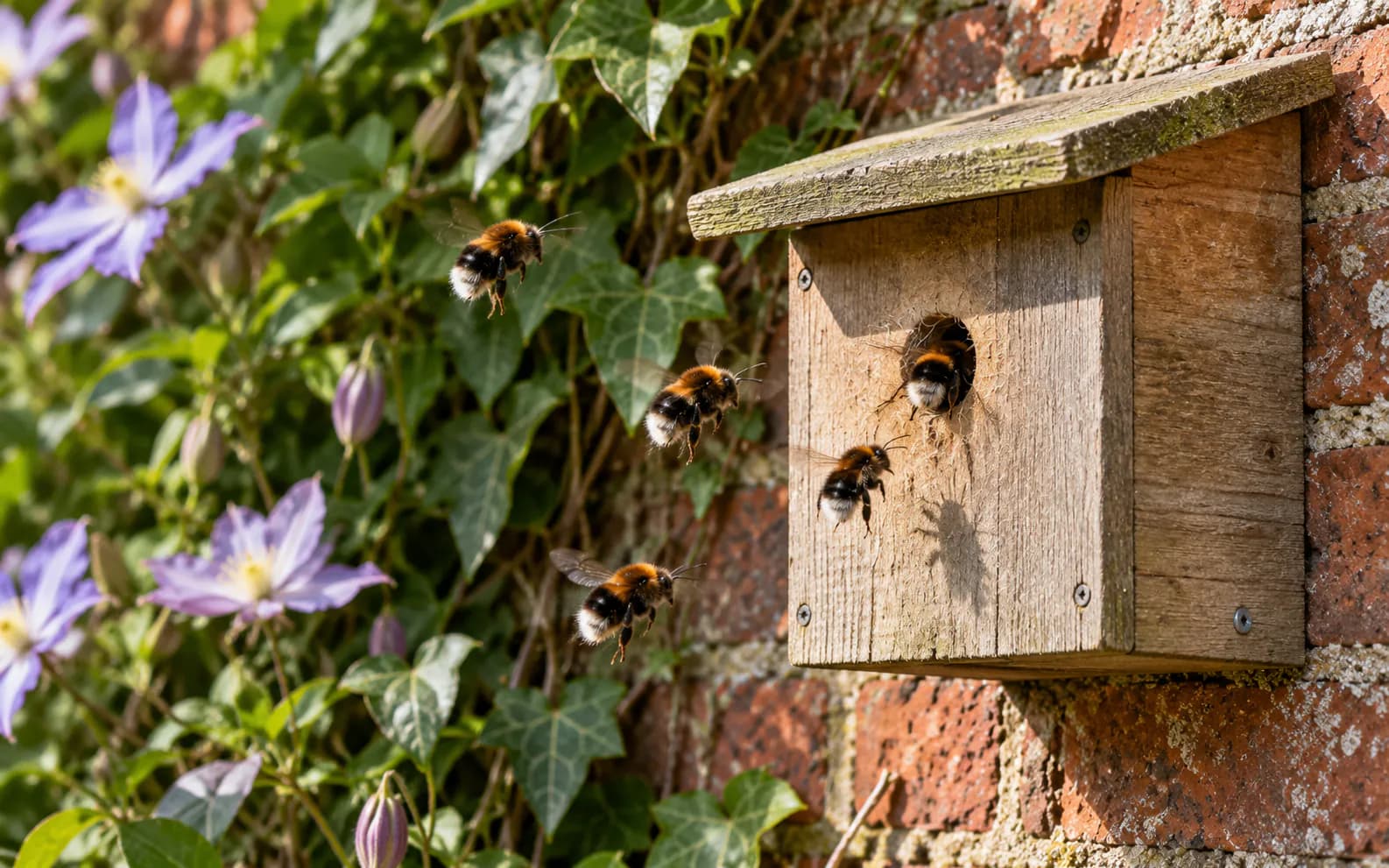
- A cloud of tree bumblebees outside a bird box or roof gap is usually males waiting for new queens, not an attack.
- We relocate bees with local beekeepers where we can and only treat as an absolute last resort.
On this page
- Is it really a bumblebee nest?
- What does the Bumblebee Conservation Trust advise?
- Do bumblebees sting?
- How do you live with a bumblebee nest for a few weeks?
- Why is there a cloud of bees around the nest?
- What happens to a bumblebee nest at the end of the season?
- Bumblebee nest: leave it or get help?
- What if someone at home is allergic to stings?
- Could it be a different kind of bee or wasp?
- Will the council deal with a bumblebee nest?
- When to call a professional
If you find a bumblebee nest, the best thing to do is usually nothing. The Bumblebee Conservation Trust recommends leaving nests alone: they cause no structural damage, usually last 2 to 6 months and are never reused. Bumblebees are calm and rarely sting. If it is indoors or someone is allergic, Urgent Pest Control's bee removal team gives free phone advice and relocates bees with local beekeepers where it can.
This guide explains how to confirm it really is a bumblebee nest, how to live with one for a few weeks, what to do if it is in an awkward place, and when it is reasonable to get help.
Is it really a bumblebee nest?
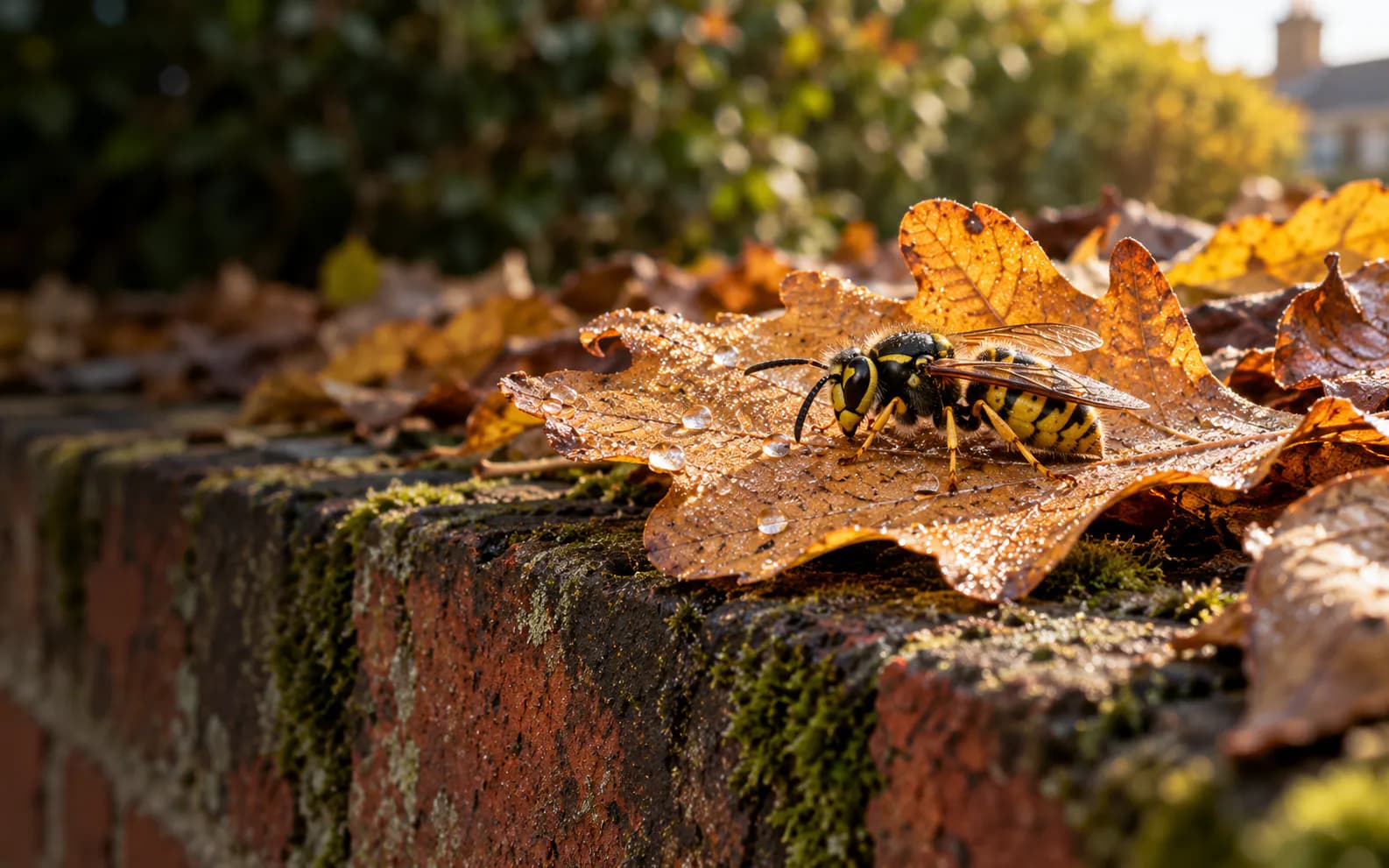
Check the insects before anything else. Bumblebees are round, furry and slow, and fly in a steady, buzzing line. Wasps are slimmer, shiny and black and yellow, and honey bees are smaller, slimmer and brown. A nest of any of these can be in the same places, from a roof gap to a compost heap, so the insect is the clue, not the location.
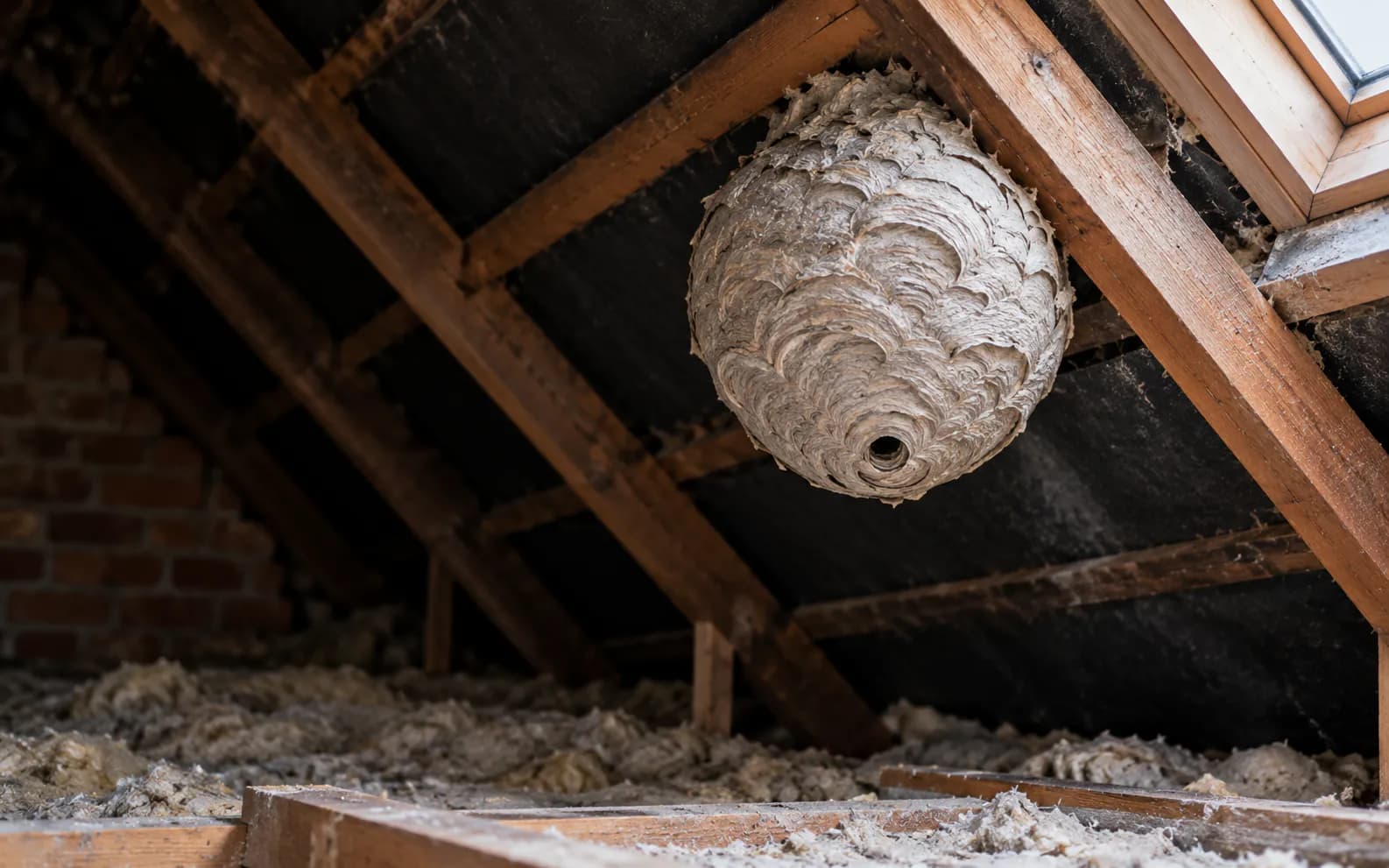
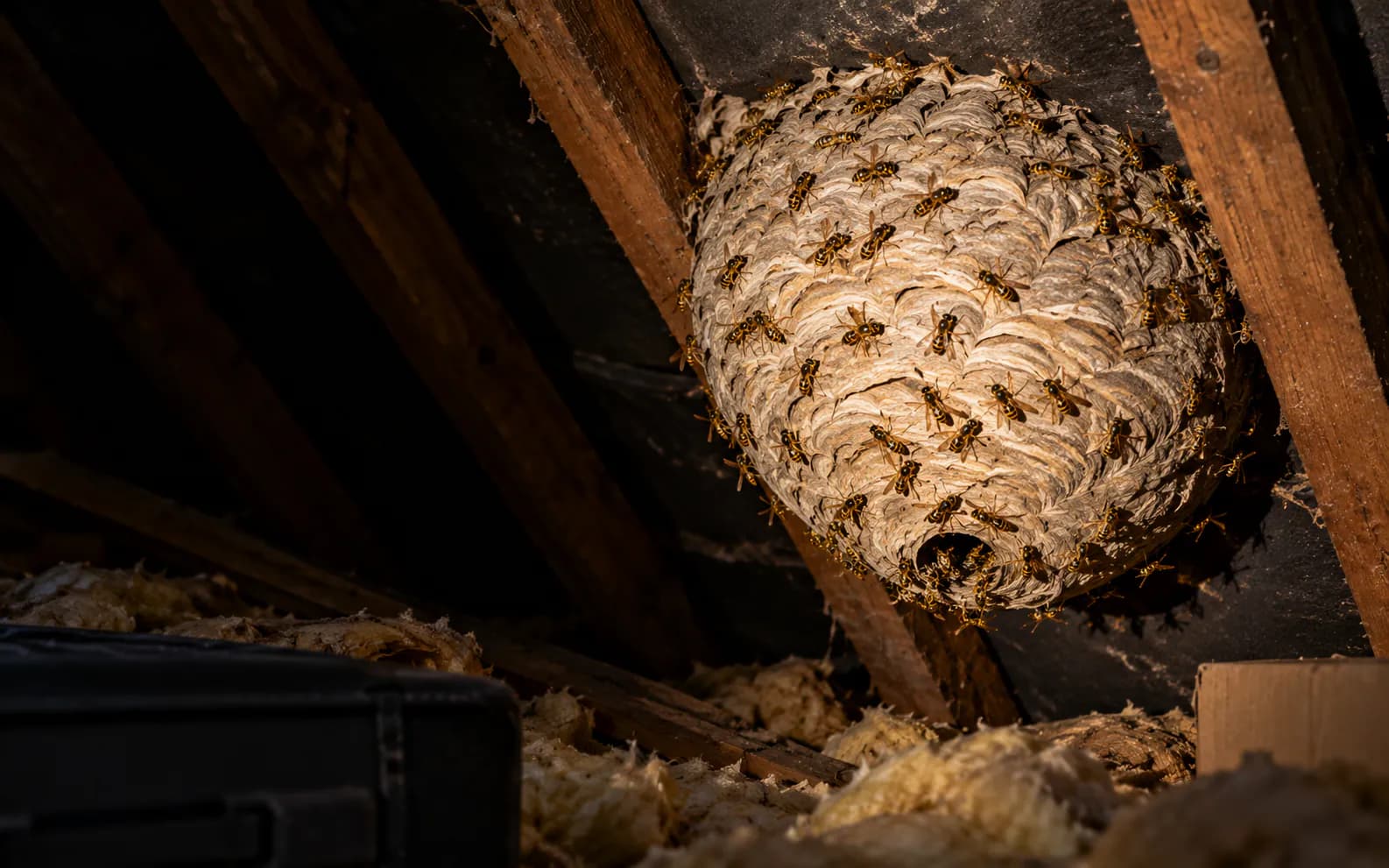
Bumblebee nests are much smaller than wasp nests. The Bumblebee Conservation Trust says a well-established nest can contain up to 400 bumblebees and is roughly the size of a small football, and some species have much smaller nests of around 50 workers at most. A wasp nest, by contrast, can hold thousands. If the insects are black and yellow and smooth, see our guide on how to tell if a wasp nest is active instead.
Common places to find bumblebee nests around a home:
- Bird boxes, very often used by the tree bumblebee (Bombus hypnorum). The Trust singles out this species in its advice on nests in bird boxes.
- Under the eaves, in soffits and roof spaces, again often tree bumblebees.
- Old mouse holes, under sheds and decking, and in compost heaps.
- Long grass, hedge bases and wall cavities.
What does the Bumblebee Conservation Trust advise?
The Trust's advice is clear: "we generally recommend that nests are left alone and in place." Its reasons:
- No structural damage. The Trust says nests cause no structural damage, so there is no repair bill waiting at the end.
- A short life. "Bumblebee nests usually last between 2 and 6 months," depending on food, weather and species.
- A calm insect. Bumblebees are "generally calm creatures". Females will usually only sting defensively if they feel threatened, and males have no sting.
- No repeat in the same nest. "Bumblebee queens always start their own nest from scratch," so an old nest is never reused, though a different queen might use the same location in a later year.
- Important pollinators. A nest in the garden helps pollinate flowers, fruit and vegetables for the rest of the season.
The Trust also says that it is "not able to move bumblebee nests or recommend anyone else who can". So in most cases leaving the nest is both the kindest and the easiest option.
Do bumblebees sting?
Rarely. The Bumblebee Conservation Trust says bumblebees are generally calm and tend to ignore people; females only sting when they feel threatened, and males have no sting at all. Most stings happen when someone disturbs the nest, treads on a bee or traps one against skin or clothing.
What that means around a nest:
- Walking past is fine. Bees flying in and out will not chase you.
- Don't block, poke or flood the entrance. That is what makes them defend it.
- Watch bare feet on lawns near a ground nest.
- Take more care if anyone is allergic to bee or wasp stings (see below).
How do you live with a bumblebee nest for a few weeks?
Most nests can be managed with a few simple steps until they die off. The Trust suggests temporary changes rather than removal:
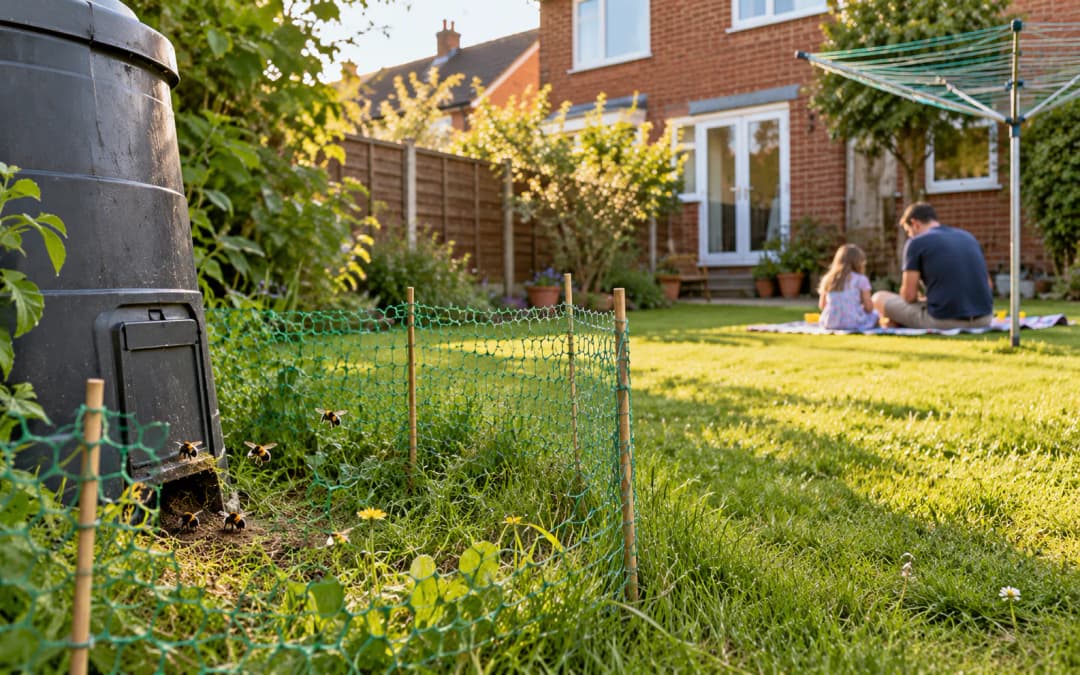
- Net nearby windows with fine netting, so bees that take a wrong turn don't end up indoors.
- Fence off the area or move play equipment, seating or the washing line away from the entrance.
- Keep children and pets back and teach children not to poke or block the hole.
- Don't block the entrance. A bee trapped inside a wall or roof may look for another way out, sometimes into the house.
- Don't mow or strim right next to a ground nest; leave a small patch for the season.
- Don't pour water, chemicals or anything else into the entrance.
If the nest is in a bird box that can be easily removed, the Trust explains how it can be moved: temporarily block the hole with something easy to remove later, and move the box "within a few metres of the old site or over 1km away". Anything in between and returning bees get lost.
Why is there a cloud of bees around the nest?
It is usually males waiting to mate. The Trust describes a cloud of about 20 male tree bumblebees outside the entrance: "These are male bees and all they are doing is waiting for new queens to emerge so that they can mate with them."
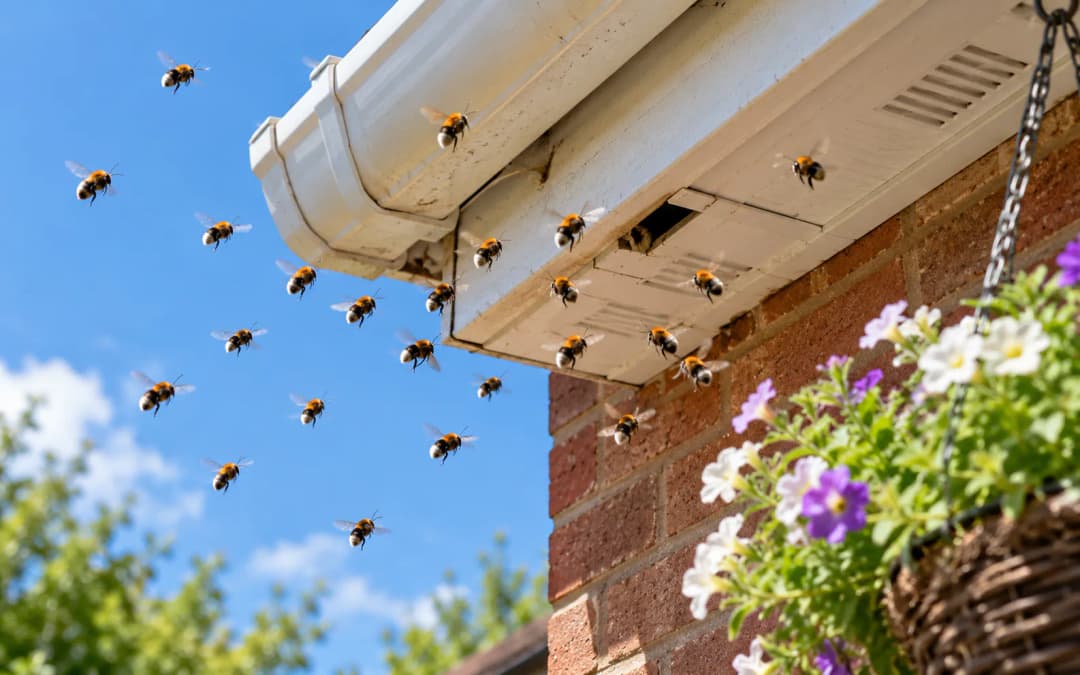
This "dancing" around a bird box or soffit can look alarming, but it is a sign the nest is near the end of its cycle, not that the bees are aggressive. Males have no sting. The Trust also notes that frequent comings and goings can mean the nest is nearing its end.
What happens to a bumblebee nest at the end of the season?
It dies off naturally. The Trust explains that at the end of the nest "the original queen naturally reaches the end of her lifespan and dies". The workers die off, new queens leave to hibernate and the males die after a few weeks. The nest then gradually breaks down.
Once it is quiet, you can clear any remains and seal the gap if you don't want another queen to pick the same spot next spring.
Bumblebee nest: leave it or get help?
Use this table to decide what to do. Our starting point is always the Trust's advice to leave the nest where possible.
| Where the nest is | Risk | What we suggest |
|---|---|---|
| Garden, shed, compost heap or hedge | Low | Leave it; keep children and pets back for a few weeks |
| Bird box | Low | Leave it, or move the box as the Trust describes |
| Under eaves or in a soffit, bees outside only | Low | Leave it; net any nearby windows |
| Next to a front door or busy path | Medium | Leave it if you can use another door; phone us for advice |
| Bees getting into a bedroom, kitchen or living space | High | Phone us; we will look at relocation first |
| Anyone in the home with a severe sting allergy | High | Phone us the same day for advice |
| Not sure if they are bees or wasps | Unknown | Send us a photo on WhatsApp |
What if someone at home is allergic to stings?
Act sooner. Bee stings are a recognised trigger for anaphylaxis. The NHS says that if you have an adrenaline auto-injector you should use it, then call 999 for an ambulance and say you think you are having an anaphylactic reaction. If symptoms have not improved after 5 minutes, use a second auto-injector.
For an ordinary sting, the NHS advises brushing or scraping any stinger out sideways with a fingernail or the edge of a bank card, not tweezers, then washing the area and using a cold pack on any swelling.
Could it be a different kind of bee or wasp?
It is worth a second look, because the right answer changes with the insect:
- Single bees going in and out of separate small holes in brick mortar in spring are solitary bees, not a bumblebee colony. Each female has her own hole. See our guide to masonry bees.
- A dense, hanging cluster of honey bees on a branch, fence or wall is a honey bee swarm. It usually moves on, and a beekeeper may collect it.
- A big brown and yellow insect around a bird box or hollow tree may be a European hornet rather than a bumblebee. Our guide to hornets vs wasps shows how to tell.
- Slim, shiny black and yellow insects from a roof gap are wasps, and a nest near the house is worth treating early.
If you are not sure, take a photo from a safe distance. We would much rather tell you to leave a bumblebee nest than treat it unnecessarily.
Will the council deal with a bumblebee nest?
Usually not. Nottingham City Council lists bees as "not treated" on its pest control price list. Derby City Council says that where a wasp booking turns out to be bees, the call-out charge is £32. Honey bee swarms are different; local beekeepers may collect them, as our guide on what to do about a bee swarm explains.
One customer described our approach in May 2026:
"Brilliant service!! Got rid of a bees nest within a couple of hours after ringing! Very friendly. They are taking them to a safe place to release them. Would definitely recommend" — Rachel Tomlinson, Google review, May 2026
When to call a professional
Call for advice if bees are getting into living space, the nest is beside a door you have to use, or anyone at home has had a serious reaction to a sting. If you are not sure whether you are dealing with bumblebees, honey bees or wasps, try our pest identifier, or send a photo by WhatsApp; that is usually enough for us to tell you.
Our bee removal service puts bees first. Phone advice is free, and in many cases our advice is simply to leave a bumblebee nest for a few weeks. Where bees do have to move, we relocate them with local beekeepers wherever we can and only treat as an absolute last resort. Ask us for a price: it depends on where the nest is and when you need us. If it turns out to be wasps, our wasp nest removal service can help.
We cover Nottingham, Derby, Leicester, Southwell, Melton Mowbray and the rest of the East Midlands, 7 days a week from 6am to 8pm. Call or WhatsApp 07999 935 929, or book online.
Sources
Frequently Asked Questions
About the author
The Urgent Pest Control team
A family-run pest control company based in Southwell, treating homes and businesses across Nottinghamshire, Derbyshire, Leicestershire and Lincolnshire since 2020. Our guides are written from the jobs we do and checked against UK sources. More about us
Cite this guide: “Bumblebee Nest: What to Do if You Find One”, Urgent Pest Control, 20 October 2026. https://urgentpestcontrol.uk/blog/bumblebee-nest-what-to-do