Hornet vs Wasp: How to Tell Them Apart (and Spot an Asian Hornet)
Hornet or wasp? Size, colour and behaviour compared, how to spot a yellow-legged (Asian) hornet in the UK, and how to report one.

By the Urgent Pest Control team
Updated · 8 min read
The short answer
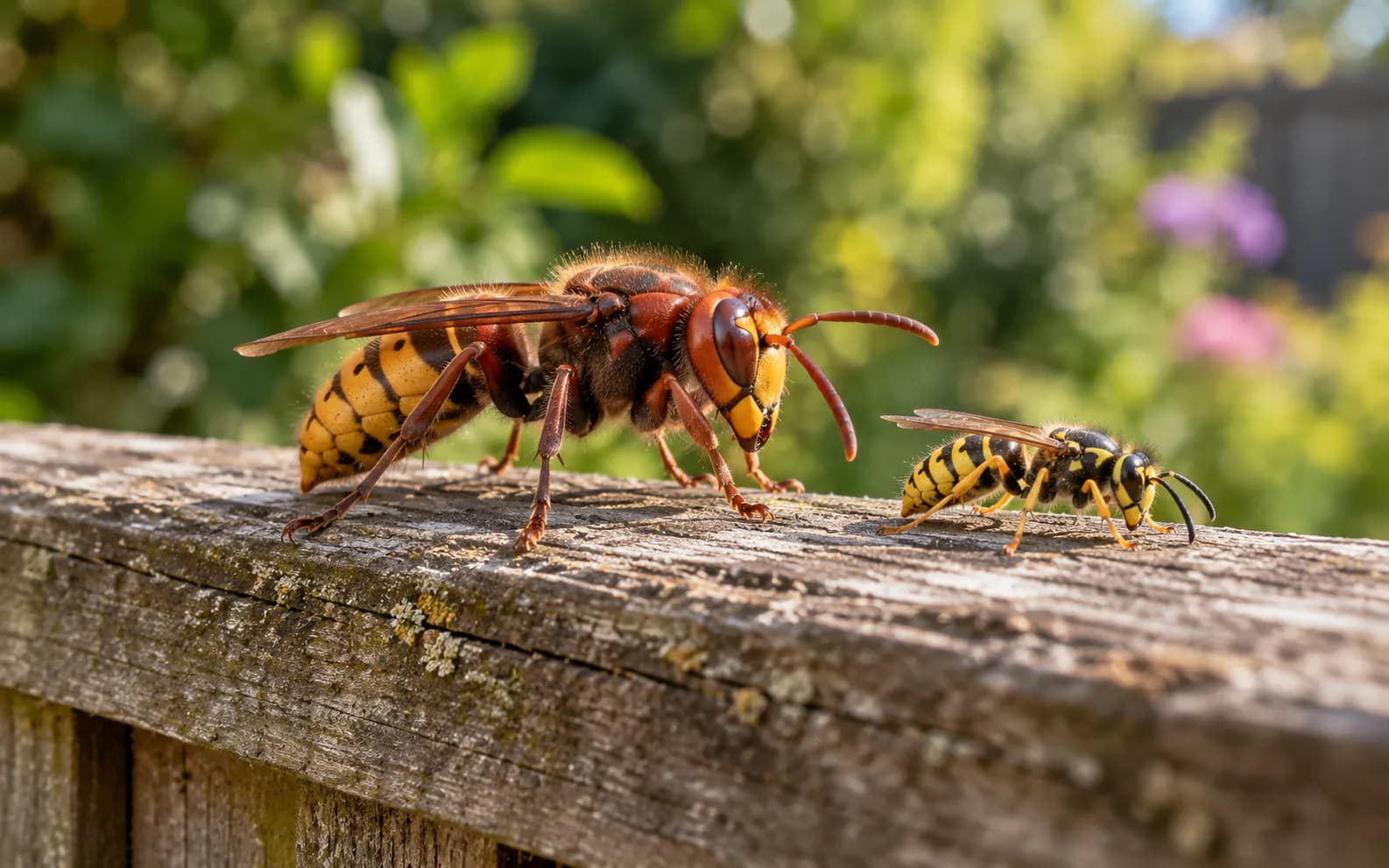
A European hornet is much bigger than a wasp, up to 3.5 cm long, with brown and yellow stripes rather than black and yellow. It is usually less aggressive than the common wasp. A dark hornet with one yellow band and yellow-tipped legs may be a yellow-legged (Asian) hornet: photograph it if safe and report it.
- European hornets grow up to 3.5 cm and are brown and yellow; common wasps reach about 2 cm and are black and yellow.
- The Wildlife Trusts say native hornets are much less aggressive than common wasps and unlikely to sting if left alone.
- The yellow-legged (Asian) hornet is dark brown or black with one yellow band on the fourth abdominal segment and yellow-tipped legs.
- A yellow-legged hornet embryo nest was found in Chesterfield on 26 April 2026, with hornets intercepted at Repton and in Rushcliffe the next day.
- Report a suspected yellow-legged hornet with a photo through the Asian Hornet Watch app; never disturb or treat its nest privately.
On this page
- What is the difference between a hornet and a wasp?
- Hornet vs wasp vs Asian hornet: comparison table
- What does a yellow-legged (Asian) hornet look like?
- Why does the Asian hornet matter?
- When are you most likely to see each one?
- How do you report an Asian hornet in the UK?
- Is it a hornet, or something else?
- What does a hornet nest look like?
- Are hornet stings worse than wasp stings?
- When to call a professional
A hornet is much bigger than a wasp. The European hornet grows up to 3.5 cm with brown and yellow stripes; the common wasp is up to 2 cm and black and yellow. A dark hornet with one yellow band and yellow legs may be a yellow-legged (Asian) hornet, which you should report. For ordinary wasp and European hornet nests, Urgent Pest Control's wasp nest removal service can help.
This guide compares the insects you are most likely to see around a home in the East Midlands, explains how to spot a yellow-legged hornet, and sets out exactly how to report one.
What is the difference between a hornet and a wasp?
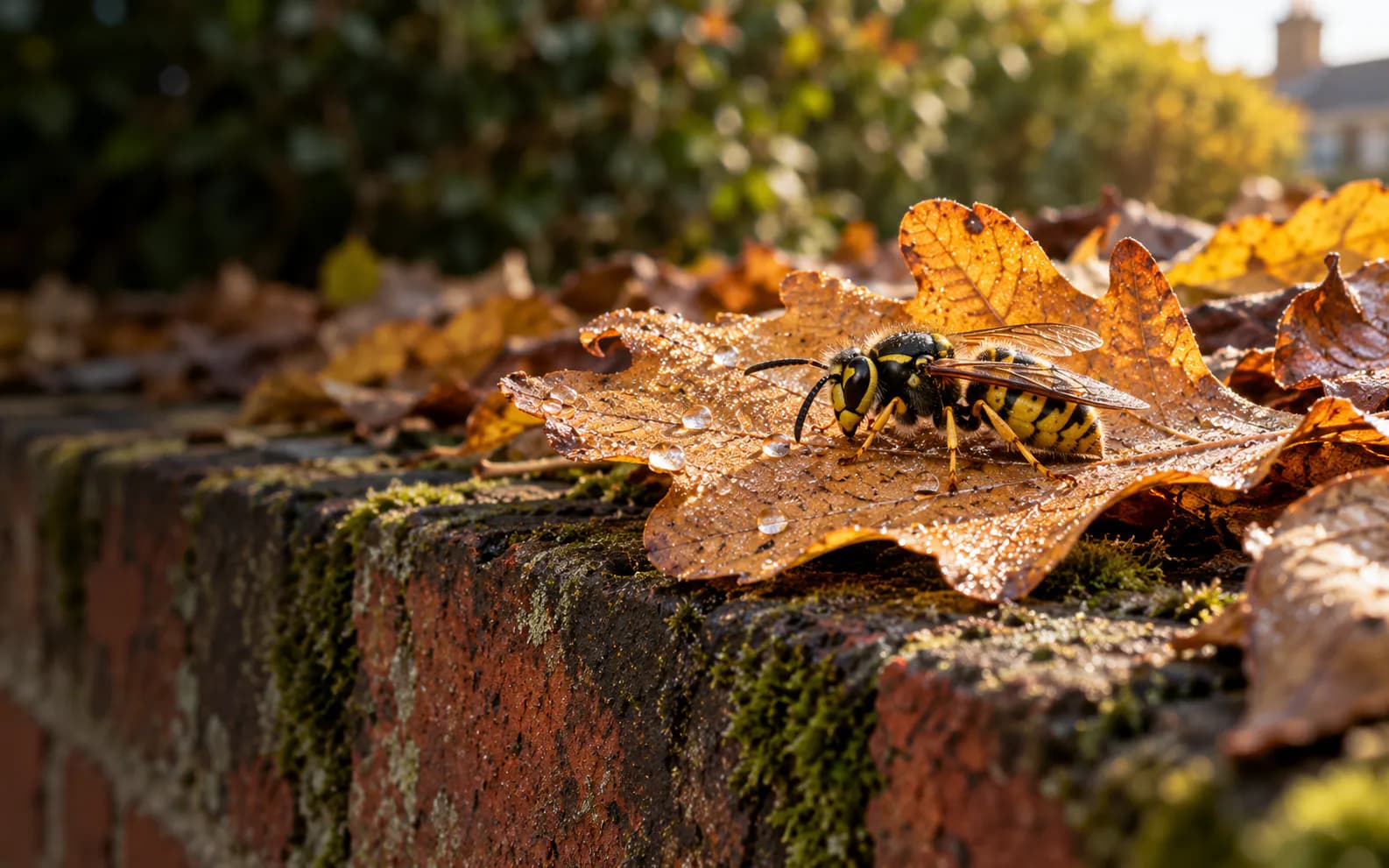
Size and colour are the quickest giveaways. The Wildlife Trusts give the European hornet (Vespa crabro) a length of up to 3.5 cm, with a brown thorax and brown and yellow stripes on its body rather than black and yellow. The common wasp is up to 2 cm long and is the familiar black and yellow insect at picnics.
Both are social wasps that build papery nests from chewed wood. Both have a single-season colony: a queen starts a nest in spring, workers build it up through summer, and the colony dies in autumn, leaving only new queens to hibernate. Hastings Borough Council describes this cycle for both wasps and hornets.
The other differences are in behaviour and timing:
- Temperament: the Wildlife Trusts say the hornet is "much less aggressive than the common wasp" and unlikely to sting if left alone.
- Season: common wasps fly from April to October; European hornets from May to November.
- Nest sites: common wasps nest in gaps in houses and roofs; hornets often choose hollow trees or cavities in buildings.
- Diet: common wasps take nectar, rotten fruit and sugary picnics late in the season, which is why they bother people more.
Hornet vs wasp vs Asian hornet: comparison table
Use this table to identify what you are looking at. Measurements and colours come from the Wildlife Trusts and the Scottish Government's yellow-legged hornet guide.
| Feature | Common wasp | European hornet | Yellow-legged (Asian) hornet |
|---|---|---|---|
| Length | Up to 2 cm | Up to 3.5 cm | Workers from 25 mm, queens about 30 mm |
| Body colour | Black and yellow | Brown and yellow stripes, brown thorax | Dark brown or black, velvety |
| Abdomen | Black and yellow bands | Brown and yellow | Dark, with one yellow band on the fourth segment |
| Legs and face | Not a key feature | Not a key feature | Yellow-tipped legs, orange face |
| Temperament | More aggressive than the hornet | Less aggressive than the common wasp | Not generally aggressive, but defends its nest |
| Native to the UK? | Yes | Yes | No, an invasive species |
| What to do about a nest near the house | Pest control treatment | Pest control treatment | Report it; do not disturb |
The one-line test for the yellow-legged hornet is the abdomen: almost entirely dark with a single yellow band, while the European hornet's abdomen is mostly yellow.
What does a yellow-legged (Asian) hornet look like?
The yellow-legged hornet (Vespa velutina), long called the Asian hornet in the UK, is smaller than our native hornet. The Scottish Government's guide says adult workers measure from 25 mm and queens 30 mm. It has a dark brown or black velvety body except for the fourth abdominal segment, which has a yellow band, yellow-tipped legs, and an orange face with two brownish red eyes.
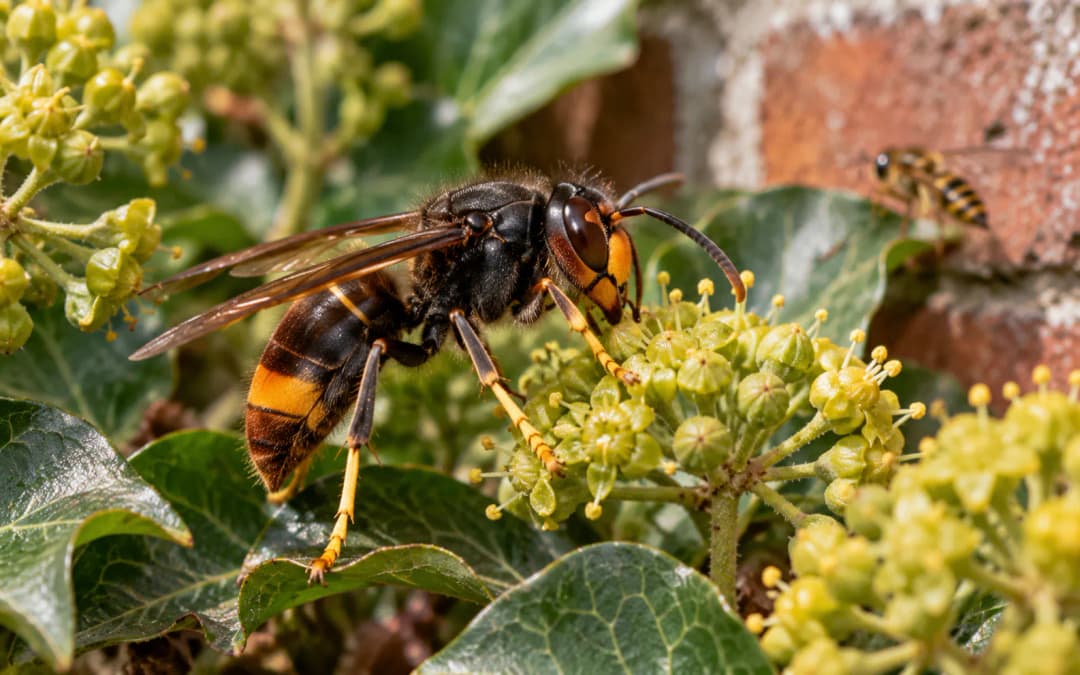
If you are unsure, compare your photo with the Non-Native Species Secretariat's identification sheet, which sets the yellow-legged hornet beside the European hornet and other lookalikes.
Why does the Asian hornet matter?
The concern is mainly for bees rather than people. Warwick District Council describes it as "a highly aggressive predator of insects such as honeybees and other important pollinators", but says it is not usually aggressive towards people unless it perceives a threat to its nest.
It has now reached the East Midlands. The BPCA's PPC magazine reported that an embryo nest was discovered in Chesterfield, Derbyshire, on 26 April 2026, and that, according to the National Bee Unit, hornets were intercepted at Repton in South Derbyshire and in Rushcliffe, Nottinghamshire, the following day. Most sightings in England have been further south, but anyone in Derbyshire, Nottinghamshire, Leicestershire or Lincolnshire should now know what to look for.
When are you most likely to see each one?
Each insect has its own season, which helps narrow down what you are looking at:
- Common wasp: April to October, according to the Wildlife Trusts. Large queens appear in spring when they leave hibernation and again in autumn when they look for somewhere to spend the winter. Workers are most noticeable in late summer, when the colony is at its largest and they turn to sugary food.
- European hornet: May to November. The Wildlife Trusts note that hornets are much less likely to sting than common wasps if left alone.
- Yellow-legged hornet: the Welsh Government says its active season runs from February to November, with most sightings from July onwards. It notes they are drawn to flowering plants, especially ivy in autumn, as well as beehives and rotting fruit.
A single large wasp indoors in early spring or a mild winter is usually a queen, not a sign of a nest; North West Leicestershire District Council notes that larger queens may appear at those times. Our guide to when wasps die off explains the end of the season.
How do you report an Asian hornet in the UK?
Report it, with a photo if you can take one safely. There are three official routes:
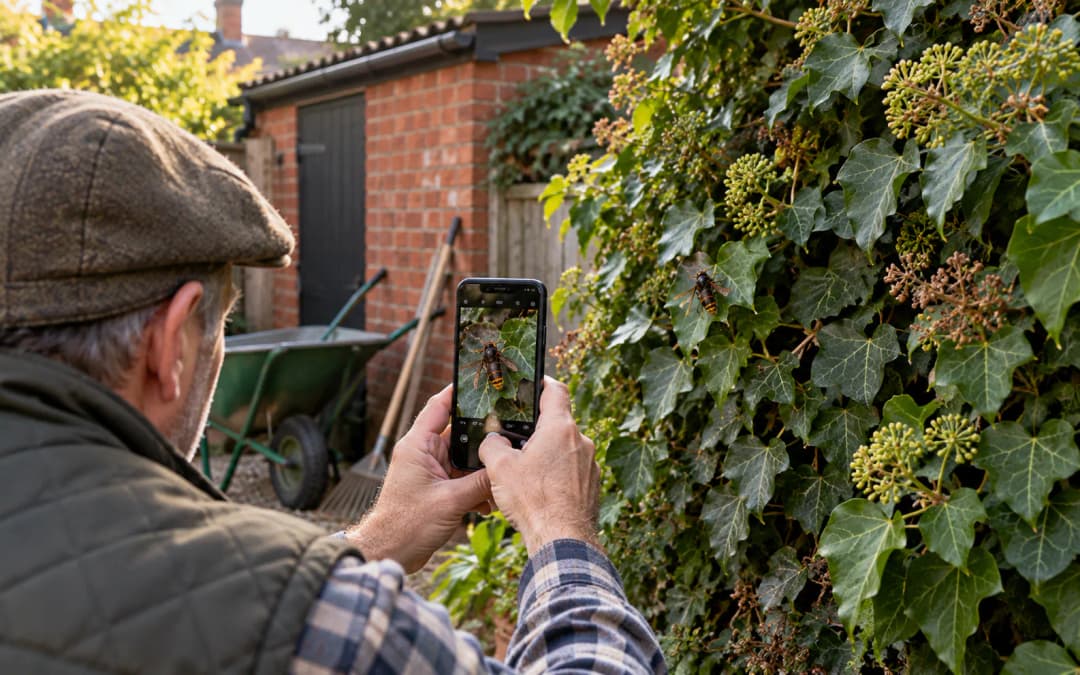
- The Asian Hornet Watch app, free on iPhone and Android, which lets you send a photo and your location.
- The online reporting form, run by the UK Centre for Ecology and Hydrology.
- Email to [email protected], attaching a photo.
A clear photo makes the difference. Specialists can usually confirm a yellow-legged hornet from a clear photograph, so take one from a distance if you can do it safely, and note exactly where you saw the insect. Confirmed sightings are followed up by the National Bee Unit and the Animal and Plant Health Agency, who track down and destroy active nests.
What not to do:
- Don't approach, poke or spray a suspected nest. Yellow-legged hornets are not generally aggressive but will defend a nest.
- Don't try to kill or trap hornets yourself to "help".
- Don't book a private treatment for a suspected yellow-legged hornet nest. It needs to be reported so the government teams can deal with it and trace any others nearby.
If we are called to a nest and suspect yellow-legged hornets, we will stop, photograph it from a safe distance and help you report it rather than treat it.
Is it a hornet, or something else?
Plenty of large insects get mistaken for hornets. Before deciding what to do, check:
- Is it furry and round? Then it is almost certainly a bumblebee. Leave the nest alone; see what to do about a bumblebee nest.
- Is it a cluster of bees hanging from a branch? That is a honey bee swarm; see what to do about a bee swarm.
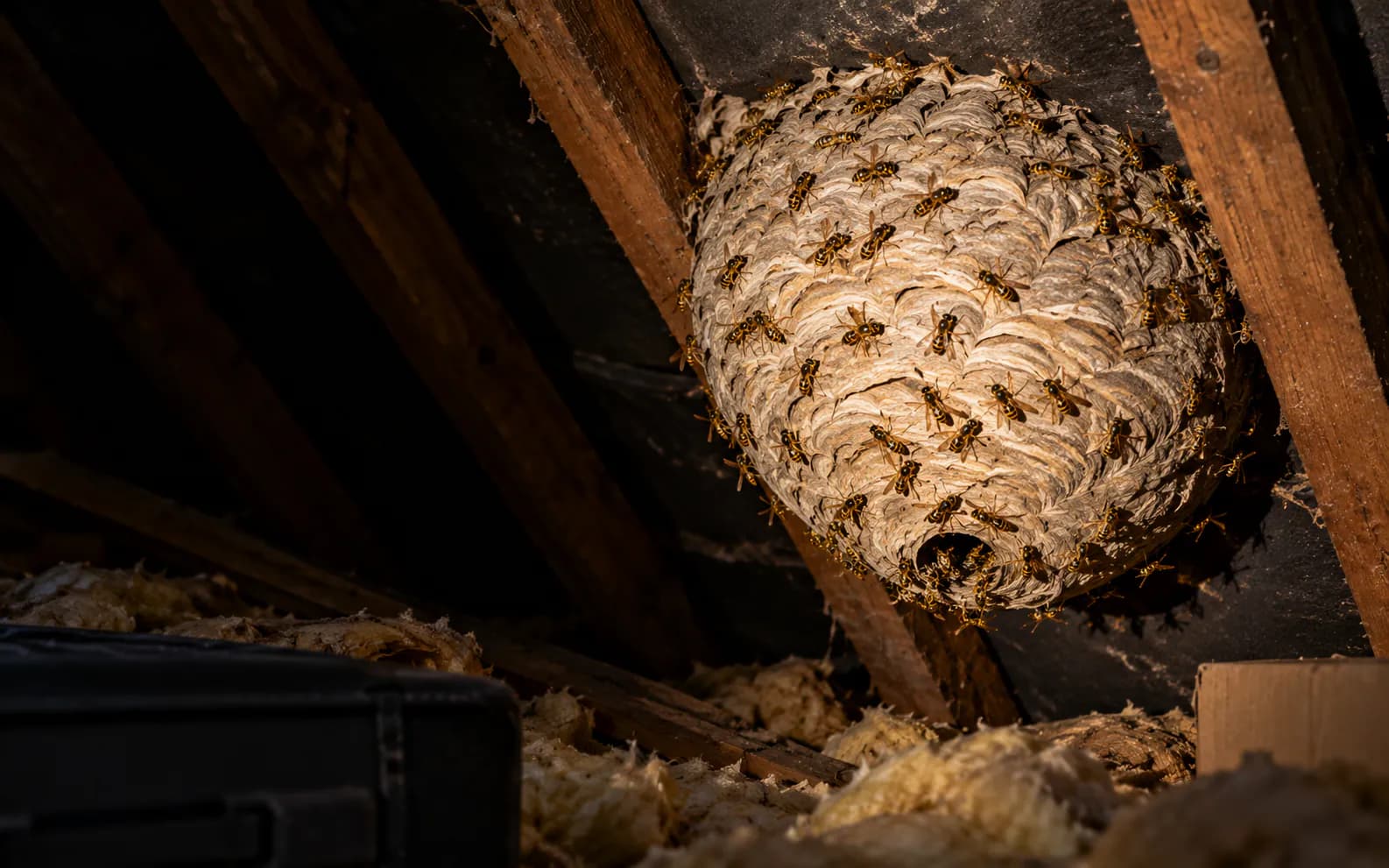
- Is it black and yellow, under 2 cm, and coming from a roof gap? That is a common wasp nest; see how to tell if a wasp nest is active.
- Is it a big brown and yellow wasp nesting in a hollow tree, bird box or building cavity? That is very likely a European hornet.
European hornets nest in hollow trees and cavities in buildings, and an empty bird box can do just as well. One customer described a job like this:
"Gino removed a hornets nest that these beasts had set up in a vacated bird box. In addition to being very knowledgeable - and clearly passionate - about his work, he was fantastic with the kids, helping me keep up the story of those hornets simply moving to a nicer place" — Dorian Kroehl, Google review, August 2023
What does a hornet nest look like?
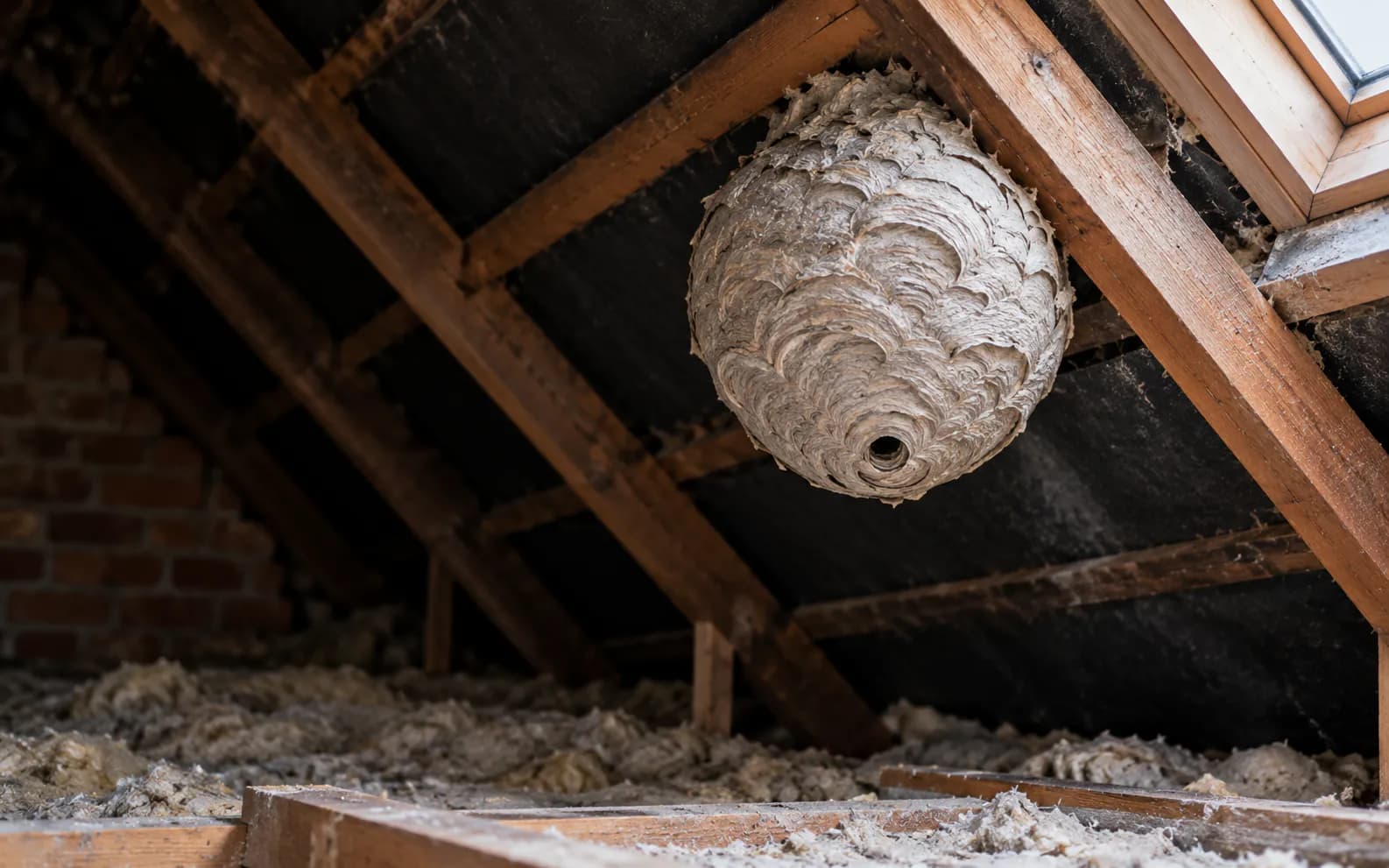
A European hornet nest looks like a large wasp nest: a papery, brownish ball made from chewed wood, with an entrance near the bottom. The Wildlife Trusts say queens usually build in hollow trees or cavities in buildings, and in practice that includes empty bird boxes, sheds, wall voids and chimneys.
A yellow-legged hornet colony also starts small in spring, like the embryo nest found in Chesterfield in April 2026. Whatever it looks like, don't approach a nest you think belongs to yellow-legged hornets; the Welsh Government warns they "will become aggressive if they feel under threat". Photograph it from a distance and report it.
Are hornet stings worse than wasp stings?
A hornet sting is treated the same way as a wasp sting. The NHS advises washing the area, using a cold pack on any swelling and not scratching. Call 999 if lips, mouth, throat or tongue suddenly swell, the throat feels tight, or someone is struggling to breathe. See a GP or call 111 if you were stung in the mouth or throat or near the eyes, were stung more than once, or have had a serious reaction before.
When to call a professional
Call a pest controller if a common wasp or European hornet nest is active near a door, window, garden path, bird table or play area, or if insects are getting into the house. A nest in a quiet corner of the garden can often be left until the colony dies off in autumn; our guide on how to get rid of a wasp nest explains the choice.
Our wasp nest removal service covers European hornet nests as well as wasp nests. Prices depend on where the nest is and when you need us, and we'll explain the likely cost first. A treatment usually takes 15 to 30 minutes; see our pest control prices page for what affects the cost, or the pest identifier if you're still not sure what you've got. For a suspected yellow-legged hornet, report it first; we are happy to look at a photo and tell you what we think.
We work across Nottingham, Derby, Leicester, Chesterfield, Lincoln and the surrounding counties, 7 days a week from 6am to 8pm. Call or WhatsApp a photo to 07999 935 929, or book online.
Sources
- The Wildlife Trusts: hornet
- The Wildlife Trusts: common wasp
- Scottish Government: yellow-legged hornet, how to spot and report the pest
- Non-Native Species Secretariat: yellow-legged (Asian) hornet ID sheet
- UK Centre for Ecology and Hydrology: report a yellow-legged hornet
- BPCA PPC magazine: first sighting of yellow-legged hornets in the East Midlands
- Warwick District Council: Asian hornet
- NHS: insect bites and stings
Frequently Asked Questions
About the author
The Urgent Pest Control team
A family-run pest control company based in Southwell, treating homes and businesses across Nottinghamshire, Derbyshire, Leicestershire and Lincolnshire since 2020. Our guides are written from the jobs we do and checked against UK sources. More about us
Cite this guide: “Hornet vs Wasp: How to Tell Them Apart (and Spot an Asian Hornet)”, Urgent Pest Control, 20 October 2026. https://urgentpestcontrol.uk/blog/hornet-vs-wasp