Bee Swarm: What to Do if Bees Swarm in Your Garden or Home
A honey bee swarm in your garden? Why it usually moves on, how to find a BBKA swarm collector, and what to do if bees get into a wall or chimney.

By the Urgent Pest Control team
Updated · 7 min read
The short answer
Keep your distance, keep children and pets indoors and don't spray, hose or disturb the swarm. A honey bee swarm in the open often moves on within a day or two. If it stays, find a local swarm collector through the British Beekeepers Association. Bees that move into a wall, roof or chimney need a professional.
- A swarm is a honey bee colony looking for a new home; leave it alone and keep people and pets back.
- Swarms in the open often move on within a day or two once scout bees find a new site.
- The BBKA's online map lists volunteer swarm collectors by postcode; they collect honey bees only.
- Swarm collectors won't take bees from roof voids, cavity walls or chimneys, which need a pest professional.
- We relocate bees with local beekeepers wherever we can and only treat as an absolute last resort.
On this page
- What is a bee swarm?
- Is it a honey bee swarm or something else?
- What should you do in the first hour?
- How do you find a swarm collector?
- How long will a bee swarm stay?
- How can you stop bees moving into your house?
- Do councils deal with bee swarms?
- What if bees get into your roof, wall or chimney?
- What should you do if you are stung?
- When to call a professional
If a bee swarm lands in your garden, keep your distance, bring children and pets indoors and leave it alone. A honey bee swarm in the open often moves on within a day or two. If it stays, a British Beekeepers Association swarm collector may take it. If bees move into a wall, roof or chimney, Urgent Pest Control's bee removal service relocates them with local beekeepers wherever possible.
This guide explains what a swarm is, how to tell honey bees from other insects, how to find a swarm collector, what to do in the first hour, and what changes when bees get inside a building.
What is a bee swarm?
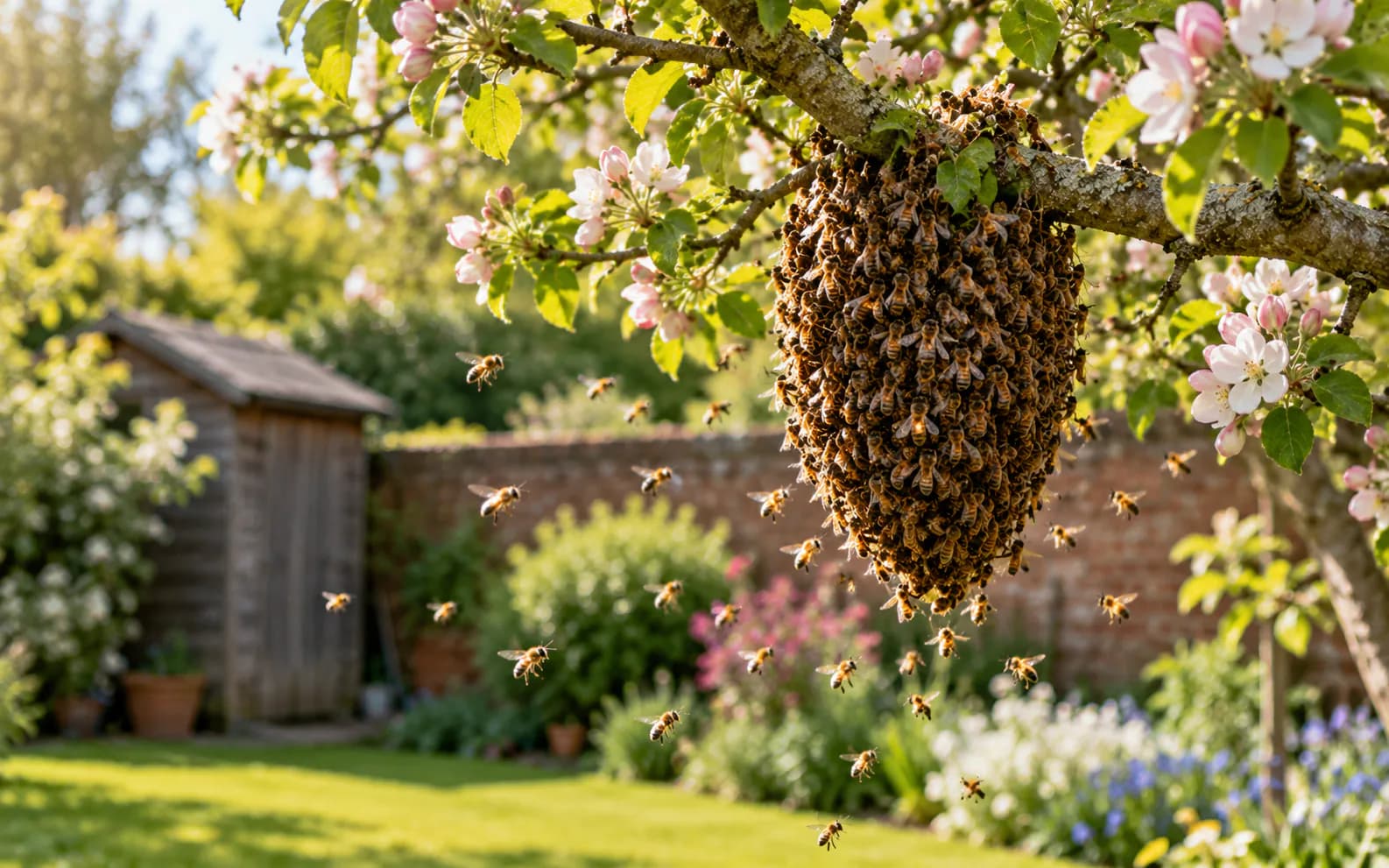
A swarm is a honey bee colony on the move. When a colony outgrows its home, the queen leaves with a large part of the workers to find a new one. The swarm settles in a tight, hanging cluster on a branch, fence, post or wall while scout bees search for somewhere permanent, such as a hollow tree, a beekeeper's hive, or a gap in a building.
That resting cluster can look alarming, but it is temporary. The bees have no nest to defend yet, and the British Beekeepers Association (BBKA) advises that a swarm's main focus is protecting its queen. Its guidance is to keep a safe distance and not try to move or destroy the swarm.
Is it a honey bee swarm or something else?
Only honey bees swarm like this, and swarm collectors only deal with honey bees. The BBKA's swarm pages say plainly that it can only help if the insects are honey bees. Check before you call:
| What you see | What it probably is | What to do |
|---|---|---|
| A dense, hanging cluster of small brown bees on a branch, fence or wall | Honey bee swarm | Keep back; find a BBKA swarm collector if it stays |
| Bees streaming in and out of a gap in brickwork, a roof or a chimney | Honey bees that have moved in | Call a professional; collectors won't remove them |
| Round, furry bees going in and out of a bird box, compost heap or soffit | Bumblebee nest | Usually leave it; see our bumblebee nest guide |
| Single bees using separate small holes in soft mortar in spring | Solitary (masonry) bees | Leave them; see our guide to masonry bees |
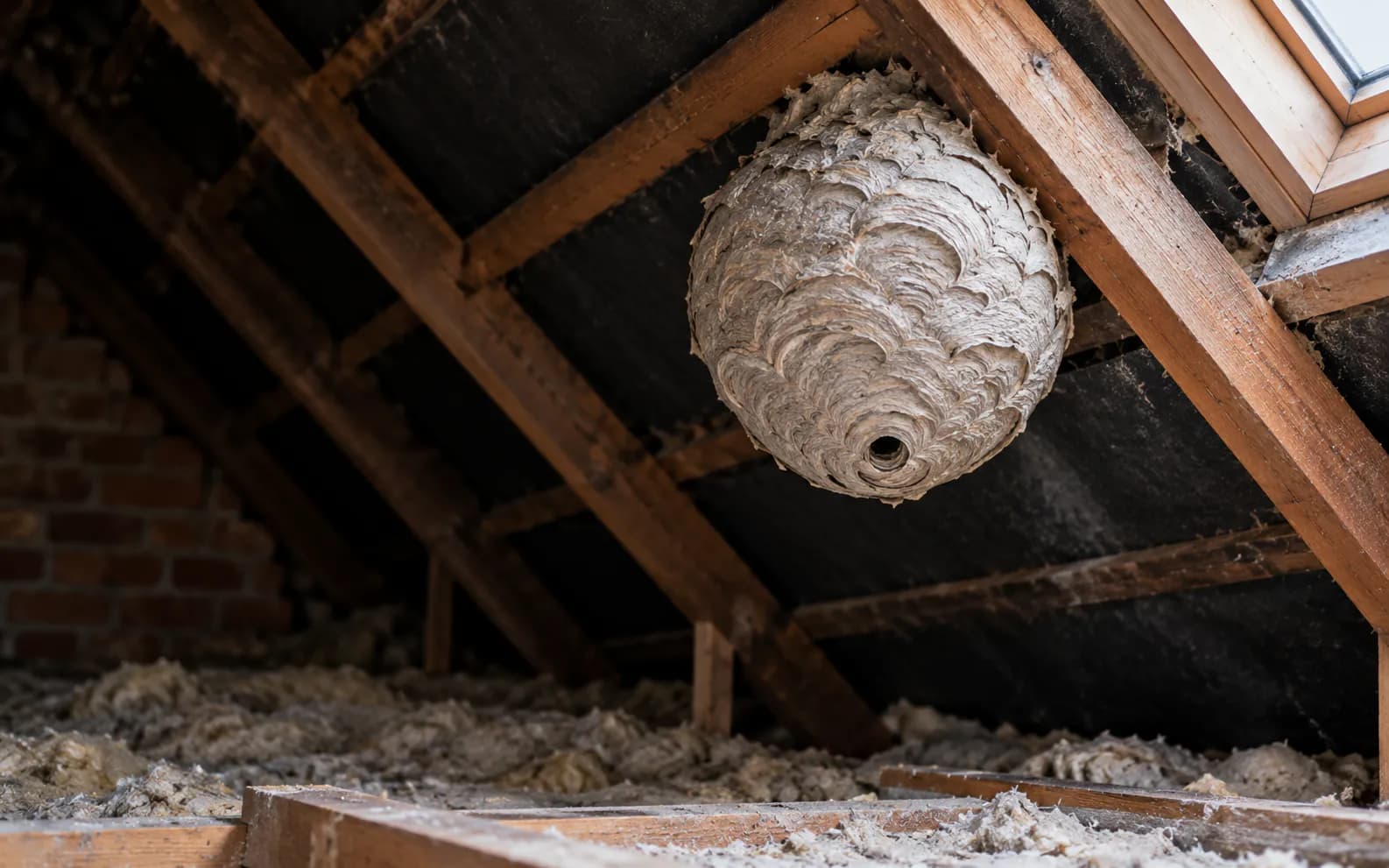
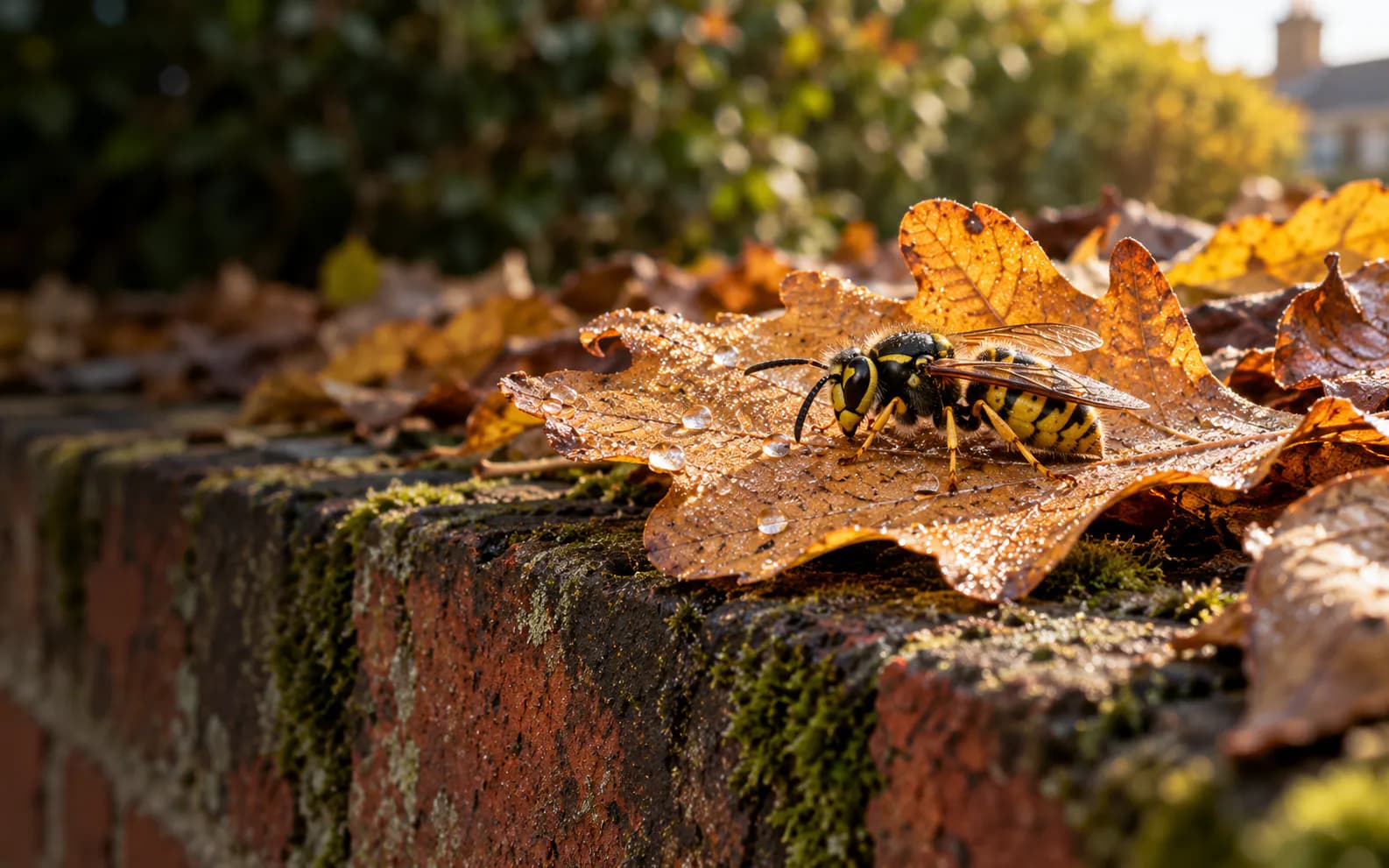
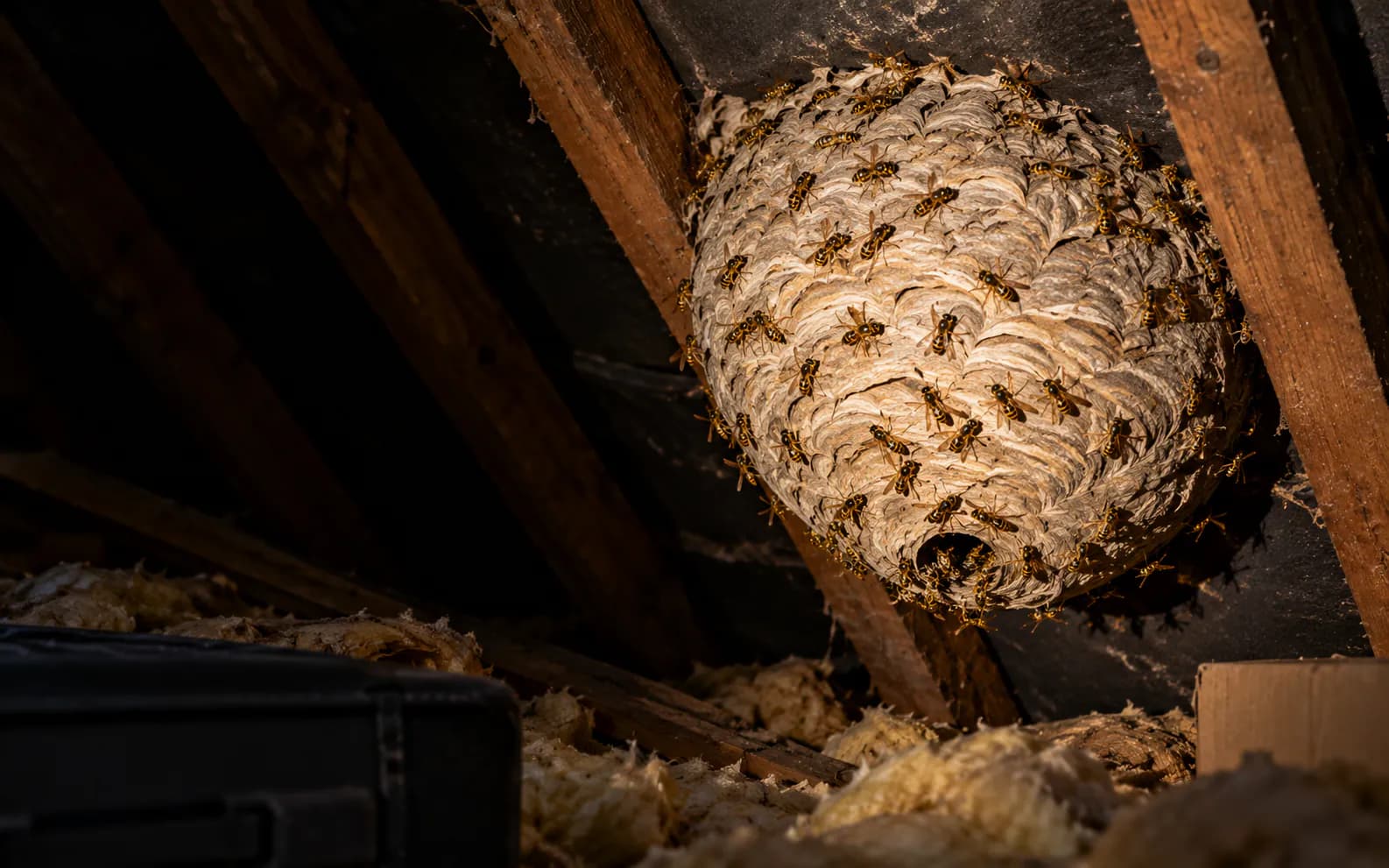
| Slim, shiny black and yellow insects from one gap | Wasp nest | See how to get rid of a wasp nest |
The Bumblebee Conservation Trust explains that a cloud of male tree bumblebees can hover outside a nest waiting for new queens. That can look like a swarm, but it is not one, and males have no sting.
What should you do in the first hour?
Stay calm and keep things simple. This checklist covers the first hour after you spot a swarm:
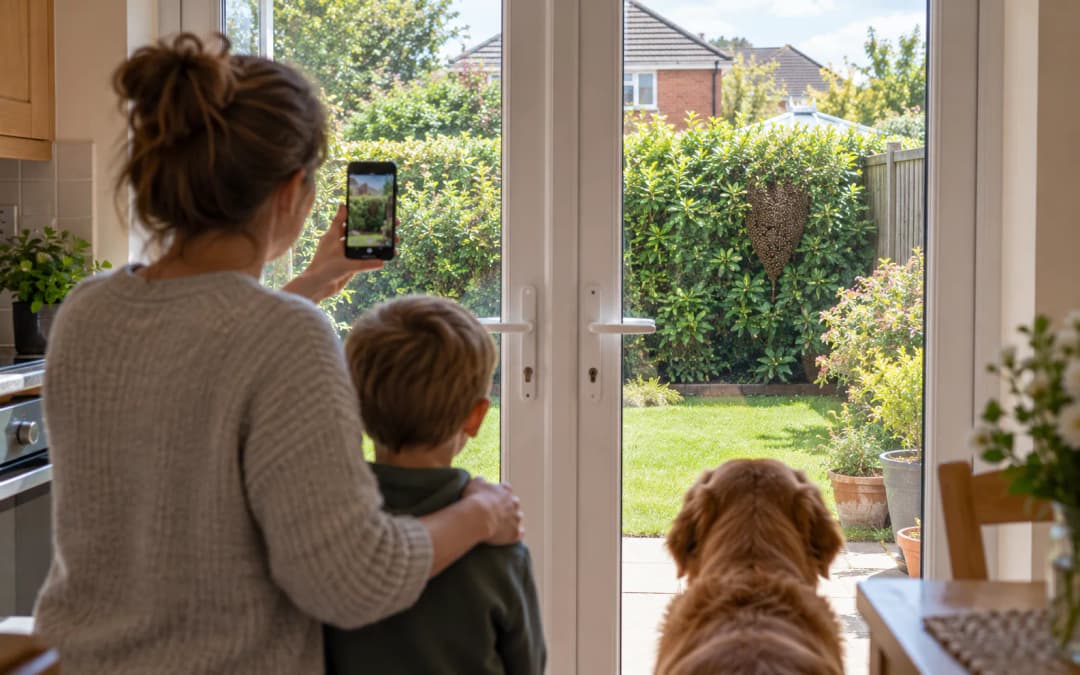
- Bring children and pets indoors and close nearby windows and doors.
- Keep at least a few metres away and don't stand in the bees' flight path.
- Don't spray, hose, smoke or throw anything at the swarm. That turns a calm cluster into an upset one.
- Take a clear photo from a distance, with something nearby for scale. It helps a beekeeper or pest controller identify the bees.
- Note where the swarm is and how high up, and whether bees are going into any gap in the house.
- Look up a local swarm collector on the BBKA map if the bees are honey bees in the open.
- Warn neighbours if the swarm is on a shared fence or near a path.
- Call us for free advice if the bees are going into a building, or check what they are with our pest identifier.
If anyone at home has had a serious reaction to a sting before, keep them well away from the area.
How do you find a swarm collector?
Use the BBKA's find a local swarm collector map. You enter your postcode and click on nearby markers to see volunteer collectors. A few points to know:

- Honey bees only. Collectors don't deal with bumblebees, solitary bees or wasps.
- Not from buildings. Collectors won't take bees from roof voids, cavity walls or chimneys; the BBKA points people to separate guidance on bees in buildings.
- A small fee is possible. Volunteers may ask for a small payment to cover travel costs.
- No one listed nearby? The BBKA suggests contacting your local beekeeping association.
How long will a bee swarm stay?
Usually not long. A swarm hanging from a branch or fence is a resting stop, not a home. It stays only while scout bees find and agree on a permanent site, and in our experience most swarms in the open move on within a day or two.
A few things suggest a swarm is about to settle somewhere nearby rather than leave:
- Bees investigating one gap in a soffit, air brick, vent or chimney pot, coming and going rather than circling.
- The cluster shrinking while traffic into a building grows.
- Comb visible on the underside of the cluster, which means the bees have started to build in the open.
If you see any of these, call for advice before the colony gets established. Bees are far easier to deal with before they have built comb behind a wall.
How can you stop bees moving into your house?
Close the gaps that scout bees look for. Most of the places a swarm chooses are openings you can protect:
- Fit mesh guards or covers to unused chimney pots and check the pots after building work.
- Make sure air bricks and wall vents have intact grilles, and replace broken ones with fine mesh that still lets air through.
- Fill gaps around soffits, fascias and pipe entries, ideally outside the warmer months.
- Repoint soft or open mortar where bees or other insects have used it before.
If a building has had bees before, it is worth checking these points every spring. Our guide to hornets vs wasps also helps if you are not sure what has been visiting.
Do councils deal with bee swarms?
Usually not. Nottingham City Council lists bees as "not treated" on its pest control price list. In Lincolnshire, West Lindsey District Council has asked residents who see a swarm to contact the BBKA swarm service, and warned against putting insect killer out. A swarm in the open is a job for a beekeeper; bees inside a building need a pest professional who works with beekeepers.
What if bees get into your roof, wall or chimney?
Then it is no longer a swarm; it is a new colony. Once the scout bees choose a gap in a building, the whole cluster moves in and starts building comb. Swarm collectors won't remove bees from inside a building, so you will need a professional who can reach the colony.
Signs bees have moved in:
- A steady stream of bees in and out of one gap in the brickwork, a soffit, an air vent or a chimney pot.
- Bees inside the house, especially near a fireplace, vent or loft hatch.
- Humming behind a wall or ceiling.
What not to do:
- Don't block the entrance. Trapped bees will look for another way out, sometimes into a bedroom or living room.
- Don't light a fire to smoke bees out of a chimney.
- Don't spray shop-bought insecticide into the gap. It is unlikely to reach the colony and rules out relocating the bees.
This is the kind of call we get in summer:
"I cant thank Gino enough for coming out to my house last Saturday to sort out a problem i had with a swarm of Bees that had come into an air vent and also got into a bedroom. Brilliant job, and also professional…" — Gary Benwell, Google review, July 2024
What should you do if you are stung?
Act quickly to remove the sting. The NHS advises brushing or scraping the stinger sideways with your fingernail or the edge of a bank card, not pulling it with tweezers, then washing the area with soap and water and using a cold pack on any swelling.
Call 999 if lips, mouth, throat or tongue suddenly swell, the throat feels tight, or someone is struggling to breathe. Bee stings are a recognised trigger for anaphylaxis, and the NHS anaphylaxis guidance says to use an adrenaline auto-injector if you have one, then call 999.
When to call a professional
Call us if honey bees have moved into a wall, roof, chimney or air vent, if bees are getting into the house, if a swarm has stayed put and no collector can help, or if someone at home has a severe sting allergy. Phone advice is free, and if a swarm is likely to move on by itself, we will tell you so.
Our bee removal service puts the bees first. We relocate bees with local beekeepers wherever we can and only treat as an absolute last resort, for example where a colony is inaccessible and putting people at risk. We'll explain the likely cost before any work starts; our pest control prices page explains what affects it.
We cover Nottingham, Derby, Leicester, Lincoln, Newark and Grantham, 7 days a week from 6am to 8pm. Send a photo on WhatsApp or call 07999 935 929, or book online.
Sources
- British Beekeepers Association: find a local swarm collector
- British Beekeepers Association: swarm collection
- Bumblebee Conservation Trust: bumblebee nests
- Nottingham City Council: pest control
- West Lindsey District Council: help protect our bees in swarming season
- NHS: insect bites and stings
- NHS: anaphylaxis
Frequently Asked Questions
About the author
The Urgent Pest Control team
A family-run pest control company based in Southwell, treating homes and businesses across Nottinghamshire, Derbyshire, Leicestershire and Lincolnshire since 2020. Our guides are written from the jobs we do and checked against UK sources. More about us
Cite this guide: “Bee Swarm: What to Do if Bees Swarm in Your Garden or Home”, Urgent Pest Control, 20 October 2026. https://urgentpestcontrol.uk/blog/bee-swarm-what-to-do