Is a Wasp Nest Active? How to Tell a Live Nest From a Dead One
How to tell if a wasp nest is active or dead: the signs to watch for, what a treated nest does next, and why old nests are not reused.

By the Urgent Pest Control team
Updated · 8 min read
The short answer
A wasp nest is active if wasps are flying in and out of one entrance on a warm day. Watch from a safe distance for ten minutes. No traffic in warm weather, or any nest found in winter, usually means it is dead. Wasps never reuse an old nest, so a dead nest can be left or removed.
- The surest sign of an active nest is steady wasp traffic in and out of one entrance on a warm day.
- Any wasp nest found in winter is dead; only new queens survive, and they hibernate elsewhere.
- Wasps never reuse an old nest, although a queen may build a new one in the same spot.
- After professional treatment a nest usually dies within a few days; councils advise waiting about two weeks before removing it.
- A few large wasps indoors in spring or autumn are often queens, not a nest.
On this page
- How do you know if a wasp nest is active?
- What does a wasp nest look like?
- Active or dead nest: what are the signs?
- How does a wasp nest change through the year?
- Do wasps reuse an old nest?
- What happens to a nest after it has been treated?
- Should you remove a dead wasp nest?
- What if I see wasps indoors but can't find a nest?
- Is it an active wasp nest or something else?
- When to call a professional
A wasp nest is active if wasps fly steadily in and out of one entrance on a warm day. No traffic in warm weather, or a nest found in winter, means it is almost certainly dead; wasps never reuse old nests. For a live nest near a door or path, Urgent Pest Control's wasp nest removal service can often visit the same day.
This guide explains how to check a nest safely, what a wasp nest looks like, how it changes through the season, what happens after a nest is treated, and when you need to do nothing at all.
How do you know if a wasp nest is active?
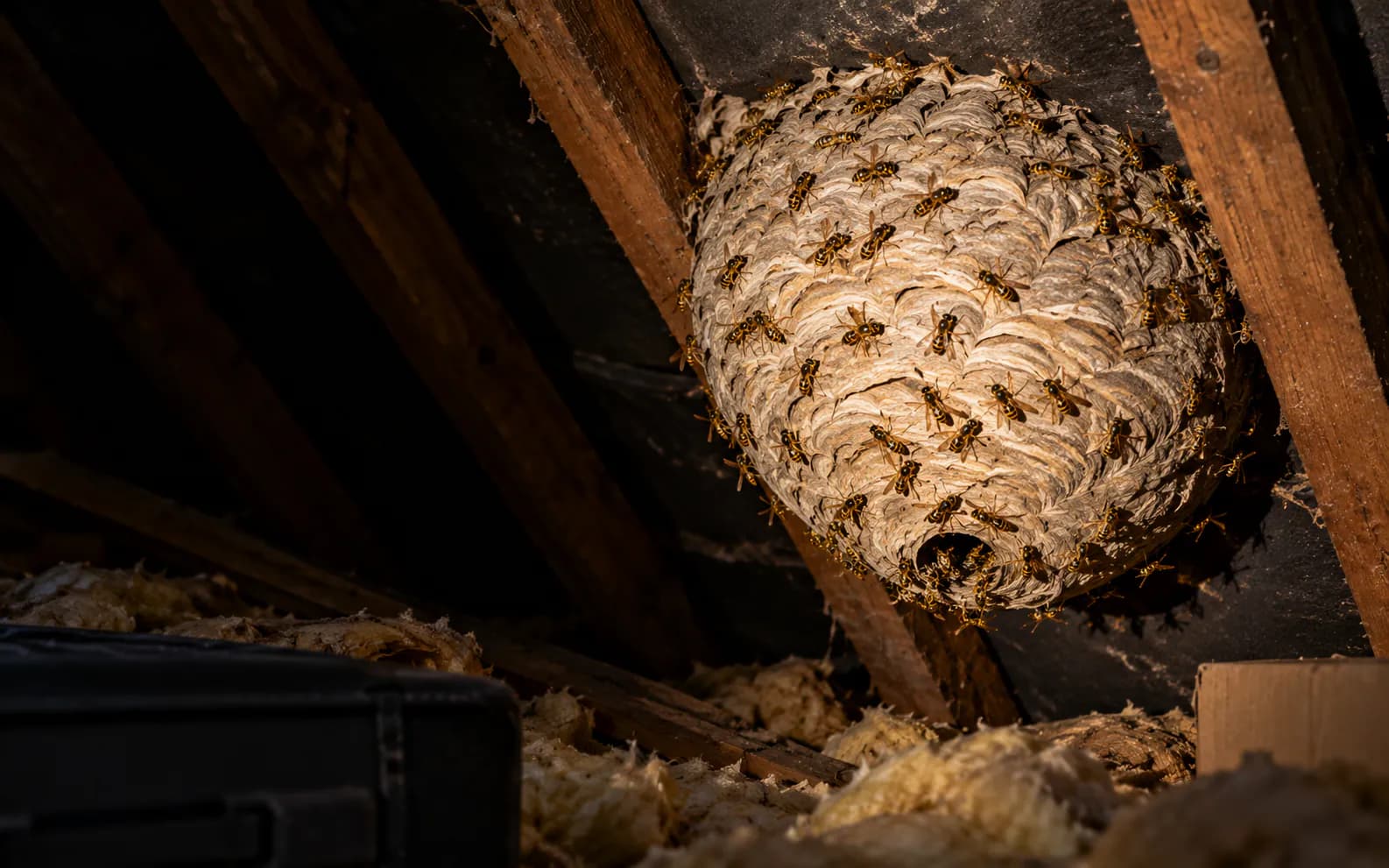
Watch the entrance, not the nest. An active nest has a constant stream of wasps leaving and returning through one hole, which might be a gap under a roof tile, a hole in a fascia board, an airbrick, a crack in a wall or a hole in the lawn.
To check safely:
- Stand well back, at least a few metres away and out of the flight path.
- Choose a warm, dry day, ideally in the afternoon, when wasps are busiest.
- Watch for ten minutes. Count whether wasps are going in as well as coming out.
- Look but don't touch. Never tap, poke, spray or hose the nest to "see if anything happens".
- Repeat on a second day if the first check is cold, wet or windy, because wasps fly less in poor weather.
What does a wasp nest look like?
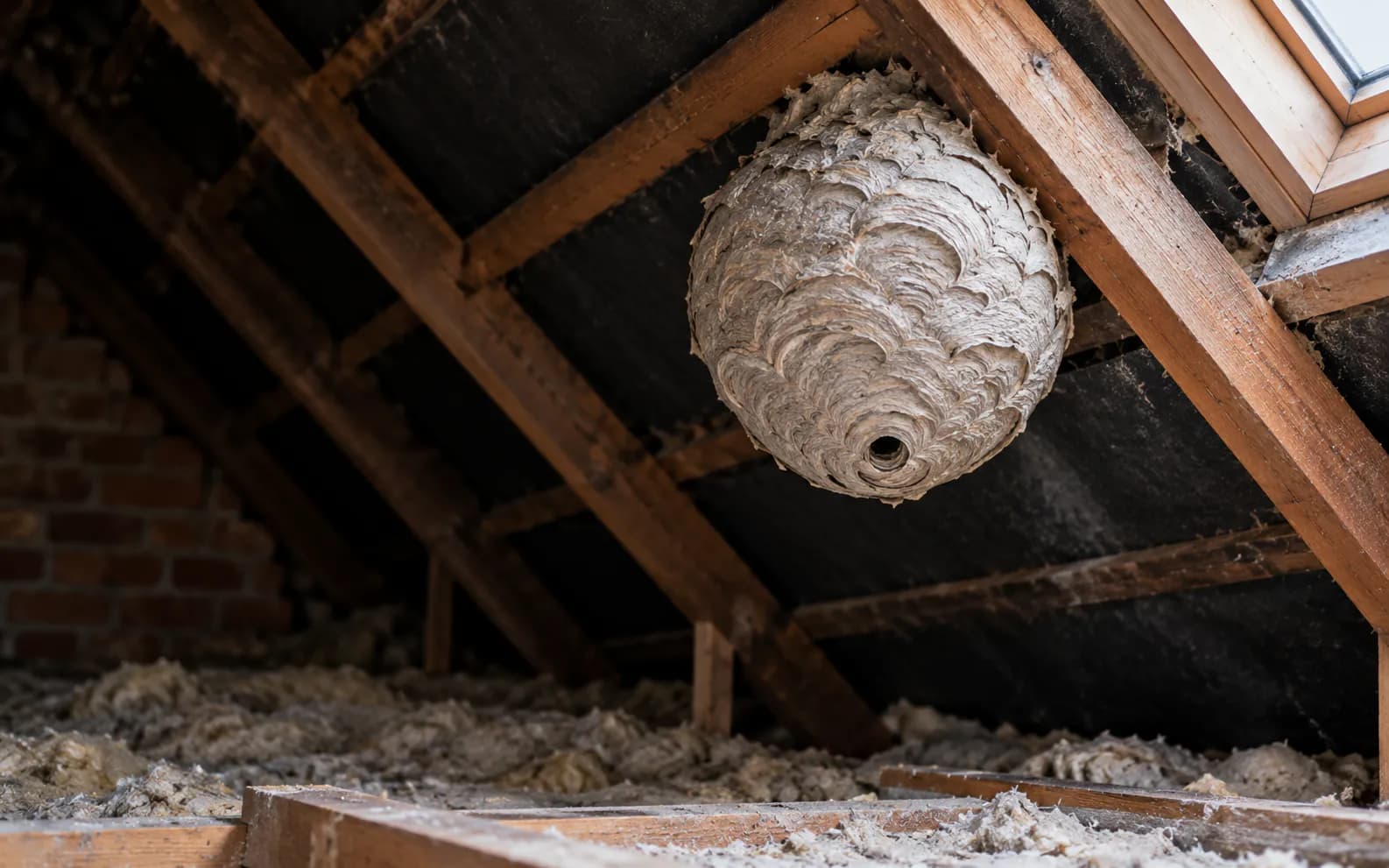
A wasp nest is a rounded, papery ball, pale beige or grey, with swirled layers on the outside and usually one entrance hole near the bottom. North West Leicestershire District Council says it is built from chewed wood mixed with saliva, and can hold 3,000 to 5,000 wasps and be over 30 cm across by late summer.
What you see depends on where it is:
- In a loft, shed or under eaves: the whole nest is visible, hanging from a rafter or beam.
- Under roof tiles, in a soffit or a wall cavity: you only see the entrance gap and the wasps using it.
- In the ground: a hole in a lawn, bank or flower bed, often an old mouse burrow, with wasps flying straight in and out.
- In a hedge, tree or bird box: a grey paper ball among the branches or filling the box.
A bumblebee nest looks quite different: the Bumblebee Conservation Trust describes a messy structure of wax pots, brood cells and silk cocoons, usually hidden in a bird box, compost heap or under decking, with far fewer, furrier bees.
Active or dead nest: what are the signs?
This checklist covers what you are likely to see. One sign on its own can mislead, so look for two or three together.
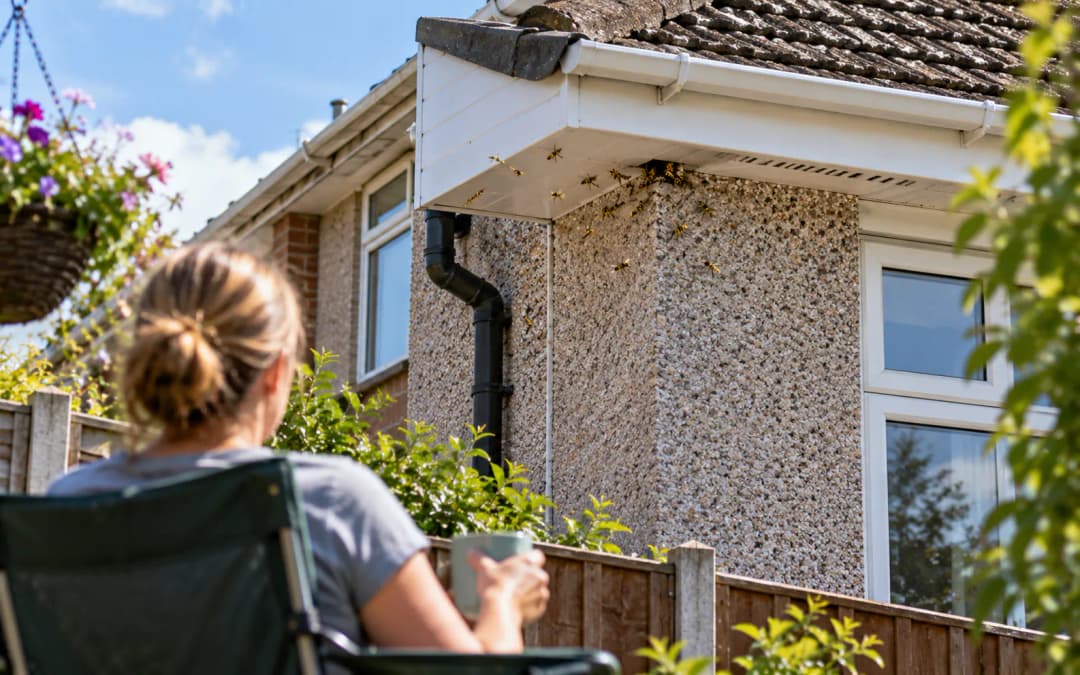
| What you see | Likely active | Likely dead |
|---|---|---|
| Wasps at the entrance on a warm day | Steady traffic in and out | None, or the odd wasp landing and leaving |
| Time of year | Spring to early autumn | Winter, or late autumn after a cold spell |
| Sound near a loft or wall nest | Faint papery rustling or humming | Silent |
| Nest surface | Fresh, intact paper with new layers | Brittle, faded, broken or crumbling |
| Wasps indoors | Many workers near one room or the loft hatch | A few slow, large wasps in spring or autumn |
| After a professional treatment | Some activity on the first day is normal | Little or no traffic after a few days |
The season is the quickest clue. The Wildlife Trusts give the common wasp's active period as April to October. Hastings Borough Council explains that in autumn all wasps die except the new queens, which hibernate and build new nests the following spring. So a nest you find in winter is dead, however large it looks.
How does a wasp nest change through the year?
A nest has a single season. The British Pest Control Association (BPCA) describes the cycle: a queen comes out of hibernation in spring and starts a small nest on her own, worker numbers build through late spring and summer, new queens and males are produced in late summer, and the colony declines in autumn.
That means what you find depends on when you look:
- Spring: a small nest with only the queen or a handful of workers. Activity is light and easy to miss.
- Early summer: the nest grows fast as workers hatch. Traffic becomes obvious.
- Late summer: the nest is at its largest. Redbridge Council says it may be the size of a football or larger by then. This is when most people notice wasps indoors.
- Autumn: workers die off and the new queens leave to hibernate. Activity slows, then stops.
- Winter: the nest is empty. It will not be used again.
Our guide to when wasps die off covers the end of the season in more detail.
Do wasps reuse an old nest?
No. Hastings Borough Council says old nests are not recolonised the following year, so nests from previous years can be removed, and treated nests need not be removed at all. The catch is that the same council notes a new nest may be built next to an existing one. A sheltered loft corner or a gap under the eaves that suited one queen can suit another.
So an old nest is not a threat in itself, but it is a sign that wasps can get in. Sealing the gap once the season is over is the best way to stop a repeat.
What happens to a nest after it has been treated?
A treated nest does not go quiet straight away, and that is expected. We puff an insecticide dust into the entrance, which takes 15 to 30 minutes. Wasps returning to the nest walk through the dust and carry it inside, which is why some activity continues for a while.
Redbridge Council says a treated nest "will then slowly die over a period of 2 to 4 days". It asks residents to report it if large numbers of wasps are still entering and leaving 7 days after the treatment. Most professionals work to a similar rule of thumb.
After a treatment:
- Keep people and pets away from the entrance for the rest of the day and the following day.
- Don't block the entrance. Wasps need to pass through the dust; blocking the hole can push them into the house instead.
- Expect some wasps for a day or two, especially foragers returning from outside.
- Call back if traffic is still heavy after a week. A second treatment is sometimes needed for large or awkward nests.
One customer described exactly this in July 2026:
"The treatment seems to have worked well so far, as there is no further sign of wasps entering the roof area. Gino was at the house for around 25 minutes and advised that if the wasps were still in the same area in two weeks time, to call him back and a second treatment would be administered." — Dawn Doleman, Google review, July 2026
Should you remove a dead wasp nest?
You don't need to. A dead nest does no harm, will not be recolonised and often crumbles away in a loft or wall void. If it is somewhere visible and you want it gone, Redbridge Council advises leaving it for at least two weeks after treatment so that all the wasps are dead, and then removing it only if it is safe to do so.
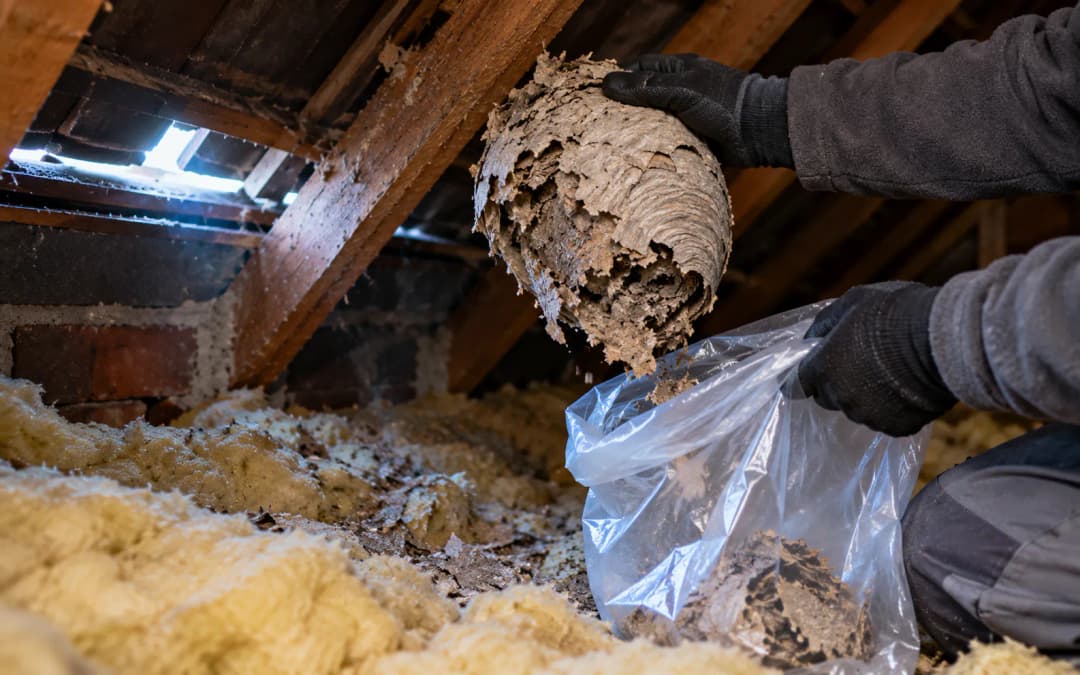
Don't climb a ladder to reach a nest on a fascia or under a roof edge. A fall is a far greater risk than the nest. In a loft, wear gloves, bag the nest and look for the gap the wasps used so it can be sealed.
What if I see wasps indoors but can't find a nest?
A few big, slow wasps indoors in early spring or autumn are often queens rather than a nest. The BPCA's PestWatch article on queen wasps notes that pest controllers often get calls about "wasp nests" that turn out to be a few waking queens, or queens looking for somewhere to hibernate, and that these queens quickly move on and are generally harmless to people.
It is different if you see many smaller wasps indoors in summer, especially in one room, near a loft hatch or around a light fitting. That usually means a nest in the roof space or a wall cavity with a route into the room. Our guide to a wasp nest in the roof or loft explains what to do next.
Is it an active wasp nest or something else?
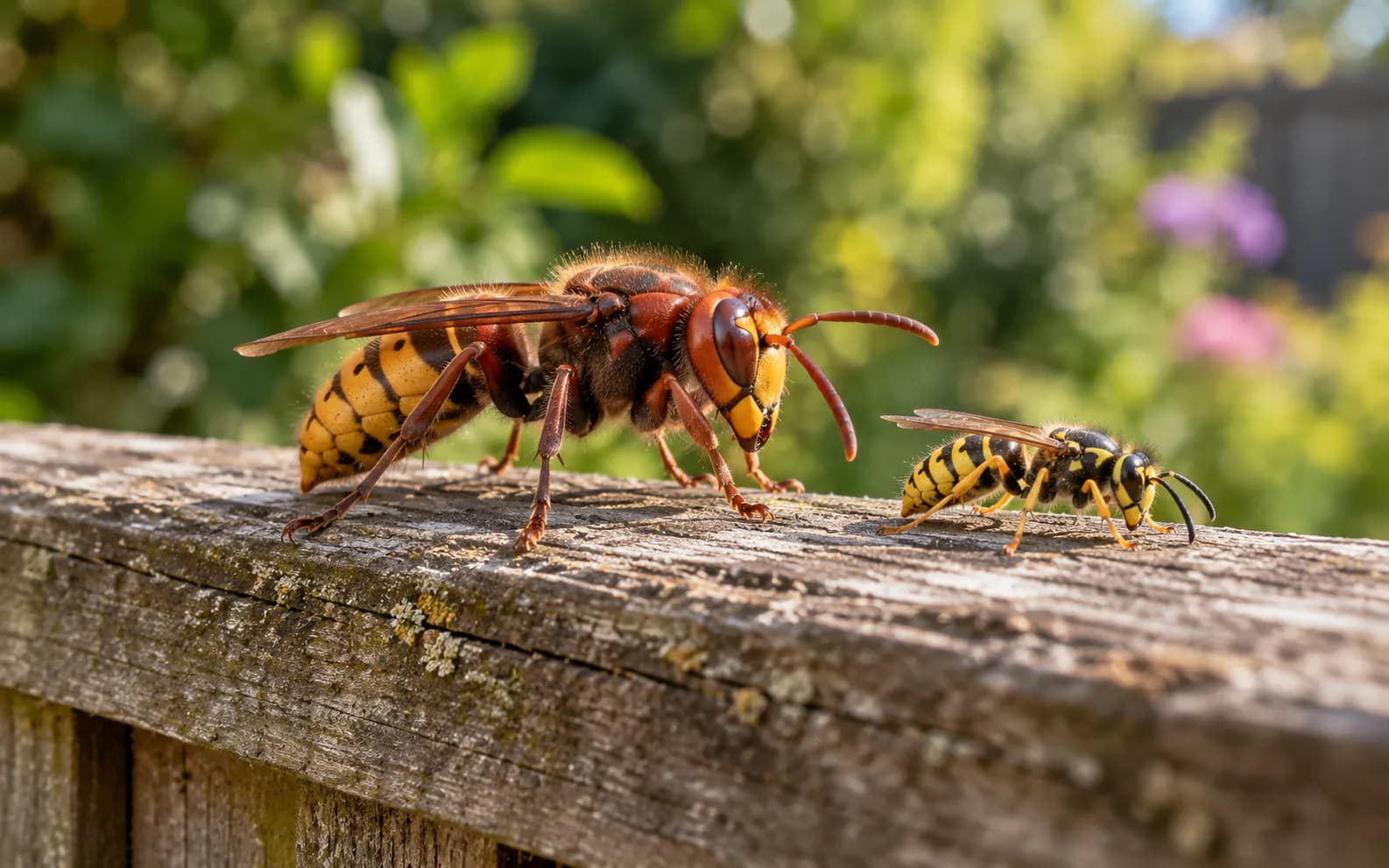
Check what is going in and out before deciding. Bumblebees are rounder and furrier, and their nests are best left alone; see what to do about a bumblebee nest. A larger, brown and yellow insect may be a European hornet, and a dark one with a single yellow band and yellow-tipped legs may be a yellow-legged (Asian) hornet, which must be reported rather than treated. Our guide to hornets vs wasps shows the differences.
When to call a professional
Call us if wasps are going in and out of an active nest near a door, window, play area or busy path, if wasps are getting inside the house, or if anyone at home has reacted badly to a sting before. The NHS advises calling 999 if, after a sting, lips, mouth, throat or tongue suddenly swell, or someone is struggling to breathe or swallow.
If the nest is dead, or it is a spring queen on her own, we will tell you so over the phone; you don't need a visit. If it is active, a treatment takes 15 to 30 minutes, and we'll give you clear, upfront advice on cost before we book the visit. Learn more about how to get rid of a wasp nest safely, or check what you're looking at with our pest identifier.
We cover Nottingham, Derby and Leicester, plus towns such as Mansfield, Newark, Loughborough and Lincoln, 7 days a week from 6am to 8pm. Call or WhatsApp 07999 935 929 with a photo of the entrance, or book online.
Sources
Frequently Asked Questions
About the author
The Urgent Pest Control team
A family-run pest control company based in Southwell, treating homes and businesses across Nottinghamshire, Derbyshire, Leicestershire and Lincolnshire since 2020. Our guides are written from the jobs we do and checked against UK sources. More about us
Cite this guide: “Is a Wasp Nest Active? How to Tell a Live Nest From a Dead One”, Urgent Pest Control, 20 October 2026. https://urgentpestcontrol.uk/blog/is-a-wasp-nest-active