How to Get Rid of Rats in the Garden (Safely)
How to get rid of rats in the garden without harming pets or wildlife: remove food and shelter, fix bird feeding and compost, and when to call a professional.

By the Urgent Pest Control team
Updated · 8 min read

The short answer
To get rid of rats in the garden, take away their food and shelter first: stop seed falling from bird feeders, bring bird food in at dusk, secure bins and compost, clear clutter and block gaps under sheds and decking. If burrows stay active after two weeks, a professional treatment with protected bait stations or traps clears them.
- Rats come to gardens for food and shelter; spilled bird seed is one of the commonest attractions, according to the Mammal Society.
- Councils advise bringing bird food in at dusk, protecting compost heaps with wire mesh and keeping bins away from fences.
- Rats need only a 15mm gap, so block gaps under sheds, decking and around pipes.
- Loose poison in a garden puts pets, children and wildlife such as barn owls at risk; professional bait is used in locked stations.
- Rat control starts from £200, including follow-up visits; the final price depends on the job.
On this page
- Why do rats come into gardens?
- How do you know you have rats in the garden?
- What do rat holes in the garden look like?
- How do you get rid of rats under decking?
- How do you get rid of rats in the garden, step by step?
- Should you use traps or poison in the garden?
- Do rat repellents work in the garden?
- Could the rats be coming from the drains?
- Are rats in the garden a health risk?
- What if the rats are coming from a neighbour's garden?
- When to call a professional
To get rid of rats in the garden, take away their food and shelter first: stop seed falling from bird feeders, bring bird food in at dusk, secure bins and compost, clear clutter, and block gaps under sheds and decking. Then deal with the rats already there. If burrows are still active after a couple of weeks, our rat control service, from £200, treats them safely with protected bait stations or traps.
These are also the first steps in how to get rid of rats anywhere around a home, because rats in the house usually start outside. Rats are active all year, so the steps work in any season.
Why do rats come into gardens?
Rats come for food and stay for shelter. The Mammal Society describes the brown rat as a true omnivore that will eat almost anything, with cereals forming a large part of its diet, and notes that fallout from bird feeders often attracts them. Rats dig their own burrows, usually joined by obvious, well-used runs.
A typical garden offers plenty of both:
- Food: spilled bird seed, food waste in compost bins, overflowing wheelie bins, pet food left outside, chicken feed and fallen fruit.
- Shelter: the void under decking and sheds, log piles, dense shrubs, overgrown corners and stored junk.
- Water: ponds, water butts and dripping outside taps.
Our guide to what attracts rats and mice covers these in more detail.
How do you know you have rats in the garden?
Look for:
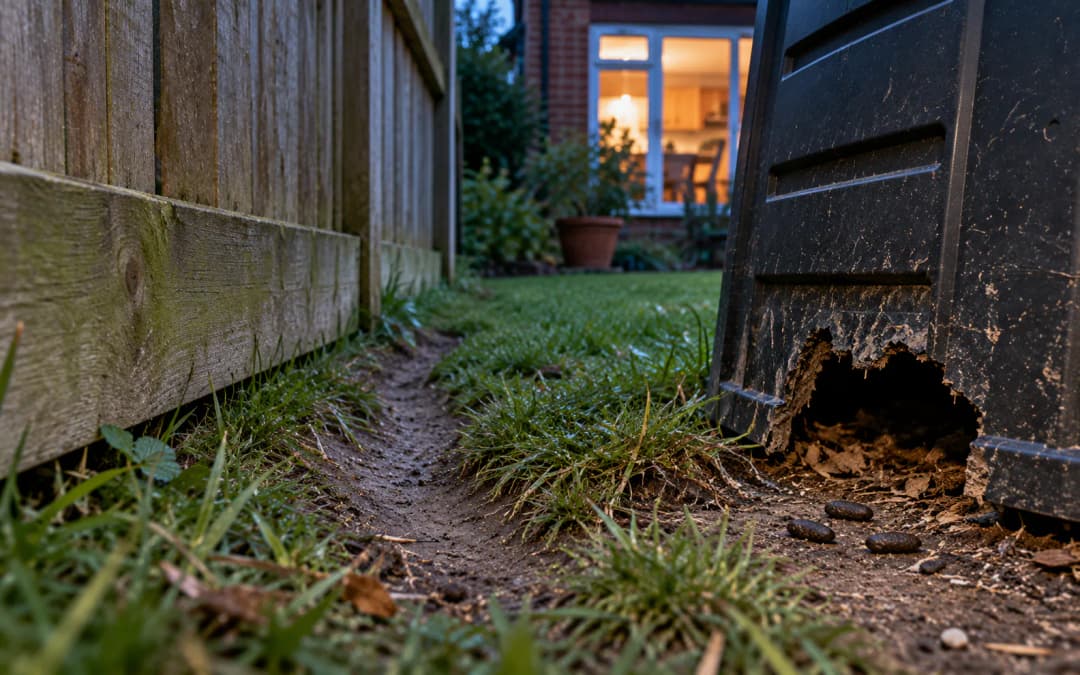
- burrow holes, often under sheds, decking, paving edges, compost bins or hedges;
- smooth, worn runs in the grass along fences and walls;
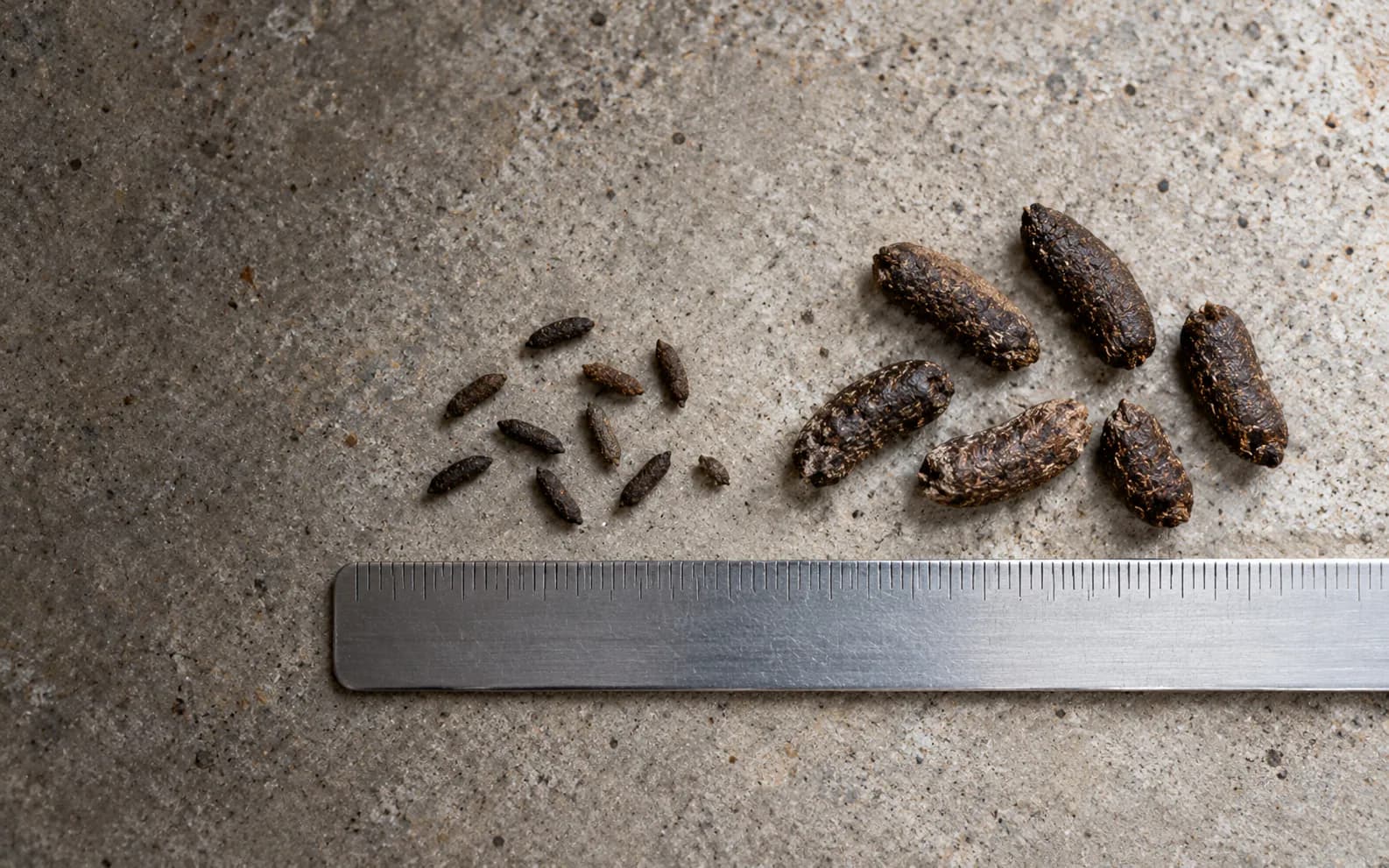
- droppings up to about 17mm long near feeders, bins or compost;
- gnawed bin lids, shed doors or plastic compost bins;
- rats seen at dusk around the bird table or chicken run.
Seeing a rat in daylight can mean a larger population or a disturbed nest. For a full checklist, see the signs of rats.
What do rat holes in the garden look like?
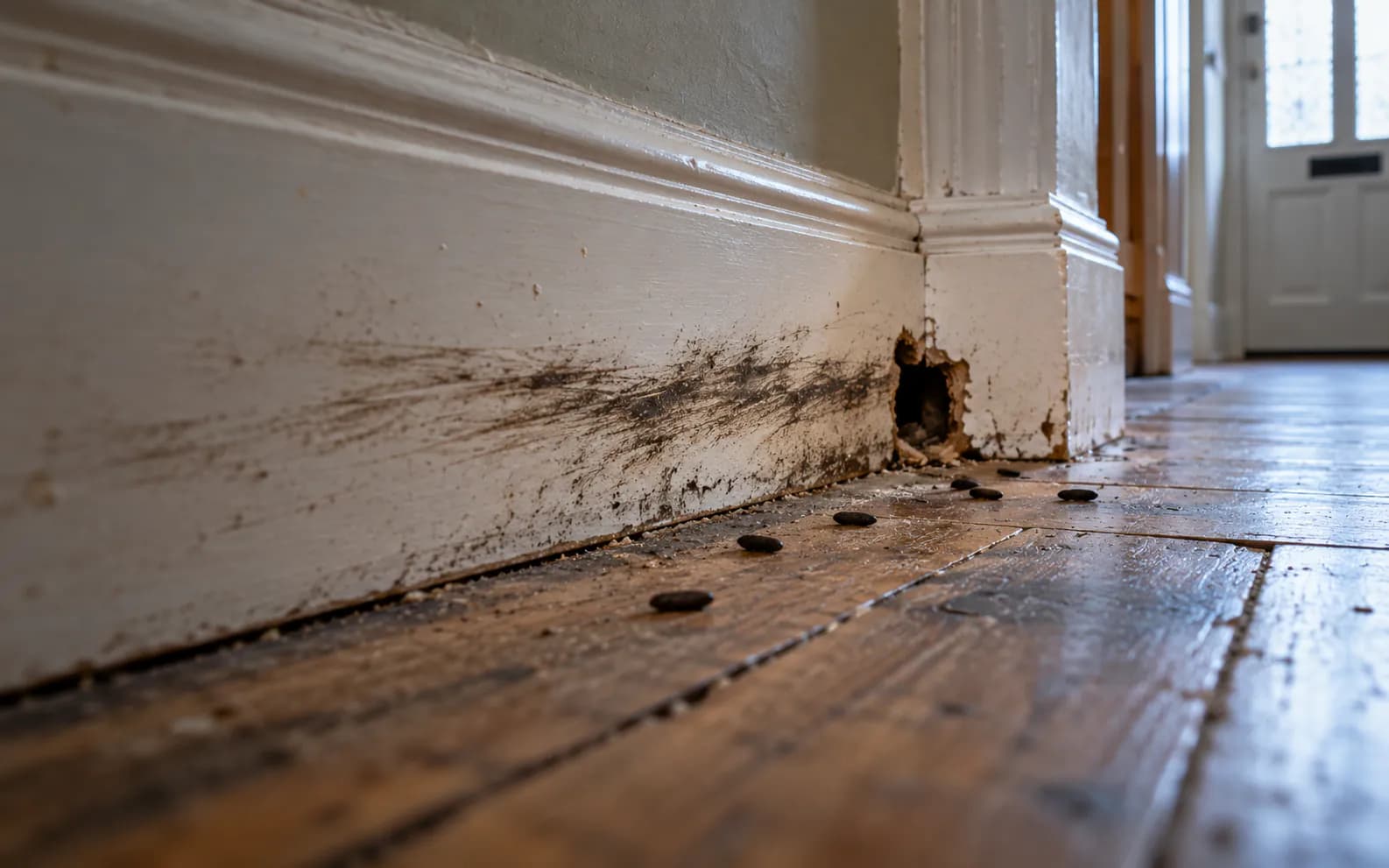
Rat holes are round, smooth-sided entrances, noticeably bigger than a mouse hole, with loose soil spread in a fan outside the entrance, often with a worn run leading away from them. You find them under sheds and decking, beside paths and walls, in compost heaps and at the base of hedges. Several holes close together usually belong to one burrow system with more than one exit.
An active hole has fresh soil, no cobwebs or leaves across it, and droppings or a smooth, polished rim. To test, loosely block the hole with scrunched newspaper or soil in the evening. If it has been reopened by the next morning, rats are using it. Holes in a lawn with no soil fan are more likely to be from mice, voles or wasps; molehills are mounds of soil with no visible hole.
How do you get rid of rats under decking?
Rats under decking are using the dry, hidden void as a nest close to food, so the fix is to remove the food nearby, treat the rats, then close the void. Don't block the gaps while rats are still underneath: they will dig out or die where you can't reach them.
- Clear spilled bird seed, barbecue scraps and pet food from the decking and patio.
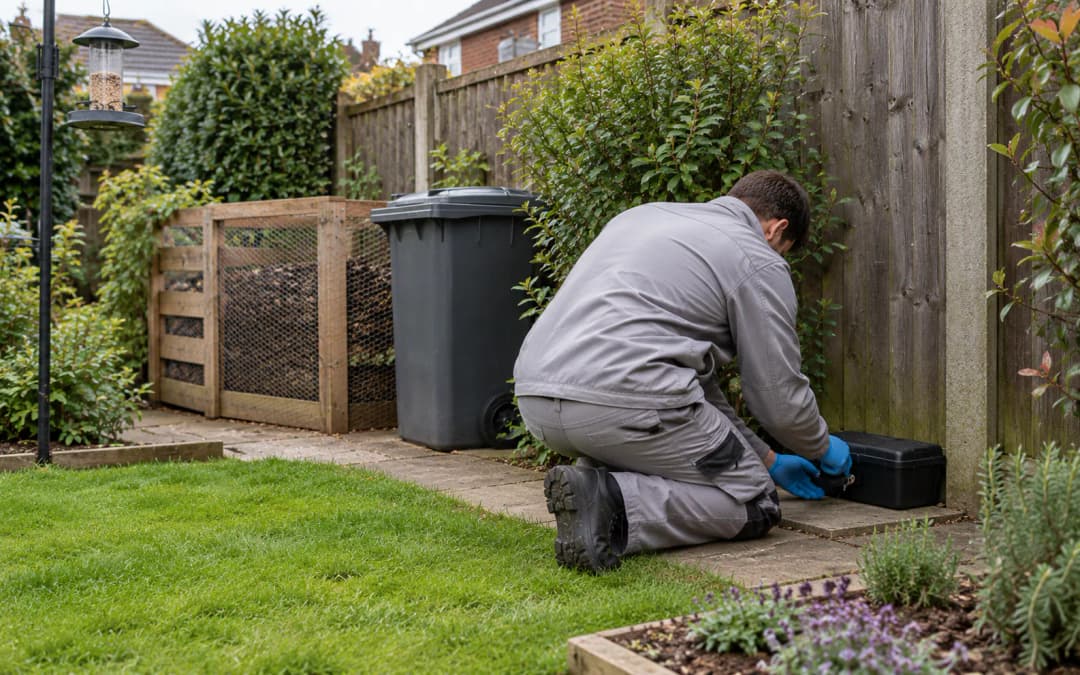
- Have the rats treated with locked bait stations or tunnel-set traps placed at the edge of the decking, where pets and children can't reach them.
- Once activity stops, fit fine galvanised mesh around the base of the decking, buried below ground level and bent outwards in an L shape so rats can't dig under it.
- Leave an access panel so the void can be checked.
How do you get rid of rats in the garden, step by step?
Work through this checklist. The advice draws on guidance from Colchester City Council and North Lanarkshire Council.
| Problem | What to do |
|---|---|
| Bird seed on the ground | Use a bird table or feeder basket to catch dropped seed; feed small amounts; bring food in at dusk |
| Compost heap | Don't add cooked food, meat or bread; protect the heap with wire mesh so rats can't dig in |
| Bins | Keep lids closed; don't let bags pile up; keep bins away from fences and walls rats can climb to jump in |
| Pet and chicken food | Feed in daylight, take bowls in, store feed in metal bins with lids |
| Decking and sheds | Block gaps around the base with fine galvanised mesh buried a little below ground |
| Clutter and overgrowth | Clear piles of garden waste, cut back overgrown areas, store wood off the ground |
| Gaps into the house | Seal gaps of 15mm or more around pipes and walls with cement mortar or wire wool in cement |
| Drains | Check gully grids and inspection chamber covers are intact and in place |
North Lanarkshire Council notes that rats tend to leave their nests at night to feed and will eat any food that falls from bird feeders or tables, so the end of the day is when tidying matters most.
Do the clearing in stages. A sudden clear-out can scatter rats into neighbouring gardens or under your house, so if you know rats are present, it is best to treat first and clear afterwards. The CRRU code of best practice makes the same point for professional treatments: note the changes to be made, but don't clear the site before treatment because it disturbs the rats.
Should you use traps or poison in the garden?
Be very careful with both. Anything left in the open can harm pets, children, hedgehogs and birds.
Traps. Outdoors, rat snap traps should always be set inside a tunnel or lockable box so that only a rat can reach the trigger. Check them every day. A live-catch trap that holds a rat makes it a protected animal under section 2 of the Animal Welfare Act 2006, because it is under human control, so it must not be left to suffer.
Poison. The Health and Safety Executive says anticoagulant rodenticides present a higher risk to people and non-target animals than is normally acceptable, and that other methods should be considered first. The stronger professional products are restricted: the Campaign for Responsible Rodenticide Use (CRRU) explains that from 1 January 2026 professional-use rodenticides with stewardship conditions can only be supplied to certified users. CRRU's monitoring programme tracks rodenticide residues in barn owls every year, because wildlife can be poisoned by eating rats that have taken bait.
If you do use an amateur product, follow the label exactly and use a proper bait station, never loose bait. The CRRU code warns that rats may die up to 100 metres or more from where they took the bait, so search for and safely dispose of bodies.
Do rat repellents work in the garden?
Not on their own. Scent repellents and ultrasonic devices are widely sold, but there is no good evidence that they shift rats that have food and shelter nearby. MyJobQuote's rat exterminator cost guide notes there is no proven evidence in favour of plug-in ultrasonic repellers. Your money is better spent on mesh, a rat-resistant compost bin and a better bird feeder.
Could the rats be coming from the drains?
Yes, and it is worth checking if rats keep appearing near manholes, gullies or the house wall. In an article published by the BPCA, a member pest controller estimates that on average 80% of rat infestations in homes originate from drainage. Burrows next to an inspection chamber, or rats seen near a gully, are a strong hint.
Our rats in drains service investigates this with our sister company, Urgent Drainage Solutions, which carries out CCTV drain surveys and repairs, and can fit rat blockers.
Are rats in the garden a health risk?
They can be, mainly through urine and droppings on soil, paths, play areas and water. The NHS says leptospirosis is spread when soil or water containing infected pee gets into your mouth, eyes or a cut. It is rare in the UK, but simple precautions make sense: wear gloves when gardening near burrows or compost, cover cuts with waterproof plasters, wash hands afterwards, keep children's toys and sandpits covered, and don't let pets drink from ponds or puddles where rats are active.
What if the rats are coming from a neighbour's garden?
Rats travel along fence lines and between gardens, so a neighbour's compost heap, chickens or rubbish can be the source. Talk to them first; treating together works far better than treating one garden.
If that doesn't work, contact the council. Section 2 of the Prevention of Damage by Pests Act 1949 gives every council a duty to keep its district free from rats so far as practicable, and section 4 lets it serve notice on an owner or occupier to deal with rats on their land. Our guide to council pest control charges lists what each council in our area offers.
When to call a professional
Call a pest controller if:
- burrows are still active after two weeks of removing food and shelter;
- you see rats in daylight or several rats at once;
- rats are close to the house, under decking by the back door, or near drains;
- you have children, pets or chickens and don't want to use poison yourself;
- your neighbours have rats too, which suggests a wider problem.
Urgent Pest Control surveys the garden and the outside of the house, identify where rats are living and travelling, and treat with locked, tamper-resistant bait stations or traps placed where non-target animals can't reach them. We come back for follow-up visits, remove all bait and stations at the end, and advise on proofing. Most domestic rat jobs take two to three weeks. Rat control starts from £200; the final price depends on the property and the size of the problem, and we'll explain it before any work starts.
"Excellent service from gino .Everything explained before he started and set about eliminating a rat problem in my garden after month my problem seem to be solved." James King, Google review, June 2024
We work across Nottingham, Derby, Leicester, Lincoln and the East Midlands, 7 days a week from 6am to 8pm. Book online, or call or WhatsApp 07999 935 929.
Sources
Frequently Asked Questions
About the author
The Urgent Pest Control team
A family-run pest control company based in Southwell, treating homes and businesses across Nottinghamshire, Derbyshire, Leicestershire and Lincolnshire since 2020. Our guides are written from the jobs we do and checked against UK sources. More about us
Cite this guide: “How to Get Rid of Rats in the Garden (Safely)”, Urgent Pest Control, 4 November 2026. https://urgentpestcontrol.uk/blog/how-to-get-rid-of-rats-in-the-garden