Rat Droppings vs Mouse Droppings: How to Tell the Difference
Rat droppings are up to 17mm long with a blunt end; mouse droppings are 3–6mm and rod-shaped. A comparison table, what fresh droppings mean, and safe clean-up.

By the Urgent Pest Control team
Updated · 7 min read
The short answer
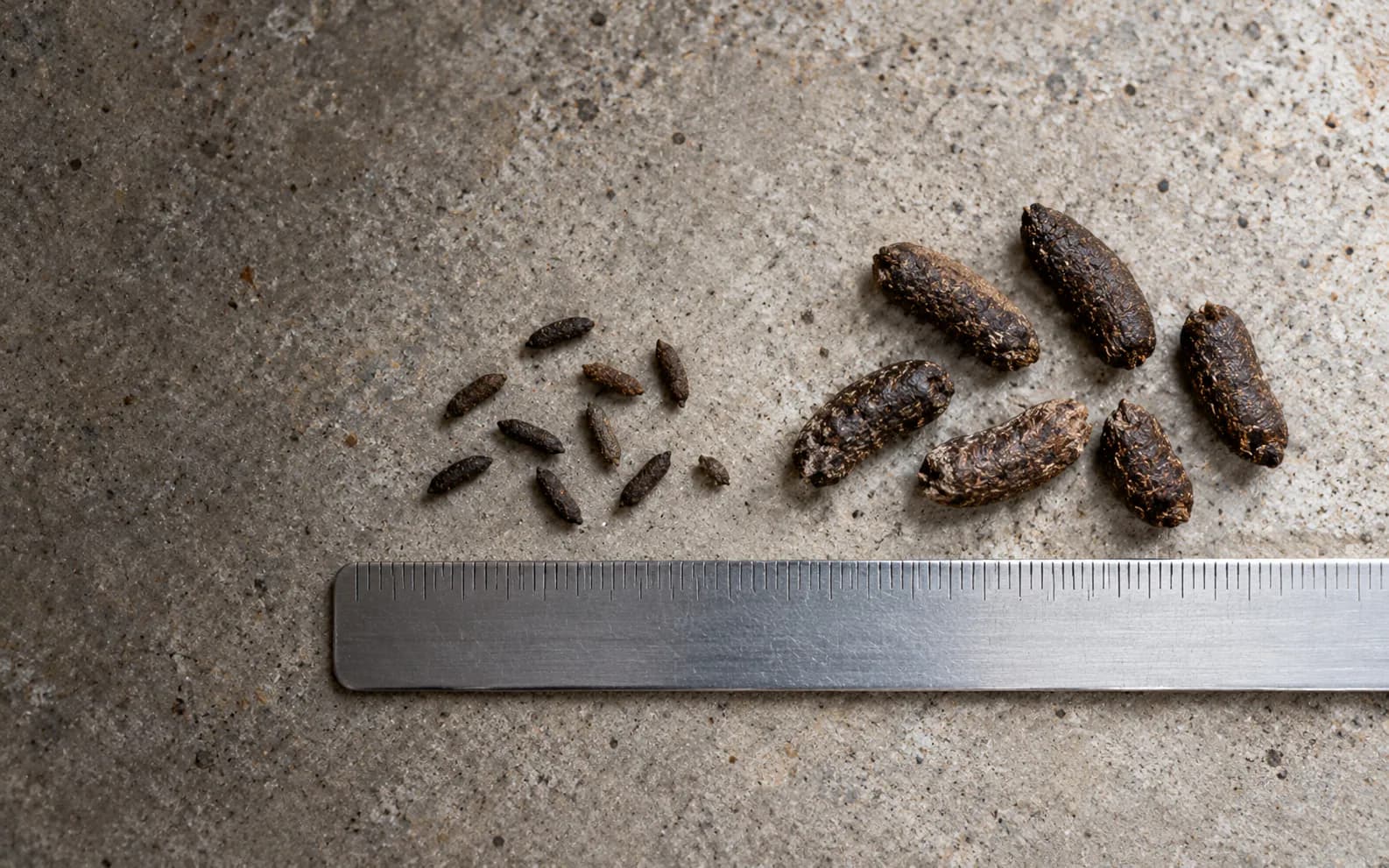
Size is the quickest test. Mouse droppings are small, black and rod-shaped, about 3–6mm long, like a grain of rice. Rat droppings are much larger, up to about 17mm long and 6mm wide, putty-like with a blunt end and a pointed end. Soft, moist droppings are fresh and mean rodents are active now.
- Mouse droppings are 3–6mm long, black and rod-shaped, according to the BPCA.
- Rat droppings vary in size up to about 1.7cm long and 0.6cm wide, with a blunt end and a pointed end (Mammal Society).
- Fresh droppings are soft and moist; dry, crumbly ones may be old, so clean up and check again.
- Never sweep or vacuum dry droppings: wear gloves, wet them with disinfectant and bag them.
- Rat control starts from £200 and mice control from £200; the final price depends on the job.
On this page
- What is the difference between rat and mouse droppings?
- Where do you usually find mouse droppings?
- Where do you usually find rat droppings?
- How can you tell if droppings are fresh?
- Could the droppings be something else?
- Are rat and mouse droppings dangerous?
- How do you clean up rat or mouse droppings safely?
- Why does it matter whether it is rats or mice?
- What else can you check besides the droppings?
- How many droppings mean an infestation?
- When to call a professional
The quickest way to tell rat droppings from mouse droppings is size. Mouse droppings are small, black and rod-shaped, about 3–6mm long, like a grain of rice. Rat droppings are much larger, up to about 17mm long, putty-like, with one blunt end and one pointed end. Fresh, soft droppings mean rodents are active now. If you are finding rat droppings indoors, our rat control service starts from £200.
Knowing which rodent you have matters, because rats and mice get in differently, behave differently and need different treatment. This guide shows you how to tell them apart, what the droppings tell you, and how to clean up safely.
What is the difference between rat and mouse droppings?
The table below brings together the published descriptions from the British Pest Control Association (BPCA), the Mammal Society and English Heritage's rodent fact sheet.
| Feature | Mouse droppings | Rat droppings |
|---|---|---|
| Length | 3–6mm (BPCA); 3–7mm (English Heritage) | Variable, up to about 17mm (Mammal Society) |
| Width | Thin, like a grain of rice | Up to about 6mm |
| Shape | Rod- or spindle-shaped, pointed ends | Putty-like, usually one blunt end and one pointed end |
| Colour | Black or very dark | Blackish-brown |
| Smell | Strong, stale smell from urine in enclosed cupboards | Foul, rancid smell (Mammal Society) |
| Quantity | Around 80 per mouse per day (BPCA) | Fewer, but much larger |
| Typical places | Under the sink, around the boiler, in cupboards, in the loft | Along runs by walls, in lofts, under decking and sheds, near drains |
A useful rule of thumb: if a dropping is smaller than a grain of long-grain rice, think mouse; if it is closer to the size of a raisin, think rat.
Where do you usually find mouse droppings?
The BPCA lists the commonest places for mouse droppings as under the kitchen sink, around central heating boilers and in roof spaces. Mice are erratic feeders that nibble at many food sources rather than one, so their droppings are often scattered widely across worktops, shelves and the backs of cupboards.
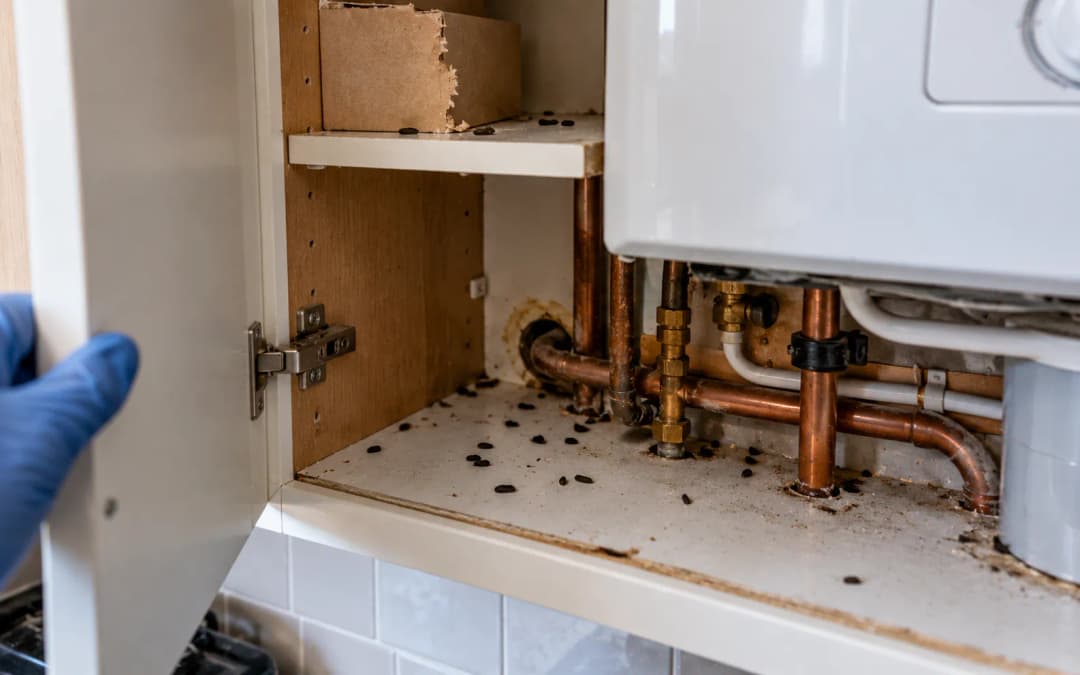
English Heritage notes that mouse activity is often seen on higher surfaces too: on top of cupboards, along beams and joists, and on electrical boxes. House mice are agile climbers and can turn up at any level of a building. Our guide on whether mice can climb walls explains how.
Where do you usually find rat droppings?
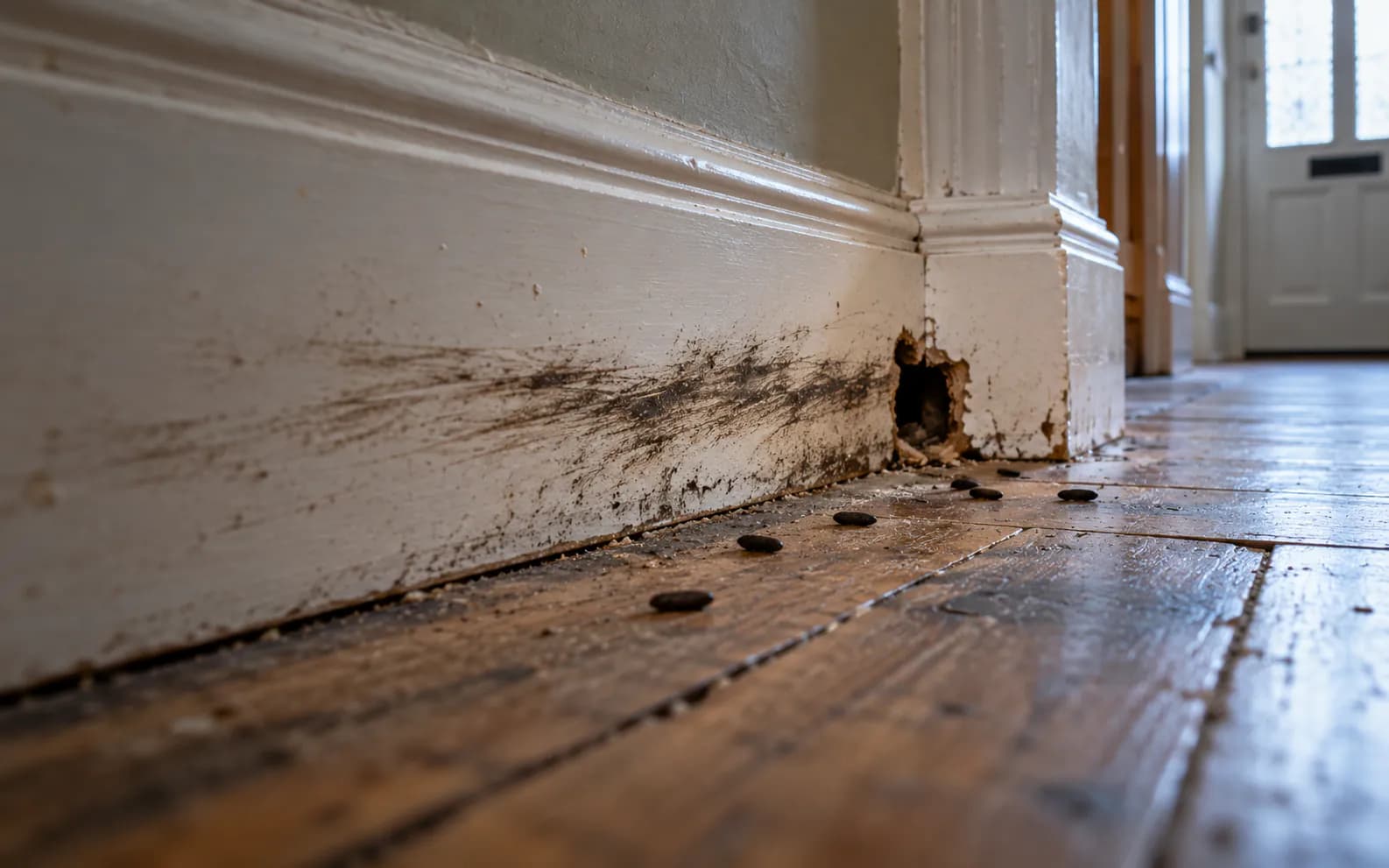
Rat droppings are usually found along the routes rats travel, close to walls and cover. In our experience as pest controllers, the most common places in East Midlands homes are:
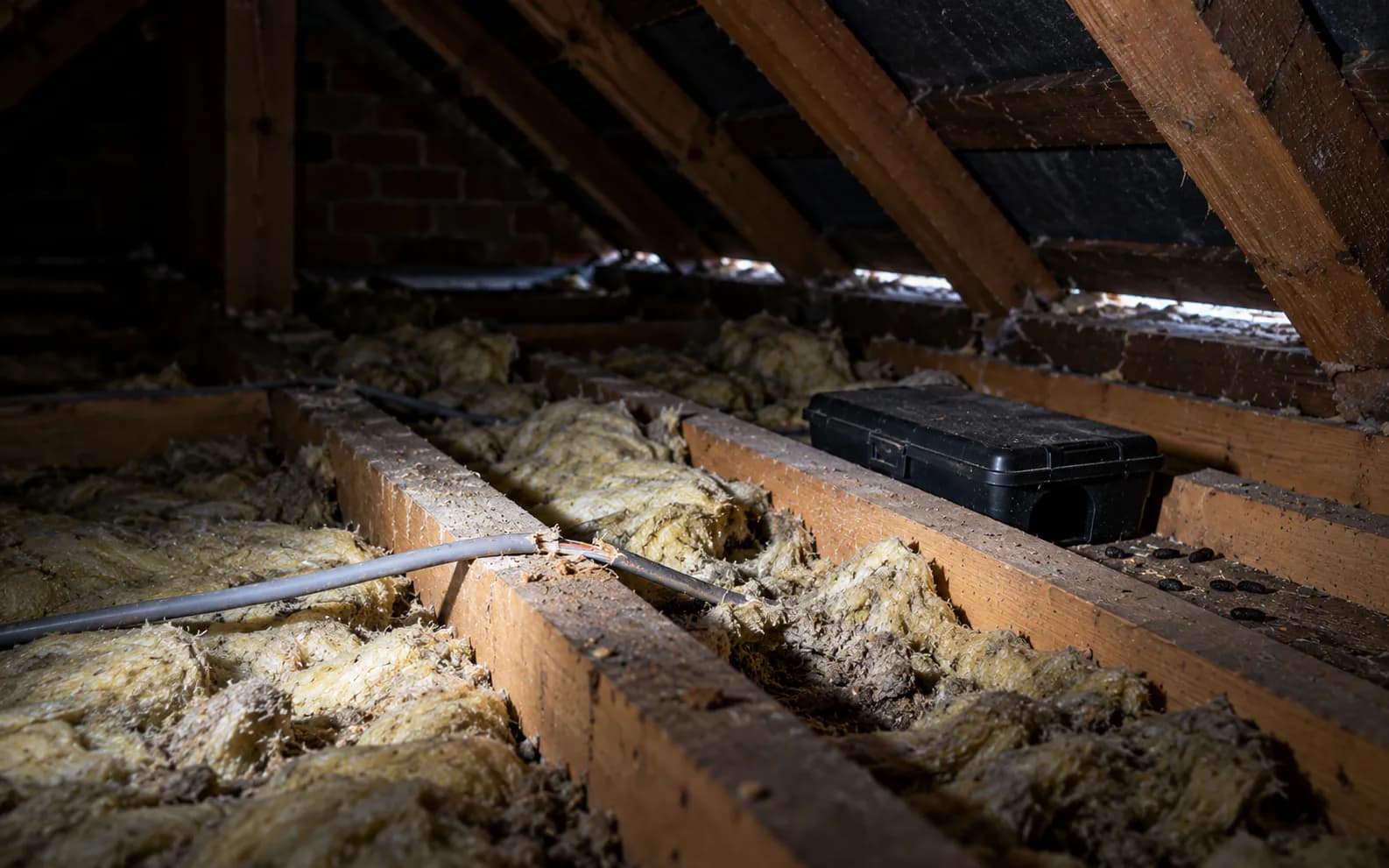
- the loft, especially around the water tank and along the eaves;
- behind kitchen kickboards and under the bath panel;
- under sheds, decking and garden buildings;
- around compost bins, bird feeders and chicken runs;
- near inspection chambers and gullies, where rats may be coming from the drains.
The Mammal Society describes brown rats as living in loose colonies with obvious, well-used runs between burrows and food. If you find large droppings in more than one place, it usually means rats are travelling between a nest and a food source. Our guide to the signs of rats in the house covers the other clues to look for, including gnawing, grease marks and noises at night.
How can you tell if droppings are fresh?
The BPCA says fresh mouse droppings are soft and moist. As droppings age they dry out, harden and eventually become crumbly and dull.
The most reliable test is simple:
- Clean up every dropping in the area safely (see below).
- Check the same places a day or two later, ideally first thing in the morning.
- Any new droppings mean rodents are active now.
This also helps after treatment: if droppings stop appearing, the treatment is working.
Could the droppings be something else?
Sometimes. In lofts, bat droppings are often mistaken for mouse droppings. All bat species and their roosts are fully protected by law, according to gov.uk guidance from Natural England and Defra. If you think you might have bats, contact the National Bat Helpline for free advice before anyone treats the loft, and tell your pest controller.
Large, dark droppings in the loft with no gnawing could also be from squirrels; see our guide to squirrels in the loft. If you are not sure, try our pest identifier, or take a photo next to a coin or ruler and send it to Urgent Pest Control on WhatsApp.
Are rat and mouse droppings dangerous?
They can carry disease, so treat them with care. The BPCA warns that mice can spread bacteria such as Salmonella and Listeria, which cause food poisoning. The NHS says leptospirosis (Weil's disease) is spread in the pee of infected animals, most commonly rats, mice, cows, pigs and dogs. It is rare in the UK, but it is a good reason to cover cuts and wash your hands.
How do you clean up rat or mouse droppings safely?
Use this checklist:
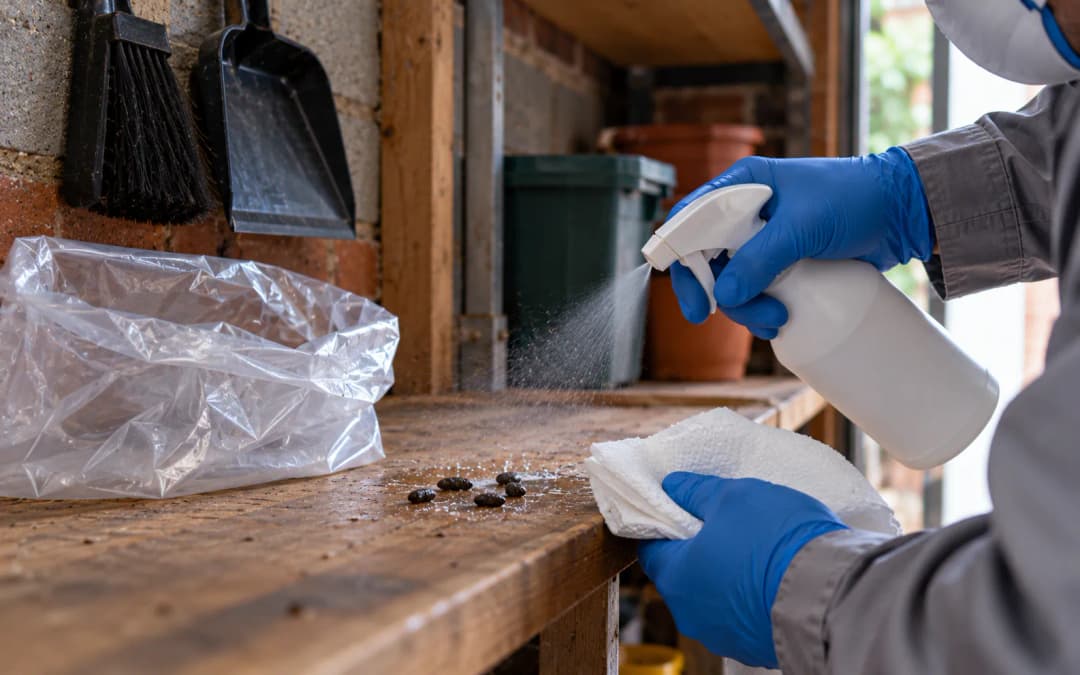
- wear disposable gloves, and a dust mask in a dusty loft;
- don't sweep or vacuum dry droppings, which can raise dust;
- spray droppings and urine-stained areas with disinfectant and leave for a few minutes;
- pick everything up with paper towels and seal it in a bag in the outside bin;
- wipe down worktops, shelves and the insides of cupboards;
- throw away any food that has been gnawed or is in damaged packaging;
- wash your hands thoroughly when you have finished.
Badly soiled loft insulation is usually best removed and replaced once the rodents have gone.
Why does it matter whether it is rats or mice?
Because rats and mice get in through different-sized gaps, behave differently and need different treatment. The BPCA says mice can squeeze through cracks as small as 5mm, while councils such as Colchester City Council say rats need a gap of about 15mm. Proofing that keeps rats out may not stop mice.
Behaviour differs too. Mice are erratic feeders that nibble at many food sources and live close to food indoors, so traps go in lots of places near the droppings. Rats are more cautious, travel further between a nest and food, and are often coming from outside or from the drains, so finding the route matters more. A rat inside the house is also a stronger sign of a structural problem, such as a broken drain under the floor.
What else can you check besides the droppings?
Droppings are the best clue, but these signs help confirm which rodent you have:
- Gnaw holes. The BPCA says mouse holes are normally 20–30mm across. Rat holes and gnawing are noticeably larger and rougher.
- Footprints. The Mammal Society says brown rat hind feet are up to 4.5cm wide, with five straight toes. Mouse prints are tiny by comparison. A thin dusting of flour on a hard floor overnight will show prints.
- Smell. English Heritage describes mouse urine as very pungent in closed rooms and cupboards; rats leave a heavier, stale ammonia smell.
- Smear marks. Both leave dark marks from the oils in their fur, but rat smears are wider and lower down along runs.
- Noises. Mice make light, quick scratching; rats make heavier scurrying, gnawing and thudding, mostly at night.
How many droppings mean an infestation?
There is no exact number, and droppings build up quickly. The BPCA estimates a single mouse can leave around 80 droppings a day, so dozens of mouse droppings may still mean only a few mice. Droppings in several rooms, in food cupboards, or reappearing after you have cleaned them up are the signs that matter. Any rat droppings indoors should be treated as a problem worth acting on.
When to call a professional
Call a pest controller if:
- you find rat droppings anywhere inside the house;
- mouse droppings keep reappearing after a week or two of trapping;
- you find droppings in food cupboards, or near a baby or someone vulnerable;
- you can hear scratching in walls, ceilings or under floors;
- you run a food business, where you need records of pest control.
We identify the rodent, find how it is getting in, and treat with traps or tamper-resistant bait stations, with follow-up visits included. Rat control starts from £200 and mice control from £200. We'll explain the likely cost before any work starts. For full detail, see our guides to how to get rid of mice and rat removal cost.
We cover Nottingham, Derby, Leicester, Lincoln and the surrounding counties, 7 days a week from 6am to 8pm. Book online, or call or WhatsApp 07999 935 929 with a photo of the droppings.
Sources
Frequently Asked Questions
About the author
The Urgent Pest Control team
A family-run pest control company based in Southwell, treating homes and businesses across Nottinghamshire, Derbyshire, Leicestershire and Lincolnshire since 2020. Our guides are written from the jobs we do and checked against UK sources. More about us
Cite this guide: “Rat Droppings vs Mouse Droppings: How to Tell the Difference”, Urgent Pest Control, 4 November 2026. https://urgentpestcontrol.uk/blog/rat-vs-mouse-droppings