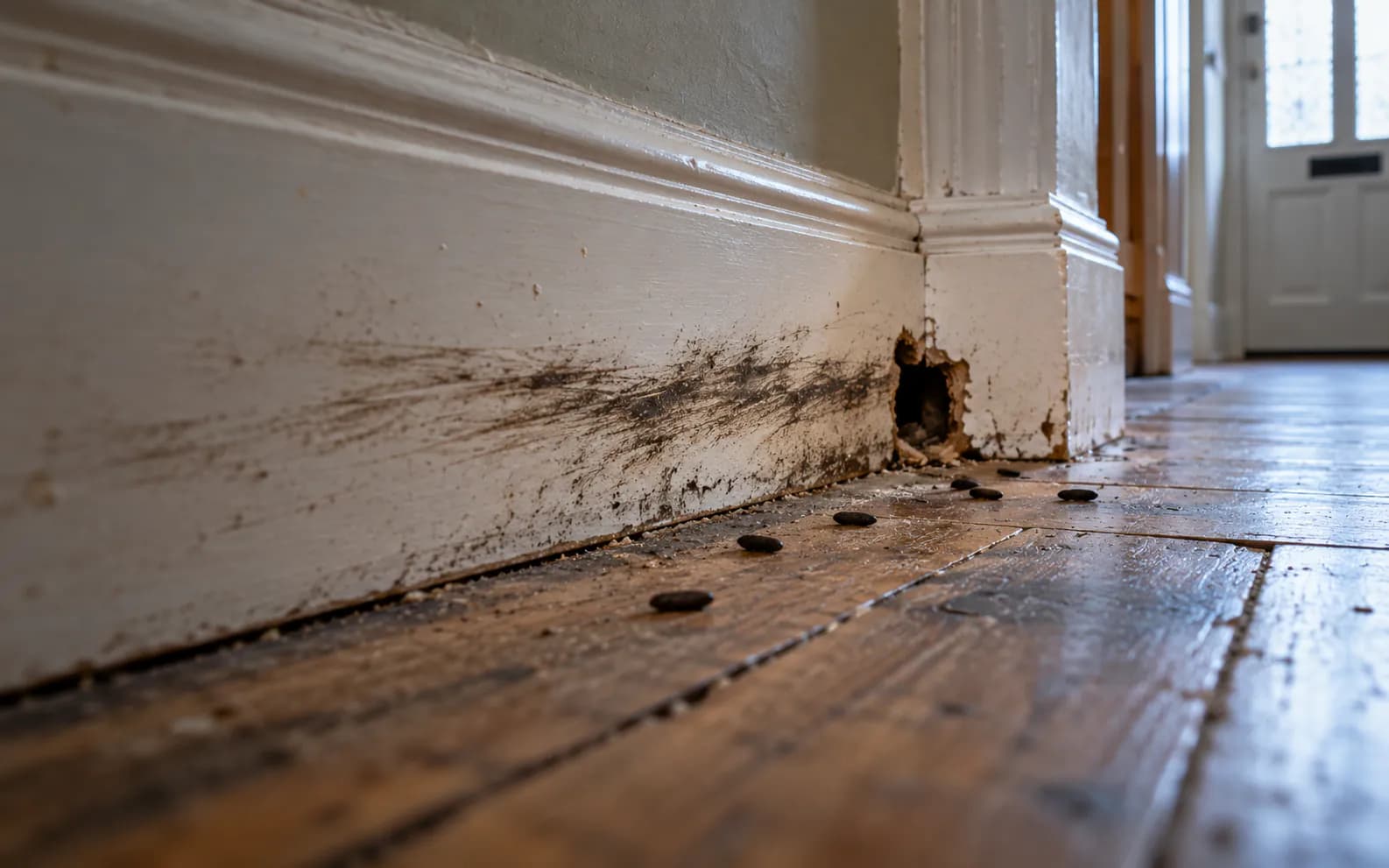
Can Mice Climb Walls? How Mice (and Rats) Get Up High
Yes, mice can climb walls. How they climb brick, pipes and cables, how they reach lofts and worktops, whether rats climb too, and how to proof at every level.

By the Urgent Pest Control team
Updated · 8 min read
The short answer
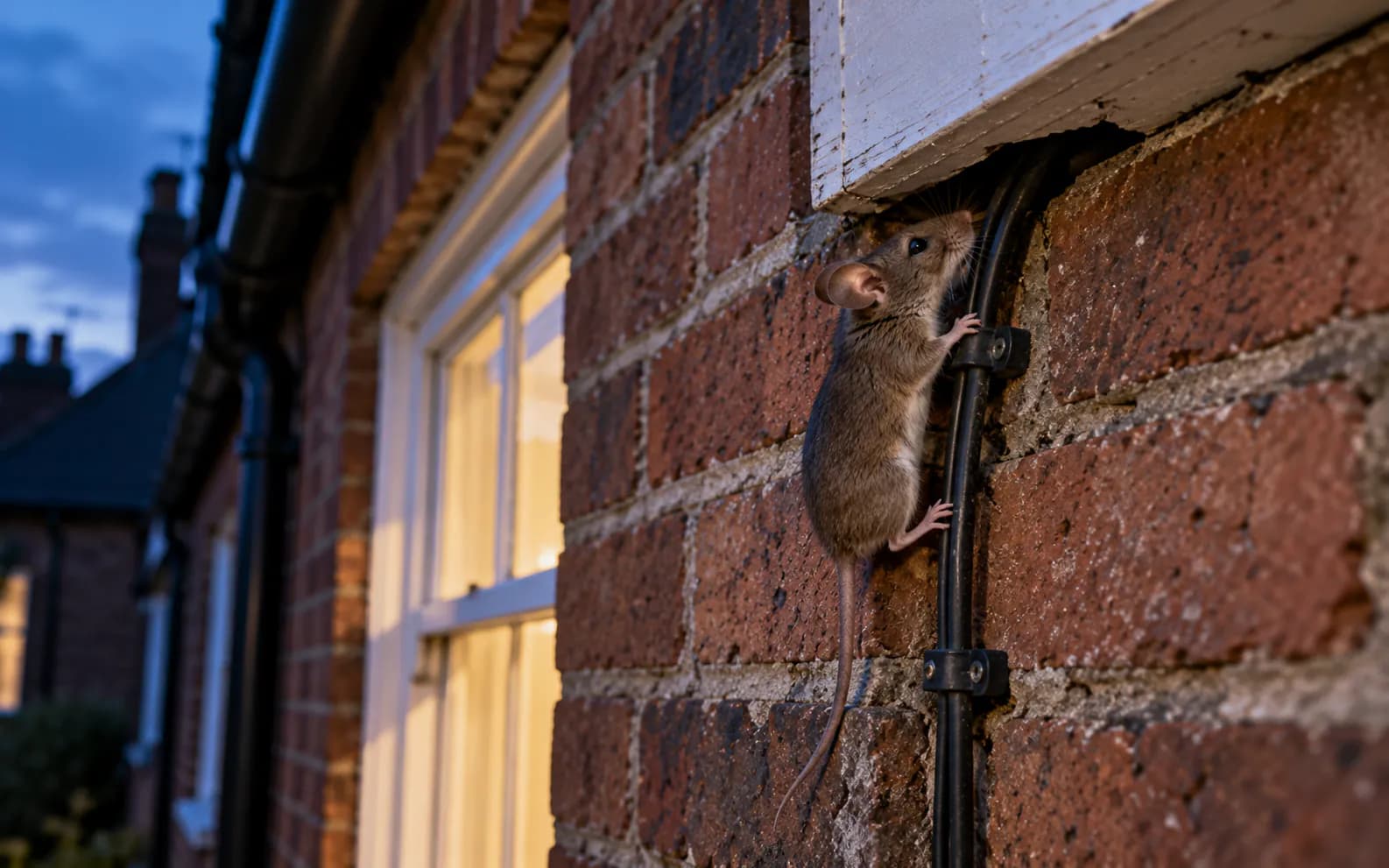
Yes. House mice are agile climbers and can run up rough surfaces such as brick, render, wood, pipes and cables, and climb inside cavity walls to reach upper floors and lofts. Very smooth vertical surfaces like glass or glazed tiles are much harder for them. Because mice can get through gaps of about 5mm, high-level gaps need proofing too.
- English Heritage describes house mice as agile climbers that can be found at all levels within a building.
- Mice climb rough surfaces, pipes and cables, and use cavity walls and floor voids as hidden routes.
- The BPCA says mice can squeeze through cracks as small as 5mm, so gaps at the eaves and around high pipes matter.
- English Heritage says house mice can squeeze through holes more than 6mm across and move through cavity walls and under floorboards.
- Proofing from ground level to the roofline, after treatment, is what keeps mice out.
On this page
- How well can mice climb?
- Can mice climb stairs?
- How do mice get into your house in the first place?
- What surfaces can mice climb?
- How do mice get into lofts and upstairs rooms?
- Can rats climb walls too?
- Can mice get in through the roof?
- What are the signs that mice are getting in high up?
- Why does climbing matter for keeping mice out?
- Is storing food high up enough to stop mice?
- Can you stop mice climbing with deterrents?
- When to call a professional
Yes, mice can climb walls. House mice are agile climbers that can run up rough surfaces such as brick, render, timber, pipes and cables, and they use cavity walls and floor voids as hidden routes to upper floors and the loft. Very smooth vertical surfaces like glass are much harder for them. Because a mouse can get through a gap of about 5mm, high-level gaps need sealing as well as those at ground level. Our pest proofing service closes them, and our mice control treatment, from £200, deals with mice already inside.
This guide explains how and where mice climb, why it matters for keeping them out, and whether rats can climb too.
How well can mice climb?
Very well. English Heritage's rodent fact sheet describes house mice as "agile climbers" that "can be found at all levels within a building". It notes that signs of mice are often found on higher objects such as the tops of cupboards and shelving, along wooden beams and joists in cellars or attics, and on electrical boxes.
The same guidance says mice can squeeze through holes more than 6mm in diameter and move easily through buildings via cavity walls and under floorboards. The British Pest Control Association (BPCA) puts it even smaller: mice can squeeze through cracks as small as 5mm, although their holes are normally 20–30mm across.
English Heritage adds that house mice can produce 5–10 litters a year, each with 4–8 young. A mouse that climbs into a warm loft in October can start a breeding group well before spring.
Can mice climb stairs?
Yes. Stairs are easy for a mouse: carpet, stair rods, banisters and the gap at the side of the treads all give grip, and English Heritage notes that house mice can be found at all levels within a building. In practice, though, mice more often reach upper floors and the loft through the cavity wall or along pipework, out of sight, than by running up the stairs.
How do mice get into your house in the first place?
Mice usually get in low down, through gaps of 5mm or more. The BPCA says mice can squeeze through cracks that small, and advises sealing gaps around pipes and under sheds. The commonest ground-level entry points we find on surveys are:
- gaps around waste pipes, gas pipes and cables where they pass through the outside wall;
- damaged or missing air bricks and weep vents;
- gaps under external doors, garage doors and the door from the garage into the house;
- holes behind kitchen plinths and boiler cupboards that lead into the floor void;
- gaps around new pipework or flues where an installer has not made good.
Once inside a cavity or floor void, mice can travel up to any floor.
What surfaces can mice climb?
As a general guide from what we see on jobs, the rougher the surface and the more there is to grip, the easier it is for a mouse.
| Surface or feature | Can mice climb it? | Why it matters |
|---|---|---|
| Brick, stone, pebble-dash, rough render | Yes, easily | Outside walls give a route to air bricks, gaps at the eaves and window frames |
| Timber, fences, sheds, beams, joists | Yes, easily | Common routes in lofts, garages and gardens |
| Pipes and cables | Yes, easily | Mice follow pipework up through walls and into boxed-in voids |
| Inside cavity walls | Yes | Hidden route between ground floor, upper floors and loft |
| Carpet, curtains, fabric | Yes | Mice reach shelves and windowsills this way |
| Painted plaster, wallpaper | Sometimes, especially at corners and edges | Usually climbed where there is a corner, pipe or furniture alongside |
| Glass, glazed tiles, polished metal, smooth plastic | Much harder on a flat vertical face | Smooth containers and splashbacks are more mouse-resistant |
Mice also climb inside things: behind kitchen units, up the backs of fridges and cookers, and through the gaps where pipes pass between floors.
How do mice get into lofts and upstairs rooms?
Mice reach upper floors in three main ways:
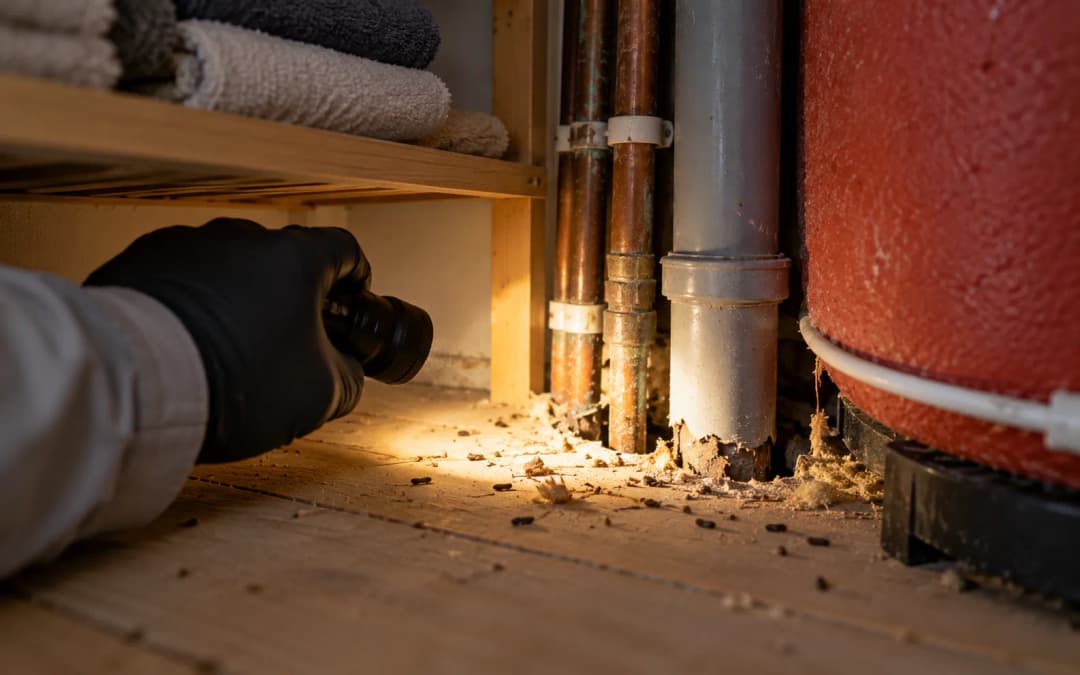
- Through the cavity wall. Once a mouse gets into the cavity at ground level, for example through a gap around a pipe or a damaged air brick, it can climb inside the wall to the first floor and the loft.
- Up the outside wall. Rough brickwork and render, climbing plants, downpipes and cables give mice a route to gaps under the eaves, around soffits and where the roof meets the wall.
- Along services inside the house. Boxed-in soil pipes, heating pipes and cable runs connect kitchens, bathrooms, airing cupboards and lofts.
The BPCA notes that mice build nests in roof spaces, under floors and in wall cavities, especially during winter. That is why noises in the ceiling at night are such a common sign of mice in autumn.
Can rats climb walls too?
Yes. Brown rats are strong climbers as well as burrowers and swimmers. North Lanarkshire Council advises keeping bins away from fences and walls because rats can climb then jump onto a bin to reach food. Rats are also known for climbing up inside cavity walls from damaged drains to reach lofts, which our guides to rats in walls and rats in the loft explain.
Rats need a bigger gap than mice. Councils including North Lanarkshire say rats only need a gap of 15mm to get through. So proofing that is good enough for rats may still let mice in.
Can mice get in through the roof?
Yes, if there is a gap. Mice that climb the outside wall, a downpipe or a climbing plant can get in under loose or slipped tiles, through gaps where the soffit meets the wall, at the ends of the ridge, and around roof vents and cable entries. Older houses with timber fascias, and homes where the roofline has been altered for an extension or loft conversion, often have small gaps that are easy to miss from the ground.
Bird nesting material, ivy and overhanging branches make these routes easier. Cutting climbing plants back from the roofline and keeping gutters clear helps, but it is the gaps themselves that need closing.
What are the signs that mice are getting in high up?
Mice getting in at the roofline or through the cavity often show up in places that seem odd at first:
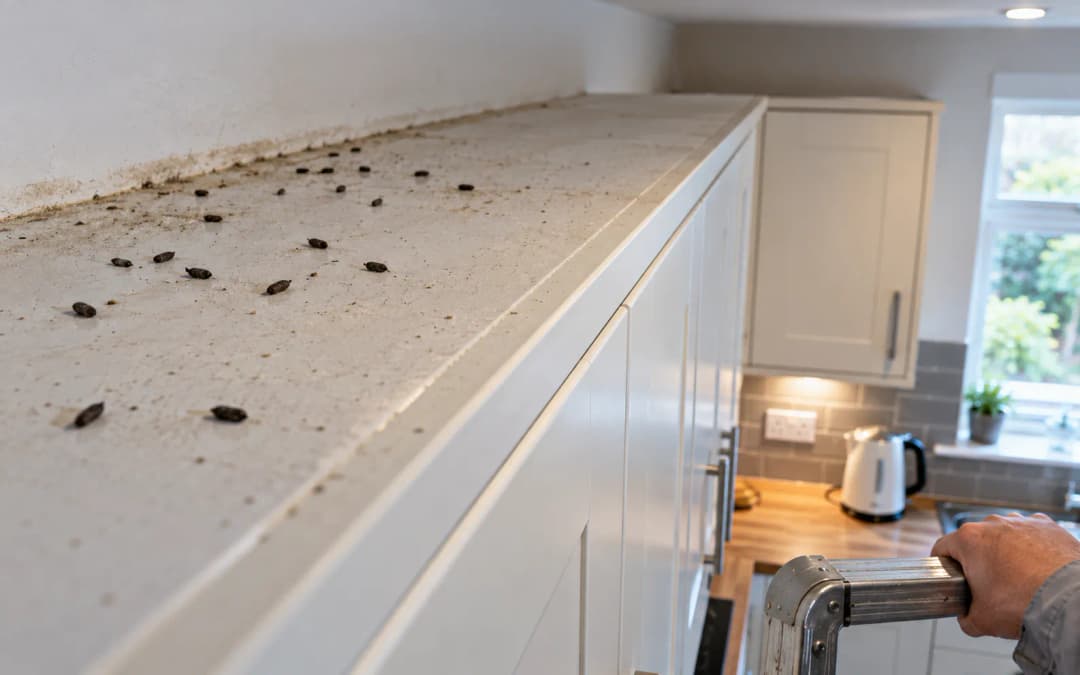
- droppings in the loft, on top of wardrobes or in upstairs airing cupboards, but not in the kitchen;
- scratching in ceilings or upstairs walls at night;
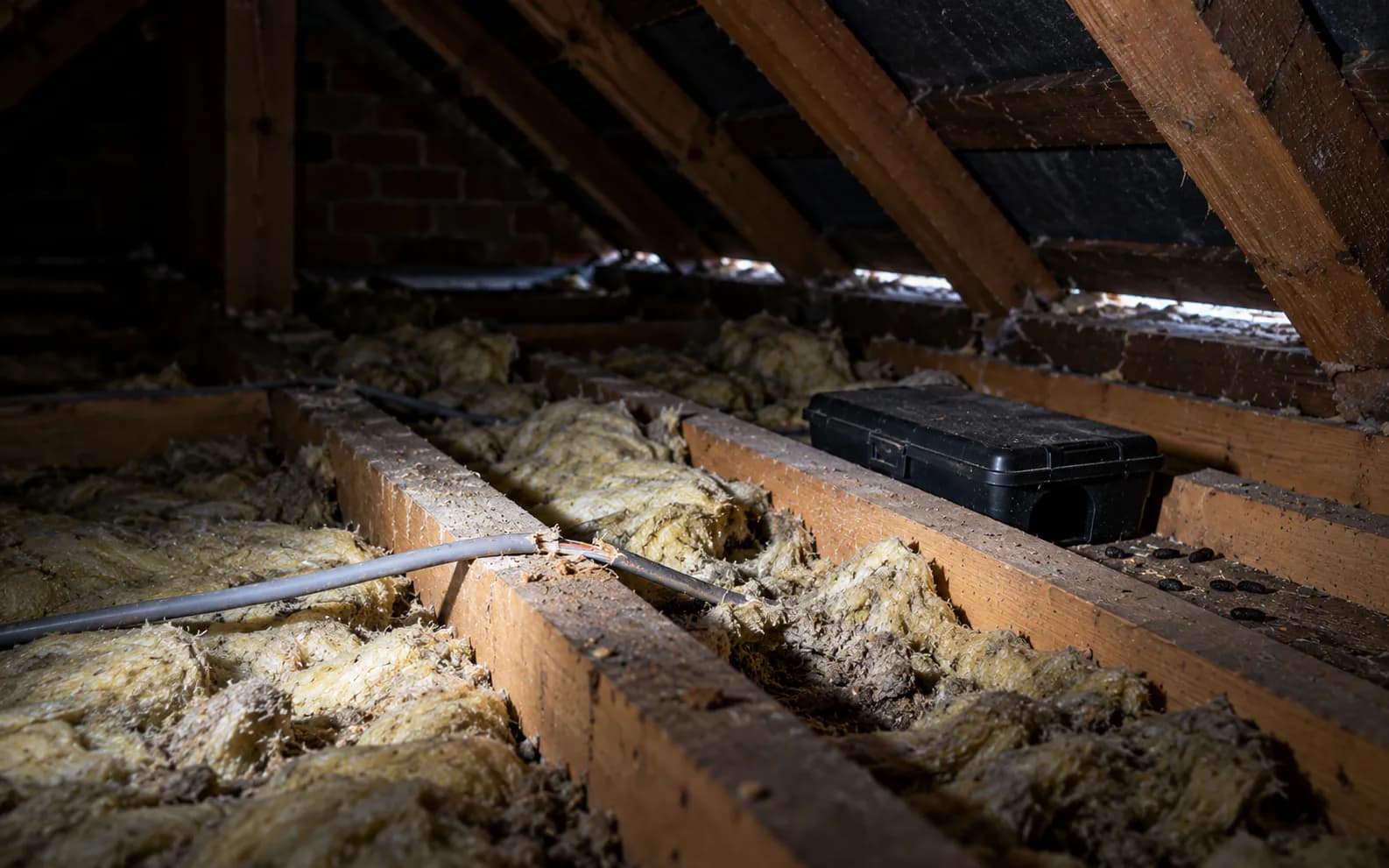
- shredded loft insulation or stored items nibbled in the loft;
- droppings on top of kitchen wall units rather than on the floor;
- smear marks along pipes or joists rather than skirting boards.
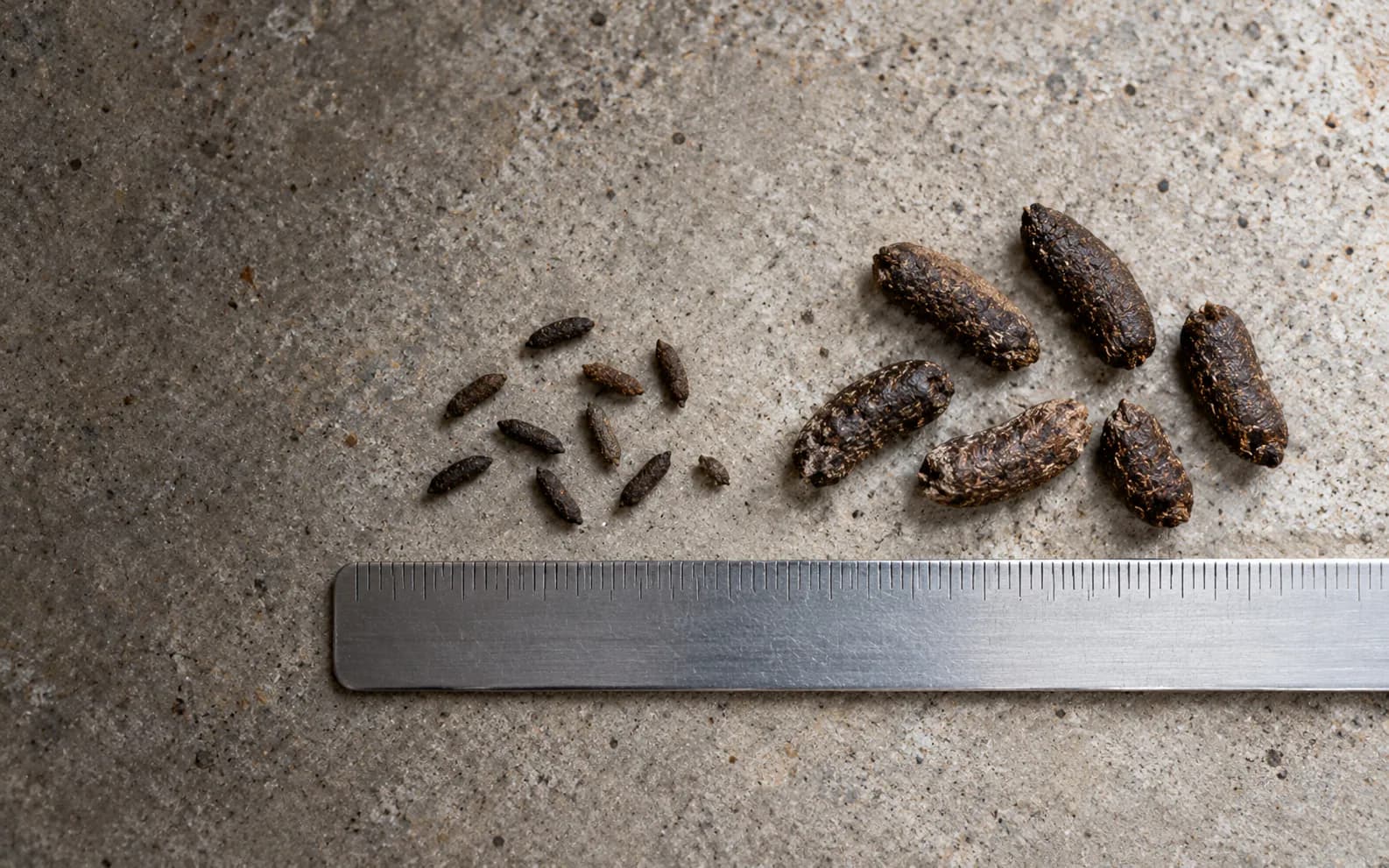
If you have these signs and no obvious gaps at ground level, the entry point is probably higher up or inside the cavity. Photos taken in the loft help the technician plan the survey. If you are not sure the droppings are from mice, compare them using our guide to rat vs mouse droppings.
Why does climbing matter for keeping mice out?
Because ground-level proofing alone may not be enough. If you only seal gaps at the bottom of the walls, mice can still get in higher up. When we survey for mice, we look at every level:
- Ground level: gaps under external doors and garage doors, around pipes and cables, damaged air bricks and weep vents.
- First floor and walls: gaps around overflow pipes, boiler flues, satellite and broadband cables, and window frames.
- Roofline: gaps at the eaves, under the first row of tiles, around soffits and fascias, and at the ends of ridge tiles.
- Inside: gaps where pipes pass through floors and walls behind units, under baths and in airing cupboards.
The BPCA recommends blocking holes with wire wool embedded in quick-setting cement and fitting metal strips to doors. Don't block air bricks completely: they ventilate the floor void. Fit fine mesh over damaged ones instead.
Is storing food high up enough to stop mice?
No. Mice climb, so food on a high shelf or on top of the fridge is still within reach. The BPCA notes that cereal products are their favourite foods, and that mice nibble at many food sources rather than taking repeated meals from one. Keep dry food, pet food and bird seed in sealed glass, metal or hard plastic containers, wherever it is stored. Our guide to what attracts rats and mice has a full checklist.
Can you stop mice climbing with deterrents?
There is no reliable way to stop a mouse climbing; the answer is to close the gaps it is climbing to and take away the reasons to come in. Smooth metal guards, such as cones on bird table poles or collars on pipes, can make specific routes harder, but they are no substitute for proofing the building itself. If mice are already inside, sealing the gaps first can trap them in, so it is usually best to treat and then proof. Our guide on how to get rid of mice covers the order to do things in.
When to call a professional
Call a professional if you can hear mice in ceilings or upstairs walls, find droppings in the loft, or have trapped mice but more keep coming. Mice upstairs usually mean an entry point you can't easily see, often at the roofline or inside a cavity.
Urgent Pest Control surveys the house from ground level to the roofline, treats any mice already inside with traps or tamper-resistant bait stations, and prices proofing separately so you can choose what to do. Mice control starts from £200 with follow-up visits included; the final price depends on the property and the size of the problem, and we'll explain the likely cost before any work starts. See our pest control prices.
We cover Nottingham, Derby, Leicester, Lincoln and the surrounding counties, 7 days a week from 6am to 8pm. Book online, or call or WhatsApp 07999 935 929.
Sources
Frequently Asked Questions
About the author
The Urgent Pest Control team
A family-run pest control company based in Southwell, treating homes and businesses across Nottinghamshire, Derbyshire, Leicestershire and Lincolnshire since 2020. Our guides are written from the jobs we do and checked against UK sources. More about us
Cite this guide: “Can Mice Climb Walls? How Mice (and Rats) Get Up High”, Urgent Pest Control, 4 November 2026. https://urgentpestcontrol.uk/blog/can-mice-climb-walls