Signs of Rats in the House: 9 Things to Check
The nine signs of rats in the house: droppings, gnawing, smear marks, runs, burrows, noises, smells, nests and footprints. A checklist and what to do next.

By the Urgent Pest Control team
Updated · 7 min read
The short answer
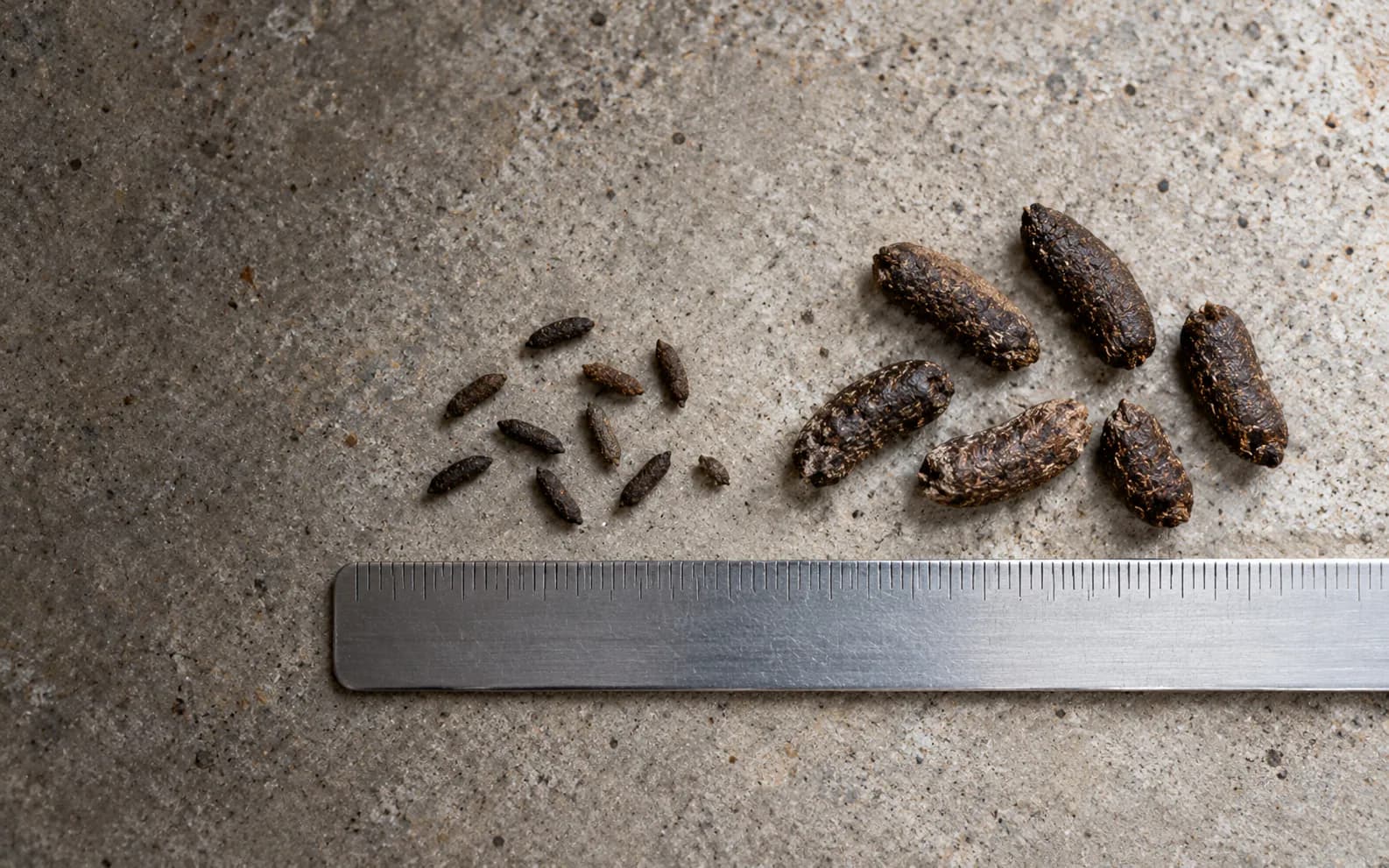
The clearest signs of rats in the house are large droppings up to about 17mm long, fresh gnaw marks, dark greasy smear marks along walls, scratching or thudding at night, a strong ammonia smell, and nests of shredded material. Outside, look for burrows and well-worn runs near walls, sheds and decking. One sign is enough to act on.
- Rat droppings are up to about 17mm long and 6mm wide with a blunt end (Mammal Society).
- Smear marks, gnawing and noises at night are as telling as droppings.
- Rats are often coming from damaged drains, so a rat seen indoors can mean a hidden defect.
- Councils have a legal duty to keep their districts free from rats so far as practicable.
- Rat control starts from £200 with follow-up visits included; the final price depends on the job.
On this page
- What are the 9 signs of rats in the house?
- Where in the house do rats usually show up?
- How do rats get into your house?
- Why are signs of rats a health concern?
- What should you do in the first hour after finding signs of rats?
- What is the council's role with rats?
- How can you tell if rats are still active?
- What do signs of rats outside the house look like?
- When to call a professional
The clearest signs of rats in the house are large droppings up to about 17mm long, fresh gnaw marks, dark greasy smear marks along skirting boards and pipes, scratching or thudding at night, an ammonia smell, and nests of shredded material. Outside, look for burrows and worn runs near walls, sheds and decking. Any one of these is enough to act on: our rat control service starts from £200.
Rats are rarely seen in daylight, so most people find the evidence before they find the rat. Use the checklist below to work out what you are dealing with and how serious it is.
What are the 9 signs of rats in the house?
| Sign | What to look for | Where to look | What it tells you |
|---|---|---|---|
| 1. Droppings | Dark, putty-like, up to about 17mm long with a blunt end | Along walls, in cupboards, loft, under sinks | Soft and shiny means rats are active now |
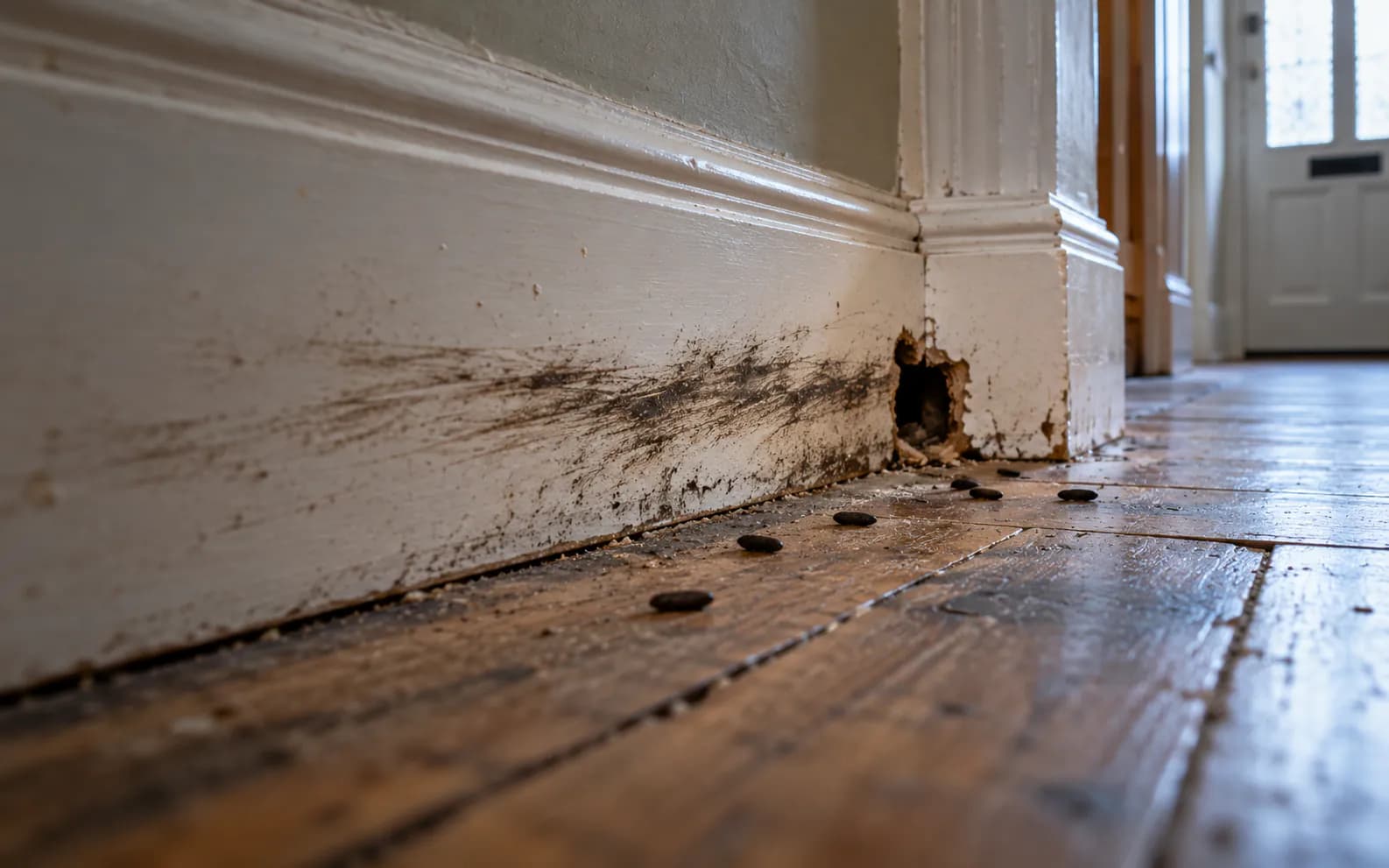
| 2. Gnaw marks | Fresh, pale chew marks on wood, plastic, cables, food packaging | Kitchen units, pipes, doors, loft | Rats are present and may be widening an entry point |
| 3. Smear marks | Dark, greasy marks where rats brush against surfaces | Skirting boards, pipes, joists, holes | Regular routes; useful for placing traps or bait stations |
| 4. Runs | Worn tracks in grass or dust between cover and food | Along fences, walls, behind sheds | An established route between nest and food |
| 5. Burrows | Holes in the ground, often with loose soil at the entrance | Under decking, sheds, hedges, beside paths and drains | Rats are living on site, not just passing |
| 6. Noises | Scratching, scurrying, gnawing, thudding at night | Walls, ceilings, loft, under floors | Rats are inside the building structure |
| 7. Smell | Stale ammonia from urine; rancid droppings | Cupboards, under floors, lofts | Ongoing activity in an enclosed space |
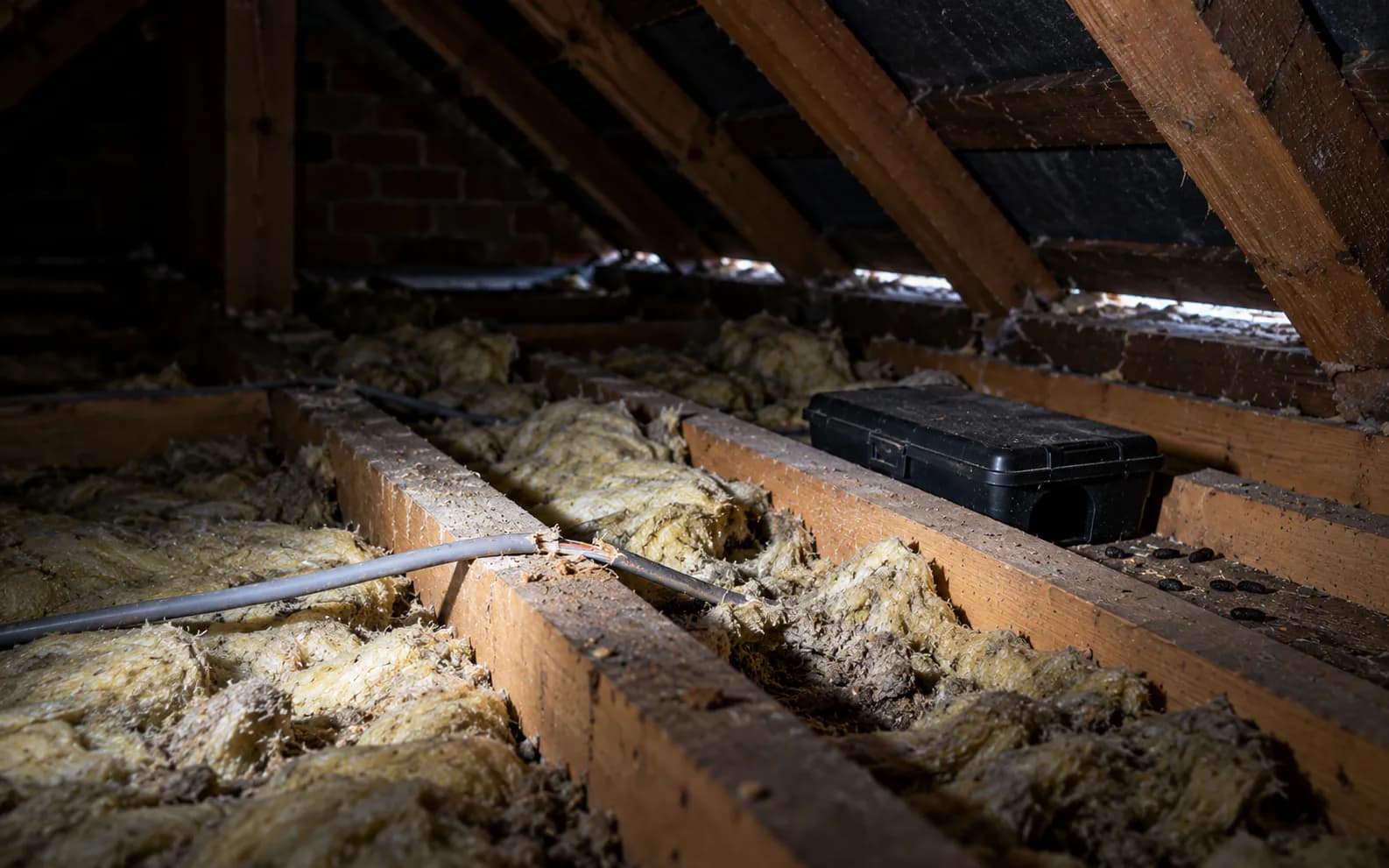
| 8. Nests | Shredded paper, fabric, insulation | Loft, under baths, behind appliances, wall voids | Breeding, so treat quickly |
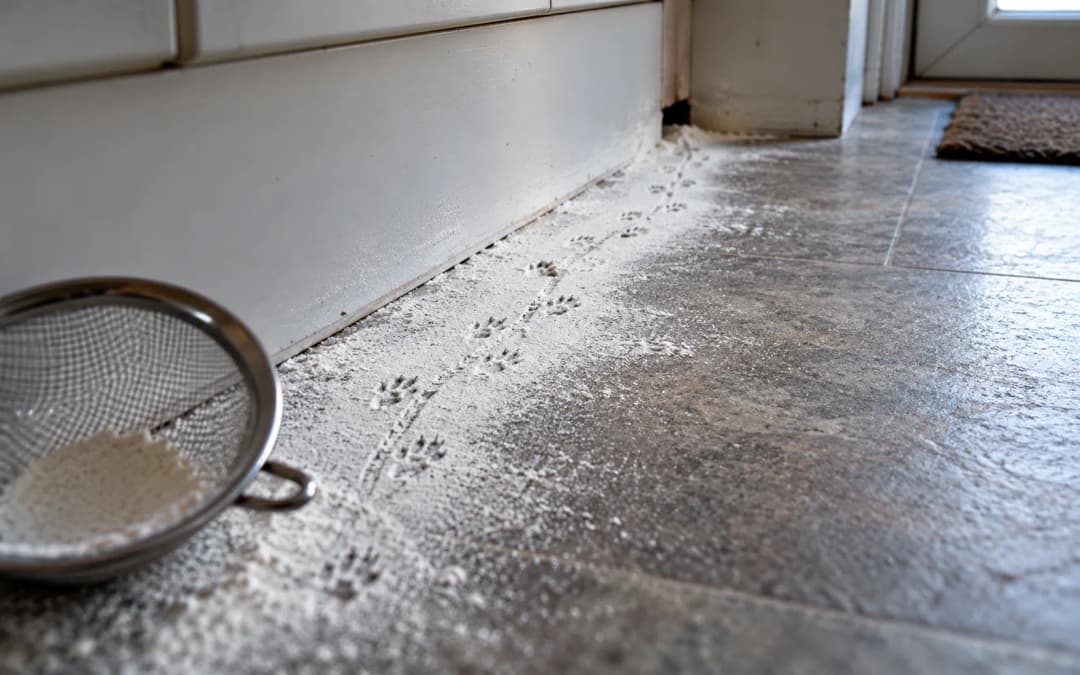
| 9. Footprints and tail marks | Five-toed prints, a line from the tail | Dusty floors, mud, a flour test on a hard surface | Which routes are in use |
The dropping size and smell come from the Mammal Society's brown rat profile, which also notes that rat hind feet are up to 4.5cm wide and show five toes.
If you are not sure whether the droppings are from rats or mice, our guide to rat vs mouse droppings has a comparison table, and our pest identifier helps you rule out squirrels and other pests.
Where in the house do rats usually show up?
Rats usually show up in the loft, inside walls and under floors, and in kitchens and bathrooms where pipes pass through walls. In our experience, the most common places to find signs of rats indoors are:
- The loft. Rats climb up inside cavity walls and nest in the insulation. See our guide to rats in the loft.
- Inside walls and under floors. Scratching behind plasterboard or under floorboards often means rats are moving through voids from a damaged drain. See rats in walls.
- The kitchen. Behind kickboards, under the sink, behind the cooker and in the boiler cupboard, where pipes pass through walls.
- Bathrooms. Behind bath panels and boxed-in soil pipes.
- Garages and outbuildings, especially where pet food, bird seed or grain is stored.
In flats and terraced houses, signs often appear first where pipework and cables pass between properties, such as boxed-in soil stacks, service risers and the gap behind kitchen units on a party wall. If you share walls or drains, it is worth asking neighbours whether they have noticed anything, because rats rarely stay in one property.
How do rats get into your house?
Rats get into a house through gaps of about 15mm at ground level, through broken drains, and by climbing to gaps higher up. Several councils, including Colchester City Council, say rats only need a gap of 15mm to get into a property. Common entry points are gaps around pipes and cables, damaged air bricks, gaps under doors and holes left by builders.
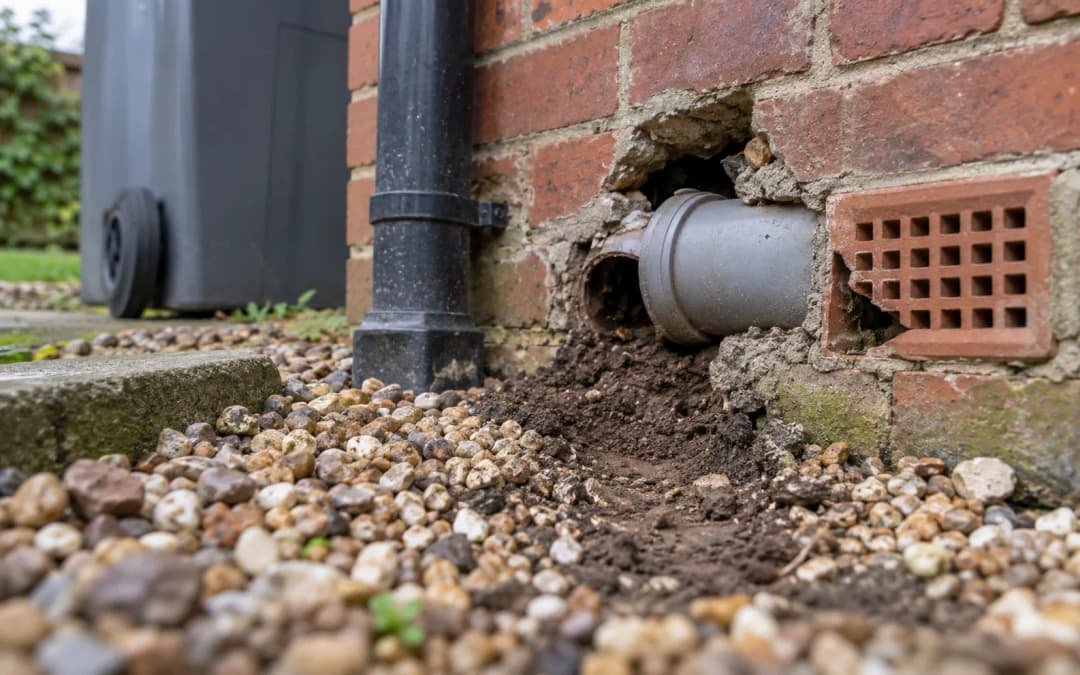
The drains matter more than most people realise. In an article published by the BPCA, a member pest controller estimates that on average 80% of rat infestations in homes originate from drainage. If rats keep coming back after treatment, our rats in drains service and our sister company Urgent Drainage Solutions can survey the pipes by CCTV.
Why are signs of rats a health concern?
Rats contaminate food and surfaces with urine and droppings. The NHS says leptospirosis (Weil's disease) is spread in the pee of infected animals, most commonly rats, mice, cows, pigs and dogs. It is rare in the UK, and most people who get it have mild flu-like symptoms or none at all, but some become seriously ill.
Rats also gnaw cables and pipes. English Heritage's rodent guidance warns that gnawed electric cables lead to costly repairs and can cause fires.
What should you do in the first hour after finding signs of rats?
- Photograph the evidence next to a coin for scale; it helps identify rats or mice and plan treatment.
- Remove food they can reach. Put food, pet food and bird seed into sealed metal or hard plastic containers.
- Keep children and pets away from droppings and nests.
- Don't put down loose poison. Rats can die in walls and floors, and loose bait is dangerous to children, pets and wildlife.
- Don't block holes yet. Trapping rats inside can drive them further into the house.
- Clean up safely. Wear gloves, wet droppings with disinfectant, bag them and wash your hands.
- Get a professional survey to find the entry point.
What is the council's role with rats?
Every council has a legal duty over rats. Section 2 of the Prevention of Damage by Pests Act 1949 requires local authorities to take steps to keep their district free from rats and mice so far as practicable. Under section 4, a council can serve notice on an owner or occupier requiring them to deal with rats on their land.
That doesn't mean your council will treat your home. Many councils in the East Midlands have stopped domestic pest treatments or charge for them. Our guide to council pest control charges lists what each council in Nottinghamshire, Derbyshire, Leicestershire and Lincolnshire offers.
How can you tell if rats are still active?
Old signs don't always mean a current problem, especially in a house you have just moved into. Three simple tests help:
- Clean and check. Clean up all droppings safely, then check the same spots over the next two or three days. New droppings mean active rats.
- Flour or talc test. Dust a thin layer of flour on a hard floor along a suspected run overnight. Fresh footprints and a tail line show rats are using it.
- Paper test. Loosely block a suspected hole with scrunched newspaper. If it has been pushed out or chewed by the next day, something is using the hole.
Fresh droppings are soft and moist, and gnawing that is pale and clean is recent. Darkened gnawing and dry, crumbly droppings can be old.
What do signs of rats outside the house look like?
Outside, rats leave signs around food and cover. Look for burrows under decking, sheds and paving edges, runs worn into grass along fences, droppings near bird feeders and compost bins, and gnawing on plastic bins. Burrows beside a manhole or gully, or a broken air brick on the house wall, are worth reporting to your pest controller because they suggest how rats could get indoors. Our guide to getting rid of rats in the garden covers the outside in detail.
When to call a professional
Call a pest controller as soon as you see rat droppings inside, hear scratching in walls or ceilings, or find gnawing or burrows near the house. Rats rarely leave on their own while they have food and shelter.
An Urgent Pest Control technician surveys inside and out, finds the entry points, treats with tamper-resistant bait stations or traps, and comes back for follow-up visits until activity stops. Most domestic rat jobs take two to three weeks. Rat control starts from £200; the final price depends on the job, and we'll explain the likely cost, including any proofing, before any work starts. See our pest control prices or our guide to rat removal cost.
We cover Nottingham, Derby, Leicester, Lincoln and the surrounding counties, 7 days a week from 6am to 8pm. Book online, or call or WhatsApp 07999 935 929 with photos of what you have found.
Sources
- Mammal Society: Brown rat
- Colchester City Council: Rats advice
- BPCA: Drainage inspections for rodents
- NHS: Leptospirosis
- English Heritage: Pest fact file 15, rodents
- Prevention of Damage by Pests Act 1949, section 2 (legislation.gov.uk)
- Prevention of Damage by Pests Act 1949, section 4 (legislation.gov.uk)
Frequently Asked Questions
About the author
The Urgent Pest Control team
A family-run pest control company based in Southwell, treating homes and businesses across Nottinghamshire, Derbyshire, Leicestershire and Lincolnshire since 2020. Our guides are written from the jobs we do and checked against UK sources. More about us
Cite this guide: “Signs of Rats in the House: 9 Things to Check”, Urgent Pest Control, 4 November 2026. https://urgentpestcontrol.uk/blog/signs-of-rats-in-the-house