Rats in the Loft: Signs, How They Get In and How to Get Rid of Them
Scratching in the loft at night? How to tell rats from mice or squirrels, how rats reach the roof space, the risks, and how a professional clears them.

By the Urgent Pest Control team
Updated · 7 min read
The short answer
Rats in the loft usually show up as heavy scratching or thudding at night, large droppings up to about 17mm long, flattened tunnels in the insulation and gnawed cables. They often climb up inside cavity walls from a broken drain or get in at the eaves. Treat them quickly and find the entry point, or they will return.
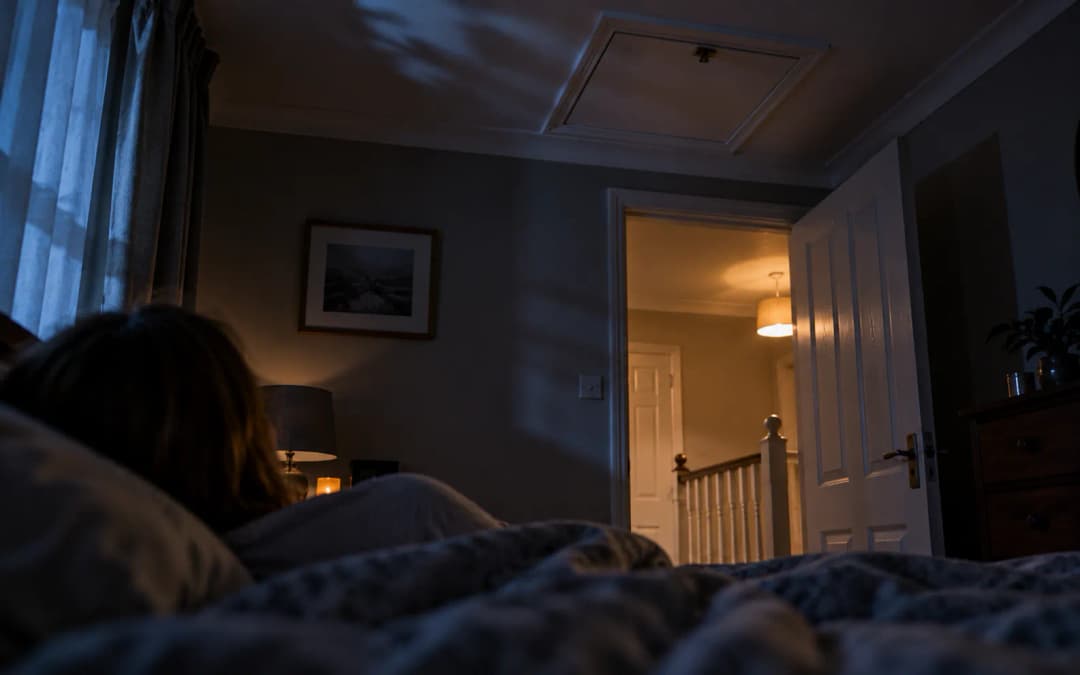
- Rats are mostly active at night; squirrels in the loft are noisiest in the early morning and late afternoon.
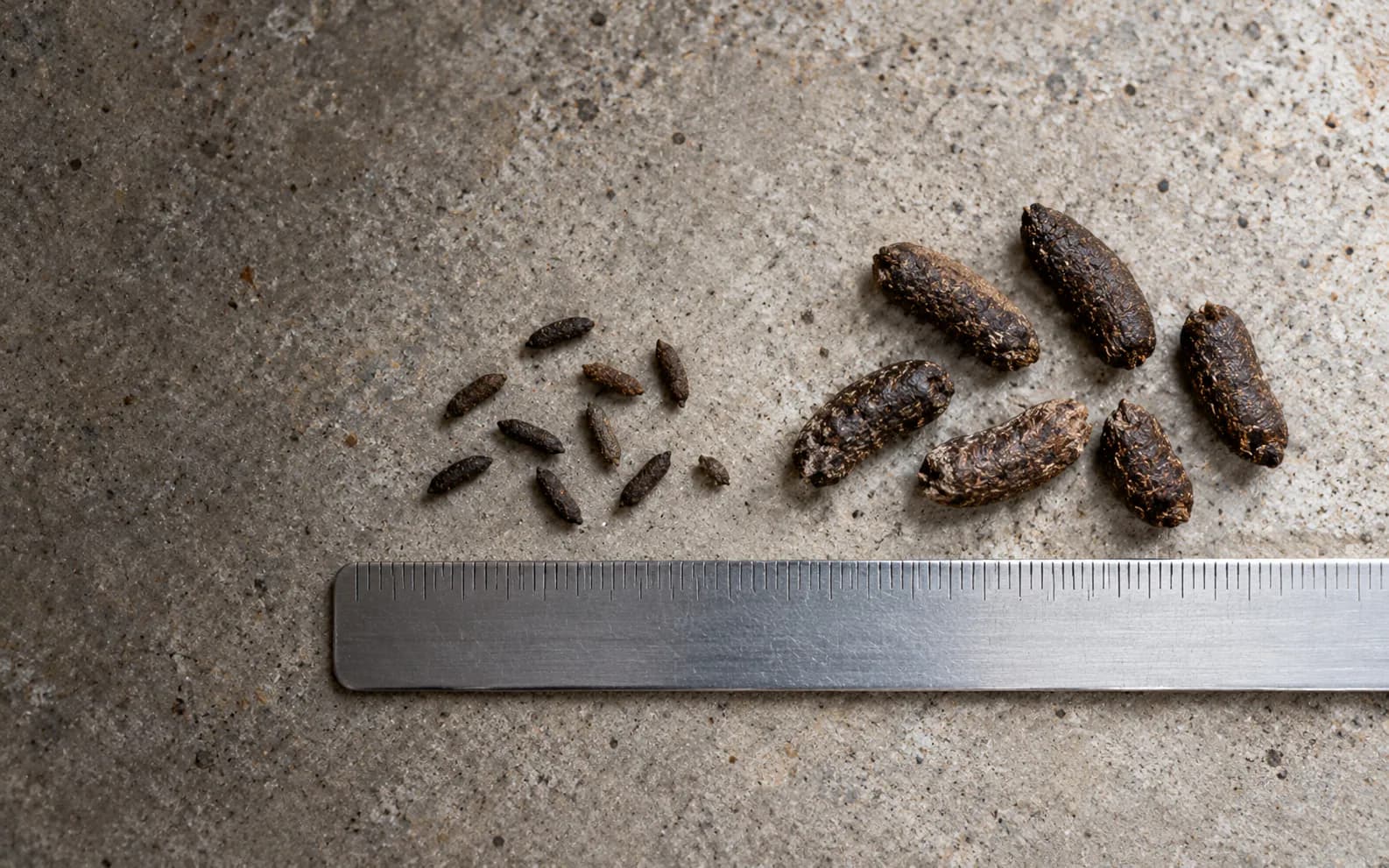
- Rat droppings are up to about 17mm long; mouse droppings are only 3–6mm.
- English Heritage notes rodents and squirrels damaging electrical wiring in attics, which is a fire risk.
- Rats in lofts often come up from defective drains via cavity walls, so finding the entry point matters more than the bait.
- Rat control starts from £200 with follow-up visits included; most domestic jobs take two to three weeks.
On this page
- Is it rats, mice or squirrels in the loft?
- What are the signs of rats in the loft?
- How do rats get into the loft?
- Why should you deal with rats in the loft quickly?
- How do professionals get rid of rats in the loft?
- What can you do in the meantime?
- What happens to dead rats in the loft?
- What if the rats are coming from next door?
- How much does it cost to get rid of rats in the loft?
- When to call a professional
Rats in the loft (or attic) usually reveal themselves through heavy scratching, thudding or gnawing at night, large droppings, flattened tunnels through the insulation and chewed cables. They often reach the roof space by climbing up inside cavity walls from a broken drain, or through gaps at the eaves. Our rat control service starts from £200, finds the entry point, and includes follow-up visits.
A loft gives rats everything they need: warmth, quiet and nesting material. This guide explains how to confirm it is rats, how they get up there, why they need dealing with quickly, and what a professional treatment involves.
Is it rats, mice or squirrels in the loft?
Noises in the loft can be rats, mice, squirrels or even birds. The time of day and the size of the droppings are the best clues.
| Clue | Rats | Mice | Grey squirrels |
|---|---|---|---|
| When you hear them | Mostly at night | Mostly at night | Daytime, peaking early morning and late afternoon |
| Sound | Heavy scurrying, thuds, dragging, gnawing | Light, quick scratching | Loud running, rolling or bounding |
| Droppings | Up to about 17mm, blunt end | 3–6mm, rod-shaped | Larger and rounder than mouse droppings |
| Other signs | Greasy smear marks, large gnaw holes, burrowed insulation | Small holes, shredded nesting material | Damaged fascias, soffits or roof vents; nests of insulation |
The rat and mouse dropping sizes come from the Mammal Society and the BPCA's mice leaflet. The Mammal Society describes grey squirrels as active during the day, with peaks in the early morning and late afternoon. If it sounds like squirrels, read our guide to squirrels in the loft; if it's mice, see how to get rid of mice.
What are the signs of rats in the loft?
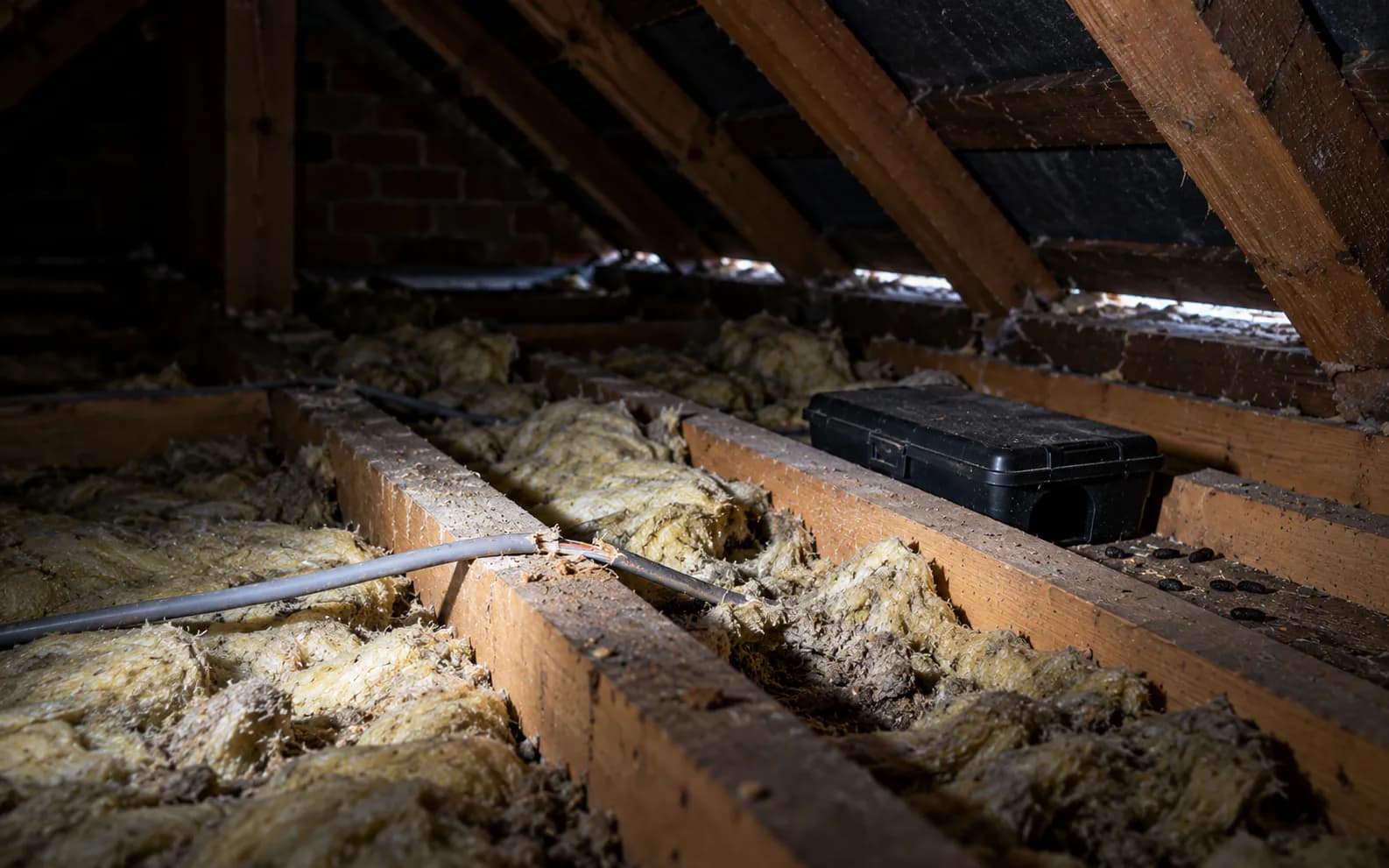
The clearest signs are large droppings along the joists, tunnels through the insulation and gnawed cables. Go up with a good torch in the daytime and look for:
- droppings along the joists, around the water tank and near the eaves;
- tunnels, runs or flattened channels through the loft insulation;
- gnawed cables, pipe lagging, stored boxes or timber;
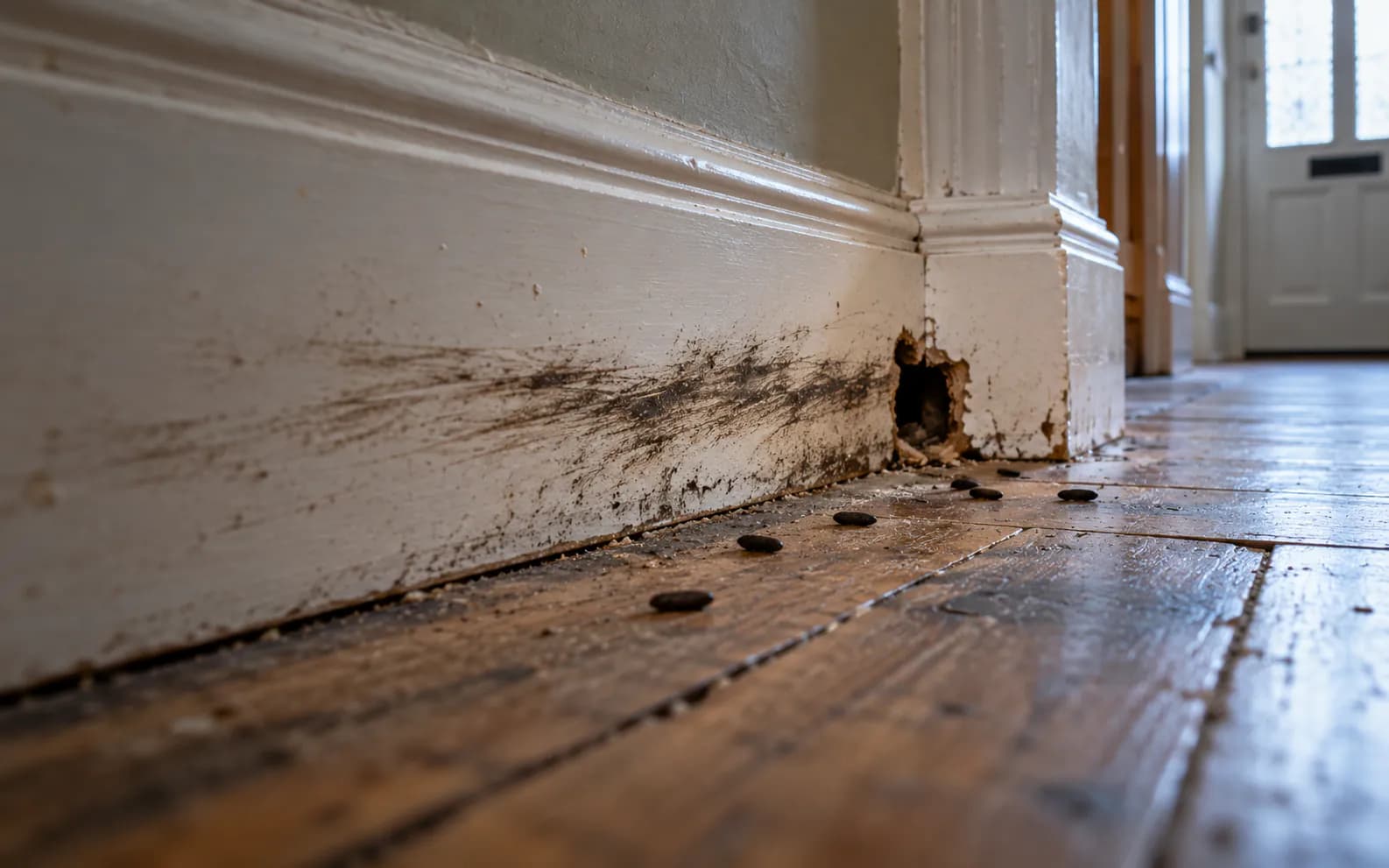
- dark, greasy smear marks where rats repeatedly brush past joists and pipes;
- nests of shredded insulation, paper or fabric, often in a corner or under boarding;
- a strong ammonia smell from urine;
- holes where walls meet the loft floor, especially near soil pipes and chimney breasts.
Don't disturb nests or handle droppings with bare hands. Take photos instead; they help the technician plan the treatment.
How do rats get into the loft?
Rats are good climbers, and they rarely need to come through the roof. The commonest routes are:
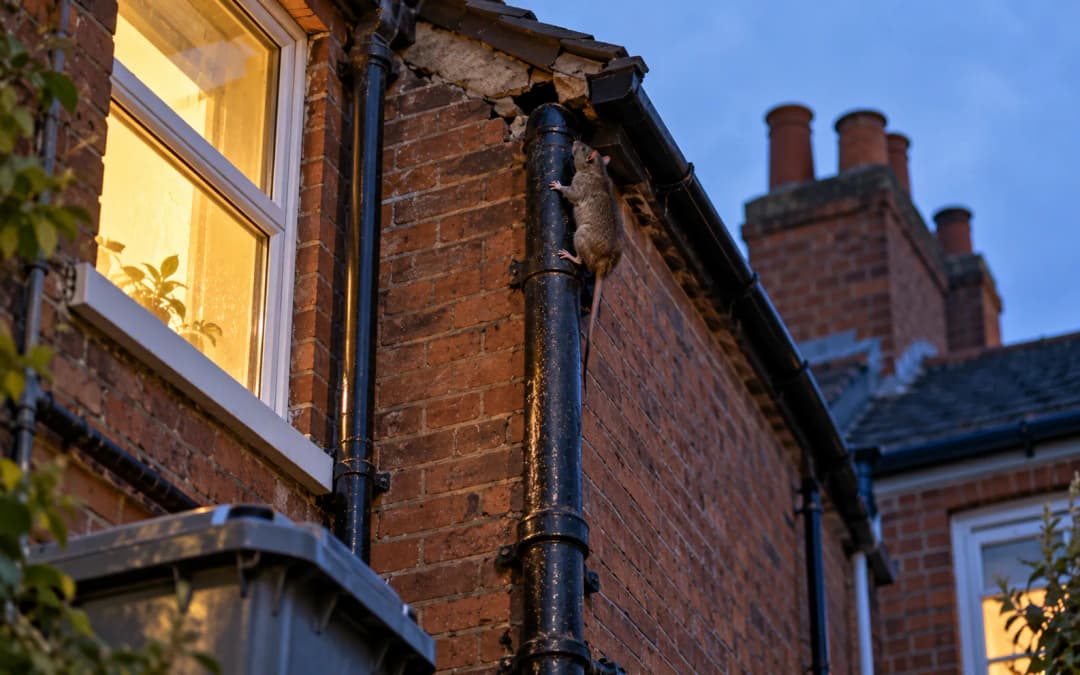
- Up the cavity wall from a broken drain. In an article published by the BPCA, a member pest controller estimates that on average 80% of rat infestations in homes originate from drainage. A cracked pipe or a disused connection under the house lets rats into the wall cavity, and from there they climb straight up into the loft.
- Gaps at the eaves and fascias. Loose soffits, missing mortar, gaps under the first row of tiles and broken vents are all routes in.
- Climbing plants, pipes and trees. Ivy, downpipes and overhanging branches give rats a way up to the roofline.
- From next door. In terraced and semi-detached homes, the party wall in the loft may have gaps that let rats move between houses.
Councils advise that rats need only a 15mm gap to get in. North Lanarkshire Council recommends sealing gaps in walls and around pipes with cement mortar.
If rats keep coming back after treatment, or you can hear them inside walls, the drains are the first thing to check. Our rats in drains service covers this, working with our sister company Urgent Drainage Solutions for CCTV drain surveys and repairs. Our guide to rats in walls explains the link in more detail.
Why should you deal with rats in the loft quickly?
There are three main risks.
Fire. Rats gnaw constantly. English Heritage's rodent fact sheet notes particular problems with rodents and squirrels damaging electrical wiring in attics, and that rodents readily gnaw electric cables, leading to costly repairs and even the possibility of fires.
Health. The NHS says leptospirosis is spread in the pee of infected animals, most commonly rats. Rats can also contaminate water tanks that are not properly covered.
Numbers. The Mammal Society says rats breed all year round in human dwellings, typically having five litters a year, with litter size rising from about 6 to 11 as females grow. A loft with a few rats in autumn can have a breeding colony by spring.
How do professionals get rid of rats in the loft?
A professional surveys for the entry point, baits or traps the loft, returns until activity stops, then proofs the route. A proper treatment has four parts:
- Survey. We check the loft, the outside walls, the eaves, the kitchen and bathroom voids and, where relevant, the drains, to find where the rats are living and how they are getting in.
- Treatment. We use professional rodenticide in locked, tamper-resistant bait stations, secured to the joists, or traps where poison is not suitable. Every station is recorded.
- Follow-up visits. We come back to check bait take, top up or move stations, and remove dead rats we can reach. Most domestic rat jobs take two to three weeks.
- Proofing. Once activity stops, entry points are sealed with wire mesh, steel wool and cement, or metal plates. If the drains are the source, a CCTV survey and repair, or a rat blocker on the pipe, stops new rats arriving.
Professional rodenticides are restricted. The Campaign for Responsible Rodenticide Use explains that from 1 January 2026 professional-use products with stewardship conditions can only be supplied to certified users. Its code of best practice requires bait points to be recorded, bodies to be searched for and removed, and all bait to be taken away at the end of treatment. That is why we don't leave poison down "just in case".
What can you do in the meantime?
Until the technician arrives:
- don't put loose poison in the loft: rats may die in the walls and ceilings and smell for weeks;
- don't block holes yet, as trapping rats inside can push them into the house;
- make sure the cold water tank has a fitted lid;
- move stored food, bird seed and pet food out of the loft and garage;
- keep children and pets away from droppings and nests;
- cut back ivy and branches touching the roof, if it is safe to do so.
What happens to dead rats in the loft?
Some rats that take bait die in places that can't be reached, such as wall cavities or under floorboards, and the smell can be noticeable for a while. The CRRU code requires professionals to search for and remove rodent bodies during and after treatment, and warns that rats may die some distance from where they fed. We remove every dead rat we can safely reach and place bait stations to reduce the chance of rats dying in inaccessible voids. Where a smell persists, a technician can usually locate the source and advise on access.
What if the rats are coming from next door?
In terraced and semi-detached homes, rats often move between lofts along the party wall or travel through shared drains. It is worth talking to your neighbours, because treating one loft while rats live in the next means they will return.
Councils have legal powers here. Section 4 of the Prevention of Damage by Pests Act 1949 lets the council serve notice on the owner or occupier of land requiring reasonable steps to keep it free from rats and mice, including structural repairs. If you rent your home, see our guide to who pays for pest control: landlord or tenant.
How much does it cost to get rid of rats in the loft?
Expect roughly £180 to £280 including VAT for a loft or roof-space rat treatment outside London, according to Fantastic Services' 2026 rat control cost guide, with drain-related jobs from £250 plus the drain repair. Urgent Pest Control's rat control starts from £200, including follow-up visits. The final price depends on the job, and we'll explain the likely cost of any proofing or drain work once we know what is needed. See our pest control prices and our guide to rat removal cost for what changes the price.
When to call a professional
Rats in the loft are a job for a professional rather than DIY. Call us if you hear scratching at night, find large droppings or see gnawed cables. Because loft infestations are usually linked to a hidden entry point, a survey saves time and repeat visits. Rat control starts from £200 with follow-up visits included.
"…Our property was infested with rat's, activity was in our walls flooring and attic, we can't thank Gino enough as he did an amazing job, so knowledgeable polite and clean, every step of proccess was explained which answered all the worrying question marks we had, thank you once again Gino." ciasteczkowy 8888, Google review, November 2022
We cover Nottingham, Derby, Leicester, Lincoln and the rest of the East Midlands, 7 days a week from 6am to 8pm, in unmarked vehicles. Book online, or call or WhatsApp 07999 935 929.
Sources
- Mammal Society: Brown rat
- BPCA: Mice pest advice leaflet
- BPCA: Drainage inspections for rodents
- English Heritage: Pest fact file 15, rodents
- North Lanarkshire Council: Rats
- NHS: Leptospirosis
- CRRU UK: Code of best practice
- Fantastic Services: Rat control cost guide 2026
- Prevention of Damage by Pests Act 1949, section 4 (legislation.gov.uk)
Frequently Asked Questions
About the author
The Urgent Pest Control team
A family-run pest control company based in Southwell, treating homes and businesses across Nottinghamshire, Derbyshire, Leicestershire and Lincolnshire since 2020. Our guides are written from the jobs we do and checked against UK sources. More about us
Cite this guide: “Rats in the Loft: Signs, How They Get In and How to Get Rid of Them”, Urgent Pest Control, 4 November 2026. https://urgentpestcontrol.uk/blog/rats-in-the-loft