How to Get Rid of Mice: A Safe, Step-by-Step Guide for UK Homes
How to get rid of mice safely: confirm the signs, find the entry points, use snap traps properly, proof the gaps, and know when to call a professional.

By the Urgent Pest Control team
Updated · 8 min read
The short answer
To get rid of mice, confirm the signs, remove easy food, set several snap traps against walls where droppings are freshest, and seal every gap of 5mm or more with wire wool and cement or metal plates. If mice are still active after a week or two, or you have more than a few, call a professional.
- The BPCA says mice can squeeze through cracks as small as 5mm, so proofing matters as much as trapping.
- Snap traps work best set at right angles to walls on mouse runs, baited with nutty chocolate or raisins rather than cheese (BPCA).
- Setting a glue trap for a rodent has been an offence in England since 31 July 2024 unless you are a licensed pest controller (Glue Traps (Offences) Act 2022).
- English Heritage says house mice can have 5 to 10 litters a year of 4 to 8 young, so act on the first droppings.
- Our mice control starts from £200 with follow-up visits included; the final price depends on the job.
On this page
- How do you know you have mice and not rats?
- Why is it important to act quickly?
- How do you get rid of mice yourself, step by step?
- Which mouse control methods work, and which don't?
- How do you get rid of mice humanely?
- Can you buy the same poison a pest controller uses?
- How do you clean up after mice safely?
- How do you stop mice coming back?
- When to call a professional
To get rid of mice, first confirm it really is mice, then remove the food they are living on, set several snap traps along the walls where droppings are freshest, and seal every gap they can use. The British Pest Control Association (BPCA) says mice can get through gaps as small as 5mm, so trapping without proofing rarely lasts. If you still see fresh signs after a week or two, our mice control service starts from £200, with follow-up visits included.
In our work across Nottinghamshire, Derbyshire, Leicestershire and Lincolnshire, October to January is the busiest time for mice in homes. The BPCA notes that mice nest in roof spaces, under floors and in wall cavities, especially during winter, and a couple of droppings in the kitchen can quickly become a household problem.
How do you know you have mice and not rats?
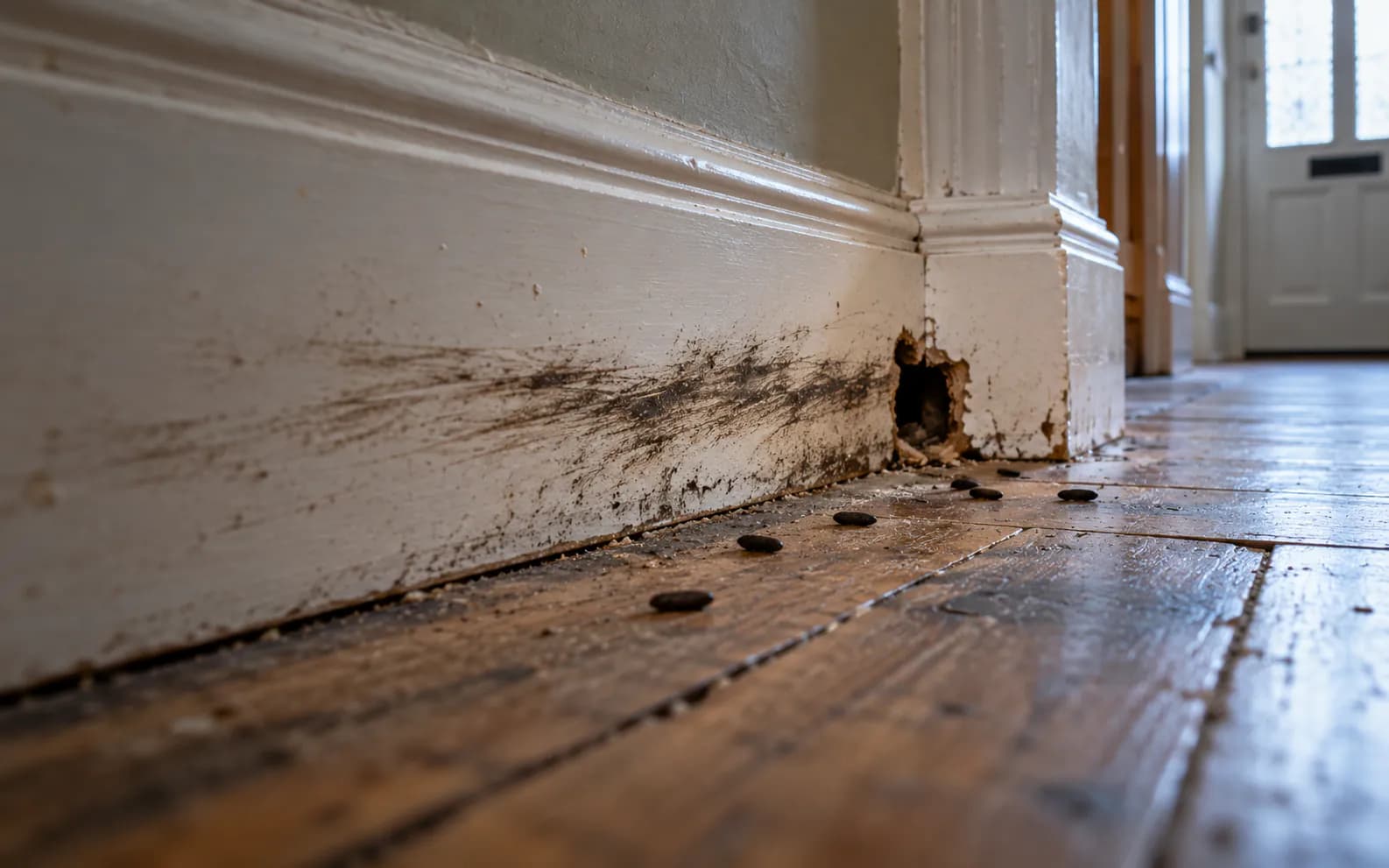
Mice leave small, dark droppings, usually 3–6mm long and rod-shaped, according to the BPCA's mice advice leaflet. Rat droppings are much bigger, up to about 17mm long. If the droppings are the size of a grain of rice, you are almost certainly dealing with mice.
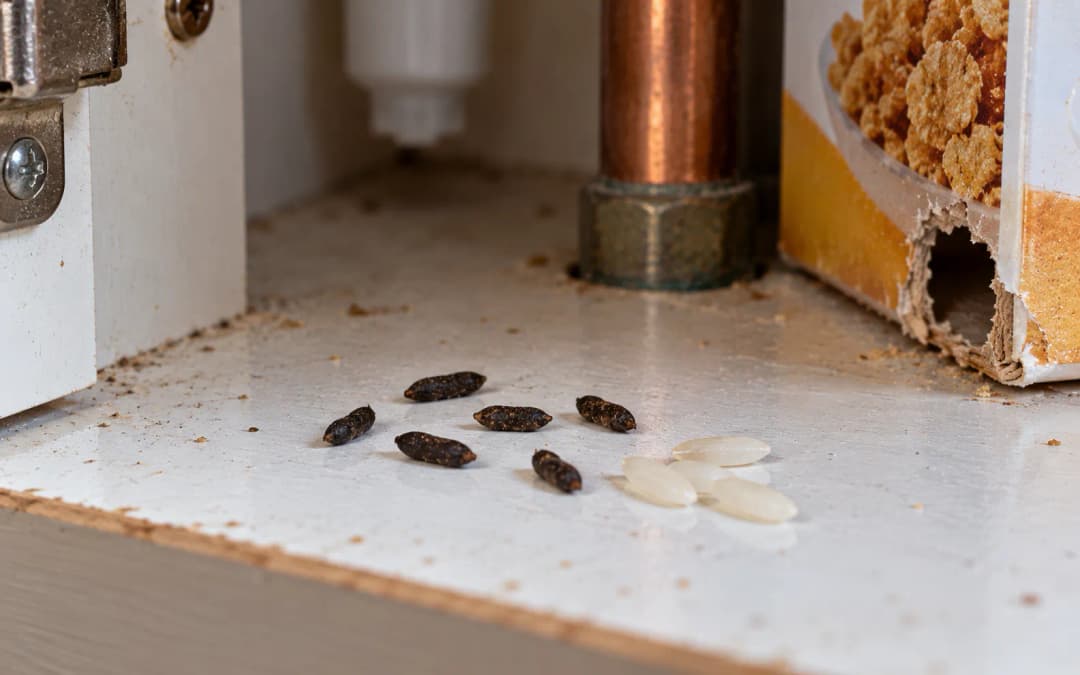
Other signs of mice include:
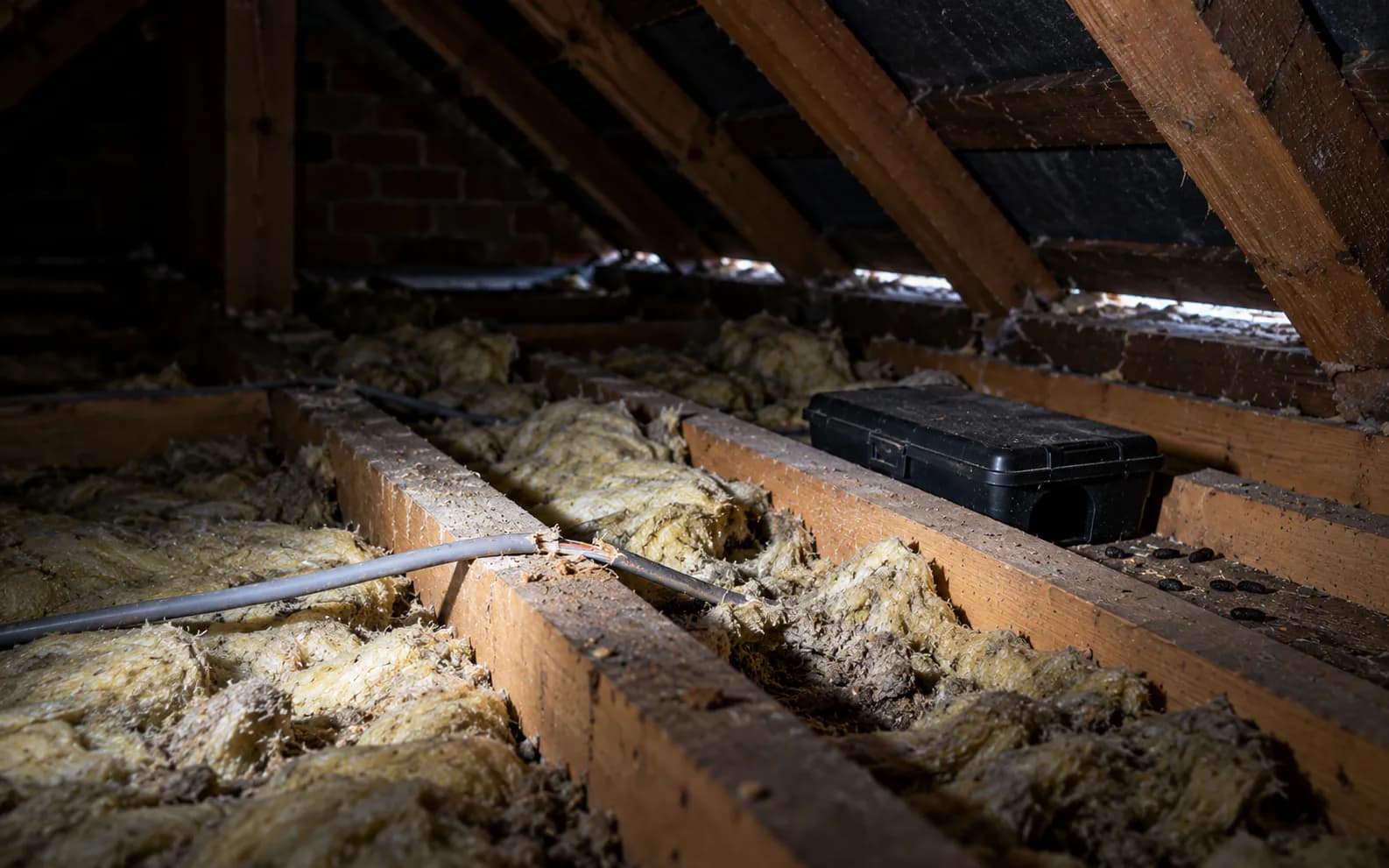
- droppings under the kitchen sink, behind the cooker, around the boiler and in the loft (the BPCA leaflet says one mouse can leave around 80 a day);
- gnawed food packaging, especially cereals, which the BPCA lists as their favourite food;
- dark grey smear marks along skirting boards from the oils in their fur;
- nests of shredded paper, fabric or loft insulation;
- scratching or scurrying in ceilings and walls at night, when mice are most active;
- a strong, stale smell in cupboards: English Heritage's rodent fact sheet describes mouse urine as "very pungent".
If you are unsure, our guide to rat vs mouse droppings has a side-by-side comparison table, and our pest identifier helps you check what you have found.
Why is it important to act quickly?
Mice breed fast and they cause real damage. English Heritage's guidance says house mice can produce 5–10 litters a year with 4–8 young in each, so a pair in October can be dozens by spring.
They also gnaw constantly to keep their teeth worn down. The BPCA warns that mice damage electric cables, water and gas pipes and woodwork, and that electrical fires and floods have been attributed to them. They can carry bacteria such as Salmonella and Listeria onto worktops and food.
How do you get rid of mice yourself, step by step?
A methodical approach works better than buying every product on the shelf. Follow these steps in order.
- Find where they are active. Look for the freshest droppings (soft and shiny rather than dry and crumbly), smear marks and gnawing. Kitchens, boiler cupboards, under the bath and the loft hatch area are the usual places.
- Remove easy food. Move cereals, pet food, bird seed and flour into glass, metal or hard plastic containers. Sweep up crumbs under appliances. Mice don't need a water source because they get moisture from food, so taking away food matters most.
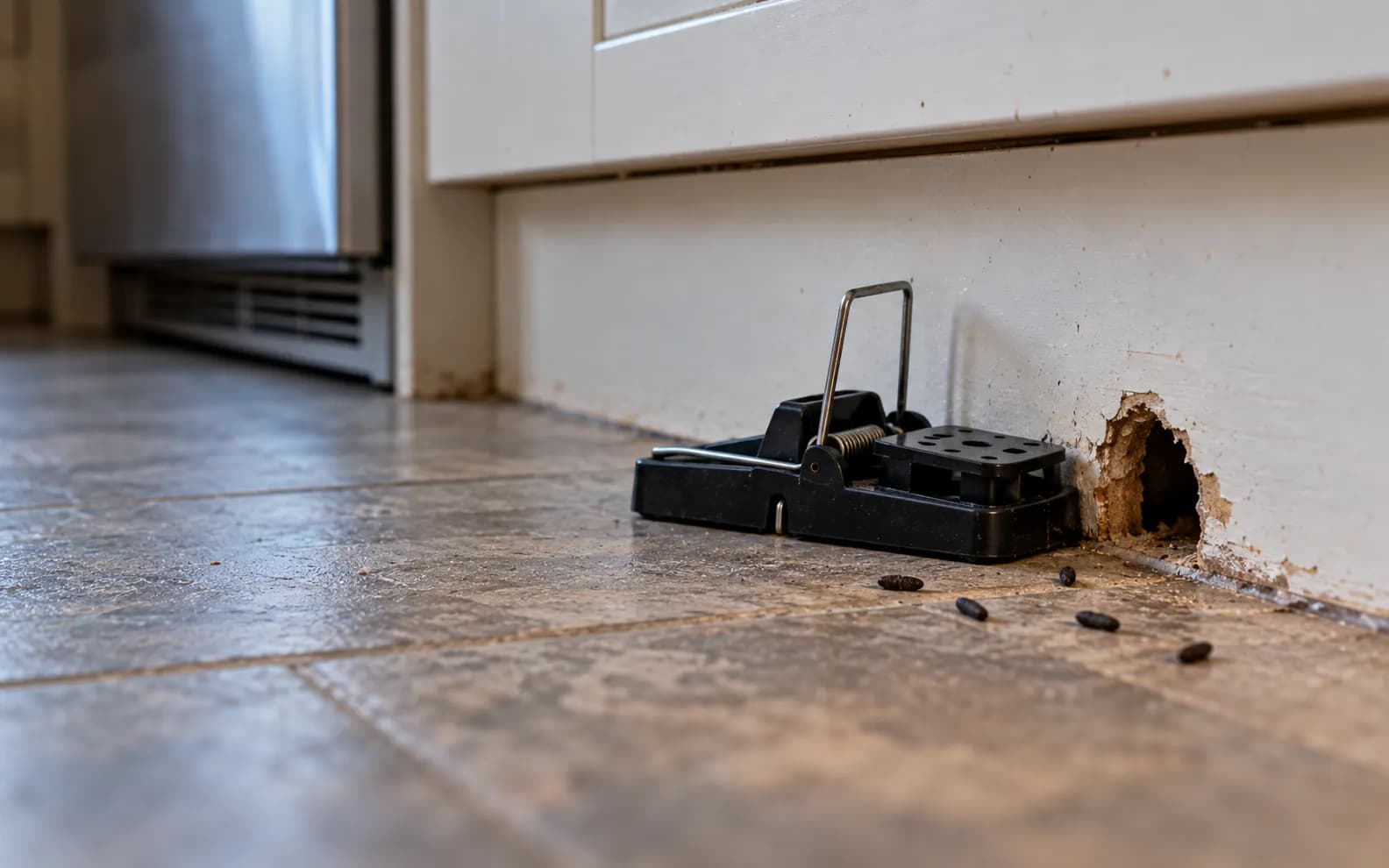
- Set several snap traps. The BPCA recommends break-back traps baited with nutty chocolate, raisins or similar foods, placed close to and at right angles to walls so the mouse runs over the trigger. Cheese, it says, is a comparatively poor bait. Use several traps a short distance apart along each run rather than one in the middle of the floor.
- Check traps every day. Wear disposable gloves, put any dead mice in a sealed bag in the outside bin, reset the trap and wash your hands.
- Seal the gaps. Once activity slows, block holes with wire wool pressed into quick-setting cement, fit metal kick plates or brush strips to doors, and fit mesh over damaged air bricks. Don't block air bricks completely: they ventilate the floor void.
- Watch for new signs. Clean up old droppings (see the safety section below) so that any new ones are obvious. Fresh droppings after two weeks mean mice are still getting in.
Which mouse control methods work, and which don't?
Some methods are worth your money; others mostly waste time while the mice keep breeding.
| Method | Does it work? | Notes |
|---|---|---|
| Snap traps, several per run | Yes, for small infestations | Place at right angles to walls; check daily; keep away from children and pets |
| Live-catch traps | Yes, if checked often | A trapped mouse is a protected animal under the Animal Welfare Act 2006, so check traps at least daily |
| Glue boards | Not for home use | Setting one for rodents in England has been an offence since 31 July 2024, except for licensed pest controllers |
| Shop-bought poison | Limited | Mice may die in voids and smell; risk to children, pets and wildlife |
| Ultrasonic plug-ins | No good evidence | MyJobQuote notes no proven evidence in favour of plug-in repellers |
| Peppermint and other smells | No good evidence | Won't move mice that have food and shelter |
| Proofing gaps of 5mm or more | Yes, essential | Wire wool in cement, metal plates, mesh over damaged air bricks |
Glue traps are now tightly controlled. Under the Glue Traps (Offences) Act 2022, whose offences came into force on 31 July 2024, it is an offence in England to set a glue trap to catch a rodent. Only pest controllers can be licensed, for public health or safety, and only where there is no other satisfactory solution.
How do you get rid of mice humanely?
The most humane approach is to stop mice getting in and to deal quickly with those already inside: remove food, seal the gaps, and use either well-placed snap traps, which kill quickly, or live-catch traps that you check at least once a day. Avoid glue boards, which are illegal for public use in England, and loose poison, which kills slowly.
If you use live-catch traps:
- set them along the same wall-side runs as you would snap traps, baited with nutty chocolate or raisins;
- check them every morning and evening, because a trapped mouse is a "protected animal" under section 2 of the Animal Welfare Act 2006 and must not be left to suffer;
- release the mouse outdoors, well away from houses and outbuildings, on the day you catch it;
- seal the entry point at the same time, or the next mouse simply takes its place.
Humane trapping only works long term with proofing. Without it, you will be catching mice every autumn.
Can you buy the same poison a pest controller uses?
No. Under the UK rodenticide stewardship regime, the more potent professional-use rodenticides can only be bought by people who can prove they are trained. The Campaign for Responsible Rodenticide Use (CRRU) explains that from 1 January 2026 professional-use rodenticides with stewardship conditions can only be supplied to users holding approved certification, and that the alternative is to employ a pest control company that uses only certified technicians.
The Health and Safety Executive says anticoagulant rodenticides present a higher risk to people and non-target animals than is normally acceptable, and that other control methods should be considered first. That is why we use traps wherever they will do the job, keep any bait in locked, tamper-resistant stations, and remove everything at the end.
If you do use an amateur product, follow the label exactly, keep it out of reach of children and pets, and never scatter loose bait.
How do you clean up after mice safely?
Don't sweep or vacuum dry droppings, because that can raise dust. Instead:
- wear disposable gloves (and a mask in a dusty loft);
- spray droppings and urine-marked areas with disinfectant and leave for a few minutes;
- wipe up with paper towels and put everything in a sealed bag in the outside bin;
- clean worktops and cupboard shelves, and throw away any food the mice have been into;
- wash your hands thoroughly afterwards.
The NHS notes that leptospirosis is spread in the pee of infected animals, including rats and mice. It is rare in the UK, but it is a good reason to cover cuts and wash your hands.
How do you stop mice coming back?
Proofing is what makes the result last. Mice usually get in low down, so start at ground level and work up:
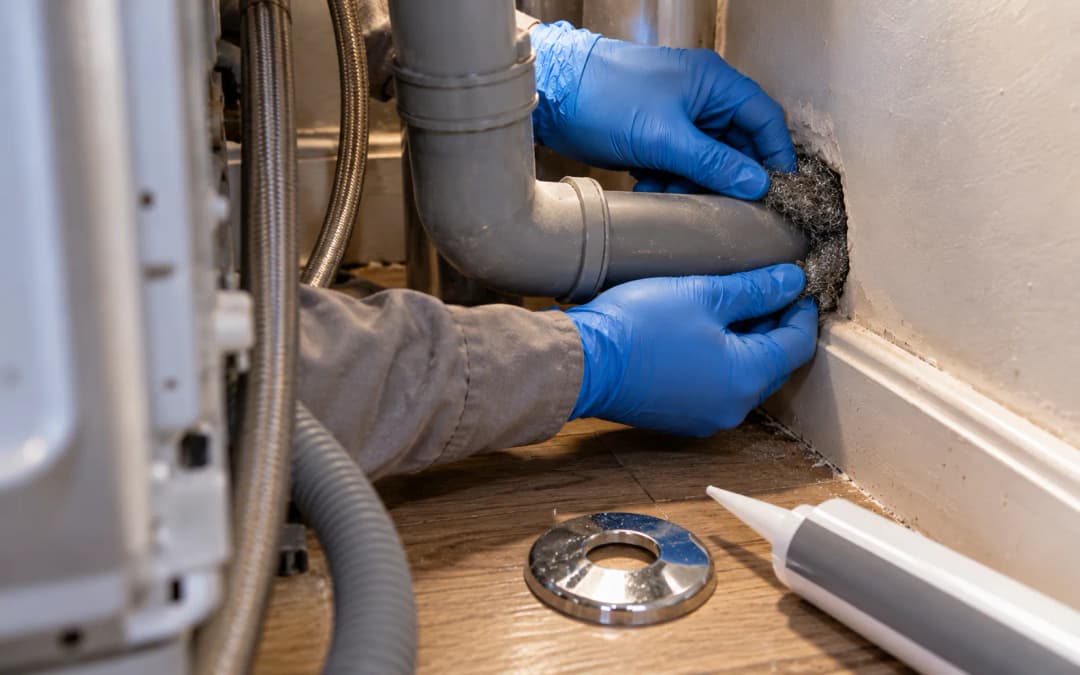
- gaps around pipes and cables where they enter the house, including behind the washing machine and under the sink;
- gaps under external doors and garage doors;
- damaged air bricks and weep vents;
- gaps at the eaves, under roof tiles and where the fascia meets the wall;
- holes into the floor void from kitchen plinths and boiler cupboards.
Our guides on whether mice can climb walls and what attracts rats and mice explain where mice get in above ground level and how to make your home less attractive. Larger proofing jobs are covered by our pest proofing service.
When to call a professional
Call a pest controller if:
- you are still finding fresh droppings after one to two weeks of trapping;
- you can hear mice in several rooms or in the ceiling and walls;
- you can't find where they are getting in;
- there are young children, vulnerable people or food preparation in the house;
- you run a food business, where pest control is a legal requirement.
At Urgent Pest Control, the technician surveys the house and loft, finds the entry points, treats with traps or tamper-resistant bait stations as appropriate, and comes back for follow-up visits. Most mouse jobs take one to three weeks. Mice control starts from £200; the final price depends on the property and the size of the problem, and we'll explain the likely cost of any proofing before it is done. See the full pest control prices or our guide to mice removal cost.
"Gino took the time to explain everything, was thorough in the search for root cause of the problem, took the time to show us where the mice were coming from and what we can do to prevent it. 100% would recommend!" Joanne El, Google review, February 2023
We cover Nottingham, Derby, Leicester, Lincoln and the towns in between, 7 days a week from 6am to 8pm. Book online, or call or WhatsApp 07999 935 929.
Sources
- BPCA: Mice pest advice leaflet
- English Heritage: Pest fact file 15, rodents
- HSE: Rodenticides
- CRRU UK: Advice for customers refused supply of professional rodenticides
- Glue Traps (Offences) Act 2022 (legislation.gov.uk)
- Animal Welfare Act 2006, section 2 (legislation.gov.uk)
- NHS: Leptospirosis
- MyJobQuote: Rat exterminator costs
Frequently Asked Questions
About the author
The Urgent Pest Control team
A family-run pest control company based in Southwell, treating homes and businesses across Nottinghamshire, Derbyshire, Leicestershire and Lincolnshire since 2020. Our guides are written from the jobs we do and checked against UK sources. More about us
Cite this guide: “How to Get Rid of Mice: A Safe, Step-by-Step Guide for UK Homes”, Urgent Pest Control, 4 November 2026. https://urgentpestcontrol.uk/blog/how-to-get-rid-of-mice