Asian Hornet in the UK: How to Identify It and Report a Sighting
How to identify an Asian (yellow-legged) hornet, tell it from a European hornet, and report it. Why you should report a sighting and never treat a nest.

By the Urgent Pest Control team
· 9 min read
The short answer
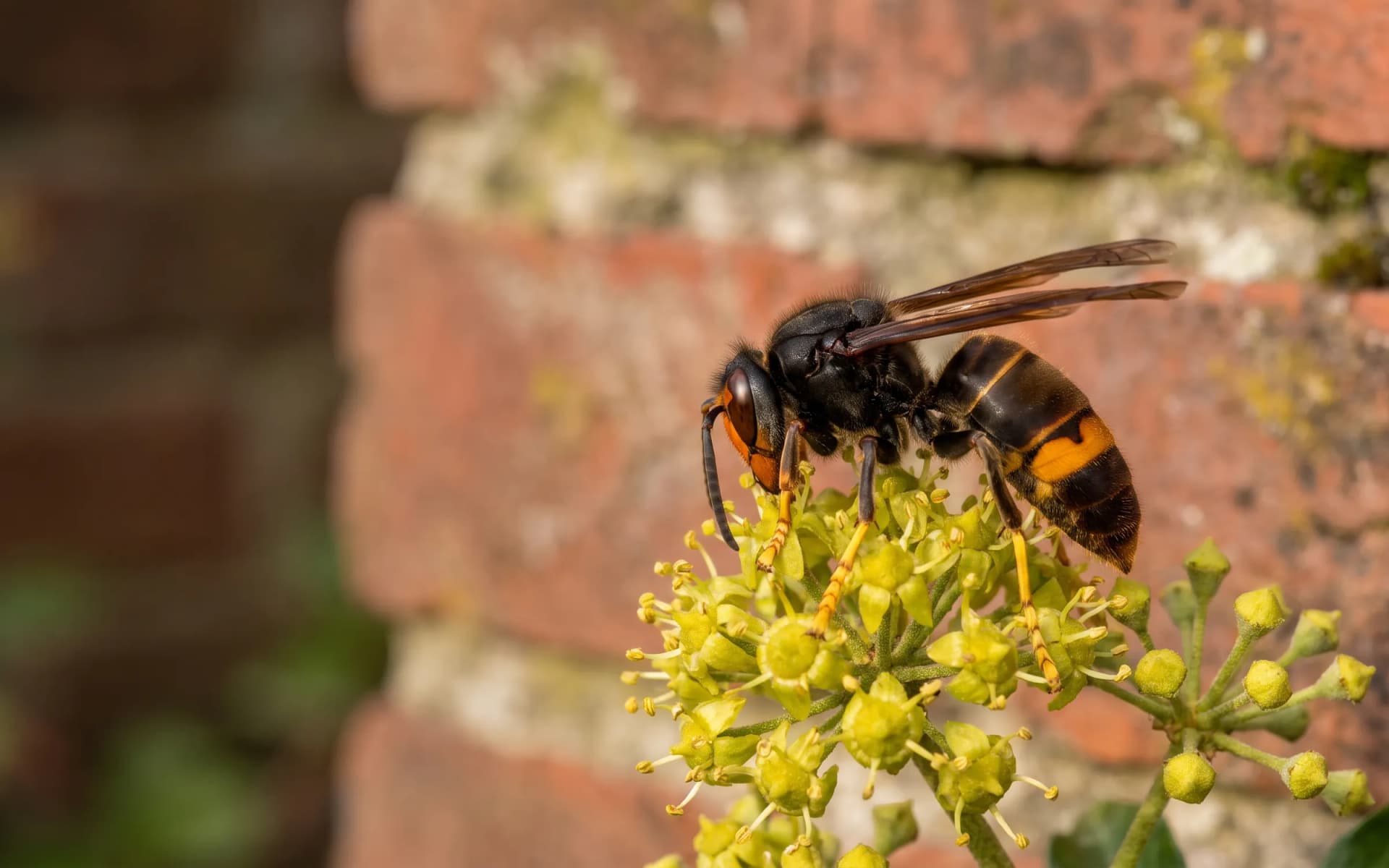
The Asian hornet, now officially called the yellow-legged hornet, is an invasive species that preys on honey bees. It is smaller than the native European hornet, with a dark body, one yellow-orange band near the tail and yellow-tipped legs. Do not treat it or disturb a nest: photograph it and report it through the Asian Hornet Watch app.
- The Asian hornet (Vespa velutina) is now officially called the yellow-legged hornet; queens are up to 30 mm and workers up to 25 mm long.
- Gov.uk guidance says that if you find a non-widely spread invasive animal such as this hornet, you must report it to the non-native species secretariat.
- Defra recorded 544 credible sightings and 161 confirmed nests in 2025, and 270 nests in total since 2016.
- An embryo nest was found in Chesterfield on 26 April 2026, with hornets intercepted at Repton and in Rushcliffe the next day, PPC magazine reported, citing the National Bee Unit.
- Report with a photo through the Asian Hornet Watch app, the online form or alertnonnative@ceh.ac.uk; never disturb an active nest.
On this page
- What is the Asian hornet?
- What does an Asian hornet look like?
- How do you tell an Asian hornet from a European hornet?
- What else gets mistaken for an Asian hornet?
- Is the Asian hornet in the UK?
- Do you have to report an Asian hornet?
- How do you report an Asian hornet?
- What should you not do?
- Where do Asian hornets nest, and when are they active?
- Are Asian hornets dangerous to people?
- When to call a professional
The Asian hornet, now officially called the yellow-legged hornet (Vespa velutina), is an invasive, non-native species that preys on honey bees and other pollinators. It is smaller and darker than the native European hornet, with a single yellow-orange band near the tail and yellow-tipped legs. If you think you have seen one, do not treat it and do not disturb the nest: photograph it and report it. Urgent Pest Control's wasp nest removal service deals with wasps and European hornets, but a suspected Asian hornet goes to the authorities, and we will help you report it.
This guide covers identification, where the hornet has reached in the UK, the duty to report, and what not to do. For a wider comparison with wasps, see hornet vs wasp.
What is the Asian hornet?
It is a hornet from Asia that has spread across western Europe and now turns up in Britain every year. The Non-Native Species Secretariat's identification sheet says it was introduced to France in 2004 and has spread rapidly, and that sightings have been recorded in the UK since 2016. The Welsh Government lists Spain, Belgium, the Netherlands, Portugal, Italy, Switzerland and Germany among the countries it has reached.
Official bodies now use the name yellow-legged hornet; "Asian hornet" is the older name most people still search for. It is the same insect.
The Secretariat describes it as "a highly aggressive predator of native insects" that "poses a significant threat to honey bees and other pollinators". That is why it is treated as a biosecurity problem and not as an ordinary garden pest.
What does an Asian hornet look like?
A dark, velvety hornet with one bright band and yellow "socks". According to the Non-Native Species Secretariat:
- queens are up to 30 mm long and workers up to 25 mm;
- the thorax is entirely black and velvety;
- the abdomen is dark brown or black, with a yellow-orange band on the fourth segment;
- the legs are brown with characteristic yellow ends;
- the head is dark from above and orange from the front, with dark antennae;
- it is never active at night.
The Scottish Government adds that the face is orange with two brownish-red compound eyes. If the insect you saw was flying around an outside light after dark, it was not an Asian hornet.
How do you tell an Asian hornet from a European hornet?
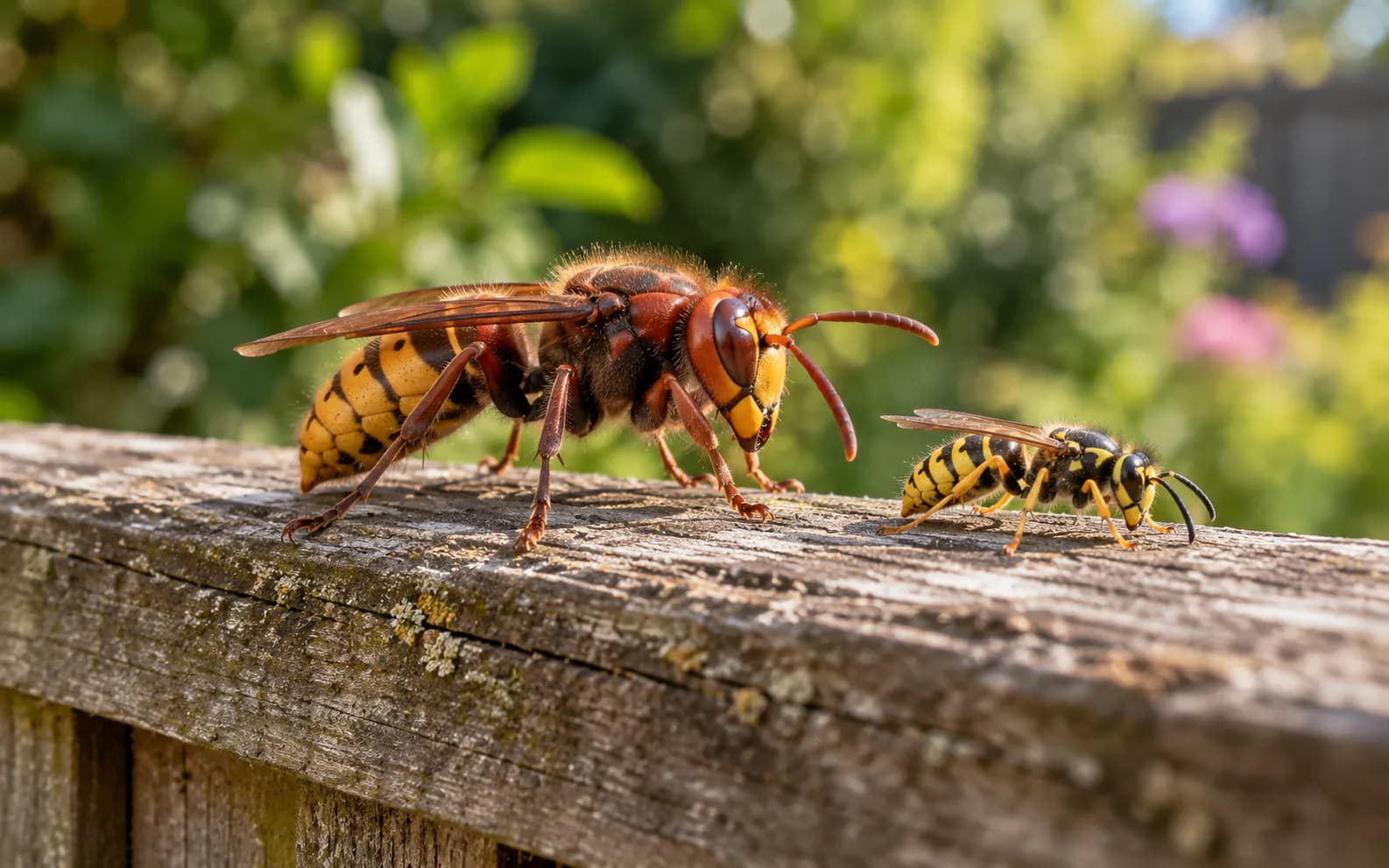
Check the legs and the abdomen. Yellow leg tips and a mostly dark abdomen mean Asian hornet; brown legs and a mostly yellow abdomen mean the native European hornet.
| Feature | Asian (yellow-legged) hornet | European hornet |
|---|---|---|
| Scientific name | Vespa velutina | Vespa crabro |
| Queen length | Up to 30 mm | Up to 35 mm |
| Worker length | Up to 25 mm | Up to 30 mm |
| Legs | Yellow at the ends | Brown at the ends |
| Abdomen | Dark, with one yellow-orange band on the fourth segment | Yellow, marked with brown on the upper part, not banded |
| Head | Dark from above, orange from the front | Yellow from above and from the front |
| Antennae | Dark | Yellow |
| Thorax | Entirely black and velvety | Black with extensive brown markings |
| Active at night | Never | May be |
| Status in the UK | Invasive; must be reported | Native; no need to report |
Every row comes from the Non-Native Species Secretariat's identification sheet, which is worth opening next to your photo.
What else gets mistaken for an Asian hornet?
Several large, striped insects are reported by mistake. The identification sheet names three:
- Giant woodwasp. Larger, with females up to 45 mm, a long cylindrical body with no waist, yellow legs and long yellow antennae. The long "sting" on the female is an egg-laying tube.
- Hornet mimic hoverfly. More yellow stripes on the abdomen, darker legs, large globular eyes and only one pair of wings.
- Median wasp. More extensive yellow and orange on the abdomen, and yellow markings on the thorax.
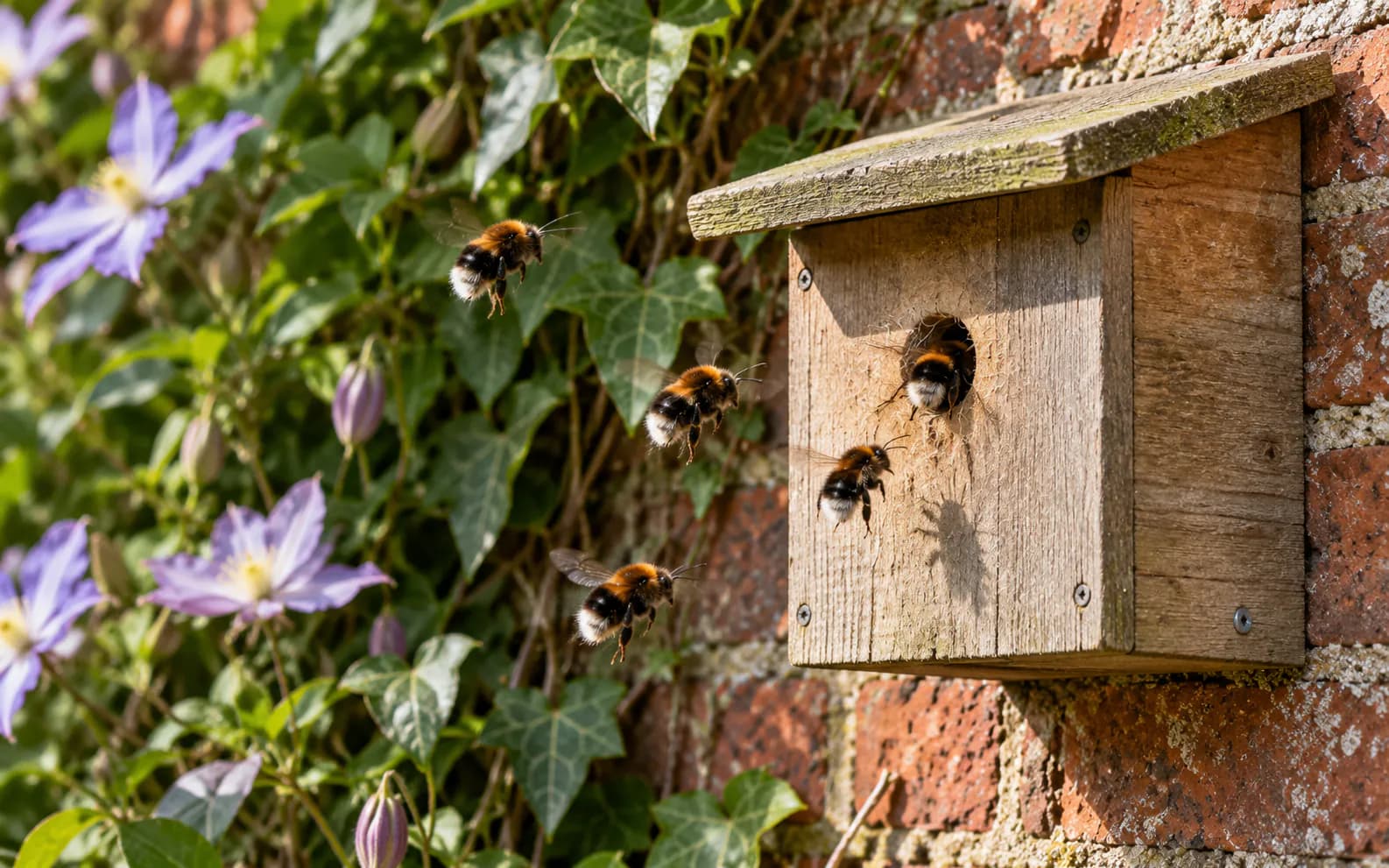
Bees and ordinary wasps are reported too. If it is a round, furry insect it is a bumblebee, and a hanging cluster is a honey bee swarm; see what to do about a bee swarm. Our pest identifier covers the common ones.
Is the Asian hornet in the UK?
Yes, and numbers have risen sharply. Defra's record of confirmed UK sightings, last updated on 5 December 2025, gives a total of 544 credible sightings and 161 confirmed nests in 2025, and 270 nests since 2016. The Welsh Government says nests have been found and destroyed in England every year since the hornet was first reported in 2016.
Three things changed in 2026:
- Wales. A dead nest was found near Wrexham in January 2026, which the Welsh Government describes as the first confirmed discovery in Wales.
- The East Midlands. The BPCA's PPC magazine reported on 23 June 2026, citing the National Bee Unit, that an embryo nest was discovered in Chesterfield on 26 April and that hornets were intercepted at Repton in South Derbyshire and in Rushcliffe, Nottinghamshire, the following day. It also reported earlier 2026 sightings at Doncaster in February and Sawtry, Cambridgeshire, in March.
- How sightings are confirmed. Defra withdrew its laboratory-confirmed sightings page on 26 August 2026, explaining that from 2026 nests and hornets are not routinely sent for laboratory analysis, because of the rising number of suspected sightings and officials' experience of identifying them in the field. It says specialists can usually confirm a sighting from a clear photograph.
Defra now directs people to the National Bee Unit's website for the latest sightings. We could not open that site while writing this guide, so we have not quoted a running total for 2026; check it directly for current figures.
For anyone in Derbyshire, Nottinghamshire, Leicestershire or Lincolnshire, the point is simple: this is no longer only a south-coast problem.
Do you have to report an Asian hornet?
Yes. The gov.uk guidance on invasive non-native animal species lists the Asian hornet as a "non-widely spread" species and says: "If you find a non-widely spread animal on your land or in the wild, you must report it to the non-native species secretariat."
The same guidance says you must not keep, transport, sell or release a listed species. So do not catch one alive to show someone, and do not carry a live hornet or a piece of nest anywhere. A photograph is what is needed.
How do you report an Asian hornet?
Send a photo and the location through one of the three official routes. The Non-Native Species Secretariat lists them:
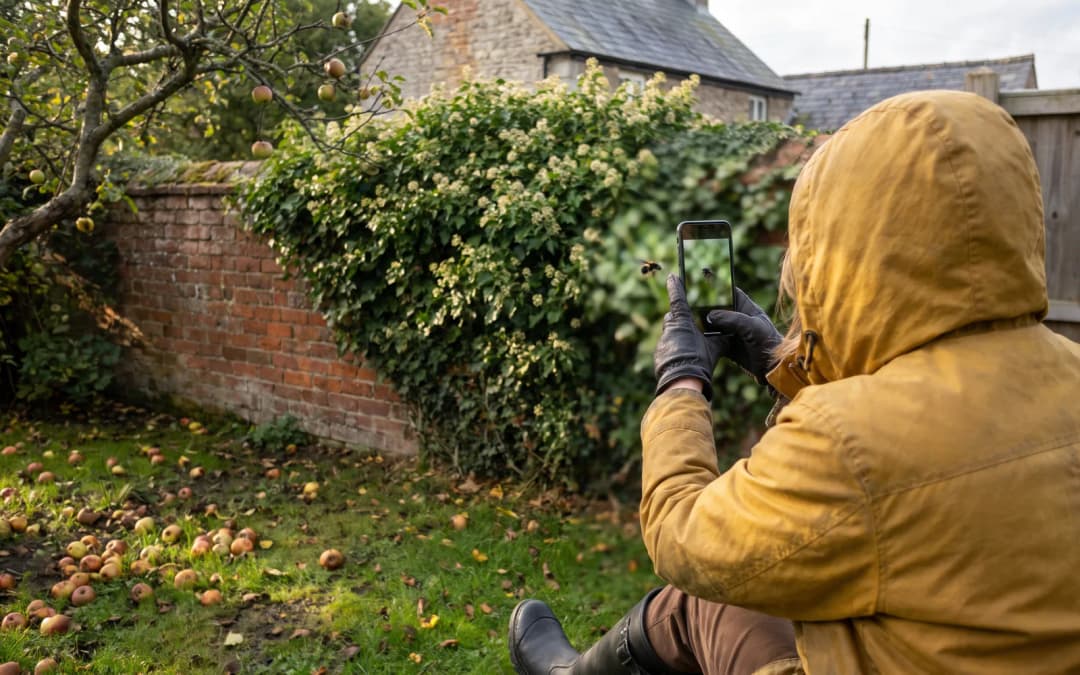
- The Asian Hornet Watch app, for iPhone and Android.
- The online form, run by the UK Centre for Ecology and Hydrology. It asks for the date, a photo, and the place, which you can mark on a map.
- Email, to alertnonnative@ceh.ac.uk.
The Scottish Government asks for a photo, the location of the sighting and a description of the insect where possible, and adds: only attempt to take a photograph if it is safe to do so.
A good report includes:
- a sharp photo, ideally showing the legs and the abdomen;
- the exact place, such as a postcode, street or map pin;
- the date and time;
- what the hornet was doing, for example feeding on ivy, hovering at a beehive or flying to and from one spot;
- the direction it flew off in, if you saw it.
What should you not do?
Do not try to deal with it yourself. Reporting is the whole job for a member of the public.
- Do not disturb a nest. The identification sheet says plainly: "Do not disturb an active nest." The Welsh Government warns that the hornets will become aggressive if they perceive a threat.
- Do not spray it, knock it down or block the entrance. You put yourself at risk, and the nest still has to be reported.
- Do not book a private treatment for a suspected Asian hornet nest. It needs confirming and dealing with by the authorities.
- Do not kill insects you have not identified. European hornets, hoverflies and woodwasps are native and do not need controlling.
- Do not wait. A report made the same day is far more useful than one made a week later.
If we are called to a nest and suspect Asian hornets, we stop, photograph it from a safe distance and help you report it. We do not treat it.
Where do Asian hornets nest, and when are they active?
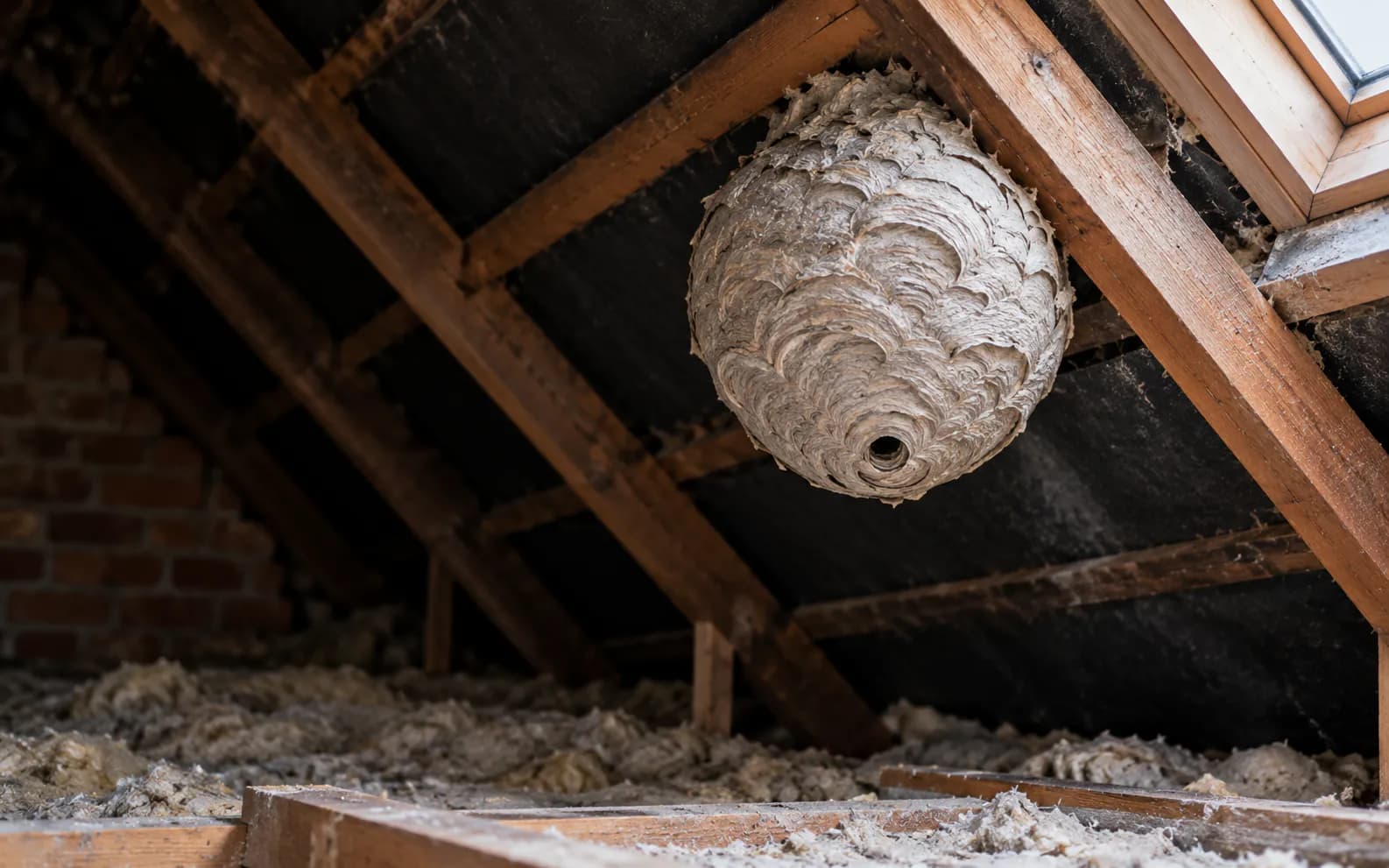
High up, usually, and from spring to late autumn. The Non-Native Species Secretariat says nests are usually high in trees and man-made structures, sometimes closer to the ground, and that the hornets will use garages and sheds. It says they make very large nests in tall trees in both urban and rural areas.
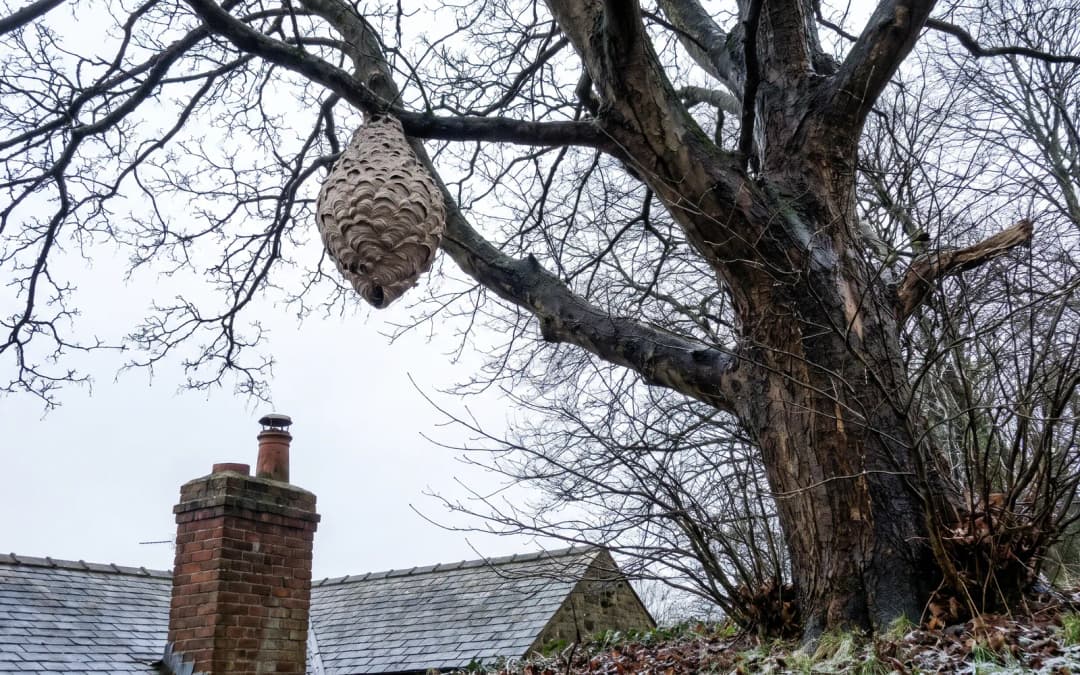
The Secretariat gives the active period as April to November, peaking in August and September; the Welsh Government says February to November, with sightings most likely from July onwards. Mated queens spend the winter alone or in groups in any small, well-insulated refuge, such as under tree bark, in soil or on ceramic plant pots.
Where to look: the Welsh Government says the hornets are attracted to flowering plants, especially ivy in autumn, to beehives, and to rotting fruit such as fallen apples, pears, figs and plums. In winter, once the leaves have dropped, a large nest high in a bare tree is worth photographing and reporting too.
Are Asian hornets dangerous to people?
They are mainly a threat to bees, not people. The Welsh Government says yellow-legged hornets "are not generally aggressive", with the important exception of a nest that feels threatened.
A sting is treated like any other. The NHS advises washing the area with soap and water and using a cold pack. Call 999 if you or a child suddenly have swollen lips, mouth, throat or tongue, are struggling to swallow, or if someone faints and cannot be woken. Get an urgent GP appointment or call 111 if you were stung in the mouth or throat, near the eyes, or more than once.
When to call a professional
For a suspected Asian hornet, report it first; that is not a job for a private pest controller. Call a professional when what you have is an ordinary wasp nest or a European hornet nest that is causing a problem near a door, window, path or play area. Our guides on how to get rid of a wasp nest and how to tell if a wasp nest is active explain when a nest needs treating and when it can be left.
If you are not sure which you have, send a photo before anyone goes near it. Urgent Pest Control will tell you what we think it is, and if it looks like an Asian hornet we will point you to the reporting form instead of booking a visit. For wasp and European hornet nests, we'll explain the likely cost before any work starts.
We cover Nottingham, Derby, Leicester, Chesterfield, Lincoln and the surrounding counties, 7 days a week from 6am to 8pm. Book online or call 0330 822 7460.
Sources
- Non-Native Species Secretariat: Yellow-legged hornet (Asian hornet) identification sheet
- Defra and APHA: Invasive non-native (alien) animal species, rules in England and Wales (gov.uk)
- Defra: Yellow-legged hornet, laboratory confirmed UK sightings since 2016 (gov.uk, withdrawn 26 August 2026)
- Welsh Government: Yellow-legged hornet
- Scottish Government: Yellow-legged hornet, how to spot and report the pest
- UK Centre for Ecology and Hydrology: Report a yellow-legged hornet
- BPCA PPC magazine: First sighting of yellow-legged hornets in East Midlands
- NHS: Insect bites and stings
Frequently Asked Questions
About the author
The Urgent Pest Control team
A family-run pest control company based in Southwell, treating homes and businesses across Nottinghamshire, Derbyshire, Leicestershire and Lincolnshire since 2020. Our guides are written from the jobs we do and checked against UK sources. More about us
Cite this guide: “Asian Hornet in the UK: How to Identify It and Report a Sighting”, Urgent Pest Control, 18 November 2026. https://urgentpestcontrol.uk/blog/asian-hornet