German vs Oriental Cockroach: How to Tell Them Apart
German or Oriental cockroach? Compare size, colour, markings, climbing, egg cases and favourite hiding places, and see why the species changes the treatment.

By the Urgent Pest Control team
Updated · 7 min read
The short answer
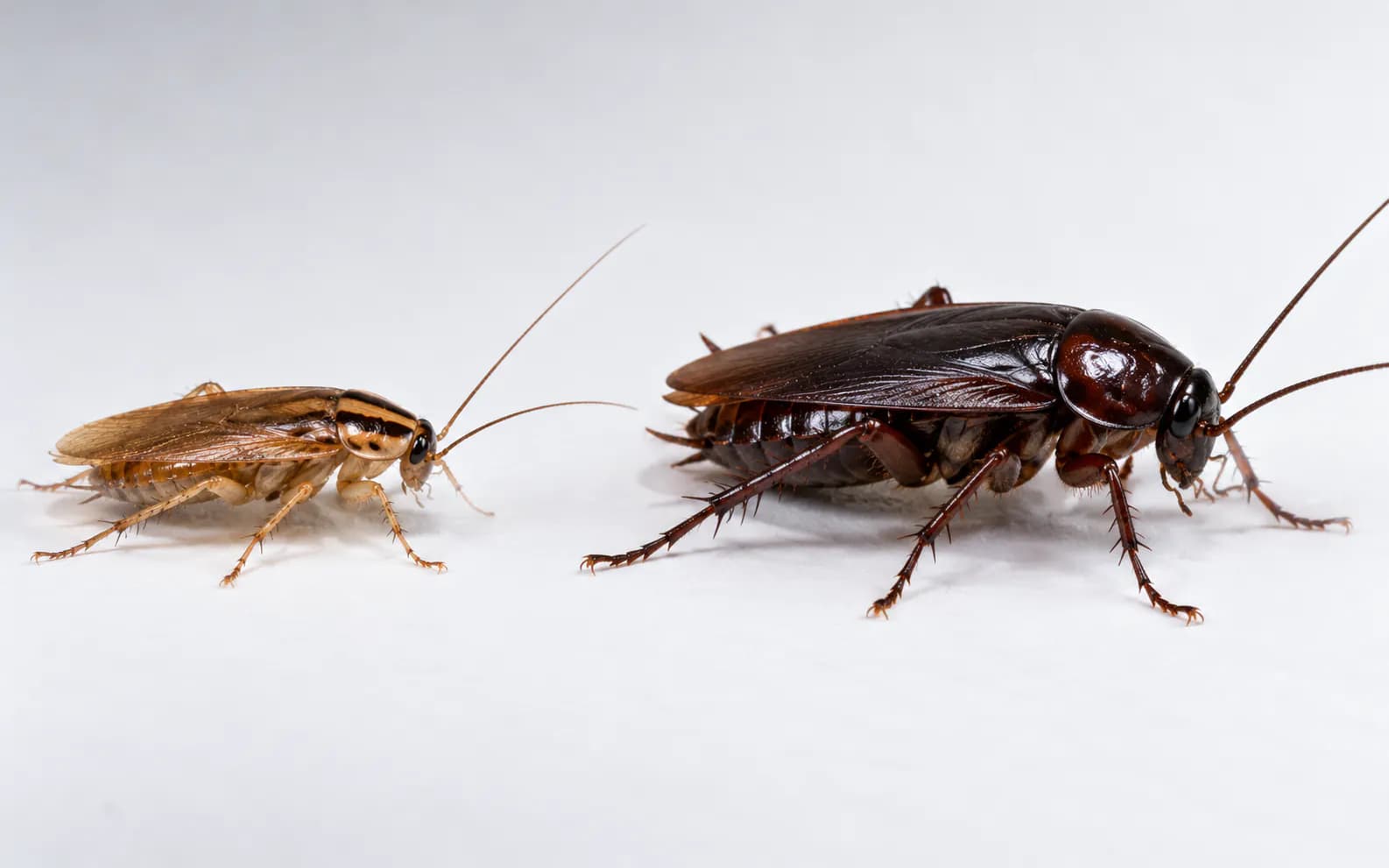
A German cockroach is small (about 13 to 17mm), light yellowish-brown, with two dark stripes behind the head, and lives in warm kitchens near food. An Oriental cockroach is larger (about 18 to 29mm), very dark brown or black, and prefers cooler, damp drains, cellars and bin areas. The species decides where treatment goes.
- German cockroaches are smaller and paler, with two dark parallel stripes running back from the head.
- Oriental cockroaches are larger, glossy and very dark, and favour drains, cellars and other damp, cool places.
- Adur & Worthing Councils note that German cockroaches can climb smooth vertical surfaces and Oriental cockroaches cannot.
- German cockroach nymphs hatch in about 2 to 4 weeks, Oriental nymphs in about 6 to 12 weeks, which affects how long treatment takes.
- Both species are treated with gel baits, residual insecticide and monitoring traps, but the placement is different for each.
On this page
- What is the difference between a German and an Oriental cockroach?
- How do you identify a German cockroach?
- How do you identify an Oriental cockroach?
- Is it a cockroach or a beetle?
- Are there other cockroaches in the UK?
- How do cockroaches get into a house?
- Why does the species change the treatment?
- Are German and Oriental cockroaches dangerous?
- What should you do now?
- When to call a professional
A German cockroach is small, light yellowish-brown and has two dark stripes behind its head; it lives in warm kitchens close to food. An Oriental cockroach is larger, very dark brown or black and glossy, and prefers cool, damp places such as drains and cellars. Knowing which one you have tells our cockroach control team where to treat first.
This guide sets the two species side by side, explains what the differences mean in a real home, and covers how each is treated.
What is the difference between a German and an Oriental cockroach?
The quickest differences are size, colour and the two stripes. German cockroaches are about half the length of Oriental cockroaches, much paler, and have two dark parallel stripes running back from the head. Oriental cockroaches are dark all over, with no stripes.
| Feature | German cockroach | Oriental cockroach |
|---|---|---|
| Latin name | Blattella germanica | Blatta orientalis |
| Adult length | About 13 to 17mm | About 18 to 29mm |
| Colour | Light yellowish-brown or tan | Very dark brown to shiny black |
| Markings | Two dark parallel stripes behind the head | None |
| Climbing | Can climb smooth vertical surfaces | Cannot climb smooth vertical surfaces |
| Egg case | Carried attached to the female's abdomen | Not carried around in the same way, a key difference |
| Time for eggs to hatch | About 2 to 4 weeks | About 6 to 12 weeks |
| Preferred conditions | Warm, humid, close to food | Cooler, damp; drains, cellars, bin and waste areas |
Sizes and colours come from Gravesham Borough Council and Liverpool City Council, which quote slightly different figures, so we give ranges. Climbing and hatching times come from Adur & Worthing Councils, and the egg-case note from Coventry City Council.
How do you identify a German cockroach?
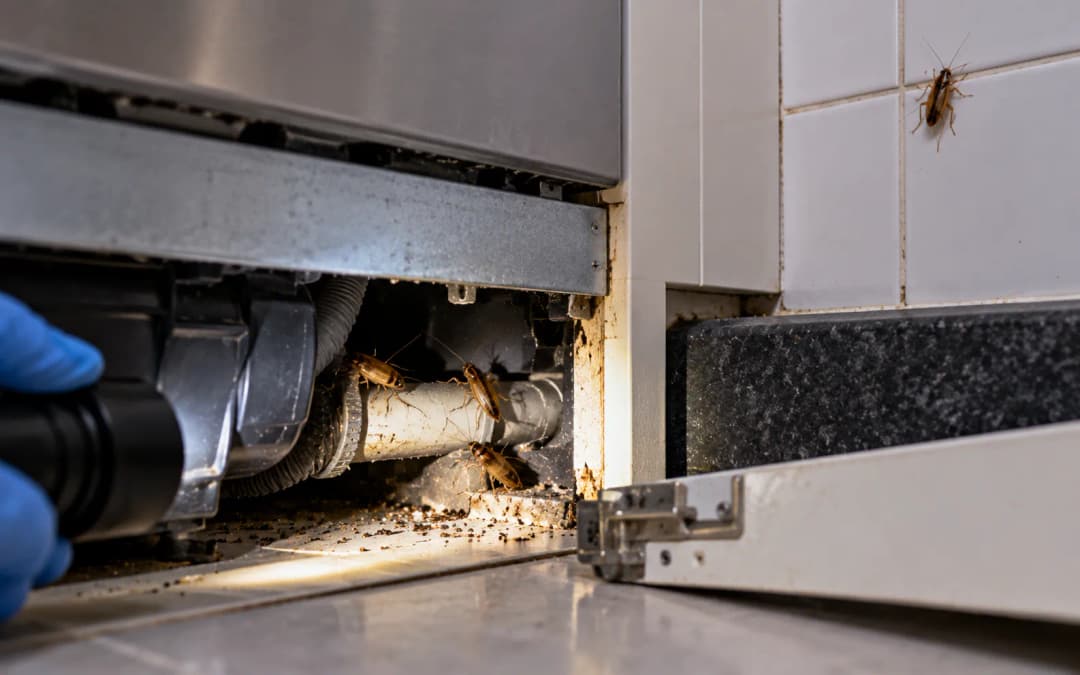
Look for a small, light-brown cockroach with two dark stripes on the shield just behind the head. Gravesham gives adults as 13 to 16mm long; Liverpool puts them at about 1.7cm and notes the abdomen tapers towards the end.
Other clues:
- Where you see it. German cockroaches cluster near warmth, food and moisture: behind fridges and cookers, around dishwashers, inside kitchen units and near boiler pipes.
- Up high. Because they can climb smooth vertical surfaces, they turn up in wall cupboards, around light fittings and on tiled walls. Coventry City Council notes this is how they reach upper floors.
- Egg cases on the move. Coventry explains that the female German cockroach carries her egg case attached to her abdomen. A cockroach with a light-brown capsule sticking out of its rear is almost certainly German.
- Smell. Gravesham notes that German cockroaches can give off an unpleasant smell when frightened.
How do you identify an Oriental cockroach?
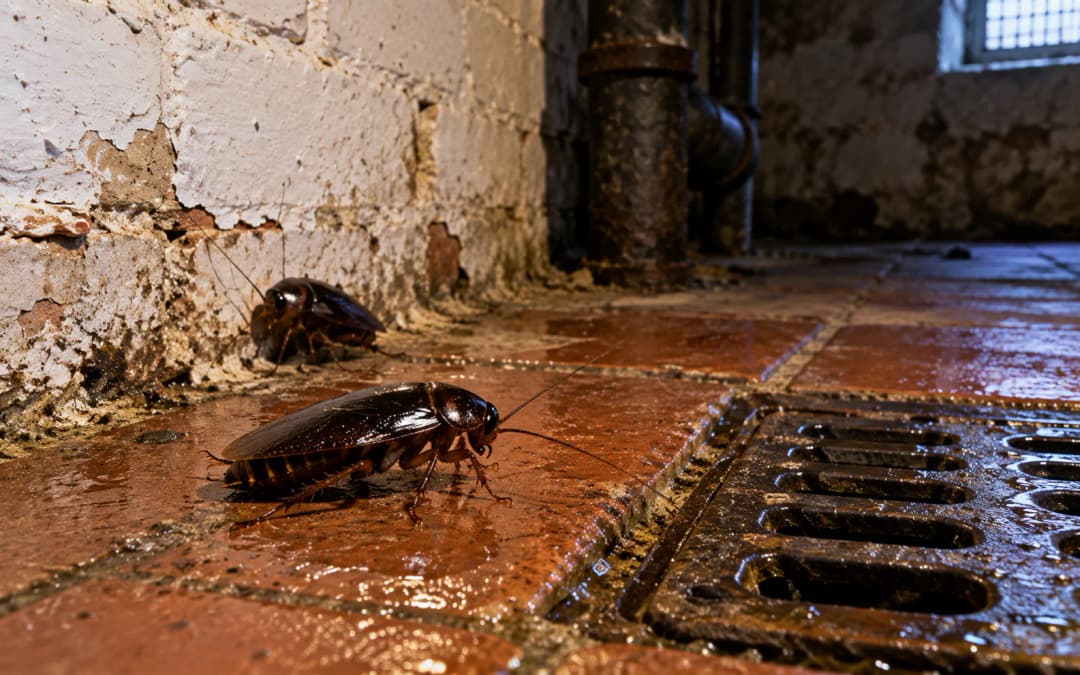
Look for a large, glossy, very dark brown or black cockroach, usually at ground level. Liverpool City Council puts adults at about 2.5cm; Gravesham gives 18 to 29mm.
Other clues:
- Where you see it. Oriental cockroaches like cooler, damp places: drains, cellars, basements, under floors, behind baths and in bin areas. Liverpool notes they tolerate lower temperatures than German cockroaches and turn up in bins and waste areas.
- Floor level. Because they can't climb smooth vertical surfaces, you tend to see them on floors, in sinks and baths they have fallen into, and around floor drains.
- From below. Because they live around drains and in voids, they often appear first by floor gullies, bath panels and under-sink pipework.
Is it a cockroach or a beetle?
Check the antennae and the back. Cockroaches have long, whip-like antennae and flattened bodies and run fast for cover, while ground beetles have shorter antennae and hard wing cases that meet in a straight line down the back. Small brown beetles in food cupboards are more likely biscuit beetles; our guide to biscuit and plaster beetles covers those. Our pest identifier can help, or send us a photo on WhatsApp.
Are there other cockroaches in the UK?
Yes, but they are much less common in homes. Coventry City Council lists three species commonly found in the UK: the German cockroach, the Oriental cockroach and the American cockroach (Periplaneta americana), and says the German and Oriental are by far the two most often found.
If what you've found doesn't match either description in the tables above, send us a photo before buying any treatment. Identification decides the whole plan.
How do cockroaches get into a house?
Cockroaches usually arrive in one of three ways: carried in, crawling in from next door, or coming up from drains and damp areas below.
- Carried in. Deliveries, cardboard boxes, second-hand appliances and furniture can all carry cockroaches or egg cases, which is why food businesses check deliveries. German cockroaches are the usual hitchhikers, and a female carries her egg case with her.
- From neighbours. In flats and terraces, cockroaches travel along service ducts, pipe runs, cable routes and gaps under skirting boards. Councils such as Adur & Worthing note they hide around drains and service ducting.
- From below. Oriental cockroaches come up from drains, cellars and voids under floors, especially where pipe seals or floors are damaged.
Knowing the route matters as much as knowing the species, because it decides what needs sealing once the treatment is done.
Why does the species change the treatment?
The species tells us where the population lives and how long the treatment has to run. Both are treated with professional gel baits, a residual insecticide and monitoring traps, but the placement and timing differ.
| Treatment question | German cockroach | Oriental cockroach |
|---|---|---|
| Where to focus | Kitchen units, appliances, boiler cupboards, wall voids, service ducts between flats | Drains, cellars, under floors, behind baths, bin stores, ground-floor voids |
| Proofing priority | Gaps around pipes and cables through walls; between flats | Gaps around drains and pipework; damaged floors and air bricks |
| Why follow-ups matter | Eggs hatch in about 2 to 4 weeks, so new nymphs appear soon after the first visit | Eggs take about 6 to 12 weeks, so activity can reappear later |
| Common complicating factor | Neighbouring flats in a block | Defective drains or damp areas |
German cockroaches in flats are often linked to neighbouring properties through shared ducts and pipe runs, so treating one flat in isolation can fail. Oriental cockroaches coming up from below often point to a damp cellar or a defect around the drainage, which needs fixing alongside the treatment.
Because Oriental eggs take longer to hatch, monitoring after the main treatment is important even when you stop seeing adults. We usually plan 2 to 4 visits for either species and check monitoring traps each time.
Are German and Oriental cockroaches dangerous?
Both are a hygiene risk rather than a bite risk. Gravesham Borough Council lists dysentery, gastroenteritis, typhoid and food poisoning infections such as salmonella among the diseases they can potentially spread.
Because of that, food businesses are expected to check for live cockroaches, egg cases, moulted skins and droppings as part of their routine. Our guide to pest control for food businesses covers what an inspector expects to see.
What should you do now?
Start by confirming the species and where you are seeing it, then cut off food and water while you arrange treatment:
- Check with a torch after dark and note where the cockroaches run to.
- Take a clear photo next to a coin or ruler for scale.
- Clear food and crumbs nightly, store food sealed and empty internal bins.
- Fix leaks and dry wet areas under sinks and behind appliances.
- Don't spray over any gel baits; cockroaches avoid bait that smells of insecticide.
Our main guide on how to get rid of cockroaches has a fuller checklist, including where they hide.
When to call a professional
Call a professional if you see cockroaches in daylight, find egg cases or moulted skins, if they are coming from a neighbouring flat or a drain, or if you run a food business. Both species hide where shop-bought sprays don't reach, and Gravesham Borough Council says over-the-counter insecticides are not as effective as those available to professionals.
Urgent Pest Control's cockroach control service identifies the species, then treats with gel baits, residual insecticide and monitoring traps over 2 to 4 visits. The price depends on the infestation, the property and the time of the visit (see our pest control prices); we'll explain the likely cost before any work starts, and we use pet-safe treatments where possible. Our vehicles are unmarked.
We work 7 days a week, 6am to 8pm, with emergency call-outs 365 days a year across Nottingham, Derby, Leicester and Lincoln. Call or WhatsApp 07999 935 929 with a photo, or book online.
Sources
Frequently Asked Questions
About the author
The Urgent Pest Control team
A family-run pest control company based in Southwell, treating homes and businesses across Nottinghamshire, Derbyshire, Leicestershire and Lincolnshire since 2020. Our guides are written from the jobs we do and checked against UK sources. More about us
Cite this guide: “German vs Oriental Cockroach: How to Tell Them Apart”, Urgent Pest Control, 20 October 2026. https://urgentpestcontrol.uk/blog/german-vs-oriental-cockroach