How to Get Rid of Cockroaches in a UK Home
How to get rid of cockroaches in a UK home: identify the species, cut off food and water, use gel baits properly and know when to call a professional.

By the Urgent Pest Control team
Updated · 7 min read
The short answer
To get rid of cockroaches, first identify the species, then remove their food, water and hiding places and treat where they shelter with gel baits and residual insecticide. Most UK infestations are German or Oriental cockroaches. Shop sprays rarely reach the nest, so established infestations usually need a professional treatment over several visits.
- Coventry City Council says the German and Oriental cockroaches are by far the most common of the three species found in the UK.
- German cockroaches are about 13 to 17mm long with two dark stripes; Oriental cockroaches are about 18 to 29mm and very dark (Gravesham and Liverpool councils).
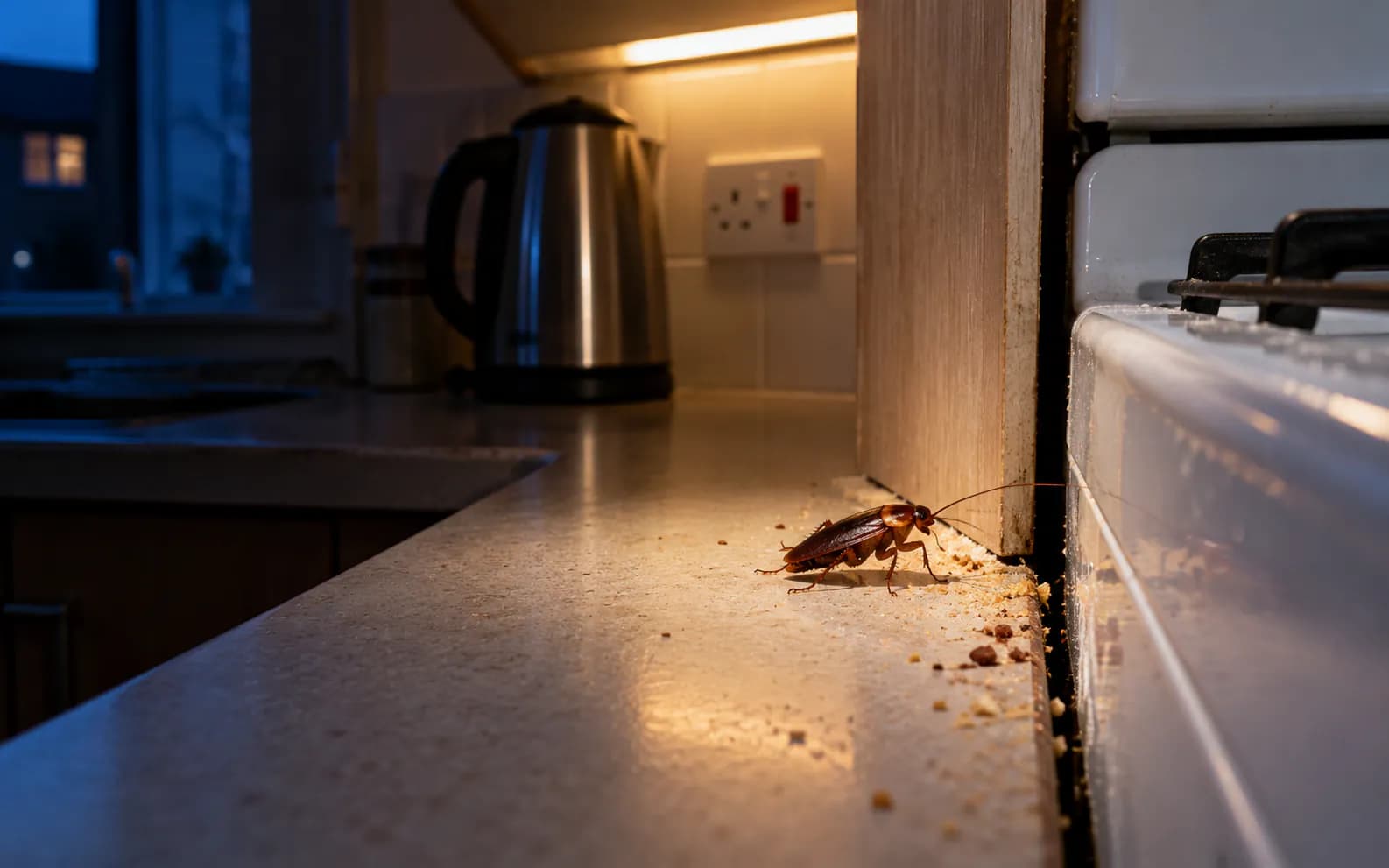
- Cockroaches are nocturnal, so a torch check after dark is the quickest way to judge how bad an infestation is.
- Gravesham Borough Council says over-the-counter insecticides are not as effective as those available to professionals, and it does not treat cockroaches itself.
- A professional treatment combines gel bait, residual insecticide and monitoring traps over 2 to 4 visits, because new nymphs hatch after the first visit.
On this page
- How do you know you have cockroaches?
- Are there cockroaches in the UK, and which ones get into homes?
- Are cockroaches dangerous?
- Where do cockroaches hide in a house?
- What can you do yourself to get rid of cockroaches?
- Why don't cockroach sprays work?
- How do professionals get rid of cockroaches?
- Who is responsible for cockroaches in a rented home?
- When to call a professional
To get rid of cockroaches, identify the species, take away their food, water and hiding places, and treat the cracks where they shelter with gel bait and a residual insecticide. Most infestations in UK homes are German or Oriental cockroaches, and both hide out of sight in the day. Our cockroach control service treats them across Nottinghamshire, Derbyshire, Leicestershire and Lincolnshire, and you can send us a photo on WhatsApp to confirm what you have found.
This guide explains how to confirm you have cockroaches, which species you are dealing with, what you can safely do yourself, and when a professional treatment is the better option.
How do you know you have cockroaches?
The surest sign is a live cockroach running for cover when you switch the light on at night. Cockroaches are nocturnal, so a light infestation can go unnoticed in daylight.
Liverpool City Council lists the signs to look for:
- insects scuttling away when a light goes on at night;
- droppings (faecal matter) along shelves, skirting boards and the backs of cupboards;
- empty egg cases in corners and crevices;
- in large infestations, a sweet smell.
Technicians also look for moulted skins: pale, cockroach-shaped cases shed as the young (nymphs) grow. A scatter of them behind a fridge or under a sink means cockroaches are breeding there, not just passing through.
Are there cockroaches in the UK, and which ones get into homes?
Yes. Coventry City Council lists three species commonly found in the UK, the German, Oriental and American cockroach, and says the German and Oriental are by far the most common. Telling those two apart matters because they live in different parts of a building.
| Feature | German cockroach | Oriental cockroach |
|---|---|---|
| Latin name | Blattella germanica | Blatta orientalis |
| Size (adult) | About 13 to 17mm | About 18 to 29mm |
| Colour | Light yellowish-brown to tan | Very dark brown to shiny black |
| Markings | Two dark parallel stripes behind the head | No stripes |
| Favourite places | Warm, humid spots near food: behind fridges and cookers, in cupboards | Cool, damp spots: drains, basements, cellars, bin areas |
| Temperature | Prefers warmth | Tolerates lower temperatures than the German cockroach |
Sizes and descriptions come from Gravesham Borough Council and Liverpool City Council, which quote slightly different lengths, so we give ranges. Our guide to German vs Oriental cockroaches goes into identification in more detail.
Are cockroaches dangerous?
Cockroaches are a genuine hygiene risk rather than a bite risk. They move between drains, bins and food, and Gravesham Borough Council lists dysentery, gastroenteritis, typhoid and food poisoning infections such as salmonella among the illnesses they can potentially spread.
That is why food businesses are expected to act quickly. If you run a kitchen, café or shop, our guide to pest control for food businesses explains what an environmental health officer will expect to see.
Where do cockroaches hide in a house?
Cockroaches hide in warm, dark, tight spaces close to food and water, which in most homes means the kitchen first and the bathroom second. Adur & Worthing Councils say they spend most of the day tucked away in cracks, around drains and near service ducting.
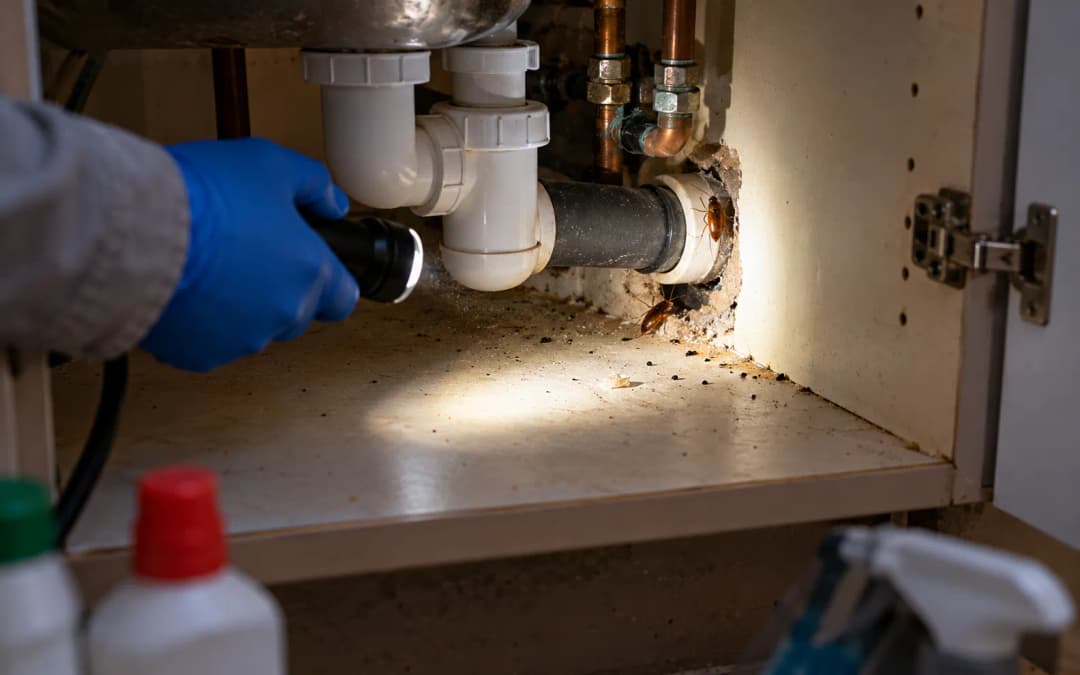
When you check, look in these places with a torch:
- behind and underneath the cooker, fridge, freezer, dishwasher and washing machine;
- inside the kick-boards (plinths) under kitchen units, where crumbs collect;
- under the sink, around waste pipes and where pipes pass through walls;
- behind loose skirting boards, tiles and bath panels;
- in boiler cupboards and around hot-water pipes, which German cockroaches favour for the warmth;
- in cellars, floor drains and bin stores, where Oriental cockroaches are more likely.
Don't forget appliances themselves. Motors in fridges and dishwashers stay warm, and cockroaches will live inside them. Note every spot where you find droppings or egg cases, because those notes make a professional treatment quicker and more accurate.
What can you do yourself to get rid of cockroaches?
You can make your home much harder for cockroaches to live in, and that helps any treatment work. Cockroaches are attracted by food, water, warmth and shelter, so the basics are to take those away.
Use this checklist the same day you spot them:
- Clear food away every night. Wipe crumbs and grease from worktops, hobs and the floor around the cooker, and don't leave dirty dishes out overnight.
- Store food sealed. Move cereals, pet food and opened packets into lidded containers.
- Empty and wash bins. Internal bins should be emptied daily and washed regularly; keep outside bins lidded.
- Fix leaks and drips. Dripping taps, leaking waste pipes and condensation trays under fridges are all water sources that keep cockroaches going.
- Seal cracks and gaps. Fill gaps around pipes, behind skirting boards and where services pass through walls, especially around drains and pipework.
- Check at night. Go into the kitchen with a torch an hour or two after dark, every few nights, and note where you see them. That tells you (and a technician) where the harbourage is.
Shop-bought gel baits can help with a very small, early problem if they are placed in the cracks where cockroaches travel, rather than in the open. Always follow the label and keep baits away from children, pets and food-preparation surfaces.
Why don't cockroach sprays work?
Aerosol sprays kill the cockroaches they hit, but most of the population is hidden in voids, behind appliances and inside cupboard carcasses where a spray never reaches. Egg cases are also protected, so a new generation hatches after the spray has worn off.
Gravesham Borough Council says over-the-counter insecticides are not as effective as the insecticides available to professional pest control services. Effective control also depends on knowing the species and where it is living, which is why a survey comes before any treatment.
A practical problem with sprays is that they can also contaminate the gel baits you have put down, and cockroaches avoid food that smells of insecticide. If you have used baits, don't spray over them.
How do professionals get rid of cockroaches?
A professional cockroach treatment combines finding the harbourage, treating it with products the public can't buy, and checking the result over several weeks. Our technicians follow the same three-step pattern on every job:
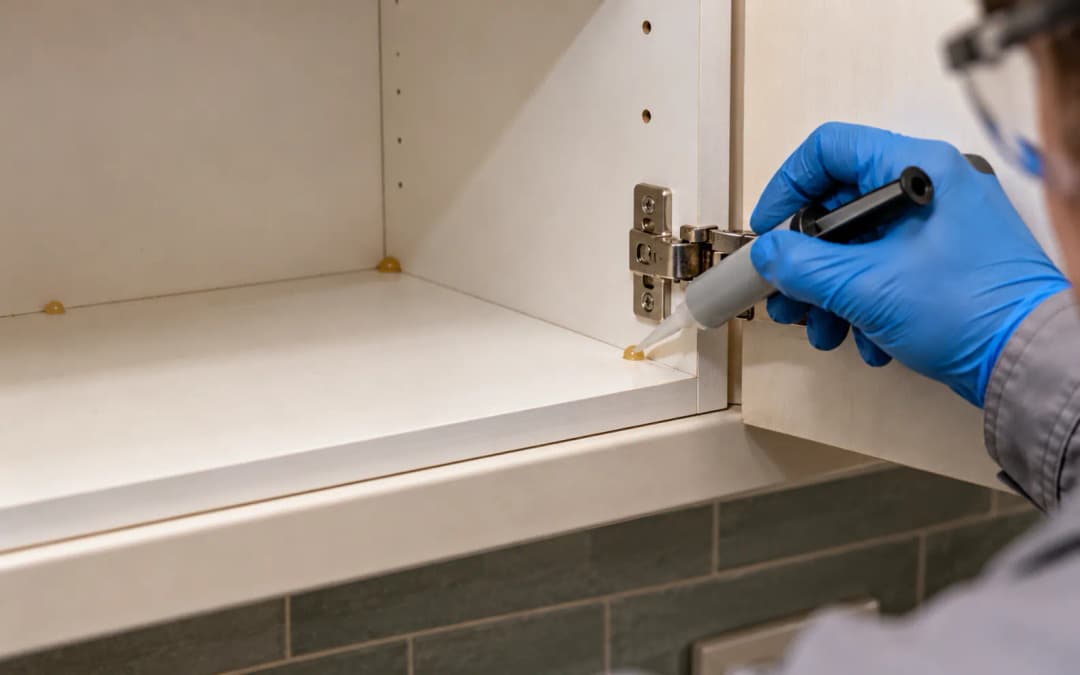
- Survey. We identify the species and find where they are living, checking behind appliances, under sinks, inside kitchen units and around pipework. Monitoring traps placed during the survey show where activity is heaviest.
- Treatment. We place professional gel baits in the cracks and crevices cockroaches use and apply a residual insecticide to harbourage areas, keeping products away from food and food-contact surfaces.
- Follow-up. Because eggs hatch after the first visit, we usually plan 2 to 4 visits. Each time we check the monitoring traps, top up bait and treat any new activity until the traps stay clear.
We'll also tell you what in the building is helping them, such as gaps behind kitchen units, leaking pipes or a damp cellar, so the problem doesn't come back.
Who is responsible for cockroaches in a rented home?
It depends on the cause and the tenancy, but a serious infestation in a rented home is usually a matter for the landlord. In England, the Housing Health and Safety Rating System includes domestic hygiene, pests and refuse among the hazards a home is assessed for, and design or disrepair that lets pests in can count against the property.
Cockroaches also move between flats through shared service ducts and pipe runs, so treating one flat in a block can fail if neighbours are infested too. In blocks we recommend that the managing agent arranges treatment of affected flats together. Council tenants should report cockroaches to their housing officer, as Gravesham advises.
When to call a professional
Call a professional if you are seeing cockroaches in daylight, finding egg cases or moulted skins, if they have survived shop-bought products, or if they are coming from a neighbouring flat or shared duct. Call straight away if you run a food business, because pests found during an inspection can affect your hygiene rating.
Urgent Pest Control's cockroach control treatment starts from £150 and uses gel baits, residual insecticide and monitoring traps over 2 to 4 visits. The price depends on the size of the infestation, the property and the time of the visit (see our pest control prices); we'll explain the likely cost before any work starts, and we use pet-safe products where possible. We travel in unmarked vehicles, which many customers and businesses prefer.
We work 7 days a week, 6am to 8pm, with emergency call-outs 365 days a year across Nottingham, Derby, Leicester, Lincoln and the surrounding counties. Call or WhatsApp 07999 935 929, or book online.
If you're not sure what you've found, our pest identifier helps, and our guide to pharaoh ants covers another insect that infests warm kitchens and flats.
Sources
Frequently Asked Questions
About the author
The Urgent Pest Control team
A family-run pest control company based in Southwell, treating homes and businesses across Nottinghamshire, Derbyshire, Leicestershire and Lincolnshire since 2020. Our guides are written from the jobs we do and checked against UK sources. More about us
Cite this guide: “How to Get Rid of Cockroaches in a UK Home”, Urgent Pest Control, 4 November 2026. https://urgentpestcontrol.uk/blog/how-to-get-rid-of-cockroaches