Springtails in the House: What They Are and How to Get Rid of Them
Springtails are tiny jumping, moisture-loving creatures that turn up in damp bathrooms, kitchens and plant pots. Why you have them and how to get rid of them.

By the Urgent Pest Control team
· 8 min read
The short answer
Springtails are tiny, wingless, moisture-loving creatures, mostly 1 to 2mm long indoors, that jump when disturbed. They feed on mould and decaying matter, don't bite and don't damage the house. To get rid of springtails, dry out the damp they depend on: fix leaks, ventilate, let plant pots dry between waterings, and vacuum up the rest.
- About 250 species of springtail live in the UK, with an estimated 100,000 in a cubic metre of topsoil, according to NatureSpot.
- They jump using a sprung, tail-like organ called the furcula, which is why they are often mistaken for fleas.
- The University of California says springtails do not bite people or pets, spread disease or damage household furnishings.
- Indoors they need moisture and soon die without it, so drying the room is the cure.
- Insecticide sprays are often no more effective than vacuuming unless the moisture problem is fixed.
On this page
- What are springtails?
- What do springtails look like in a house?
- Why do I have springtails in my house?
- Why are there springtails in a new build or extension?
- Are springtails harmful?
- How do you get rid of springtails?
- Do insecticides work on springtails?
- How do you stop springtails coming back?
- When to call a professional
Springtails are tiny, wingless, moisture-loving creatures, mostly 1 to 2mm long when you find them indoors, that spring into the air when disturbed. They feed on mould and decaying matter, they don't bite and they don't damage your home. To get rid of springtails, remove the damp they depend on: fix leaks, ventilate, dry out plant pots and seal the gaps they come in through. Where they are entering under doors and around pipes, sealing those gaps is the kind of work our pest proofing service does across Nottinghamshire, Derbyshire, Leicestershire and Lincolnshire.
Most springtail problems need a dehumidifier and a tube of sealant, not a pest controller. This guide explains how to be sure that is what you have, and what to do.
What are springtails?
Springtails are small six-legged arthropods that live in soil and leaf litter and are among the most numerous animals in any garden. NatureSpot, the wildlife recording site for Leicestershire and Rutland, says they were once considered insects but are now placed in their own group within the Hexapoda, that about 250 species are found in the UK, and that an estimated 100,000 may live in a cubic metre of topsoil.
They are tiny. The Amateur Entomologists' Society says springtails are under 5mm long and often much smaller, "about the size of a full stop", with cylindrical, slightly hairy bodies that are brown, grey or mottled. Penn State Extension says most of the kinds that enter homes are 1–2mm long, in colours from white to black.
The name comes from the way they move. Tucked under the abdomen is a forked, tail-like organ called the furcula, held under tension. When the springtail is disturbed it releases the furcula and is flung into the air. Penn State Extension says this can propel a springtail up to 100 times its own body length.
What do springtails look like in a house?
Indoors, springtails look like specks of grey, white or dark dust that jump when you touch them. You usually notice them in groups: a scatter of dots in a bath or sink, along a damp windowsill, around the base of a toilet or floating on the water in a plant saucer.
The University of California's pest management programme notes that because they jump when disturbed they are sometimes mistaken for fleas. This table separates the two, and a few other tiny household insects.
| Springtail | Flea | Booklouse | |
|---|---|---|---|
| Size | Mostly 1–2mm indoors | About 2mm | About 1mm |
| Colour | White, grey or dark | Dark reddish-brown | Pale grey or fawn |
| Jumps? | Yes | Yes | No, but runs quickly |
| Where found | Sinks, baths, damp walls, plant pots | Pets, carpets, pet bedding | Food cupboards, books, damp paper |
| Bites? | No | Yes | No |
| What it tells you | A damp spot nearby | An animal host nearby | Humidity in a cupboard or room |
For the others, see our guides on what fleas look like and booklice. If you still aren't sure, photograph a few on white paper and try our pest identifier.
Why do I have springtails in my house?
You have springtails because part of the house is damp enough for them to survive. Penn State Extension says they need high-humidity habitats and feed on moulds, mildew, fungi, bacteria and decaying plant material. The University of California adds that when outdoor conditions dry out they seek damp areas, and that indoors they soon die unless they find moisture.
The common indoor sites, drawn from both sources, are:
- kitchen and bathroom sinks, basins and baths, where they often get trapped;
- floor drains, damp cellars and the voids under suspended floors;
- wall voids where there is a leak or condensation;
- the compost of overwatered houseplants;
- bathrooms and shower rooms with poor ventilation and mould on the sealant.
They get in from outside through small gaps. Penn State Extension lists gaps under doors, at sill level and around windows; the University of California adds vent pipes, cracks and potted plants brought indoors, and notes that springtails are attracted to light.
Weather plays a part. Penn State Extension says both dry spells and saturating rain push springtails towards homes in search of better conditions, which is why they can appear suddenly in large numbers on a patio, around a door threshold or in a conservatory.
Why are there springtails in a new build or extension?
New builds get springtails because building materials can be closed in while still wet. Penn State Extension says springtails can live inside the walls of new homes if rain soaked the floor and walls before they were covered and mould then developed.
Since springtails indoors die without moisture, the answer in that situation is to help the building dry: ventilate well and keep steady background heating on. If they persist once the building has dried, look for an active source of water such as a leaking pipe or a failed seal.
Are springtails harmful?
No. The University of California says springtails do not bite humans or pets, spread disease or damage household furnishings. Outdoors they are useful: NatureSpot says most feed on decaying plant matter and microbes, which is part of how soil recycles nutrients.
There are two caveats. Some species can chew the roots and leaves of seedlings, the University of California says, though mature plants are not significantly harmed. And a room damp enough for springtails is damp enough for mould. Government guidance on damp and mould says damp and mould mainly affect the airways and lungs and can also affect the eyes and skin. The springtails are harmless; the damp they point to is worth fixing.
How do you get rid of springtails?
Dry out the places they are living, then remove the ones you can see. Work through this checklist.
- Find the damp. Look where the springtails are thickest: under the sink, behind the bath panel, around a leaking window, beside an overwatered plant.
- Repair leaks. Fix dripping joints, failed bath and shower seals and leaking gutters or downpipes that are wetting a wall.
- Ventilate and dry. Use extractor fans in the kitchen and bathroom, open windows after bathing and cooking, and run a dehumidifier or fan in the affected room. Penn State Extension recommends lowering indoor humidity with dehumidifiers, especially in bathrooms and showers.
- Remove mould. Clean mould from sealant, tiles and window frames, since it is what they are feeding on.
- Sort out houseplants. Water thoroughly, then let the compost dry before watering again, and don't leave water standing in saucers.
- Vacuum or rinse them away. The University of California suggests sweeping or vacuuming springtails up, or washing them down the sink or bath.
- Clear the outside wall. Move damp leaves, mulch and stacked pots away from the base of the walls and doors.
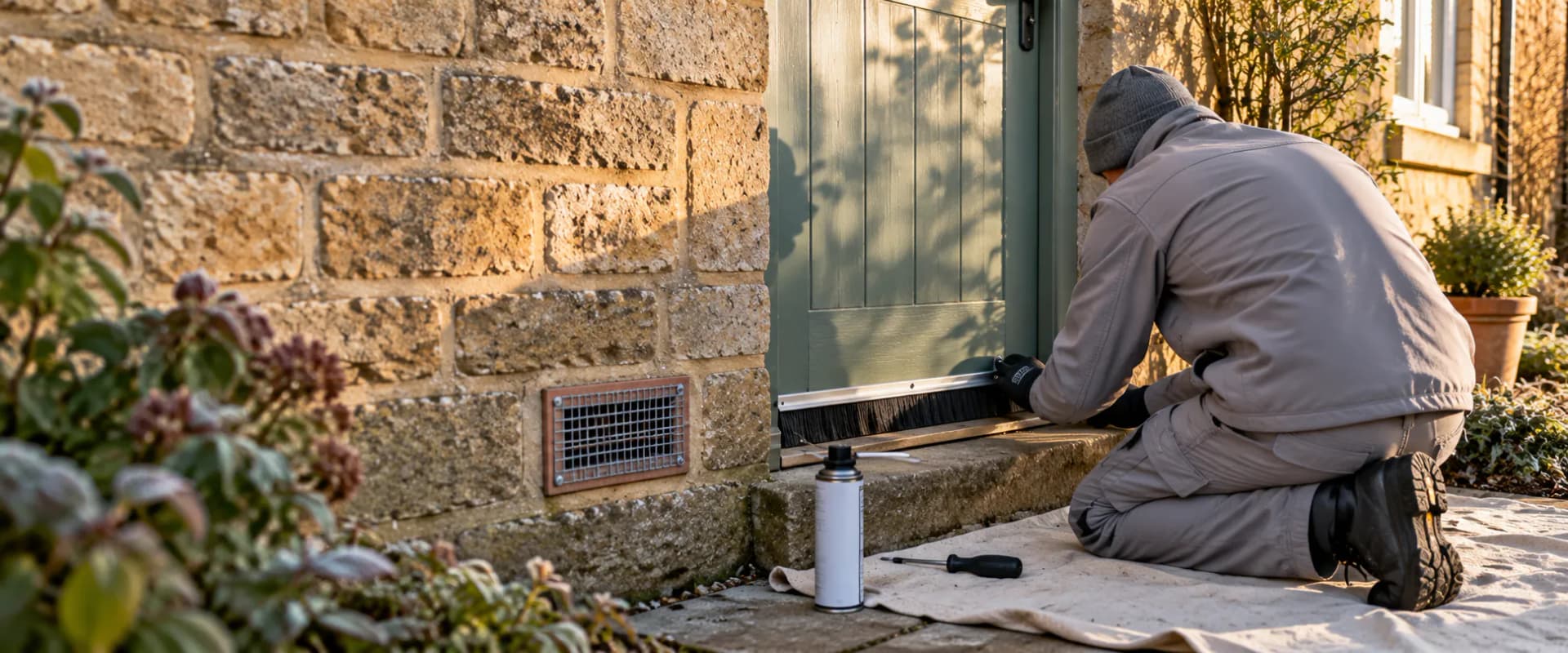
- Seal the gaps. Fit draught or bristle strips to the bottom of doors, and seal cracks around frames and pipe entries.
Numbers should fall as the area dries; if they don't, there is still a source of moisture to find.
Do insecticides work on springtails?
Not well, and not for long. The University of California says sprays are often no more effective than vacuuming, may need repeating, and give only temporary relief if the moisture and organic matter are not dealt with. It also warns never to pour or spray insecticides down drains.
Penn State Extension mentions that a pest management professional can apply insecticide to the outside foundation and perimeter of a building in a severe case, but puts humidity control and mould removal first. Spraying a bathroom while the extractor fan is broken is money wasted.
How do you stop springtails coming back?
Keep the house dry and the gaps closed. Government guidance on damp and mould recommends working extractor fans in kitchens and bathrooms, keeping trickle vents open and unblocked, opening windows when cooking or bathing, closing internal doors while you do, and keeping the home adequately heated.
Beyond that:
- re-seal baths, showers and sinks when the sealant fails;
- keep gutters and downpipes clear so walls stay dry;
- avoid overwatering houseplants, and check new plants before bringing them in;
- keep mulch, leaf piles and compost bins away from the house walls;
- keep door thresholds and air bricks clear of soil and leaves.
If you rent and the damp is caused by a building fault, tell your landlord in writing. The government guidance says homes must be free of serious damp and mould hazards under the Housing Act 2004, and that damp is caused by building faults, poor ventilation and inadequate heating rather than by tenants' normal activities.
When to call a professional
Call a professional if you can't tell whether you have springtails, fleas or something else, if the insects are biting (springtails don't, so something else is present), if they are appearing in several rooms and you can't find any damp, or if they are coming in through gaps you can't seal yourself. For the damp itself, a plumber, roofer or damp surveyor is usually the right trade, and we'll say so if that is what we find.
Urgent Pest Control can identify what you have from a clear photo or a visit. Our pest proofing service closes entry points with bristle strips, steel mesh, air brick covers and cement; every proofing job is quoted after a survey, so we'll explain the likely cost before any work starts, and the final price depends on the job. If the insects turn out to be silvery and fast rather than jumping, see our guide to silverfish, which like the same conditions.
We cover Nottingham, Derby, Leicester, Lincoln and the surrounding counties, 7 days a week from 6am to 8pm, with emergency call-outs 365 days a year. Book online or call 0330 822 7460.
Sources
Frequently Asked Questions
About the author
The Urgent Pest Control team
A family-run pest control company based in Southwell, treating homes and businesses across Nottinghamshire, Derbyshire, Leicestershire and Lincolnshire since 2020. Our guides are written from the jobs we do and checked against UK sources. More about us
Cite this guide: “Springtails in the House: What They Are and How to Get Rid of Them”, Urgent Pest Control, 18 November 2026. https://urgentpestcontrol.uk/blog/springtails