Woodlice in the House: Why They Come In and How to Get Rid of Them
Woodlice indoors are harmless, but a steady supply usually points to damp or an easy way in. Why they come in, where to look and how to stop them.

By the Urgent Pest Control team
· 8 min read
The short answer
Woodlice in the house are harmless land crustaceans that wander in from the garden. The RHS says they are unlikely to survive long indoors unless they find a damp place to shelter, so regular sightings usually point to damp or an easy way in. Fix the moisture, clear debris from the outside walls and seal the gaps.
- Woodlice are crustaceans, not insects; the RHS counts 30 species in Britain, five of them common in gardens.
- The RHS says woodlice are unlikely to survive for long indoors unless they find a damp place to shelter.
- Sheffield City Council says woodlice only live indoors where it is damp, such as cellars and around sink waste pipes.
- The BPCA says no treatment is necessary: put right any dampness and remove infested vegetation first.
- North Lanarkshire Council notes that woodlice do not breed indoors, so the supply is coming from outside.
On this page
- What are woodlice?
- Why are there woodlice in my house?
- Do woodlice mean you have damp?
- Where are you finding them, and what does it mean?
- Are woodlice harmful?
- How do you get rid of woodlice in the house?
- Do you need insecticide for woodlice?
- How do you stop woodlice coming back?
- When to call a professional
Woodlice in the house are harmless land crustaceans that have wandered in from the garden. The RHS says they are unlikely to survive for long indoors unless they find a damp place to shelter, so if you keep finding live ones, something is damp or there is an easy way in. Fix the moisture, clear the debris against the outside wall and seal the gaps; Urgent Pest Control's pest proofing service closes off entry points at doors, pipes and air bricks across Nottinghamshire, Derbyshire, Leicestershire and Lincolnshire.
Most woodlice problems do not need a pest controller at all. This guide explains what woodlice are, why they are in your house, what they tell you about the building and how to stop them.
What are woodlice?
Woodlice are crustaceans, not insects: relatives of crabs and shrimps that live on land. The RHS describes them as terrestrial crustaceans in the order Isopoda, with 30 species in Britain, five of which are often found in gardens. The BPCA's guide, published in PPC magazine, describes oval, grey, segmented bodies with 14 legs and prominent antennae, and notes the other names you may know them by: slaters, sow-bugs and pill-bugs.
Sources differ a little on size. The RHS says up to 1 cm, the BPCA says 10–15 mm and North Lanarkshire Council gives 5–17 mm. In practice, anything grey, armoured and under 2 cm that rolls up or scuttles away from the light is a woodlouse. The pill woodlouse is the one that rolls into a tight ball when disturbed.
They need moisture to live. The RHS says woodlice shelter in dark, damp places, especially where decaying plant material builds up, and feed largely on damp, decomposing plant material. North Lanarkshire Council adds that they avoid light and are mostly active at night, which is why you tend to find them first thing in the morning.
Why are there woodlice in my house?
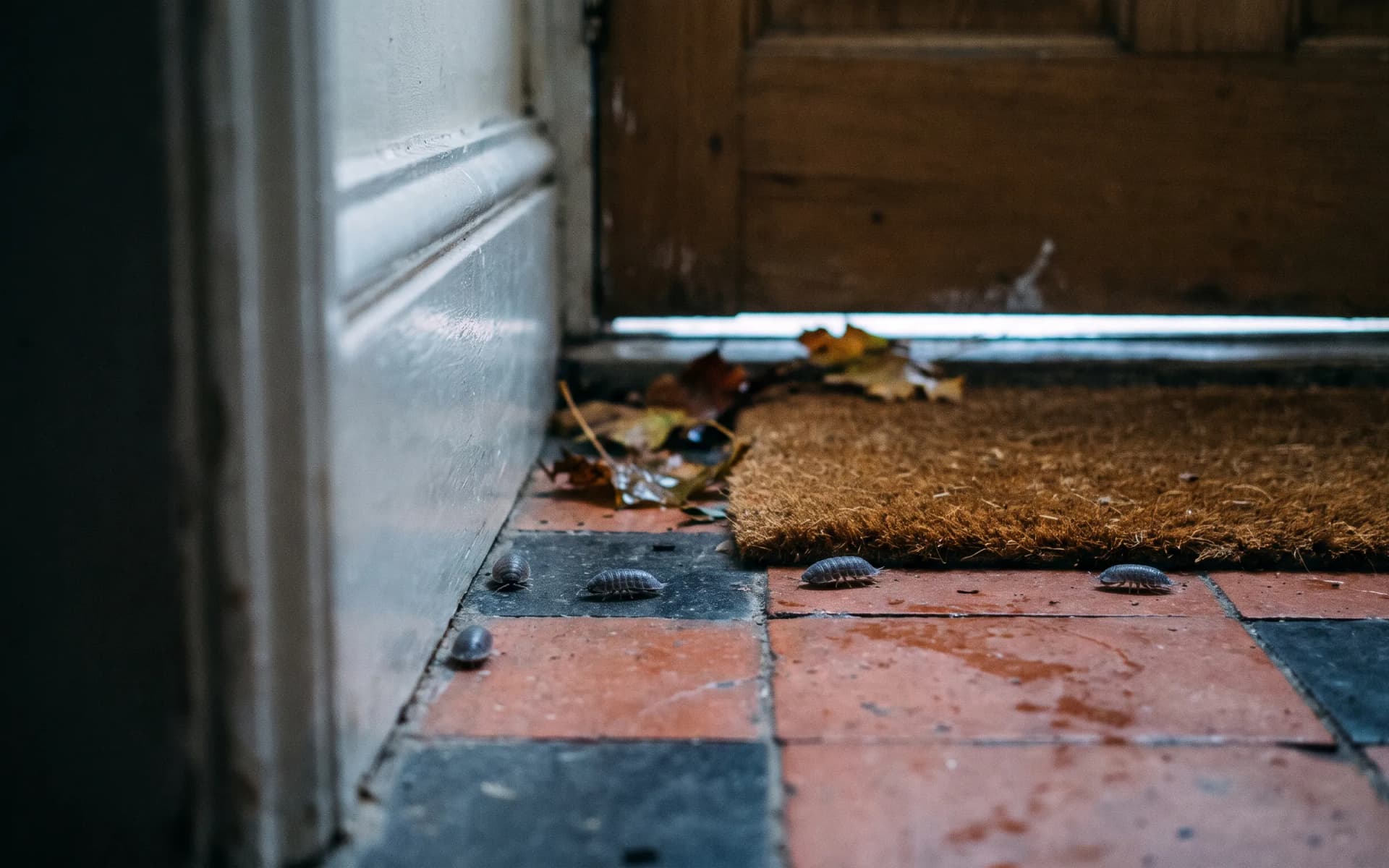
Because they live right outside it and something has let them in. The BPCA says three species enter houses from the garden. They typically live under stones, clumps of plants, logs or doormats, and from there they crawl into dark corners of a house.
Two things decide whether you notice them:
- How many are living against the wall. Leaf litter, mulch, log piles, pots and doormats pushed up against the house give woodlice a home within a few centimetres of the door.
- Whether anything inside is damp. A woodlouse that walks into a dry, heated room does not last. One that finds a damp cellar, a leaking waste pipe or a wet skirting board can stay.
North Lanarkshire Council notes that woodlice do not breed indoors. So the woodlice in your house are arriving from outside, not multiplying inside, and that is good news: cut off the route and the supply stops.
Do woodlice mean you have damp?
Regular live woodlice in the same spot usually do. Sheffield City Council puts it plainly: woodlice only inhabit areas indoors "where suitable damp conditions exist such as cellars and around sink waste pipes", and resolving the problem long-term "will involve removing the underlying causes of the damp".
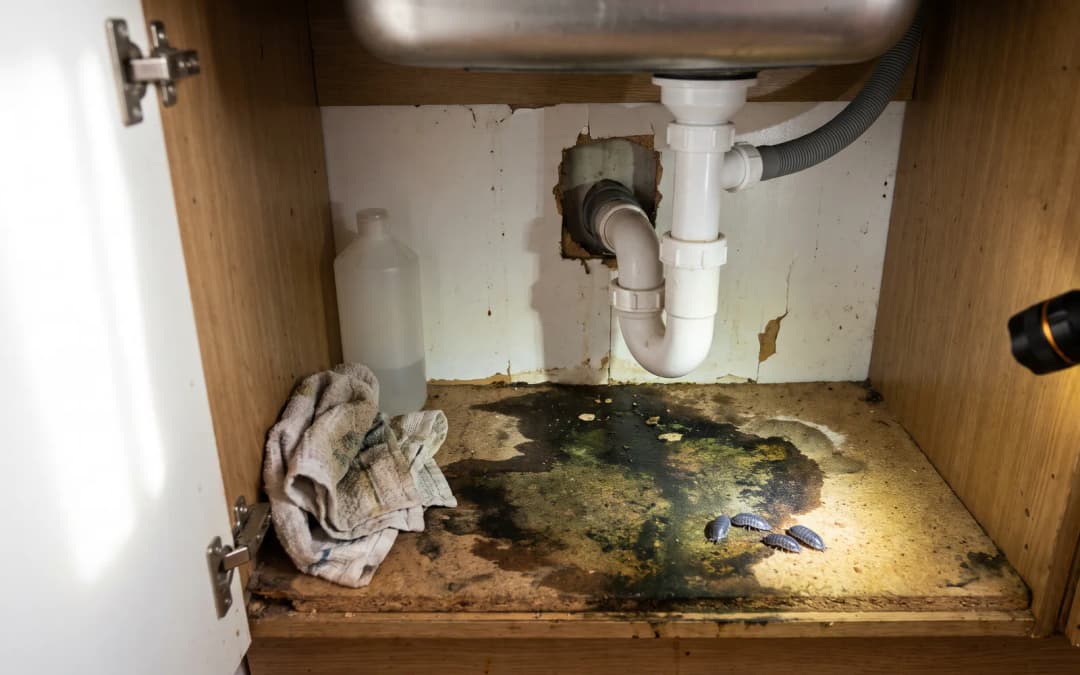
That makes woodlice a useful warning. The BPCA describes them as feeders on rotten wood, so a cluster at one end of a skirting board, under a window or beside a door frame is worth a closer look at the timber and the wall behind it. A pest controller can tell you where the woodlice are getting in; a persistent damp problem needs a builder, plumber or damp surveyor.
The odd dead, dried-out woodlouse on a carpet is different. That is a stray that came in overnight and did not survive, exactly as the RHS describes.
Where are you finding them, and what does it mean?
Where the woodlice turn up tells you most of what you need to know. Use this table to narrow it down.
| Where you find them | What it usually points to | What to do |
|---|---|---|
| Hallway or by the back door | Walking in under the door from doormats, pots or leaf litter | Clear the threshold outside; fit a bristle strip or draught excluder |
| Under the kitchen sink or by the washing machine | Damp around a waste pipe or a slow leak | Find and fix the leak; dry the cupboard; seal the pipe hole |
| Cellar or under-stairs cupboard | Damp conditions at or below ground level | Improve ventilation; check walls and floor for damp |
| Along one skirting board or under a window | Damp plaster or rotting timber behind it | Check outside for a blocked gutter, high soil level or failed pointing |
| Around patio doors or a conservatory | Debris, planting or decking tight against the frame | Clear back vegetation; check the seals and threshold |
| One or two dead ones in a dry room | Strays that wandered in and dried out | Sweep them up; nothing else needed |
Are woodlice harmful?
No. The BPCA calls them harmless feeders on rotten wood and other vegetable matter, and none of the RHS or council guidance we checked lists any risk to people or pets. Their food is damp, decaying plant material, not sound, dry timber.
In the garden they are useful. The RHS says woodlice are an important part of nutrient recycling in a healthy garden and do not usually damage healthy plants, though they occasionally nibble very soft tissue such as seedlings. So the aim is to keep them out of the house, not to wipe them out of the garden.
How do you get rid of woodlice in the house?
Remove the ones you can see, then take away the damp and the way in. The BPCA's advice is that no treatment is necessary, but if woodlice persist you should put right any dampness and remove infested vegetation. In order:
- Clear up what is there. Sweep or vacuum up live and dead woodlice. North Lanarkshire Council says control indoors may be achieved by cleaning. Odd strays can simply go back outside.
- Find the damp. Check under sinks, behind the washing machine, around waste pipes and at the base of external walls. Fix leaks and dry the area out.
- Clear the outside wall. North Lanarkshire Council advises removing leaves, grass clippings, mulch, wood, boards and stones close to affected buildings, since these harbour woodlice. Sheffield City Council says the same about debris, wood and bricks at the base of walls.
- Move pots and doormats. Planters and mats sitting against the threshold are a favourite shelter. The BPCA singles out rockeries as another.
- Seal the gaps. North Lanarkshire Council recommends repairing and sealing cracks and openings in walls and around doors and window frames.
- Give it a fortnight. With the route closed and the damp gone, numbers indoors should fall away, because woodlice do not breed inside.
Do you need insecticide for woodlice?
Usually not. An insecticide kills the woodlice it touches but does nothing about the damp that keeps them alive or the gap they walked through, so they come back.
If you do use one, follow the councils' advice. The BPCA suggests an insecticidal powder or long-lasting spray around door thresholds or other points of entry, using a product labelled for woodlice. Sheffield City Council advises applying a crawling-insect spray along wall and floor junctions, into cracks under skirting boards and over door thresholds, and repeating it every one or two weeks. It also gives a clear warning: never use insecticides in the house that are intended solely for outdoor use. Always follow the label.
How do you stop woodlice coming back?
Keep the base of the house dry and clear, and close the gaps at ground level. A short checklist for a dry weekend:
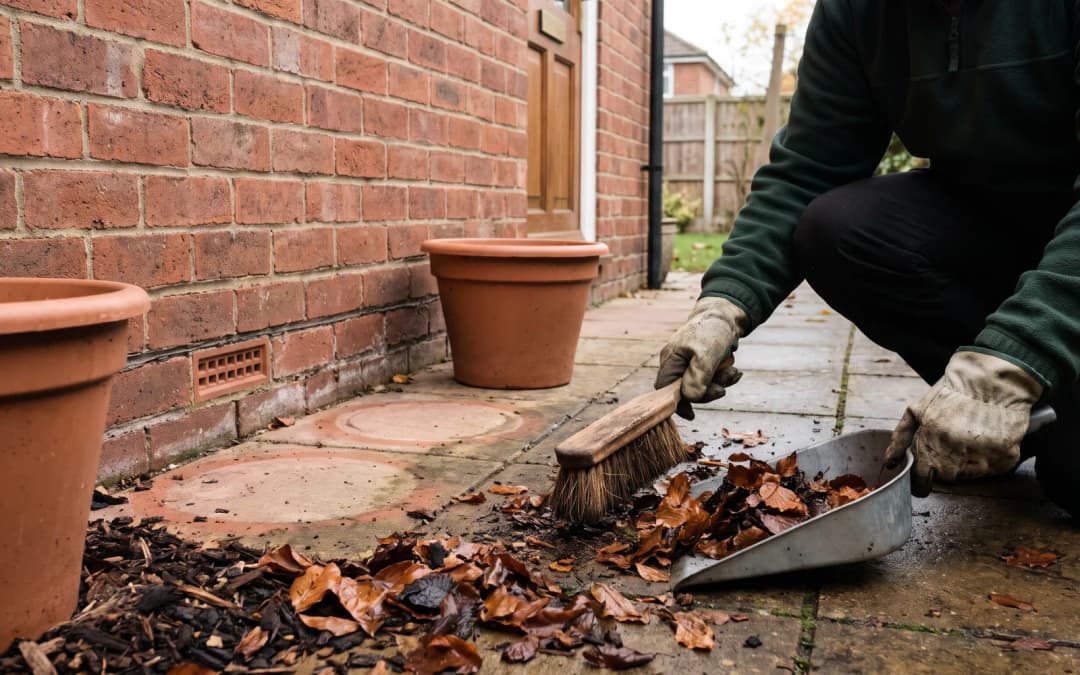
- keep a clear strip between planting, mulch or log piles and the house wall;
- check that gutters and downpipes are not soaking the wall;
- make sure soil and paving have not been built up over the damp-proof course or air bricks;
- fit bristle strips to the bottom of external doors that have a visible gap;
- seal round waste pipes and cables where they pass through the wall;
- cover damaged air bricks with mesh, but never block them, because they ventilate the floor;
- keep cellars and under-sink cupboards aired and dry.
If woodlice are not the only thing you are finding, the same damp conditions suit other household pests. If what you are seeing is silvery and fast-moving, see our guide to silverfish; for tiny brown beetles in damp or newly plastered rooms, see biscuit and plaster beetles. Our pest identifier can help if you are not sure.
When to call a professional
Call a professional if woodlice keep appearing in numbers after you have cleared the outside wall and dried out the obvious damp, if you cannot find where they are getting in, or if they are turning up in a business where customers will see them. The BPCA recommends a professional pest control company for heavy infestations.
Be realistic about what a pest controller can do. We can identify what you have, trace the entry points and seal them: our pest proofing service uses bristle strips, mesh air brick covers and sealed pipe holes. If the real cause is rising or penetrating damp, we will tell you so, because that needs a builder or damp specialist and no amount of spray will fix it. We'll explain the likely cost before any work starts; our pest control prices page shows what affects it.
We cover Nottingham, Derby, Leicester, Lincoln and the surrounding counties, 7 days a week from 6am to 8pm. Book online or call 0330 822 7460.
Sources
Frequently Asked Questions
About the author
The Urgent Pest Control team
A family-run pest control company based in Southwell, treating homes and businesses across Nottinghamshire, Derbyshire, Leicestershire and Lincolnshire since 2020. Our guides are written from the jobs we do and checked against UK sources. More about us
Cite this guide: “Woodlice in the House: Why They Come In and How to Get Rid of Them”, Urgent Pest Control, 18 November 2026. https://urgentpestcontrol.uk/blog/woodlice-in-the-house