Ladybirds in the House: Why Harlequin Ladybirds Come Indoors
Clusters of ladybirds around your windows in autumn are usually harlequins looking for somewhere to hibernate. Why they come in and what to do.

By the Urgent Pest Control team
· 7 min read
The short answer
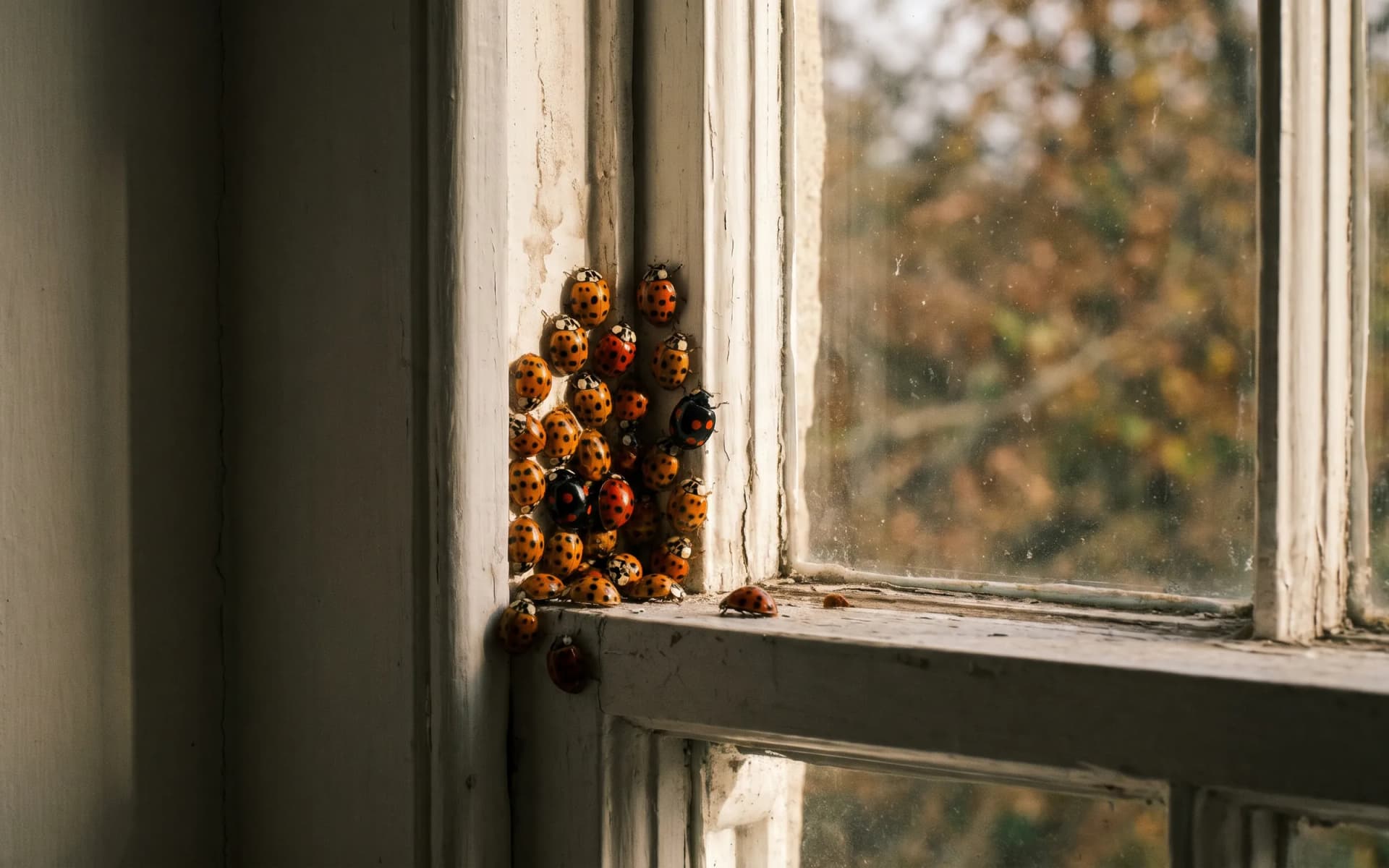
Ladybirds in the house in autumn are usually harlequin ladybirds looking for somewhere sheltered to hibernate. They gather in clusters around window frames and get in through gaps. The Natural History Museum says they are nothing to panic about: they are harmless to people, so move them outside gently and seal gaps around windows and doors.
- The harlequin ladybird, Harmonia axyridis, became established in Britain in 2004, according to the RHS.
- The UK Ladybird Survey describes harlequins as large and round, 7–8 mm long, with almost always brown legs; under 5 mm is definitely not a harlequin.
- The Natural History Museum says harlequins hibernate in clusters and get in through gaps along loose-fitting windows.
- The fungus some harlequins carry cannot infect humans, the Natural History Museum says.
- The RHS says it is not desirable nor necessary to attempt to control harlequin ladybirds.
On this page
- Why are there ladybirds in my house?
- What is a harlequin ladybird?
- How do you identify a harlequin ladybird?
- Are ladybirds in the house harmful?
- Are harlequin ladybirds bad for native ladybirds?
- How do you get ladybirds out of the house?
- How do you stop ladybirds coming in?
- Is it ladybirds or cluster flies?
- When to call a professional
Ladybirds in the house in autumn are usually harlequin ladybirds looking for somewhere sheltered to hibernate. They gather in clusters around window frames and in the corners of rooms, and get in through gaps along loose-fitting windows. They are harmless to people, so the advice from the Natural History Museum is to help them back outside and seal the gaps. Where the gaps are bigger than a tube of sealant can deal with, Urgent Pest Control's pest proofing service covers homes across Nottinghamshire, Derbyshire, Leicestershire and Lincolnshire.
A pest controller is rarely needed for ladybirds. This guide explains what they are doing in your house, how to tell a harlequin from a native ladybird, and what to do about them.
Why are there ladybirds in my house?
They have come in to spend the winter. The Natural History Museum explains that harlequin ladybirds usually hibernate in clusters. In their native range they would use caves and hollow trees; in Britain, houses, sheds and outbuildings do the job.
Sussex Wildlife Trust describes the same pattern: with the onset of autumn, ladybirds gather in clusters on the insides of windows and in the corners of sheds as they prepare to hibernate. The RHS says most adult ladybirds overwinter in sheltered places, often in large groups, that this can include inside buildings, and that harlequins in particular can gather in very large numbers.
The usual picture is a mild, sunny day in October or November, a cluster on a window frame or in the corner of a ceiling, and more arriving through the afternoon.
What is a harlequin ladybird?
The harlequin ladybird, Harmonia axyridis, is a non-native ladybird that is now one of the most common in Britain. The Natural History Museum says it is native to eastern Russia, China and Japan and was introduced elsewhere as a natural control for aphids and scale insects. The RHS says it became established in Britain in 2004 and is now one of the most commonly seen ladybirds.
Britain has plenty of native ladybirds too: the RHS counts more than 40 species as resident. Sussex Wildlife Trust calls the harlequin one of the most invasive insects in the world.
How do you identify a harlequin ladybird?
Look for a large, round ladybird with brown or orange legs. Colour and spots are no help on their own, because harlequins vary so much. The UK Ladybird Survey's identification guide describes them as:
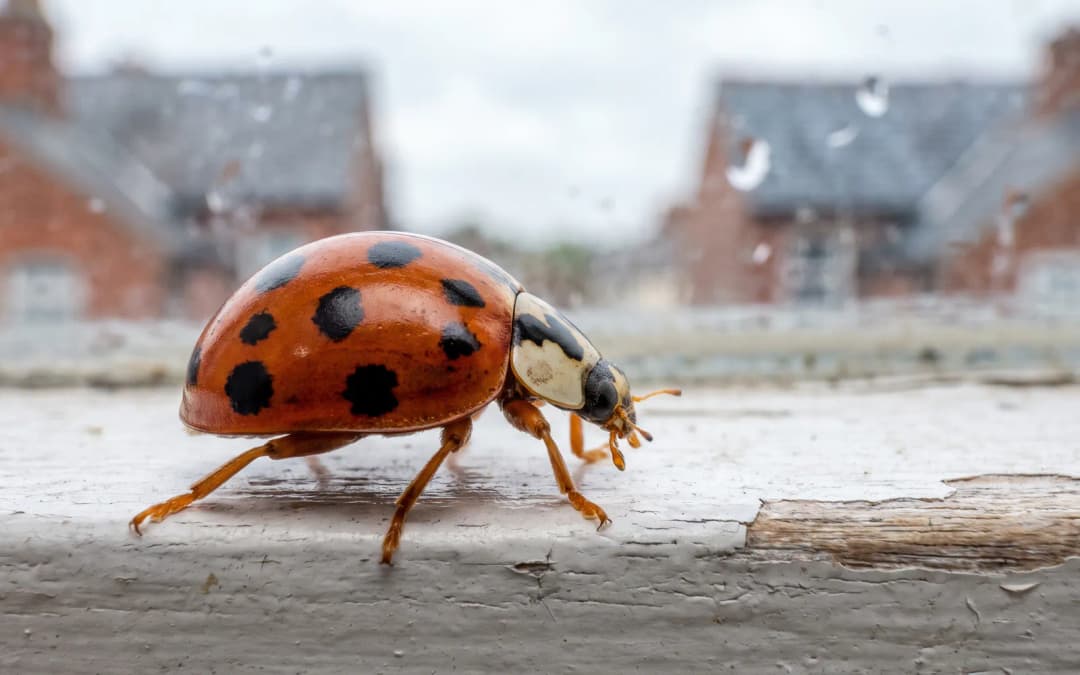
- large and round, 7–8 mm long;
- pale yellow-orange, orange-red, red or black, with anything from 0 to 21 spots;
- most often orange with 15–21 black spots, or black with two or four orange or red spots;
- white or cream behind the head, with dark spots, two curved lines, an M-shaped mark or a solid dark block;
- almost always brown-legged.
The Natural History Museum adds that the easiest check is the orange legs, and that most harlequins are orange underneath, where native species are black.
| Feature | Harlequin ladybird | 7-spot ladybird | Something else |
|---|---|---|---|
| Size | 7–8 mm, round | Similar or slightly smaller | Under 5 mm: definitely not a harlequin |
| Colour | Orange, red, yellow-orange or black | Red | Varies |
| Spots | 0 to 21, very variable | Exactly 7 black spots | White or cream spots point to other native species |
| Legs and underside | Brown or orange legs; mostly orange underneath | Black underneath | Varies |
The size rule is the Ladybird Survey's: if it is less than 5 mm long, it is definitely not a harlequin. Very small, round, mottled beetles on windowsills are more likely to be carpet beetles, which are a different problem; see our guide to carpet beetles or use the pest identifier.
Are ladybirds in the house harmful?
No. Max Barclay, Senior Curator of Beetles at the Natural History Museum, says of harlequins indoors: "These aren't anything to panic about." Specifically:
- Bites. The museum says they occasionally bite if provoked, but the bite is harmless and causes only minor irritation.
- The "STD" story. Some harlequins carry a fungus called Laboulbenia, which shows as scales on the wing cases. The museum notes that native ladybirds carry it too, and that humans can't be infected.
- Your home. The RHS says harlequins feed mainly on aphids and other insects, not on anything in your house.
The one practical nuisance is staining. The Natural History Museum says that when squashed, harlequins release a yellow defensive fluid that can stain walls and smells slightly. That is the best reason not to swat them.
Are harlequin ladybirds bad for native ladybirds?
They are a concern, though the picture is mixed. The Natural History Museum says harlequins reproduce quickly, compete with native ladybirds for aphids, and eat other ladybirds' eggs and larvae. Sussex Wildlife Trust says this may be contributing to the decline of the native two-spot ladybird, and the RHS says there is some evidence that harlequins have reduced some native species by competing for food.
The museum also notes that the impact on some native species may be limited, and that disease and native predators, including a parasitic wasp, are helping to keep harlequin numbers in check.
None of this means you should kill the ones in your house. The RHS says it is "not desirable nor necessary to attempt to control this insect", and Sussex Wildlife Trust warns that native species can be mixed into large clusters.
How do you get ladybirds out of the house?
Gently, and without squashing them. The Natural History Museum's advice is to help them find their way out.
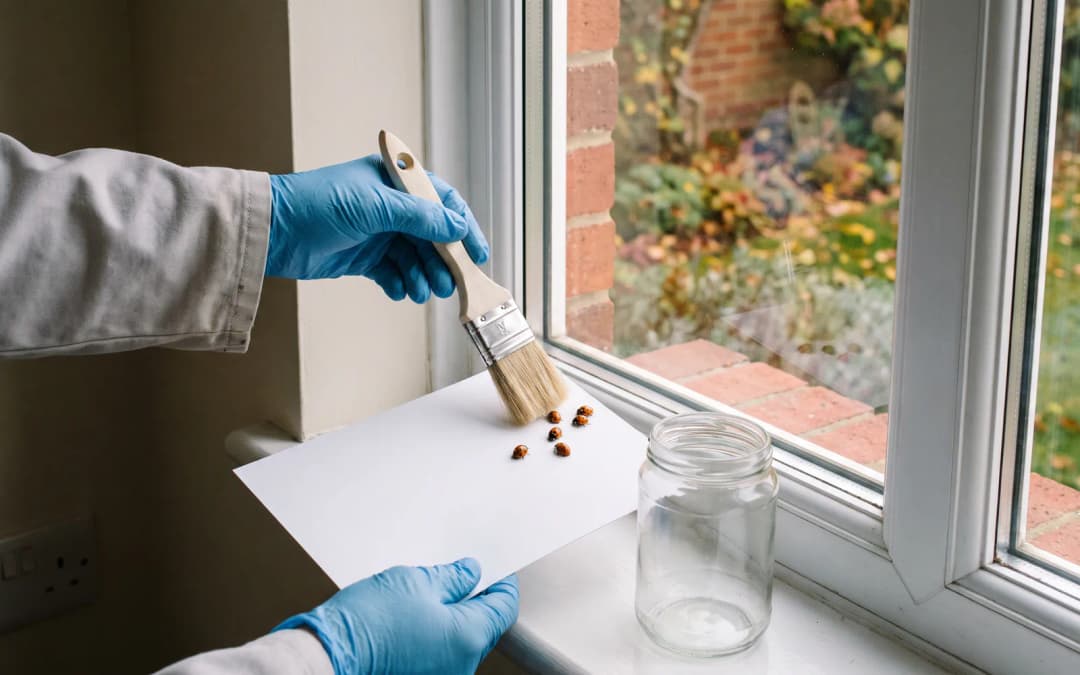
- Leave a small cluster alone if it is not bothering you. In a shed, garage, porch or unused room they will sit quietly through the winter.
- Sweep them into a box. Use a soft brush and a piece of card, or a jar. Do not crush them, or you will get the yellow staining.
- Put them somewhere sheltered outside. A shed, log pile or dense hedge gives them a chance of surviving the winter.
- Wipe down the area. Clean the window frame or wall where they were gathered.
- Close the gap they used. Otherwise more will follow.
Fly spray is a poor answer. It leaves you with dead ladybirds in the window frame and does nothing about the gap they came through.
How do you stop ladybirds coming in?
Seal the gaps around windows and doors. The Natural History Museum says harlequins typically get in through gaps along loose-fitting windows, and recommends sealing and insulating doors and windows to keep them out.
A checklist for the sunny side of the house, where ladybirds gather:
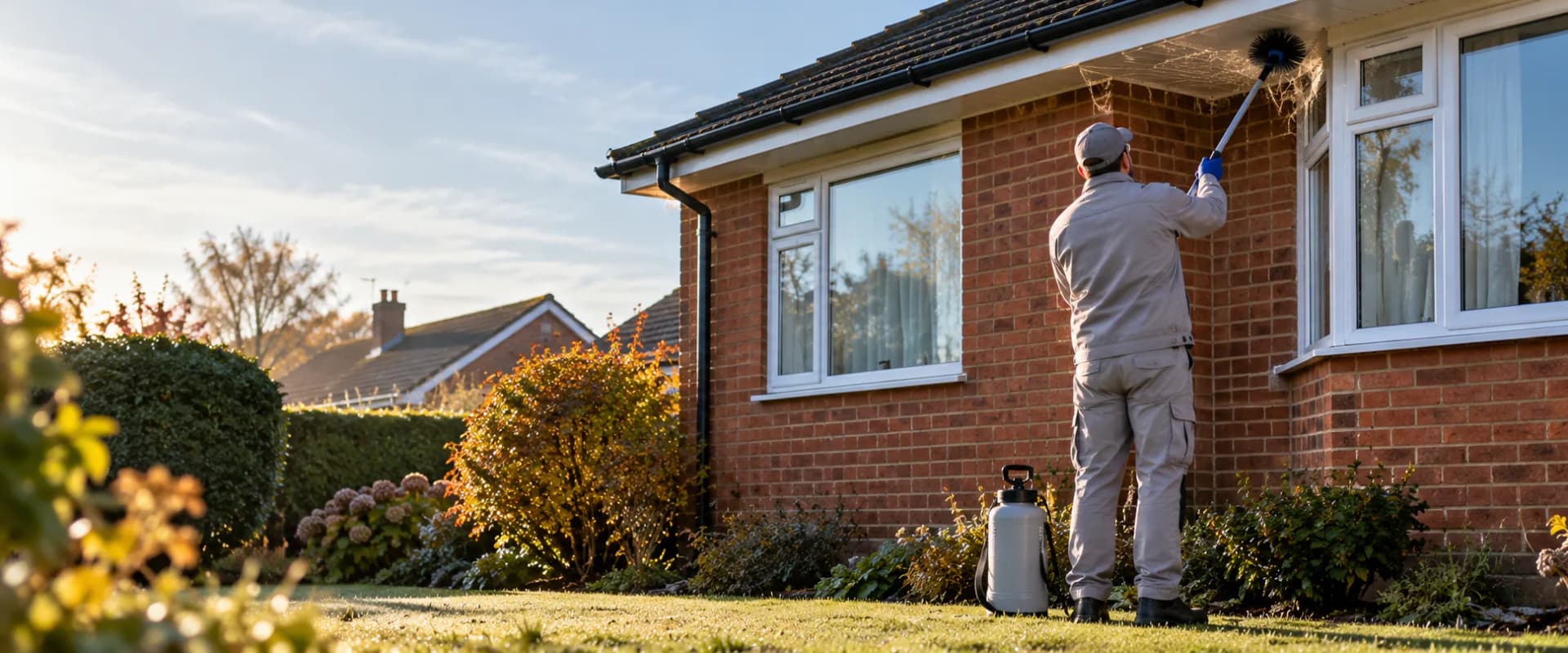
- check the seals and beading on window frames, especially older timber and sash windows;
- fit brush strips to sash windows and draught strips to loose casements;
- seal gaps where the frame meets the brickwork;
- keep upstairs windows closed on warm autumn afternoons;
- check the loft hatch closes snugly, so ladybirds in the roof space stay there;
- fit a draught excluder or bristle strip to doors with a visible gap.
Sussex Wildlife Trust suggests giving ladybirds somewhere better to go: leave flowerbeds untidied until spring, because seed heads and leaf litter provide winter shelter, or drill holes in a log and leave it near plants that need help with aphids.
Is it ladybirds or cluster flies?
Both gather at windows in autumn. Ladybirds are round, domed beetles that sit still in a tight group. Cluster flies are dark, sluggish flies that collect in lofts and at upstairs windows in the colder months, often in the same buildings year after year. If it is flies you are seeing, read our guide to cluster flies; for other flies indoors, see how to get rid of flies in the house.
When to call a professional
For ladybirds alone, you almost never need to. They are harmless, and both the RHS and the Natural History Museum advise against trying to control them. We would rather tell you that than sell you a treatment you do not need.
It is worth calling if the same gaps are letting in other things, such as cluster flies, wasps or mice, if you are not sure the insects are ladybirds at all, or if you want the gaps around doors, air bricks and pipes professionally sealed. Our pest proofing service does that, and we'll explain the likely cost before any work starts; see our pest control prices page for what affects it.
We cover Nottingham, Derby, Leicester, Lincoln and the surrounding counties, 7 days a week from 6am to 8pm. Book online or call 0330 822 7460.
Sources
Frequently Asked Questions
About the author
The Urgent Pest Control team
A family-run pest control company based in Southwell, treating homes and businesses across Nottinghamshire, Derbyshire, Leicestershire and Lincolnshire since 2020. Our guides are written from the jobs we do and checked against UK sources. More about us
Cite this guide: “Ladybirds in the House: Why Harlequin Ladybirds Come Indoors”, Urgent Pest Control, 18 November 2026. https://urgentpestcontrol.uk/blog/ladybirds-in-the-house