How to Get Rid of Spiders in the House (and Keep Them Out)
How to get rid of spiders in the house: why they appear in autumn, how they get in, what keeps them out, and whether UK house spiders are dangerous.

By the Urgent Pest Control team
· 6 min read
The short answer
To get rid of spiders, block the ways they get in and remove what keeps them there. Seal gaps around doors and windows, fit draught excluders, vacuum up webs and egg sacs, and reduce the insects they feed on. The Natural History Museum says no deterrent device is effective. Most UK house spiders are harmless.
- The Natural History Museum says only about 12 of the UK's 650 or so spider species have been recorded biting people.
- House spiders are seen most from August to October, when adult males leave their webs to look for females.
- They get in through open windows, chimneys and gaps beneath or around doors, according to the Natural History Museum.
- The museum recommends closing windows and blocking gaps with plaster, draught excluders and insect screens, and says no effective deterrent device exists.
- The Wildlife Trusts say a giant house spider can have a leg span of about 7.5cm and run at up to half a metre per second.
On this page
To get rid of spiders, block the gaps they use to get in and take away the things that keep them there. Seal around doors and windows, fit draught excluders, vacuum up webs and egg sacs, and cut down on the insects they feed on. Most spiders in UK homes are harmless, and many are males that have wandered in during autumn. Where numbers are high, or they are in a garage, shed or business, our spider control service treats entry points across Nottinghamshire, Derbyshire, Leicestershire and Lincolnshire.
This guide explains why spiders come indoors, what works and what doesn't, and when it is worth paying for a treatment.
Why are there spiders in my house?
Some live there all year, and others wander in. The Natural History Museum says some spiders in homes "have just found their way in through open windows or gaps beneath doors".
Autumn is when most people notice them. The museum's house spider guide says house spiders are mainly seen in the autumn months, moving around at night, especially from August to October, when males leave their webs in search of females.
A separate Natural History Museum article explains that warm weather keeps doors and windows open for longer, which lets more wandering males in. There are not really more spiders than usual; the larger species are simply being seen more often. The same article says house spiders are actually less common than they used to be, because homes are better sealed and central heating makes them dry and unwelcoming.
House spiders do not need your living room. The museum says their webs are usually built in garages, sheds, loft spaces and cavity walls, and that they are less often full-time residents of living areas.
Which spiders are found in UK homes?
The Natural History Museum profiles six kinds of spider commonly found in homes.
| Spider | What the Natural History Museum says |
|---|---|
| House spiders (Tegenaria and Eratigena) | Six species are common in homes. Brown front, tan rear with a herringbone pattern. Webs usually in garages, sheds, lofts and cavity walls; seen wandering in autumn |
| False widow spiders | Can be found indoors all year round, not just in autumn. Noble false widows often sit in kitchens and conservatories, with webs at least 1.5 metres off the ground |
| Missing sector orb web spider | May be found indoors in autumn |
| Daddy long legs spider | One of the six kinds the museum profiles in homes |
| Lace web spiders | Three species are profiled |
| Zebra jumping spider | One of the six kinds the museum profiles in homes |
The largest is the cardinal spider, a house spider whose adult males can reach a leg span of 12cm, according to the museum. The Wildlife Trusts describe the giant house spider as having a body up to about 1.6cm long and a leg span of up to about 7.5cm, and as one of the UK's fastest invertebrates, running at up to half a metre per second. It hides behind fireplaces, under sofas and in baths.
If you want a name for yours, try our pest identifier. For the species people worry about most, see our guide to false widow spiders.
Are house spiders dangerous?
No. The Natural History Museum says "spider bites are quite rare, so there is generally no cause for concern if you see spiders in your home". All spiders can bite, but only a few have fangs strong enough to pierce human skin. Of about 650 UK species, around 12 have been recorded biting people, and only two or three have caused a significant or unpleasant bite. The symptoms are usually localised pain and swelling.
House spiders can bite if picked up, the museum says, but the effect of their venom is small and serious complications are unlikely. Its article on false widows says their bite is often no worse than a wasp sting, with pain that typically lasts between one and 12 hours, and that severe reports are probably down to infection of the wound.
Keep any bite clean and avoid scratching it. The NHS advice on bites and stings is to wash the area with soap and water, and to get help from NHS 111 or a GP if symptoms get worse or do not improve. Call 999 for signs of a serious allergic reaction, such as swollen lips, mouth or throat, or difficulty breathing.
How do you get rid of spiders in the house?
Remove the spiders and webs you can see, then make the house harder to get into and less worth staying in. This is the order we suggest.
- Move or vacuum the spiders you see. A glass and a piece of card gets a spider outside without touching it. The Natural History Museum's advice is to leave it in peace or put it outside, for example in a shed.
- Vacuum webs and egg sacs. Go round ceiling corners, behind furniture, window reveals, the loft hatch and the garage. Empty the vacuum outside.
- Close the gaps. The museum says house spiders come in through open windows, chimneys and gaps beneath or around doors, and recommends blocking gaps with plaster, draught excluders and insect screens on doors and windows.
- Cut down their food. Spiders stay where there are insects. Dealing with flies, moths and other insects, and switching off outside lights that draw insects to doors and windows, gives spiders less reason to settle.
- Clear the clutter. Stacked boxes, logs, shoes and stored items in garages, lofts and under beds are where spiders hide. Use lidded plastic boxes instead of cardboard.
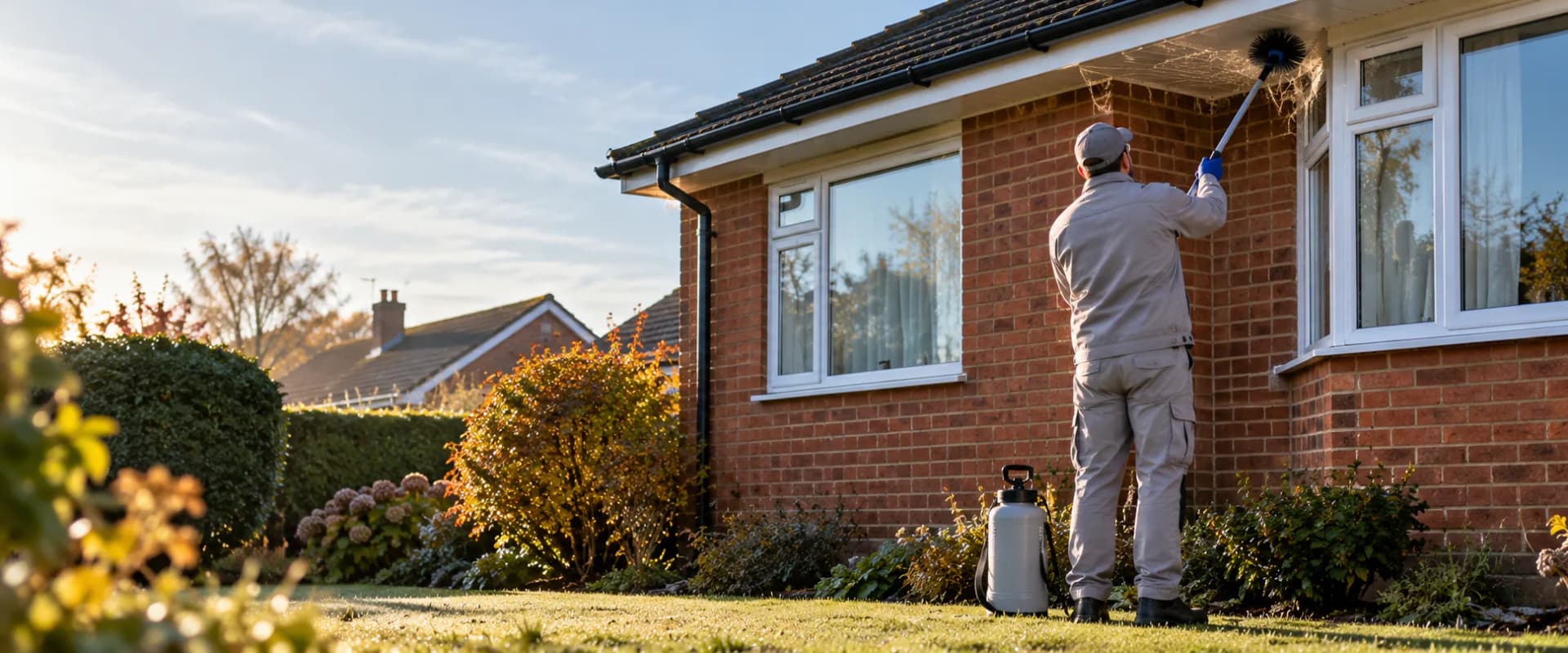
- Tidy the outside. Cut back ivy and shrubs touching the walls and windows, and move log piles and bins away from the door.
If cluster flies or other insects are feeding a spider population in your loft, sort those out too. Our guides to cluster flies and silverfish may help.
What actually keeps spiders away?
Proofing does; gadgets don't. The Natural History Museum states plainly that no effective deterrent device exists. Money spent on plug-in repellers and scents is better spent on draught excluders, brush strips for the bottom of doors and sealant around window frames and pipes.
| Method | Does it help? |
|---|---|
| Sealing gaps round doors, windows and pipes | Yes: it is the museum's main advice |
| Draught excluders and insect screens | Yes |
| Vacuuming webs and egg sacs regularly | Yes, it removes the next generation |
| Reducing other insects and outside lighting | Yes, less food means fewer spiders |
| Residual insecticide treatment at entry points | Reduces numbers where spiders gather |
| Deterrent devices | No effective device exists, according to the Natural History Museum |
Bear in mind that spiders are useful. The museum describes them as "useful and eco-friendly pest controllers" that help to control the numbers of many nuisance household pests.
How long does spider season last?
The wandering season is short. The Natural History Museum says males usually die in autumn soon after mating, while many females survive into the following year and produce more egg sacs. A warm, dry autumn lengthens the season, because males roam for longer. Once it turns cold and wet, sightings in living rooms drop, although spiders in garages, lofts and sheds are there all year.
When to call a professional
Most homes do not need a spider treatment. A few house spiders in autumn are normal, harmless and gone within weeks, and proofing does more than any spray.
It is worth calling a professional if you have large numbers building up around doors, windows, a conservatory, garage or outbuilding; if false widows are established around a play area or doorway; if someone in the house has a genuine phobia; or if webs and spiders are a problem in a shop, holiday let or commercial building.
Urgent Pest Control applies a residual barrier treatment at entry points and where spiders gather, removes webs and egg sacs, and gives straight advice on false widows. We'll explain the likely cost before any work starts; see our pest control prices for published starting prices. We cover Nottingham, Derby, Leicester, Lincoln and the surrounding counties, 7 days a week from 6am to 8pm. Book online or call 0330 822 7460.
Sources
Frequently Asked Questions
About the author
The Urgent Pest Control team
A family-run pest control company based in Southwell, treating homes and businesses across Nottinghamshire, Derbyshire, Leicestershire and Lincolnshire since 2020. Our guides are written from the jobs we do and checked against UK sources. More about us
Cite this guide: “How to Get Rid of Spiders in the House (and Keep Them Out)”, Urgent Pest Control, 18 November 2026. https://urgentpestcontrol.uk/blog/how-to-get-rid-of-spiders