Bed Bug Eggs: What They Look Like, Where They Hide, What Kills Them
Bed bug eggs are white, about 1mm long and glued into seams and cracks. What they look like, where they are laid, when they hatch and what kills them.

By the Urgent Pest Control team
· 7 min read
The short answer
Bed bug eggs are white to yellowish-white, about 0.5 to 1mm long and sticky, so they stay glued in mattress seams, bed frame joints and cracks. They hatch in roughly one to three weeks. Heat is the most reliable way to kill them: research found eggs need about 55°C, higher than adult bed bugs.
- Oxford City Council describes bed bug eggs as white and about 1mm long; Bromley Council gives about 0.5mm long and 0.2mm across.
- Eggs hatch in about one to three weeks: Oxford City Council says 10 to 20 days, Hastings Borough Council about a week in good conditions.
- Kells and Goblirsch (Insects, 2011) found bed bug eggs are more heat resistant than adults, with 99% killed at 54.8°C against 48.3°C.
- The NHS advises washing bedding and clothing at 60C and tumble drying on a hot setting for at least 30 minutes.
- Our bed bug treatment starts from £150; the final price depends on the job.
On this page
Bed bug eggs are white to yellowish-white, about 0.5 to 1mm long and sticky, so they stay glued in mattress seams, bed frame joints and cracks close to where people sleep. They hatch in roughly one to three weeks. Heat is the most reliable way to kill them: a hot wash and dryer for fabrics, and professional heat treatment for the room. If you are finding eggs, our bed bug treatment starts from £150, with the final price depending on the job, across Nottinghamshire, Derbyshire, Leicestershire and Lincolnshire.
This guide focuses on the eggs. For the wider signs see signs of bed bugs, and for the full treatment process see how to get rid of bed bugs.
What do bed bug eggs look like?
Bed bug eggs are tiny, pale, elongated specks, usually found in clusters and stuck firmly to the surface. Published descriptions differ slightly on size:
- Oxford City Council says females lay white eggs, about 1mm long, in dark places.
- Bromley Council describes the eggs as yellowish white, approximately 0.5mm in length and 0.2mm in diameter.
- Hastings Borough Council describes pale-white eggs and says the empty eggshells are quite small but still visible to the human eye.
So think of something around the size of a grain of salt to a pinhead, cream-white, and longer than it is wide. Hastings Borough Council adds two details that help with identification: the eggs are sticky, and clusters attach to furniture or fittings. An egg that doesn't brush off easily is a strong clue.
Where do bed bugs lay their eggs?
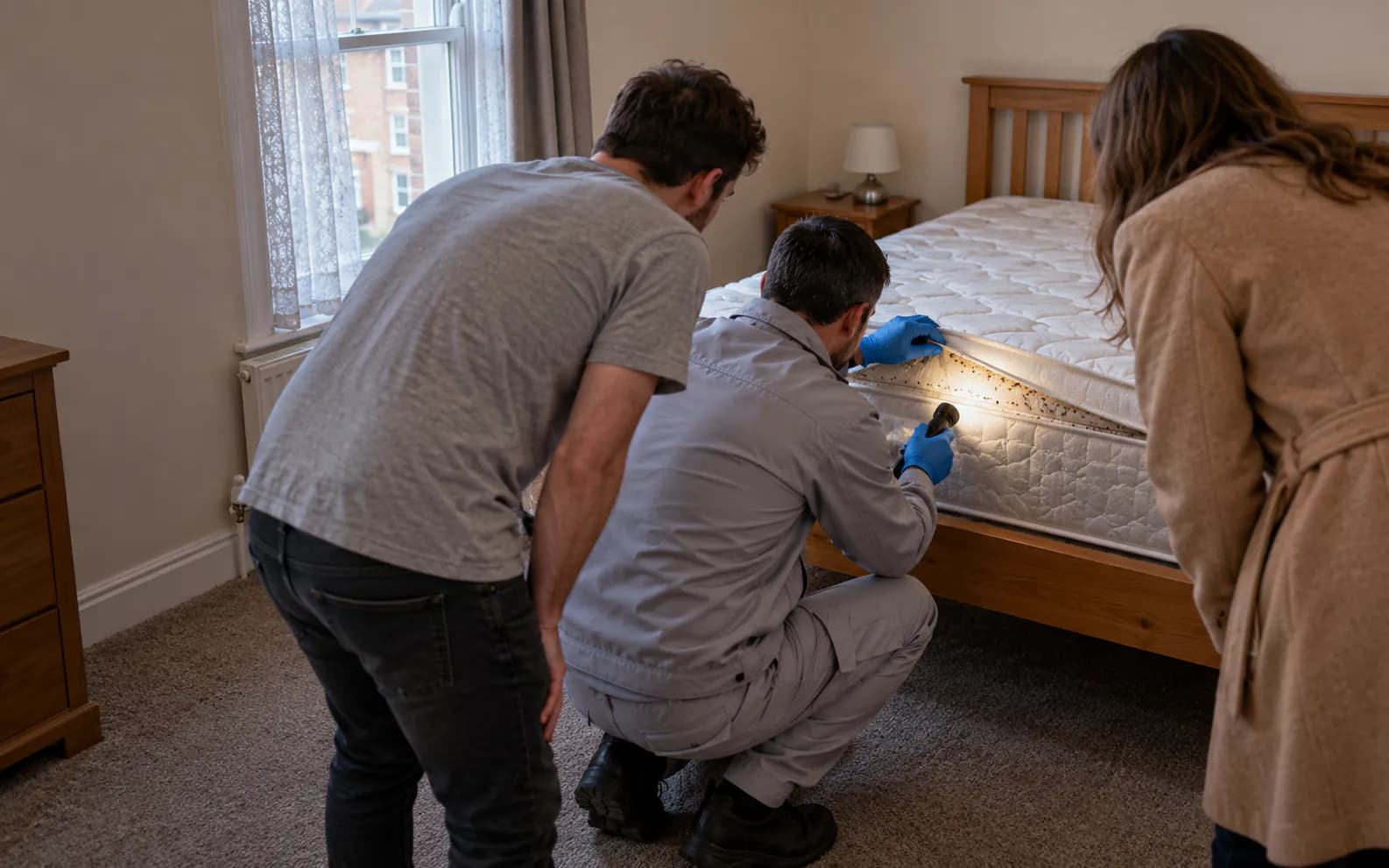
Bed bugs lay their eggs in cracks and crevices close to where they feed, not out in the open. The Natural History Museum says they rest and lay their eggs in crevices and behind wallpaper. The NHS lists the places bed bugs hide: bed frames, mattresses, clothing, furniture, behind pictures and under loose wallpaper.
Use this checklist, working outwards from the bed with a bright torch:
- mattress seams, piping, labels and handles;
- the underside of the mattress and the fabric of a divan base;
- bed frame joints, slat ends, screw holes and bolt heads;
- the back of the headboard and where it meets the wall;
- bedside furniture: drawer runners, joints and the underside;
- skirting boards, carpet edges and loose wallpaper near the bed;
- behind pictures, mirrors and sockets on the wall by the bed;
- curtain pleats and hems, as Hastings Borough Council points out;
- sofas and armchairs where anyone sleeps or naps.
Eggs are rarely alone. In the same crevice you will usually see the dark spots of droppings, pale shed skins and often live bugs. If you find white specks on an otherwise clean mattress surface with none of those, they are probably something else.
What can be mistaken for bed bug eggs?
Lint, dust, crumbs, dried glue and the eggs or skins of other insects all get mistaken for bed bug eggs. This table gives the quick checks.
| What you found | How it differs from bed bug eggs |
|---|---|
| Lint, fluff or dandruff | Irregular shapes; brushes or blows away easily |
| Grains of salt or sugar | Hard, crystalline and loose; not stuck down |
| Bed bug shed skins | Pale brown, bug-shaped and hollow rather than white and oval |
| Bed bug droppings | Small brown or black spots that look like ink marks |
| Carpet beetle larvae skins | Hairy, banded and brown; often in wardrobes and carpet edges |
| Flea eggs | Pearly white ovals found in pet bedding and carpets, not in bed frame joints |
Our guides to carpet beetle larvae and what fleas look like cover those look-alikes. If you are unsure, photograph the specks next to a ruler or coin and try our pest identifier.
How many eggs do bed bugs lay, and how fast do they hatch?
A female lays somewhere between 100 and 500 eggs in her life, and they hatch in about one to three weeks. The sources give a range rather than a single figure:
| Source | Eggs per female | Hatching time |
|---|---|---|
| Natural History Museum | Around 150 over her life | Not stated |
| Oxford City Council | Around 150 | 10–20 days |
| Bromley Council | 100–200, at irregular intervals | Normally one to three weeks, sometimes longer |
| Hastings Borough Council | 200–500 over several months, in batches of 10–50 | About a week, depending on conditions |
Conditions explain much of the difference; Hastings Borough Council says hatching time depends on them. The Natural History Museum notes that Britain's climate is relatively unfavourable for bed bugs in unheated bedrooms for much of the year, and that heavy infestations mainly develop in centrally heated buildings.
What happens after bed bug eggs hatch?
A nymph hatches, feeds on blood and moults five times before becoming an adult. The Natural History Museum says a bed bug has five immature stages before reaching adulthood, starting nearly colourless and becoming browner as it matures. Bromley Council describes newly hatched nymphs as about 1mm long and says they feed straight away.
Oxford City Council says bed bugs reach adulthood in about nine weeks. Hastings Borough Council notes that empty eggshells remain visible, so shells on a bed frame don't by themselves prove an infestation is still active. Live nymphs, live adults and new droppings do.
The adults that result are easy to recognise. The NHS says they are around 5mm long, and the Natural History Museum describes them as mahogany-brown, turning deep purple or red after a meal.
What kills bed bug eggs?
Heat kills bed bug eggs reliably; most other methods are slower or patchy. Eggs resist heat better than adults do, so any plan has to be judged by whether it deals with them.
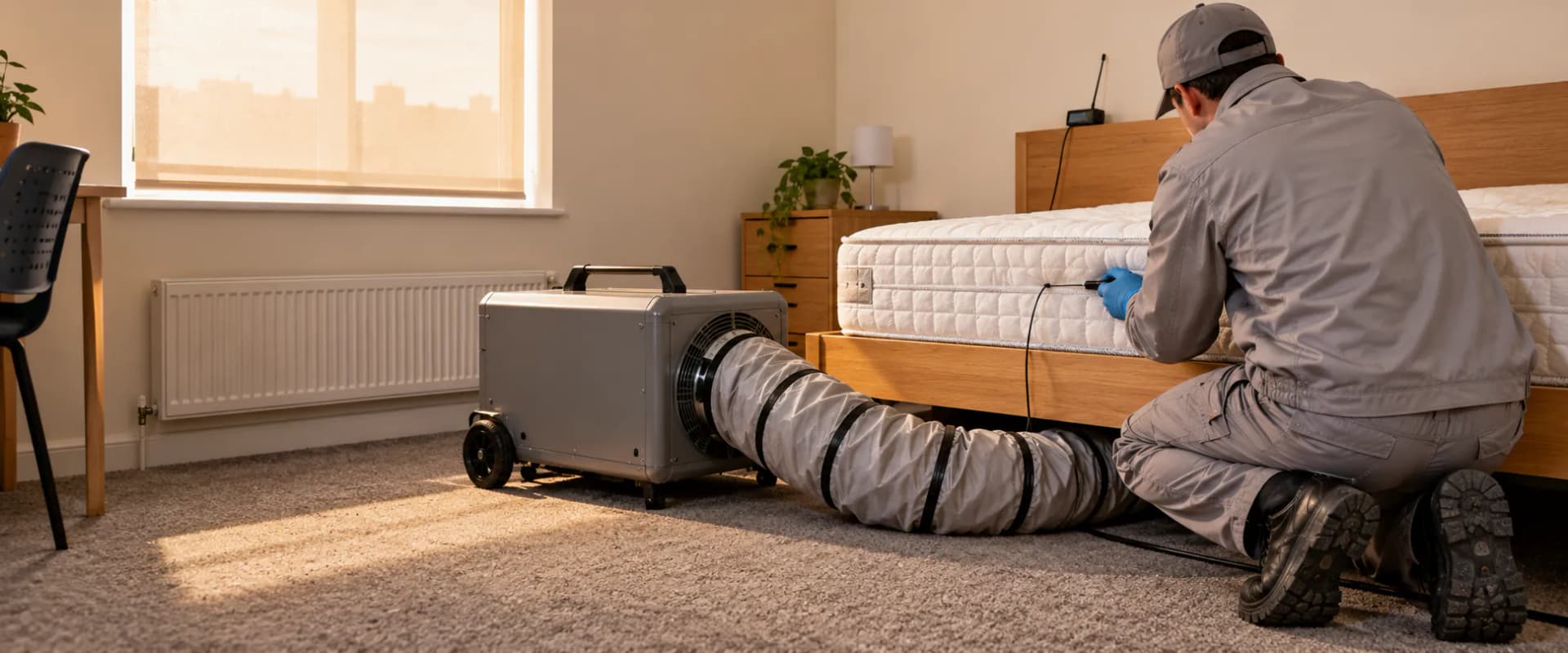
Heat. A laboratory study by Kells and Goblirsch, published in the journal Insects in 2011, found that "eggs are more heat resistant than adults". The temperature needed to kill 99% was 48.3°C for adults and 54.8°C for eggs. At 45°C eggs survived for seven hours, while at 48°C it took 71.5 minutes to kill 99% of them. No eggs survived above 50°C. The authors' recommended minimum for a whole-room heat treatment was 48°C held for 71.5 minutes, or stopping once 50°C or more is reached throughout.
Hot washing and drying. The NHS advises washing affected bedding and clothing on a hot wash (60C) and tumble drying on a hot setting for at least 30 minutes. Both are above the temperatures in the study.
Freezing. The NHS says items that can't be washed can be sealed in a plastic bag and put in the freezer for 2 to 3 weeks.
Vacuuming and scrubbing. Because eggs are glued down, a vacuum alone leaves many behind. The Natural History Museum doubts that soap and water kill many bugs, but notes that scrubbing may remove some bugs and eggs mechanically. Scrape seams with a stiff brush or an old card as you vacuum, then seal and bin the vacuum contents outside.
Insecticide. Hastings Borough Council says the standard professional treatment is a residual insecticide applied as a liquid spray or powder, and that self-treatment with amateur pesticide products is unlikely to be successful. Since eggs take up to three weeks to hatch, a residual treatment needs to stay in place, and be followed up, long enough to catch the nymphs that emerge after the first visit.
Can you get rid of bed bug eggs yourself?
You can kill the eggs on things that fit in a washing machine, dryer or freezer; the eggs in the bed frame, furniture and room are much harder. The NHS says it is very difficult to get rid of bed bugs yourself and advises contacting your local council or a pest control service.
What is worth doing straight away:
- strip the bed and put bedding straight into a 60C wash, then a hot dryer for at least 30 minutes;
- bag clothes from the affected room and wash and dry them the same way;
- freeze items that can't be washed, sealed in bags, for 2 to 3 weeks;
- vacuum the mattress, bed frame, skirting and carpet edges, scraping the seams;
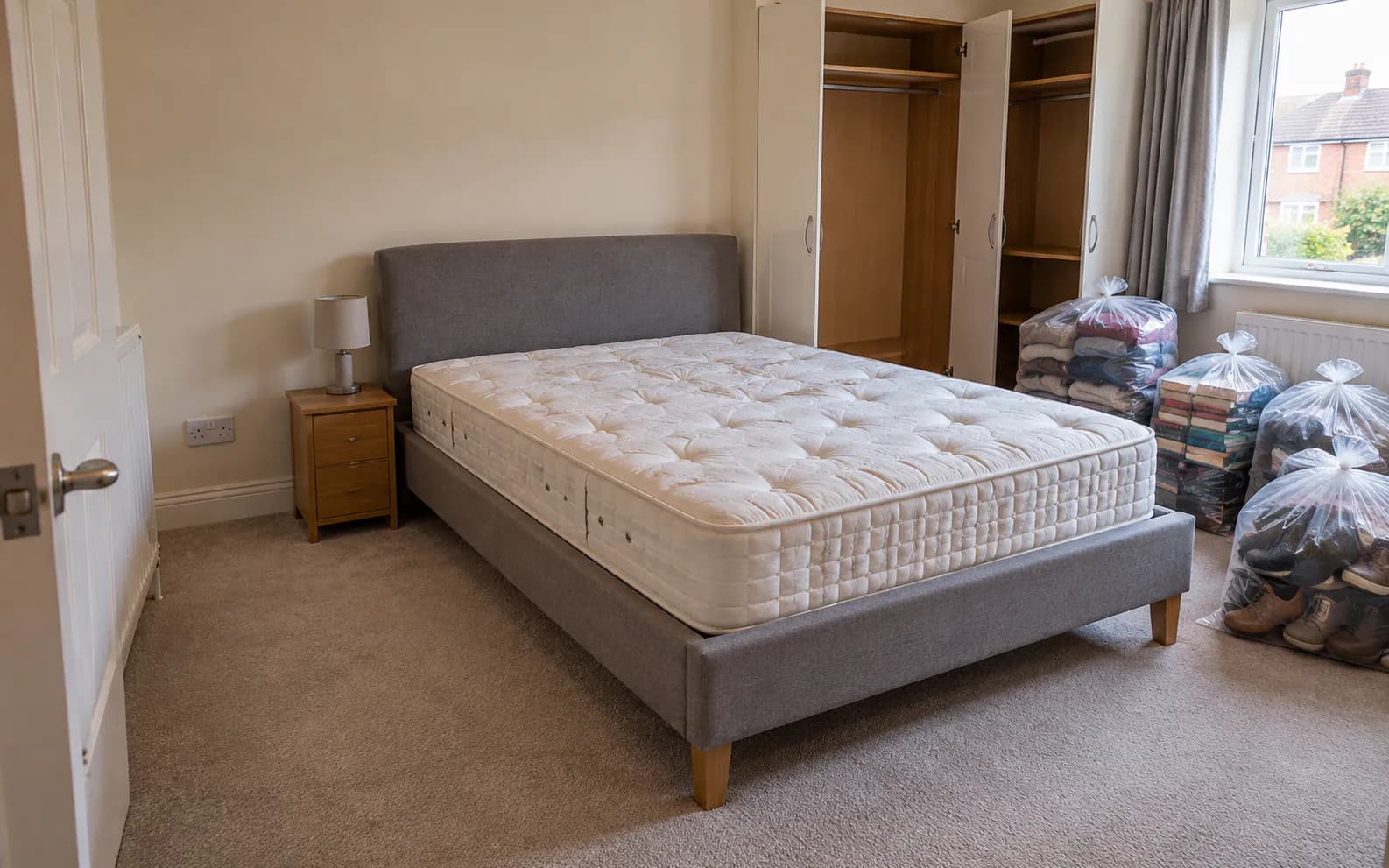
- reduce clutter around the bed so there are fewer places to lay eggs.
What to avoid: don't move bedding, furniture or belongings from the affected room into other rooms unbagged, because bed bugs travel in them. Hastings Borough Council warns that amateur products can push bed bugs into other rooms.
When to call a professional
Call a professional as soon as you find eggs, because eggs mean bed bugs are breeding in the room, not just passing through. It is also time to call if bites continue after you have washed everything, if you live in a flat, HMO or terrace where bugs can move between homes, or if anyone in the household is badly affected by the bites.
Urgent Pest Control starts with an inspection of the bed, furniture and neighbouring rooms. Depending on what we find, we use heat treatment above 56°C, which is above the temperature at which eggs die and is often a single visit for a contained infestation, residual insecticide over 2 to 3 visits, or both. See our bed bug heat treatment page for how that works. Visits are discreet, in unmarked vehicles. Bed bug treatment starts from £150; the final price depends on the job, and we'll explain the likely cost before any work starts (see our pest control prices).
We cover Leicester, Nottingham, Derby, Lincoln and the surrounding counties, 7 days a week from 6am to 8pm, with emergency call-outs 365 days a year. Book online or call 0330 822 7460.
Sources
- NHS: bedbugs
- Natural History Museum: bed bug identification guide
- Oxford City Council: pest control advice, bed bugs
- Bromley Council: bed bug
- Hastings Borough Council: bed bugs, information and advice
- Kells and Goblirsch (2011): Temperature and Time Requirements for Controlling Bed Bugs under Commercial Heat Treatment Conditions, Insects
Frequently Asked Questions
About the author
The Urgent Pest Control team
A family-run pest control company based in Southwell, treating homes and businesses across Nottinghamshire, Derbyshire, Leicestershire and Lincolnshire since 2020. Our guides are written from the jobs we do and checked against UK sources. More about us
Cite this guide: “Bed Bug Eggs: What They Look Like, Where They Hide, What Kills Them”, Urgent Pest Control, 18 November 2026. https://urgentpestcontrol.uk/blog/bed-bug-eggs