Do Mice Hibernate? Why Mice Come Indoors in Autumn and Winter
No, mice do not hibernate. They stay active all winter, which is why they move into houses in autumn. What they do in the cold and how to keep them out.

By the Urgent Pest Control team
· 6 min read
The short answer
No. Mice do not hibernate. The Wildlife Trusts say only three UK mammals truly hibernate: bats, dormice and hedgehogs. House mice and wood mice stay active all winter and need food and warmth every day, which is why they move into houses, garages and sheds in autumn. Indoors, house mice can breed all year round.
- The Wildlife Trusts say only three UK mammals truly hibernate: bats, dormice and hedgehogs.
- The Mammal Society says house mice in buildings have litters of 5 to 8 young roughly every month.
- Clackmannanshire Council describes a seasonal migration of field mice into houses and stores in autumn and early winter.
- The hazel dormouse does hibernate, but it is a protected woodland species, not a house pest.
- Proofing in early autumn, before the weather turns, is the best way to keep mice out.
On this page
No, mice do not hibernate. The Wildlife Trusts say only three UK mammals truly hibernate, bats, dormice and hedgehogs, and neither the house mouse nor the wood mouse is one of them. Mice stay active all winter and need food and shelter every day, which is why they move into houses, garages and sheds as the weather cools. If they have already moved in, our mice control treatment starts from £200 with follow-up visits included; the final price depends on the job.
This guide explains what mice do in winter, why autumn is when you notice them, and how to keep them out.
Do mice hibernate in winter?
No. Hibernation is a specific thing, and mice do not do it. The Wildlife Trusts describe it as "a prolonged period of inactivity that allows animals to survive when food is scarce and the weather is harsh": the animal fattens up, retreats somewhere safe, and its body temperature, breathing and heart rate all drop. They state that "there are only three UK mammals that truly hibernate; bats, dormice and hedgehogs".
Mice are not on that list. Rather than sleeping through the winter, they carry on feeding and, where conditions allow, breeding. The Mammal Society says house mice living in buildings produce litters of five to eight young roughly every month, while those living away from buildings only breed in the warmer months. A warm building takes winter out of the equation.
Which mice hibernate and which don't?
Only the dormouse hibernates, and it is not really a household mouse at all.
| Animal | Does it hibernate? | Where it spends the winter |
|---|---|---|
| House mouse | No | In buildings. The Mammal Society says it is most commonly found in buildings in the British Isles |
| Wood mouse (field mouse) | No | Outdoors in burrows with stored food, or in sheds, garages and houses |
| Hazel dormouse | Yes | Hibernating in logs, leaf litter or just below ground, in woodland |
| Hedgehog | Yes | One of the three true hibernators |
| Bats | Yes | One of the three true hibernators |
The hazel dormouse is the exception. The Wildlife Trusts say it hibernates through the winter months and can spend nearly three-quarters of the year asleep in some form. It lives in woodland and farmland, mainly in southern England and Wales, and is protected under the Wildlife and Countryside Act 1981. If you have mice in the kitchen, they are not dormice.
What do mice do in winter instead?
They find food, stay warm and keep going. What that looks like depends on the species.
House mice live with people all year. The Wildlife Trusts' house mouse profile says they are seen from January to December, thrive around buildings, and can produce up to 10 litters a year of four to eight young. In a heated building with food, winter makes little difference to them.
Wood mice, also called field mice, live outdoors for most of the year. The Wildlife Trusts say the wood mouse is the most common mouse in Britain and very likely to be found in the garden. In autumn it gathers berries and seeds and stores them in underground burrows, or sometimes in old birds' nests, and it "may even breed over winter if food is abundant". It is also an agile climber.
So a stash of seeds, nuts or bird food in a shed, a loft corner or a stored boot is a sign of mice preparing for winter, not of a mouse settling down to sleep through it.
Why do mice come indoors in autumn?
For warmth, shelter and food, at the point when all three get harder to find outside. Clackmannanshire Council describes it as a seasonal migration: "During the Autumn and early Winter, a seasonal migration of field mice can occur from their Summer quarters to the more comfortable surroundings in houses or stores, where adequate warmth and protection from the elements are provided."
Redbridge Council makes the same point from the householder's side: mice are normally more of a problem indoors during the winter months, when food supplies and a warm place to live are not so readily available outside.
Autumn is also when things change around a house: gardens are cut back, natural food runs down and the heating goes on. Homes that back onto farmland, allotments or open ground have the most field mice on the doorstep, which is worth bearing in mind in rural Nottinghamshire, Derbyshire, Leicestershire and Lincolnshire.
What are the signs that mice have moved in for winter?
The first signs are usually sounds and droppings.
- Scratching or scurrying in the ceiling, walls or under the floor at night.
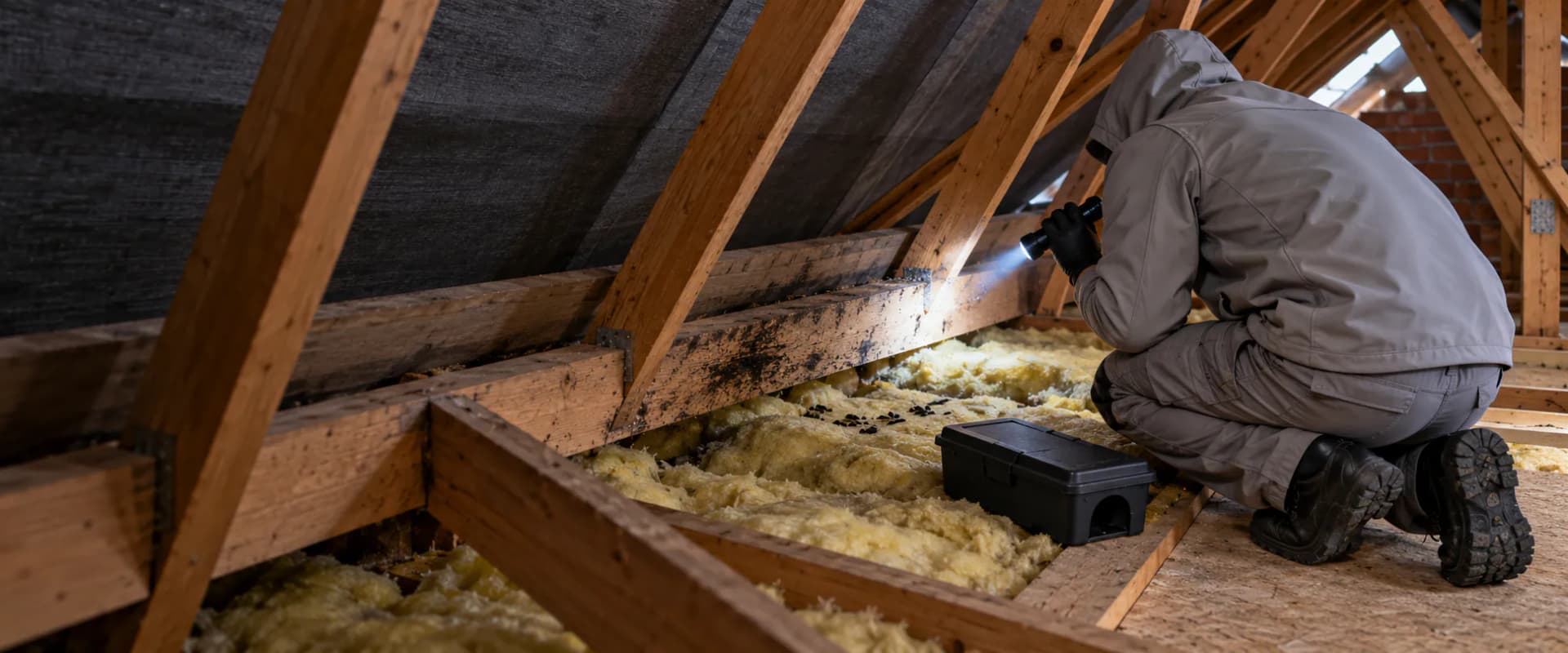
- Small, dark, spindle-shaped droppings in cupboards, under the sink or in the loft. Redbridge Council describes mouse droppings as "small and almost black in colour, thin and spindle shaped".
- Gnawed food packets, especially cereals. The Mammal Society says house mice prefer cereal foods.
- Shredded paper, insulation or fabric gathered into a nest.
- Stored seeds, nuts or pet food hidden in a quiet corner.
- A stale, musky smell in an enclosed cupboard.
If you are not sure whether droppings are from mice or rats, compare them in our guide to rat vs mouse droppings.
Do mice leave again when it gets warm?
Sometimes wood mice do; house mice generally do not. A wood mouse that wintered in the garage may go back to the garden in spring. A house mouse has no reason to. The Mammal Society's figure of a litter roughly every month in buildings, and the Wildlife Trusts' figure of up to 10 litters a year, explain why waiting for spring is a poor plan: a handful of mice in November can be a much bigger problem by March.
Mice also do more damage than their size suggests. Clackmannanshire Council says mice often destroy much more food than they eat, because they discard partly eaten food, and that they gnaw almost anything. Redbridge Council notes that they contaminate food with urine and droppings and can carry diseases including Salmonella.
How do you keep mice out before winter?
Proof the house in early autumn and remove the food that draws them in. Clackmannanshire Council says mice can squeeze through any crack into which a human finger can be inserted, so the job is finding small gaps.
Autumn mouse-proofing checklist
- Walk round the outside and look where pipes, cables and flues go through the wall. Seal gaps with wire wool and mortar or a metal plate.
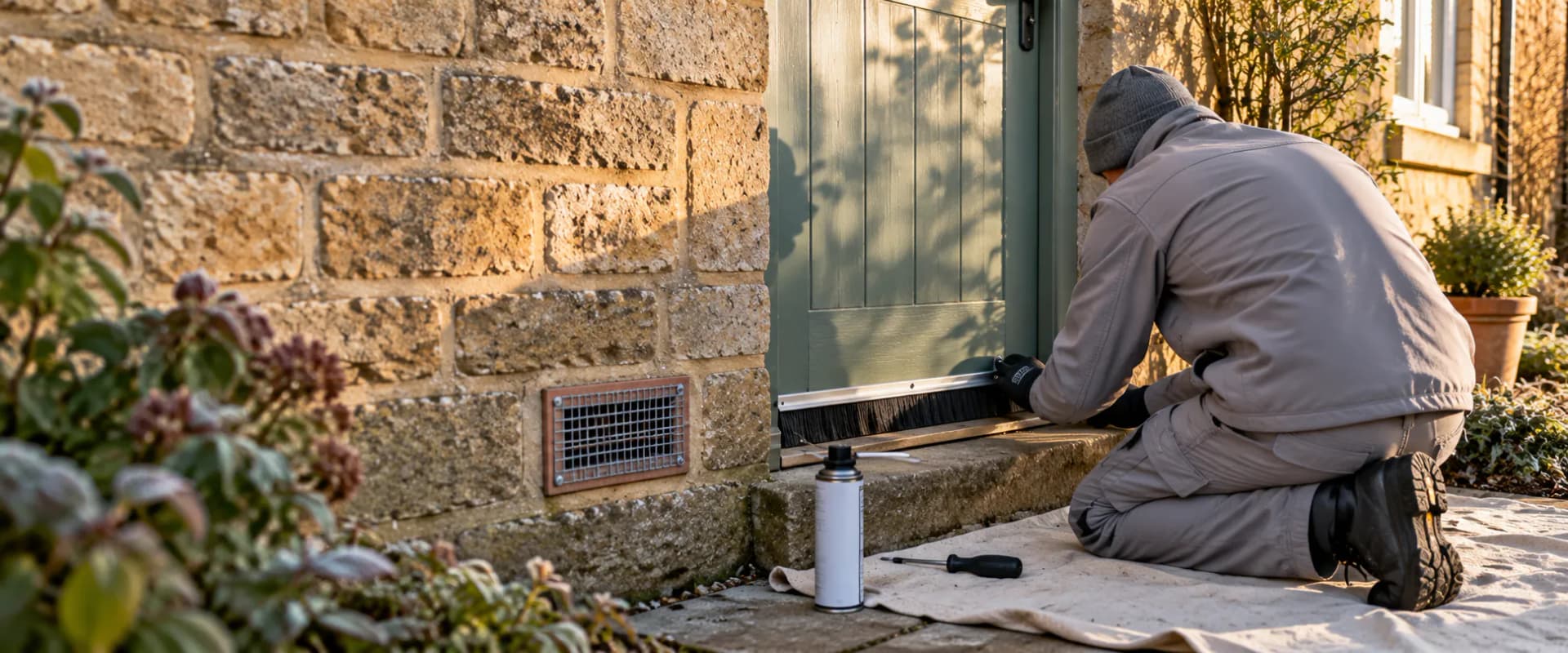
- Check air bricks and vents are intact. Fit mesh covers over damaged ones; do not block them.
- Check the bottoms of external doors and the garage door. Fit bristle strips where you can see daylight.
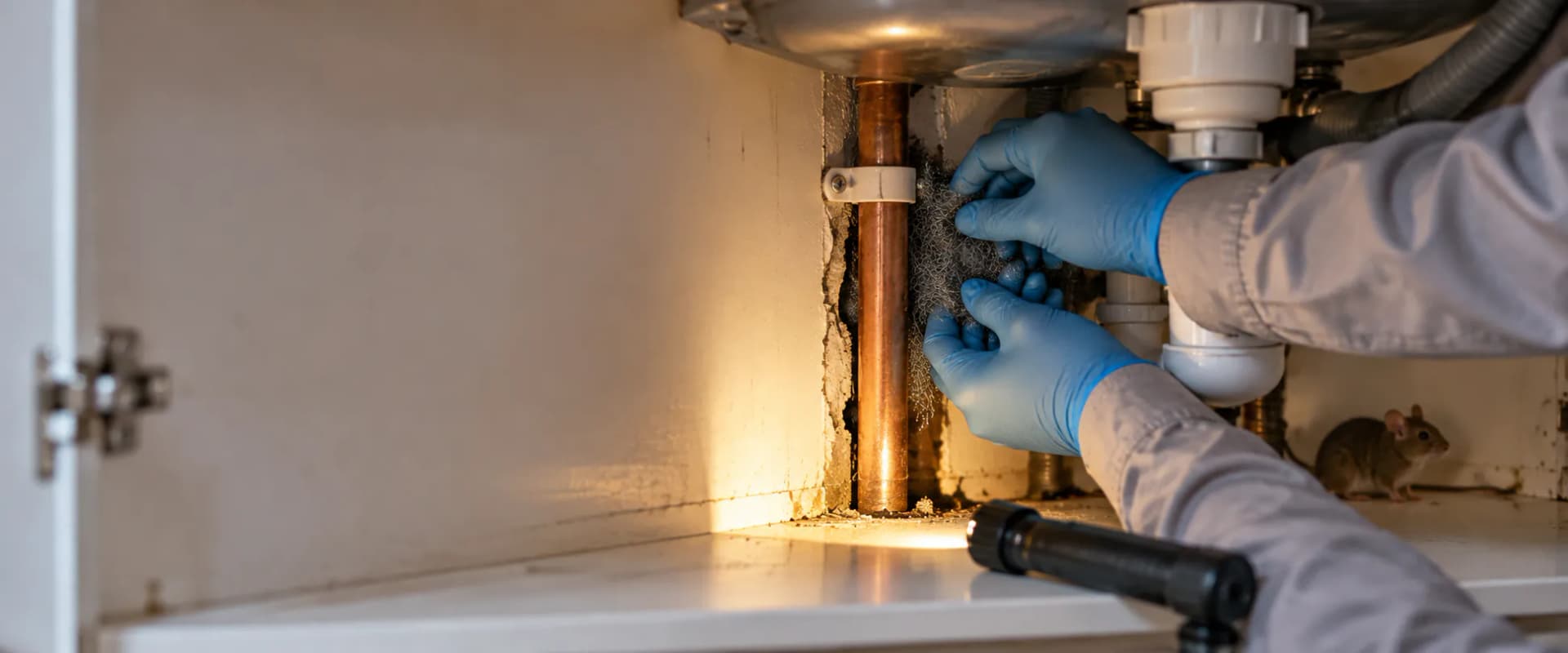
- Look under the kitchen sink, behind the washing machine and in the boiler cupboard for holes round pipes.
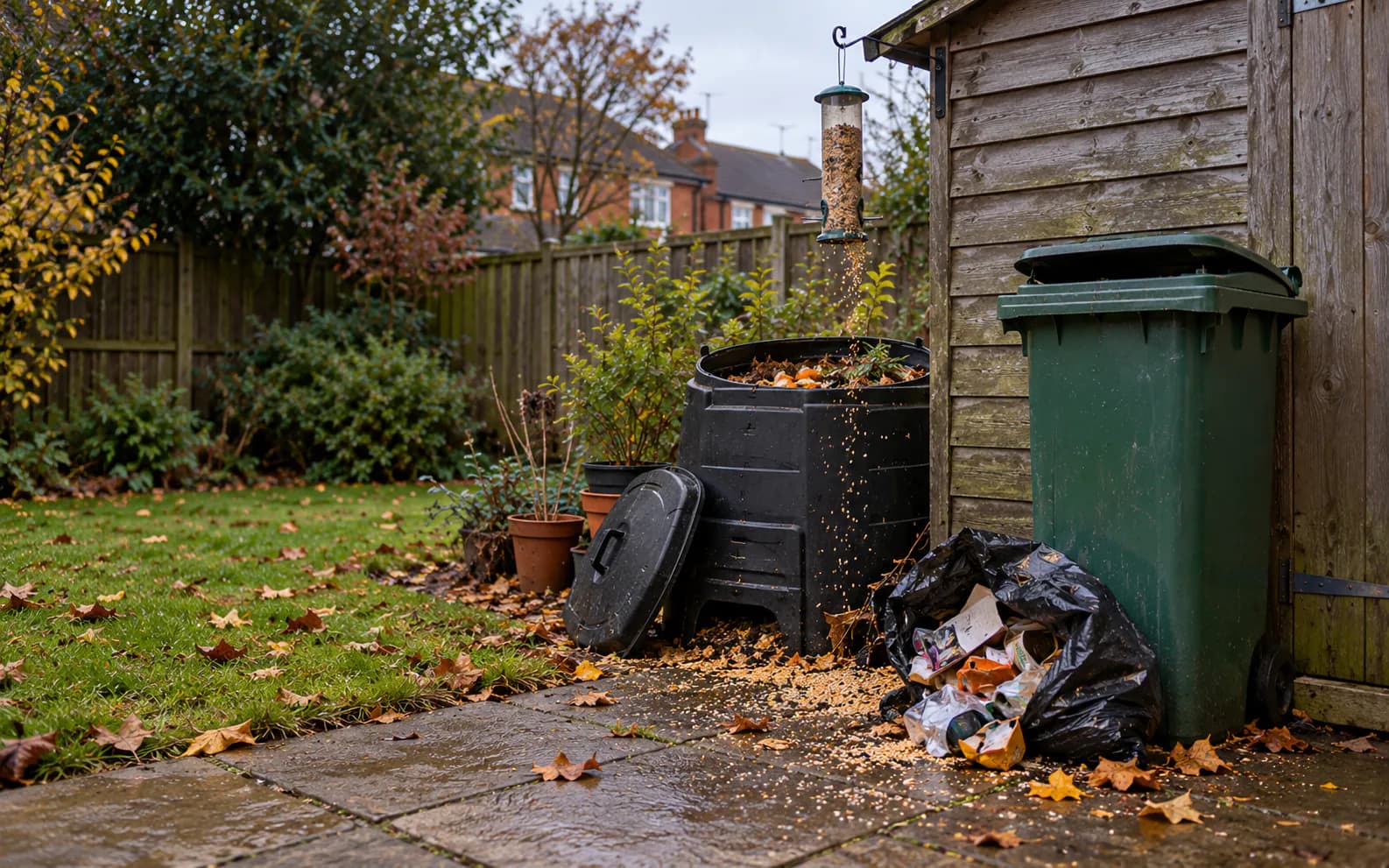
- Move bird food, pet food and grass seed in the shed or garage into lidded metal or hard plastic bins.
- Keep cereals and dry food in sealed containers, as Redbridge Council advises, and don't leave food out overnight.
- Clear leaf piles, stacked timber and clutter away from the house walls.
- Cut back ivy and shrubs that touch the walls and roofline, since mice climb.
If mice are already inside, treat first and proof afterwards, so none are sealed in. Our guides explain the detail: how to get rid of mice, what attracts rats and mice and can mice climb walls? Our pest proofing service seals the gaps for you.
When to call a professional
Call a professional if you are hearing mice in walls or ceilings, finding fresh droppings after a week of trapping, or seeing signs in more than one room. Mice that have come in for the winter will not leave on their own schedule, and indoors they keep breeding.
Urgent Pest Control traces the entry points, treats with traps or tamper-resistant bait stations, and returns for follow-up visits, which are included. Mice control starts from £200; the final price depends on the job, and we'll explain the likely cost before any work starts. Proofing is quoted separately. See our pest control prices.
We cover Nottingham, Derby, Leicester, Lincoln and the surrounding counties, 7 days a week from 6am to 8pm. Book online or call 0330 822 7460.
Sources
Frequently Asked Questions
About the author
The Urgent Pest Control team
A family-run pest control company based in Southwell, treating homes and businesses across Nottinghamshire, Derbyshire, Leicestershire and Lincolnshire since 2020. Our guides are written from the jobs we do and checked against UK sources. More about us
Cite this guide: “Do Mice Hibernate? Why Mice Come Indoors in Autumn and Winter”, Urgent Pest Control, 18 November 2026. https://urgentpestcontrol.uk/blog/do-mice-hibernate