Rat in the Garden in Daylight: What It Means and What to Do
Seen a rat in the garden in broad daylight? What a daytime sighting does and doesn't mean, the signs to check for, and when it is time to act.

By the Urgent Pest Control team
· 8 min read
The short answer
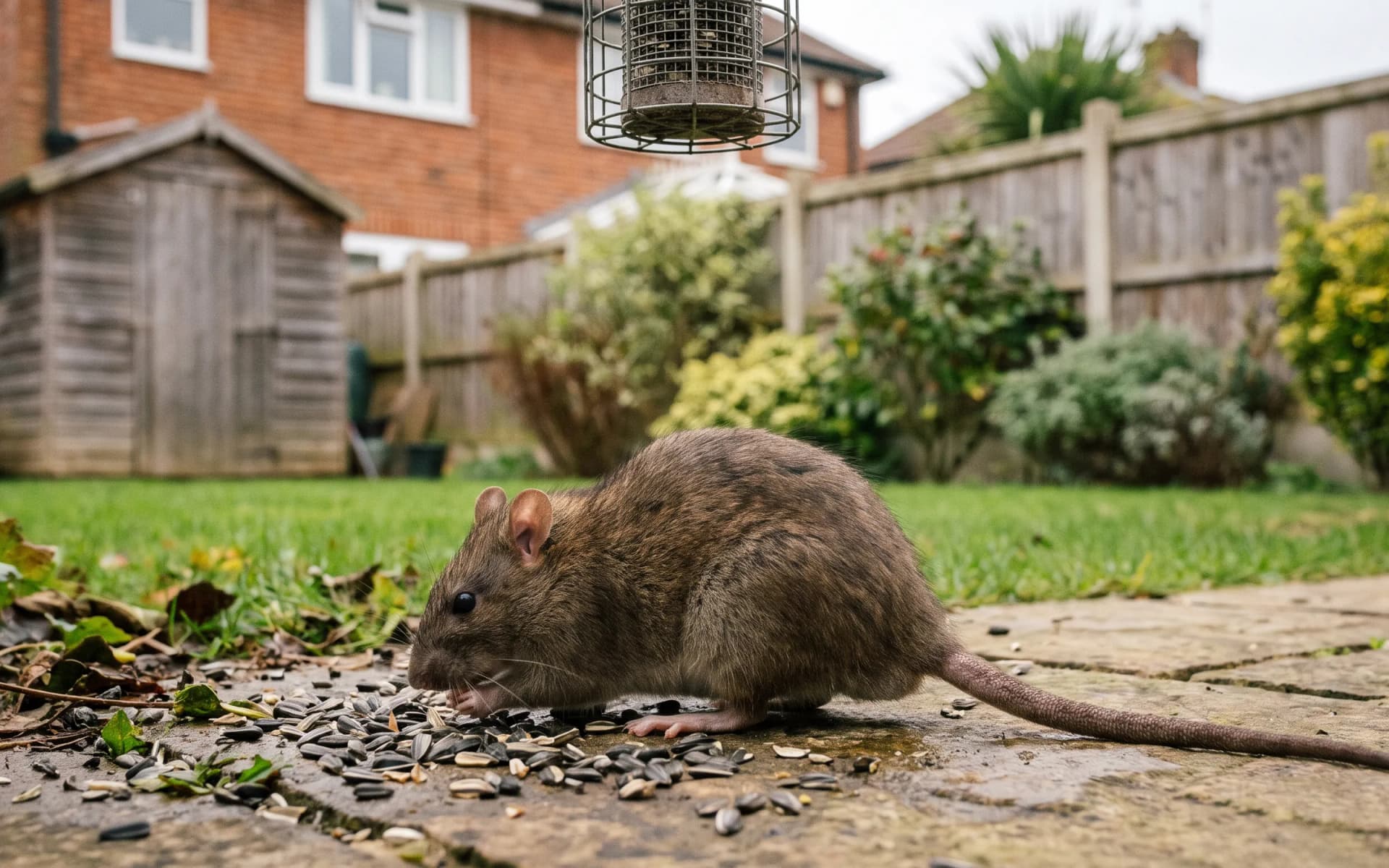
A rat in the garden in daylight is not unusual on its own. Rats are most active at night, but councils say they may be seen by day searching for food, water or shelter. One sighting may be a rat passing through. Repeated sightings, burrows, droppings or runs mean rats are living nearby and need dealing with.
- North West Leicestershire District Council says rats are particularly active at night but may be seen during the day searching for food, water or shelter.
- Sheffield City Council says a rat seen once may only be passing through, and advises against putting bait down if there are no other signs.
- An active burrow is a hole 5–7 cm wide with a smooth, shiny entrance, according to Sheffield City Council.
- The NHS says leptospirosis is spread in the pee of infected animals, most commonly rats, mice, cows, pigs and dogs.
- Urgent Pest Control's rat control starts from £200 with follow-up visits included; the final price depends on the job.
On this page
- Is it normal to see a rat in daylight?
- Does a rat in daylight mean you have an infestation?
- Why would a rat be out in the daytime?
- Is it definitely a rat?
- What signs should you check for?
- What should you do in the first week?
- Should you put poison down after one sighting?
- Is a rat in the garden a health risk?
- How quickly can a rat problem grow?
- Will the council deal with rats in the garden?
- When to call a professional
A rat in the garden in daylight is not unusual on its own. Rats are most active at night, but councils say they may be seen during the day searching for food, water or shelter, and a rat seen once may simply be passing through. What matters is whether you see it again and whether there are burrows, droppings or runs. If there are, rats are living nearby, and Urgent Pest Control's rat control service starts from £200 with follow-up visits included; the final price depends on the job.
This guide is about what a daytime sighting means and what to check in the first few days. For the full treatment plan, see how to get rid of rats in the garden.
Is it normal to see a rat in daylight?
Yes, it happens, even though rats prefer the dark. North West Leicestershire District Council says: "Rats are particularly active at night, but may be seen during the day searching for food, water or shelter." Hastings Borough Council says much the same: rats are usually active at night but may also be seen during the day.
So daylight alone is not proof of anything. A rat follows food, and in most gardens the food appears in the daytime: bird seed scattered in the morning, chicken feed, a bowl put out for the cat, windfall apples.
Does a rat in daylight mean you have an infestation?
Not on its own. Sheffield City Council's rat guidance says that if you only see a rat once, perhaps running across your garden or a neighbour's, "it may be that the rat is only passing through", because rats are in constant search of food and shelter and often travel across land.
The council's advice is to look for other signs before doing anything else. This table sets out how to read what you have seen.
| What you have seen | What it suggests | What to do |
|---|---|---|
| One rat, once, crossing the garden | A rat passing through | Check for signs; remove food; watch for a week |
| The same rat at the same time each day | A regular food source, often the bird feeder | Remove the food; check sheds, decking and compost for burrows |
| Several rats, or rats of different sizes | Rats living and breeding nearby | Arrange treatment; do not wait |
| Burrows, droppings or runs, with or without a sighting | An established population | Arrange treatment and find the source |
| Rats near the house wall, drains or air bricks | A risk of rats getting indoors | Treat promptly and check for entry points |
Why would a rat be out in the daytime?
Because something it needs is available then. North West Leicestershire District Council names the three things a rat is looking for: food, water and shelter. In a garden that usually means one of the following.
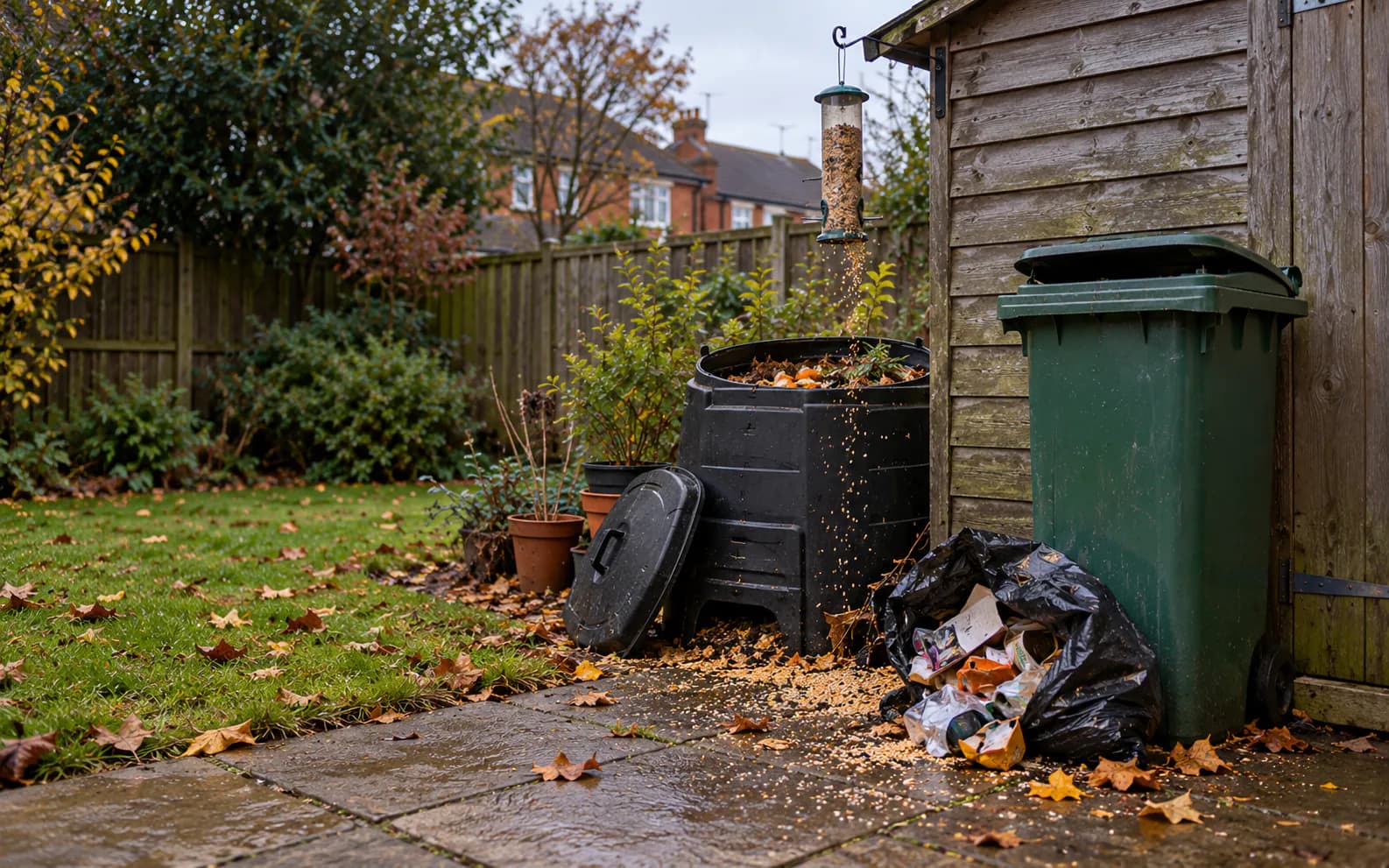
- Bird food. Sheffield City Council lists wild bird food first among the things that attract rats to gardens, with compost heaps, decking and fallen fruit.
- Water. Sheffield notes that rats need to drink regularly, so water butts, ponds and standing water draw them in.
- Pet and poultry feed. Rats will get into hutches and pens and eat spilled food, the council says.
- A burrow close by. A rat living under your shed or decking has only a short trip to the feeder, so it can afford to make it in daylight.
- Disturbance. In practice, sightings often follow a shed clear-out, decking being lifted or a compost heap being turned.
Our guide to what attracts rats and mice goes through each of these in more detail.
Is it definitely a rat?
Check the size and the tail before you decide. The Mammal Society gives the brown rat a head and body of 15–27 cm, a tail of 10.5–24 cm and a typical weight of 200–300 g. That is far bigger than any mouse. If you got a photo, our pest identifier can help, and our guide to rat and mouse droppings covers what each leaves behind.
What signs should you check for?
Look for the things a rat leaves behind when it lives somewhere, not just when it visits. Ten minutes with a torch is enough. Check:
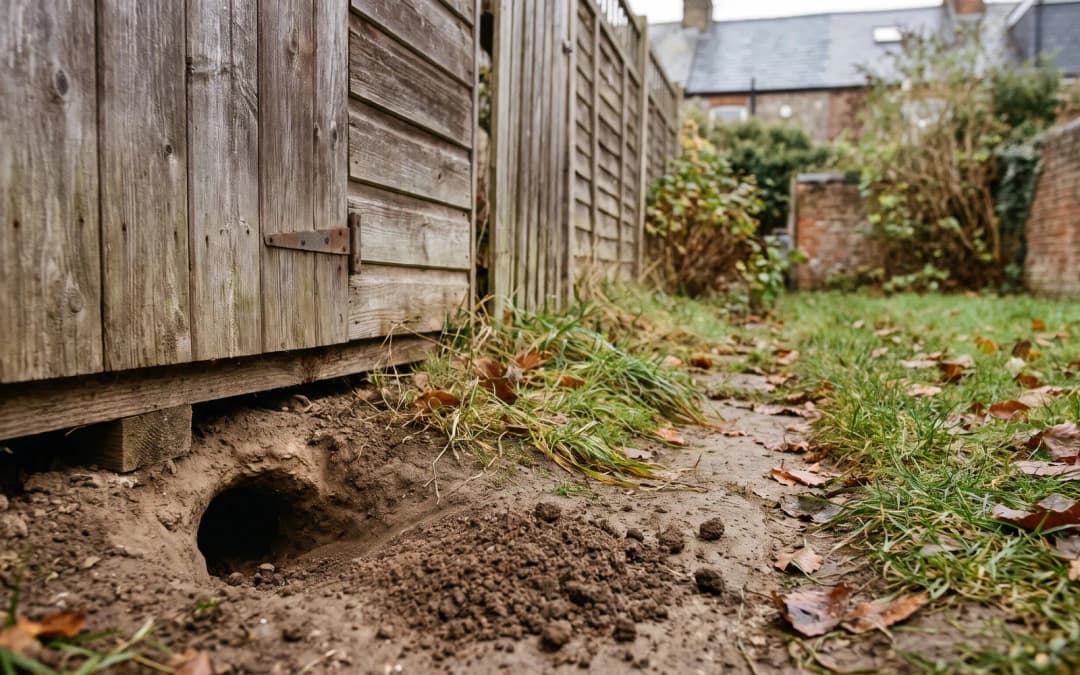
- Holes. Sheffield City Council describes an active burrow as a hole 5–7 cm wide with a smooth, shiny entrance. Look under sheds, decking and compost bins, along fences and at the edges of paving. North West Leicestershire District Council adds grassy banks, tree roots and drain cover surrounds.
- Runs. The Mammal Society says burrow entrances are usually joined by obvious, well-used runs. Look for narrow beaten paths through grass or along walls.
- Droppings. The Mammal Society describes rat droppings as putty-like, usually with one blunt and one pointed end, and up to 1.7 cm long. Sheffield describes them as torpedo-shaped and around 1.5 cm.
- Smears. Black, greasy marks where rats repeatedly brush against the same wall, pipe or fence base.
- Gnawing. Fresh tooth marks on shed doors, compost bins, feed tubs or cables.
- The shed and garage. North West Leicestershire District Council advises checking sheds for holes in the floor and panels.
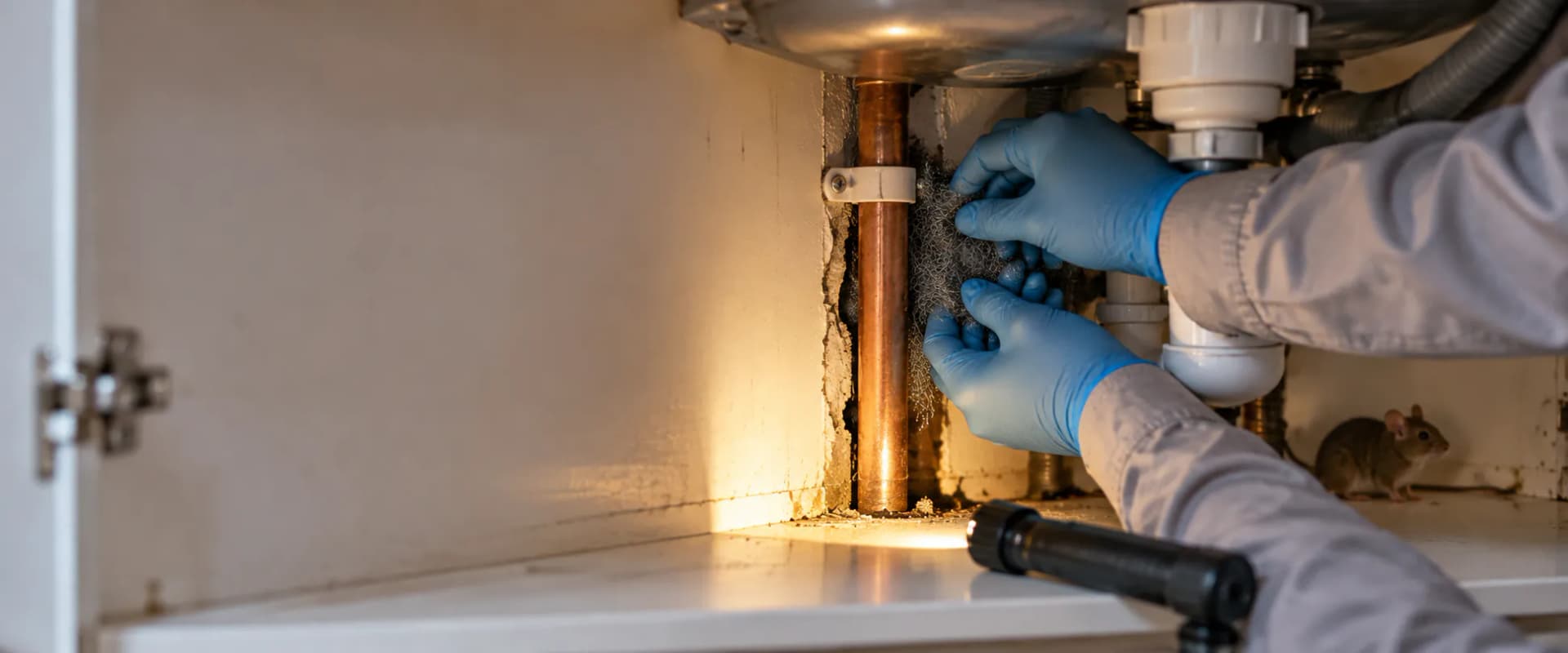
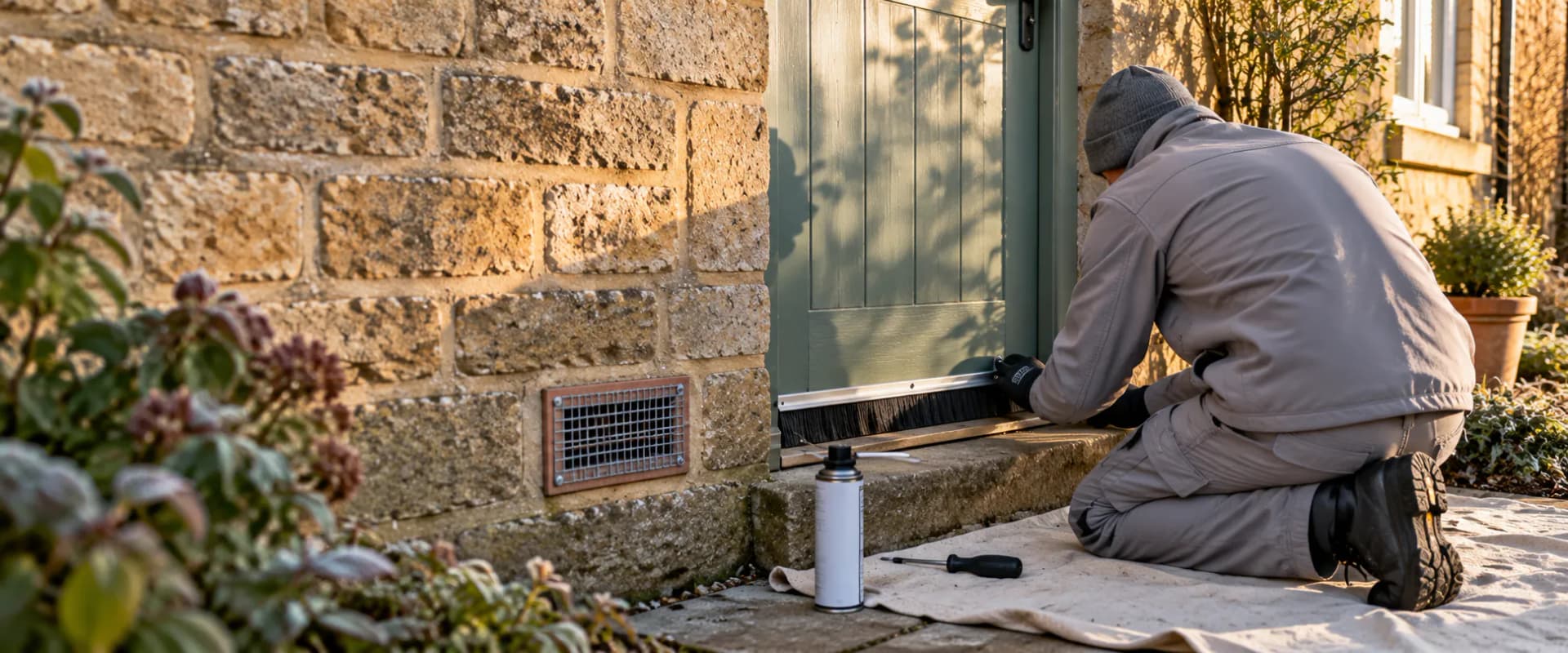
- The house wall. Check for gaps around waste pipes, broken air bricks and gaps under doors.
No signs after a careful look, and no second sighting within a week or so? It was probably a rat passing through.
What should you do in the first week?
Take away the reasons to stay, and keep watching. None of this needs poison.
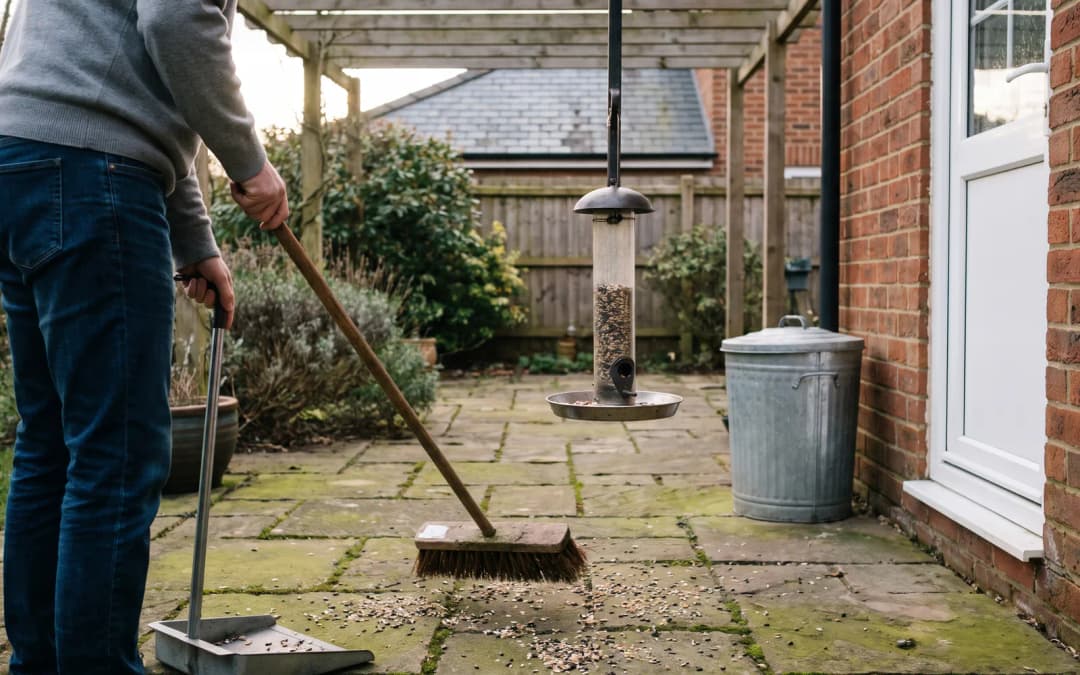
- Stop putting bird food on the ground or on open tables. North West Leicestershire District Council says not to leave food out for the birds all day and to remove what is left once they have stopped feeding.
- Never leave food out overnight, as Sheffield City Council advises, and bring pet bowls in.
- Pick up fallen fruit and store animal feed indoors in a lidded container.
- Cover water butts and empty standing water.
- Sit compost bins on a solid base. Both councils warn that rats burrow underneath them.
- Keep bin lids closed and clear any rubbish stacked against fences or sheds.
- Note the time and place of every sighting; it helps a technician find the run.
Should you put poison down after one sighting?
No. Sheffield City Council is direct about this: check your garden for other signs, and "if you don't see any signs then we would advise you not to put bait down". It also advises against using loose bait outside at all, because of the risk of killing non-target species such as birds and squirrels.
Poison put out for a rat that has already moved on does nothing useful and leaves a hazard in the garden for pets and wildlife. If the signs show rats are living there, a professional uses locked, tamper-resistant bait stations or traps placed on the runs, and removes them when the job is finished.
Is a rat in the garden a health risk?
There is a real but manageable risk. The NHS says leptospirosis is spread in the pee of infected animals, most commonly rats, mice, cows, pigs and dogs, and that you can catch it if contaminated soil or fresh water gets into your mouth, eyes or a cut.
The NHS advice is simple: wash your hands with soap and water after handling animals, and cover cuts and grazes with waterproof plasters. In the garden, wear gloves where you have found droppings or burrows, and keep children's play areas and pet bowls clear.
How quickly can a rat problem grow?
Quickly. The Mammal Society says female brown rats can breed from 3–4 months old and typically have five litters a year, with litter size rising from about 6 to about 11 as the female grows. Sheffield City Council puts it another way: a pair of rats can produce 60 or more young in a year.
That is why the second sighting matters more than the first, and why rats settled in a garden should not be left. Sheffield notes a rat can squeeze through a gap of less than 2.5 cm, and North West Leicestershire District Council says rats can climb vertical pipes. Our guide to the signs of rats in the house covers what to look for indoors.
Will the council deal with rats in the garden?
Some councils will, usually for a fee. When we checked on 17 November 2026, North West Leicestershire District Council charged £56 for up to four visits for a domestic rat treatment, free to people receiving some benefits. Many other councils in the East Midlands offer advice only. Our guide to council pest control charges lists what each one does.
When to call a professional
Call a professional if you see rats more than once, see more than one rat, find burrows, droppings or runs, or see rats close to the house, the drains or a food business. Those are signs of rats living on the site, and waiting only gives them time to breed.
A technician will walk the garden and the outside of the house, find the burrows and runs, work out what is feeding the rats and where they are coming from, and check whether they have a route indoors. Treatment uses locked bait stations or traps, with return visits until activity stops, then advice or proofing to stop it happening again. If the signs point to the drains, our rats in drains service covers that.
Urgent Pest Control's rat control starts from £200, with follow-up visits included. The final price depends on the job, and our pest control prices page explains what affects it. We cover Nottingham, Derby, Leicester, Lincoln and the rest of Nottinghamshire, Derbyshire, Leicestershire and Lincolnshire, 7 days a week from 6am to 8pm, with emergency call-outs 365 days a year. Book online or call 0330 822 7460.
Sources
Frequently Asked Questions
About the author
The Urgent Pest Control team
A family-run pest control company based in Southwell, treating homes and businesses across Nottinghamshire, Derbyshire, Leicestershire and Lincolnshire since 2020. Our guides are written from the jobs we do and checked against UK sources. More about us
Cite this guide: “Rat in the Garden in Daylight: What It Means and What to Do”, Urgent Pest Control, 18 November 2026. https://urgentpestcontrol.uk/blog/rat-in-garden-in-daylight