How to Get Rid of Rats in the House: A Step-by-Step Guide
How to get rid of rats in the house: remove food, find how they got in, trap or bait safely, seal the gaps and clean up. What works and what is illegal.

By the Urgent Pest Control team
· 8 min read
The short answer
To get rid of rats in the house, remove the food and water they are using, find how they are getting in, set snap traps or bait in tamper-proof boxes along their runs, then seal the entry points with wire wool and cement once activity stops. Glue traps are illegal for the public to use in England.
- Brown rats can breed from about three months old, averaging five litters a year of up to 12 young, according to the Wildlife Trusts.
- Using a glue trap to catch a rodent in England without a licence has been an offence since 31 July 2024 (Glue Traps (Offences) Act 2022).
- The NHS says leptospirosis (Weil's disease) is spread in the urine of infected animals, including rats, and is rare in the UK.
- Leicester City Council treats rats inside homes free of charge; Nottingham City Council offers no pest control service.
- Our rat control starts from £200 with follow-up visits included; the final price depends on the job.
On this page
To get rid of rats in the house, cut off their food and water, find how they are getting in, trap or bait the rats that are already inside, then seal the entry points so no more follow. Skip any one of those and the problem returns. If you would rather have it handled, our rat control service starts from £200 with follow-up visits included; the final price depends on the job. We cover Nottinghamshire, Derbyshire, Leicestershire and Lincolnshire.
This guide is about rats inside the home. Rats outdoors, in the roof or inside walls each have their own guide: see rats in the garden, rats in the loft and rats in walls.
How do you know it is rats?
Confirm it is rats before you buy anything, because mice and squirrels need different traps and tactics. North West Leicestershire District Council lists the signs: capsule-shaped black droppings, often near food packages, in cupboards, under sinks and along runways; dark grey smears and footprints on dusty surfaces; and teeth marks on electrical cables, pipework and wooden fixtures. Rats are most active at night, the council says, but may be seen in the day searching for food, water or shelter.
The Wildlife Trusts describe the brown rat as grey-brown with a pointed nose, large bare ears and a long scaly tail, 15–27cm long in the body, and much bigger than any mouse. Our guide to the signs of rats in the house shows how to tell rat droppings and noises from those of mice.
Why should you act quickly?
Act quickly because rats breed fast and because of the health risk. The Wildlife Trusts say female brown rats can breed from about three months old, with an average of five litters a year and up to 12 young in a litter.
On health, the NHS says leptospirosis, also called Weil's disease, is spread in the urine of infected animals, most commonly rats, mice, cows, pigs and dogs. It is rare in the UK, and you catch it when contaminated soil or water gets into your mouth, eyes or a cut. That is a reason for care when cleaning up, not for panic.
There is also the damage. Gnawed cables and pipework, as described by North West Leicestershire District Council, are a fire and leak risk in lofts, kitchens and under floors.
How do you get rid of rats in the house, step by step?
Work through these six steps in order. Trapping without removing food or sealing gaps only removes today's rats.
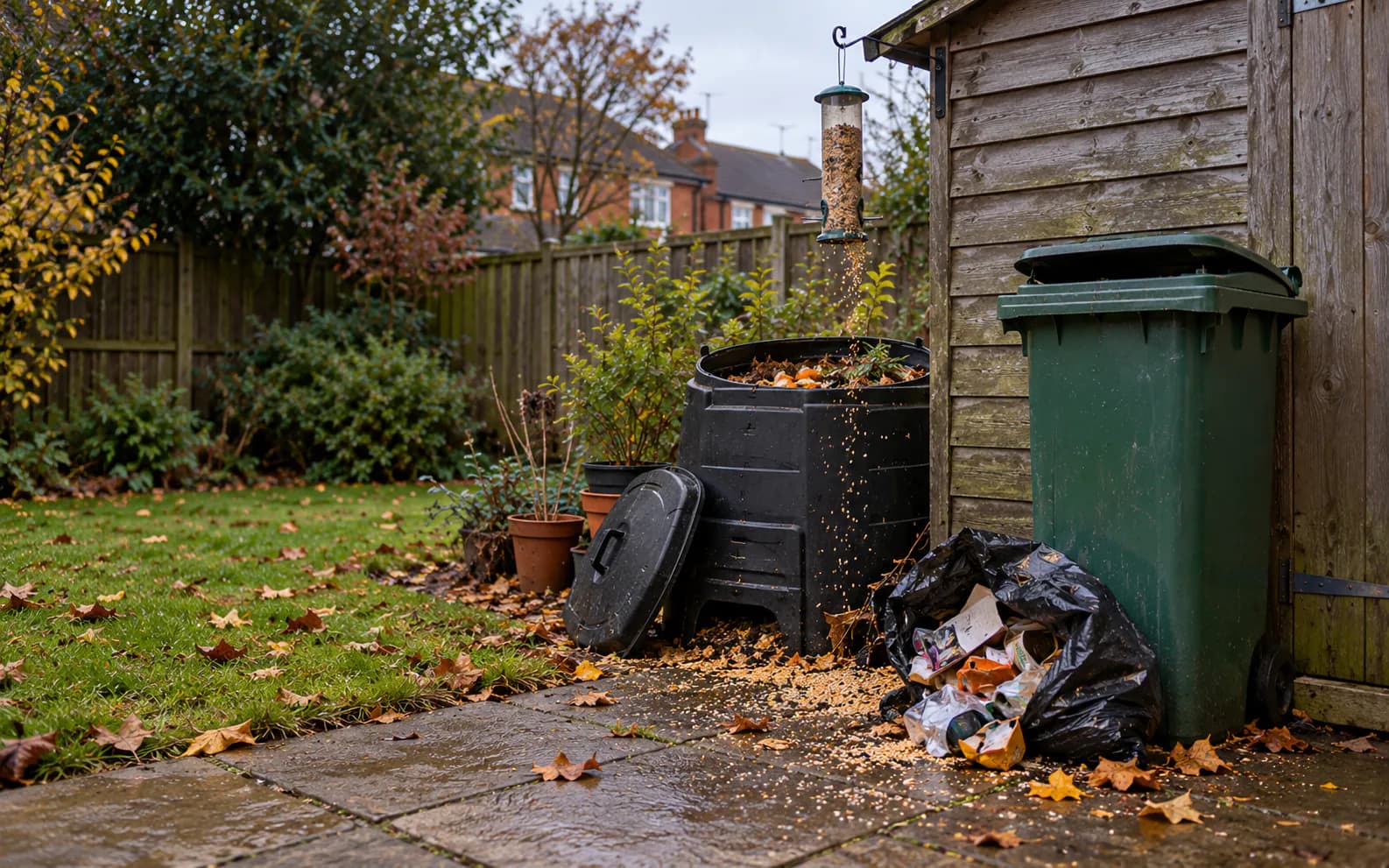
- Remove food and water. Put all food, including pet food and bird seed, into pest-proof containers. Clear crumbs and spills, empty the kitchen bin every night and fix dripping taps. Ards and North Down Borough Council also advises using sink strainers so food is not washed into gullies, and keeping wheelie bin lids closed.
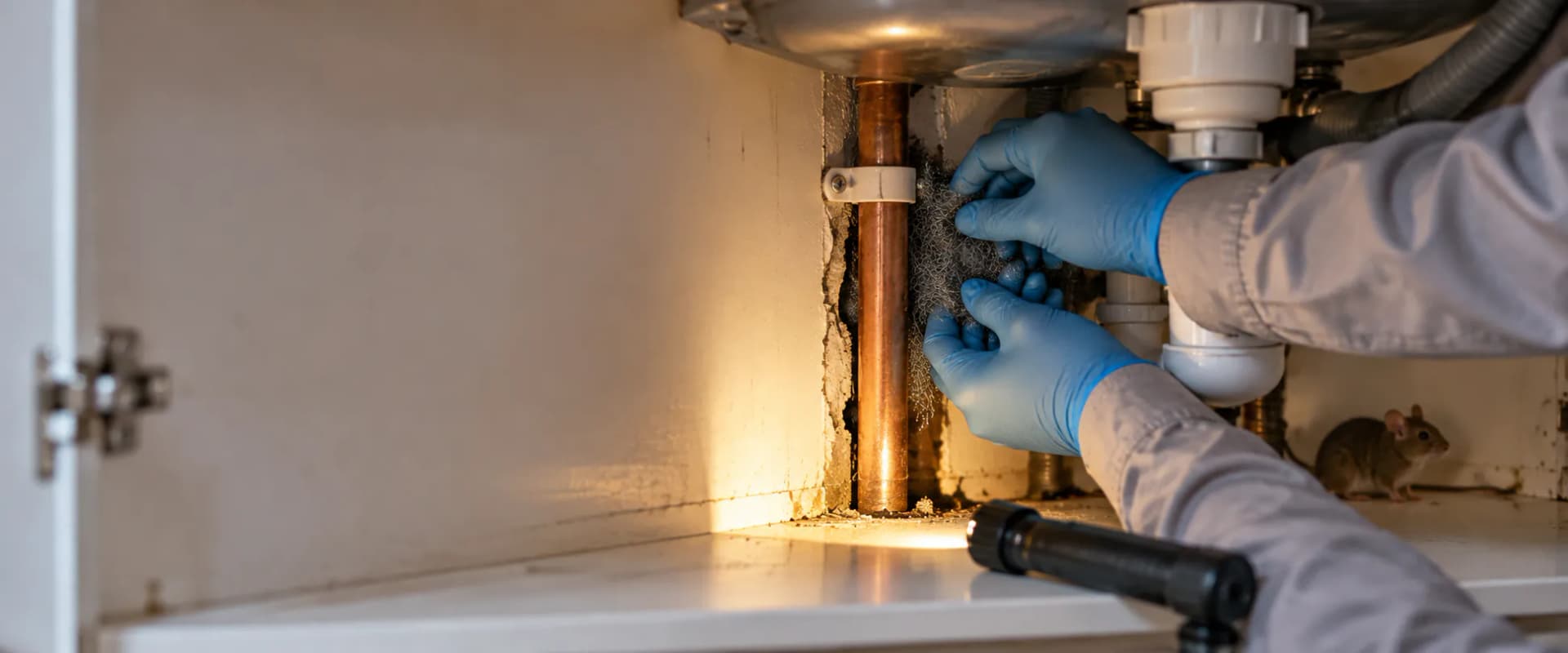
- Find where they are active. Follow droppings, smears and gnaw marks. Common places are under the kitchen units, behind the washing machine, under the stairs, the airing cupboard and the loft.
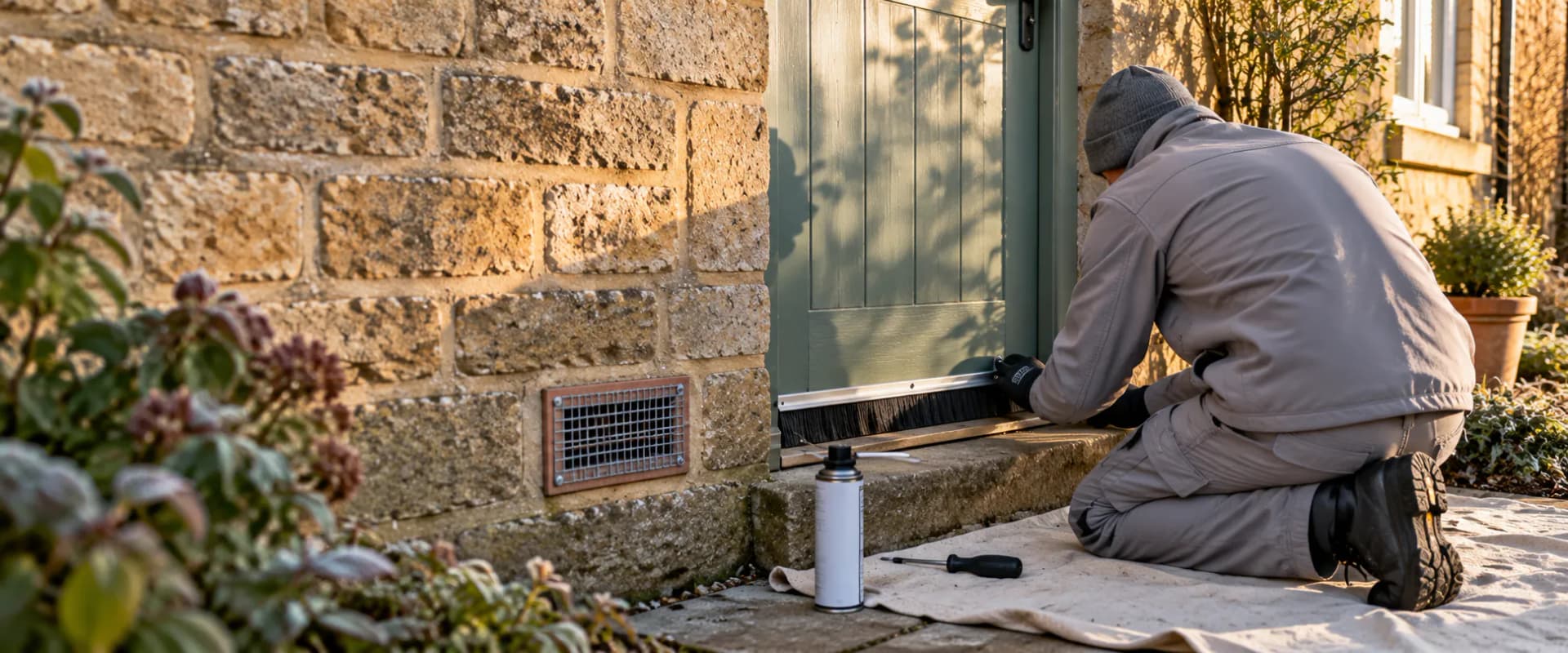
- Find how they are getting in. Check outside for holes, especially around waste pipes, under external doors, at air bricks and where sheds or extensions join the house. Ards and North Down Borough Council points out that defective underground drains let rats enter from the sewers, so a rat indoors with no visible hole can be a drain problem.
- Trap or bait the rats inside. See the next section for what to use and how to use it safely.
- Seal the entry points. North West Leicestershire District Council advises blocking holes with wire wool, then filling with cement or expanding foam, and fitting bristle strips or renewing the threshold under external doors. Seal once activity has stopped, so you don't shut rats inside.
- Clean up safely. Wear waterproof gloves, cover any cuts, and wash your hands afterwards, in line with the NHS advice on avoiding leptospirosis. Wipe up droppings with disinfectant and disposable cloths, then bag everything and put it in the outside bin.
Which rat control methods work, and which are legal?
Snap traps and shop-bought rodenticide in tamper-proof boxes are the two methods householders normally use; glue traps are not an option. This table summarises the options.
| Method | Can you use it? | What to know |
|---|---|---|
| Snap (break-back) traps | Yes | Use rat-sized traps inside tamper-proof boxes, set against walls on rat runs; check daily |
| Rodenticide (rat poison) | Yes, shop-bought products used as the label directs | Ards and North Down Borough Council says to treat it as a last resort and only in tamper-proof stations |
| Glue traps | No, in England | Using one to catch a rodent without a licence has been an offence since 31 July 2024 |
| Proofing (sealing gaps) | Yes, and essential | Wire wool and cement around pipes, bristle strips under doors |
| Professional treatment | Yes | Finds the entry point, uses professional baits and traps, and returns until activity stops |
On glue traps, the government announced that from 31 July 2024 it is an offence to use glue traps for rodent control in England unless done under a licence, under the Glue Traps (Offences) Act 2022. Licences are issued only to professional pest controllers. In short: don't use them.
On traps and poison, Nottingham City Council notes that traps and rodenticide are sold online, in supermarkets and in DIY shops for residents who want to treat a problem themselves. Ards and North Down Borough Council warns that misuse can cause suffering and harm wildlife and pets. Its advice is to put snap traps or baits in tamper-proof rodent stations, to use rodenticide only as a last resort, and to follow the manufacturer's instructions. Never scatter loose bait, and keep children and pets away from anything you put down.
Where should you put rat traps?
Put traps where the rats already travel: tight against walls, behind appliances and along the routes marked by droppings and smears. A few practical points make the difference:
- use several traps, not one, a few metres apart along the run;
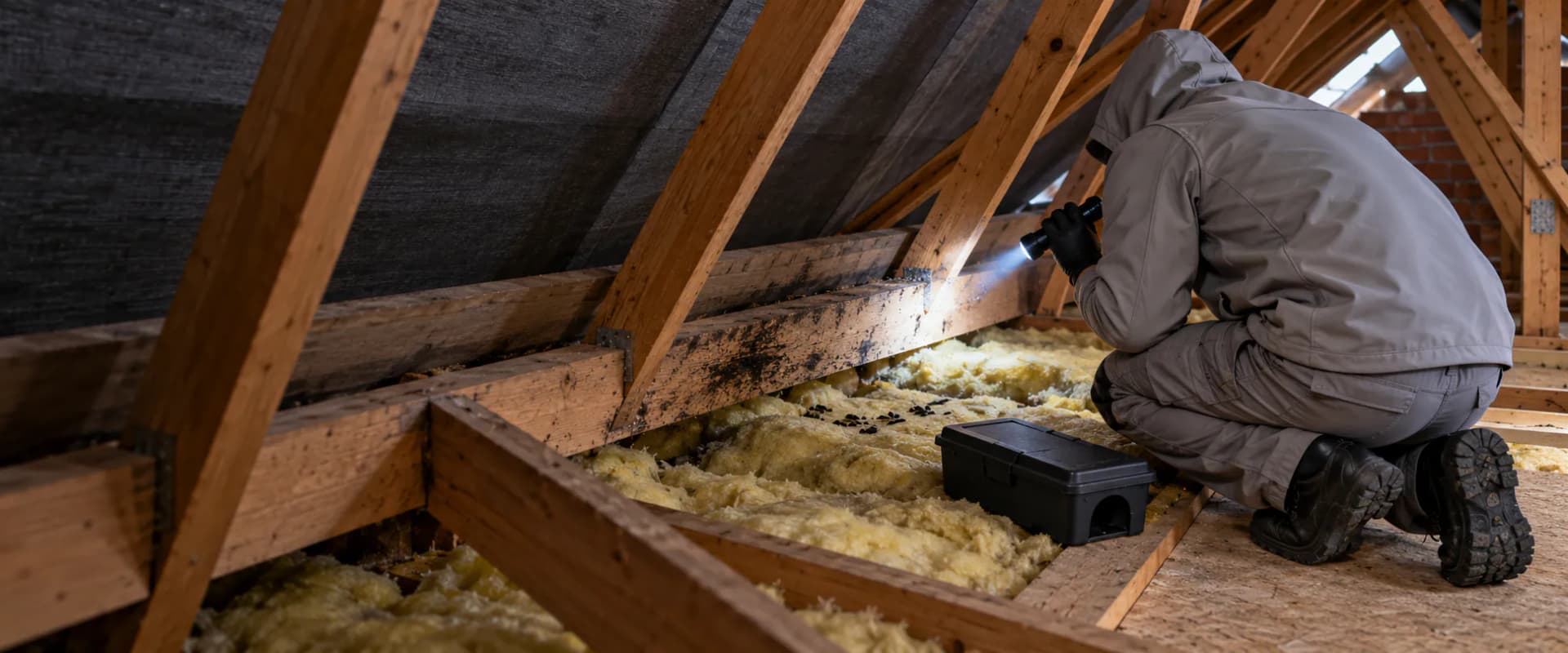
- place each trap inside a tamper-proof box with the entrance against the wall;
- wear gloves when handling traps, for hygiene;
- leave traps in position for several days before deciding they aren't working;
- check traps every day and dispose of dead rats promptly, double-bagged, in the outside bin.
If traps stay untouched for a week while fresh droppings keep appearing, the rats are travelling by a route you haven't found, usually inside a wall, under the floor or in the loft.
How do you stop rats coming back?
Stop them coming back by closing the routes in and removing what attracted them. Nottingham City Council tells residents to make sure the property is pest-proofed, rubbish is stored correctly inside and out, and food is never left out or open.
Outside, North West Leicestershire District Council advises standing compost bins on a solid base, cutting back branches that touch the roof, checking sheds for gnawed holes and not leaving bird food out all day. Rats can climb vertical pipes, the council notes, so gaps high up matter as well as those at ground level.
If rats keep returning despite all of this, suspect the drains. A defect in an underground drain gives rats a protected route from the sewer into wall cavities and floor voids, and it won't be solved by traps. Our pest proofing service covers sealing entry points once the rats have gone.
Who is responsible for dealing with rats?
The owner or occupier is responsible for rats on their property, and the council has a duty to keep its district free of them as far as practicable. Section 2 of the Prevention of Damage by Pests Act 1949 places a duty on every local authority to take such steps as may be necessary to secure, so far as practicable, that its district is kept free from rats and mice, including enforcing the duties of owners and occupiers.
Nottingham City Council sets out what that means in practice: owner-occupiers must take or arrange appropriate action to destroy rats on their property, and landlords have a legal duty to destroy the rats and take steps to ensure they do not return.
What councils actually offer varies widely. When we checked on 17 November 2026:
| Council | Rat service | Charge |
|---|---|---|
| Leicester City Council | Treats rats inside homes (within 48 hours) and outside | Free |
| North West Leicestershire District Council | Treats rats, up to four visits | £56, free for people on some benefits |
| Nottingham City Council | No pest control service | Not applicable |
When to call a professional
Call a professional if you can hear rats in walls, ceilings or the loft, if you have seen a rat indoors in daylight, if droppings keep appearing after a week of trapping, if you suspect the drains, or if there are young children, pets or vulnerable people in the home. Those are the situations where DIY tends to fail, because the entry point is hidden.
An Urgent Pest Control technician surveys inside and out to find how the rats are getting in, treats with tamper-resistant bait stations or traps, and returns for follow-up visits until activity stops; most domestic jobs take two to three weeks. Rat control starts from £200 with follow-up visits included. The final price depends on the job, and we'll explain the likely cost, including any proofing, before any work starts. See our pest control prices for more detail.
We cover Nottingham, Derby, Leicester, Lincoln and the surrounding counties, 7 days a week from 6am to 8pm, with emergency call-outs 365 days a year. Book online or call 0330 822 7460.
Sources
- The Wildlife Trusts: brown rat
- NHS: leptospirosis (Weil's disease)
- GOV.UK: glue traps licensing scheme opens
- Ards and North Down Borough Council: pests
- Prevention of Damage by Pests Act 1949, section 2 (legislation.gov.uk)
- North West Leicestershire District Council: rats
- Nottingham City Council: pests, advice for residents and businesses
- Leicester City Council: pest control
Frequently Asked Questions
About the author
The Urgent Pest Control team
A family-run pest control company based in Southwell, treating homes and businesses across Nottinghamshire, Derbyshire, Leicestershire and Lincolnshire since 2020. Our guides are written from the jobs we do and checked against UK sources. More about us
Cite this guide: “How to Get Rid of Rats in the House: A Step-by-Step Guide”, Urgent Pest Control, 18 November 2026. https://urgentpestcontrol.uk/blog/how-to-get-rid-of-rats