Pharaoh Ants: How to Identify and Get Rid of Them
Pharaoh ants are tiny yellow ants that nest inside heated buildings. How to identify them, why sprays spread them, and how a bait programme clears them.

By the Urgent Pest Control team
Updated · 7 min read
The short answer
Pharaoh ants are tiny (about 2mm), pale yellow-orange ants that nest inside warm buildings such as flats and hospitals. Their colonies have many queens and split when disturbed, so sprays tend to spread them. They are cleared with a professional bait programme, often using insect growth regulators, run patiently across every affected area.
- Pharaoh ants are about 2mm long, transparent yellow-orange with black eyes, and are generally not found outdoors in the UK.
- Colonies have many queens and can split into sub-colonies, so one infestation can spread through a whole building.
- Bolton Council warns that ordinary insecticides can encourage the spread of pharaoh ants because they avoid treated areas.
- Councils recommend insect growth regulator baits, good hygiene and professional treatment, which can take some time to work.
- In flats, every affected property needs treating together, or the colony moves next door and comes back.
On this page
- What are pharaoh ants?
- How do you identify pharaoh ants?
- Why are pharaoh ants so hard to get rid of?
- Are pharaoh ants a health risk?
- Why do sprays make pharaoh ants worse?
- How are pharaoh ants treated?
- Who deals with pharaoh ants in a block of flats?
- What should you do while you wait for treatment?
- When to call a professional
Pharaoh ants are tiny, pale yellow-orange ants, about 2mm long, that nest inside heated buildings rather than outdoors. Their colonies have many queens and split when disturbed, so shop-bought sprays usually spread them further. Getting rid of them takes a patient bait programme across every affected area, which our ant control service can plan and carry out.
This guide explains how to recognise pharaoh ants, why they behave so differently from garden ants, and what an effective treatment looks like in a house or a block of flats.
What are pharaoh ants?
Pharaoh ants (Monomorium pharaonis) are a tropical species that lives inside warm buildings in the UK. Bolton Council says they probably originated in North Africa and are now found throughout the British Isles, usually in hospitals and prisons, but increasingly in homes and blocks of flats. They are generally not found outdoors.
The British Pest Control Association describes them as a serious public health pest found in the structures of large centrally heated buildings such as high-rise flats, hospitals and bakeries. It cites research finding nests of 50,000 workers and 100,000 ants in the young stages.
Cherwell District Council explains why they stay indoors: they need warm, humid conditions, with 18°C given as the minimum for success and colonies thriving at around 30°C. They forage for water around sinks and condensation.
How do you identify pharaoh ants?
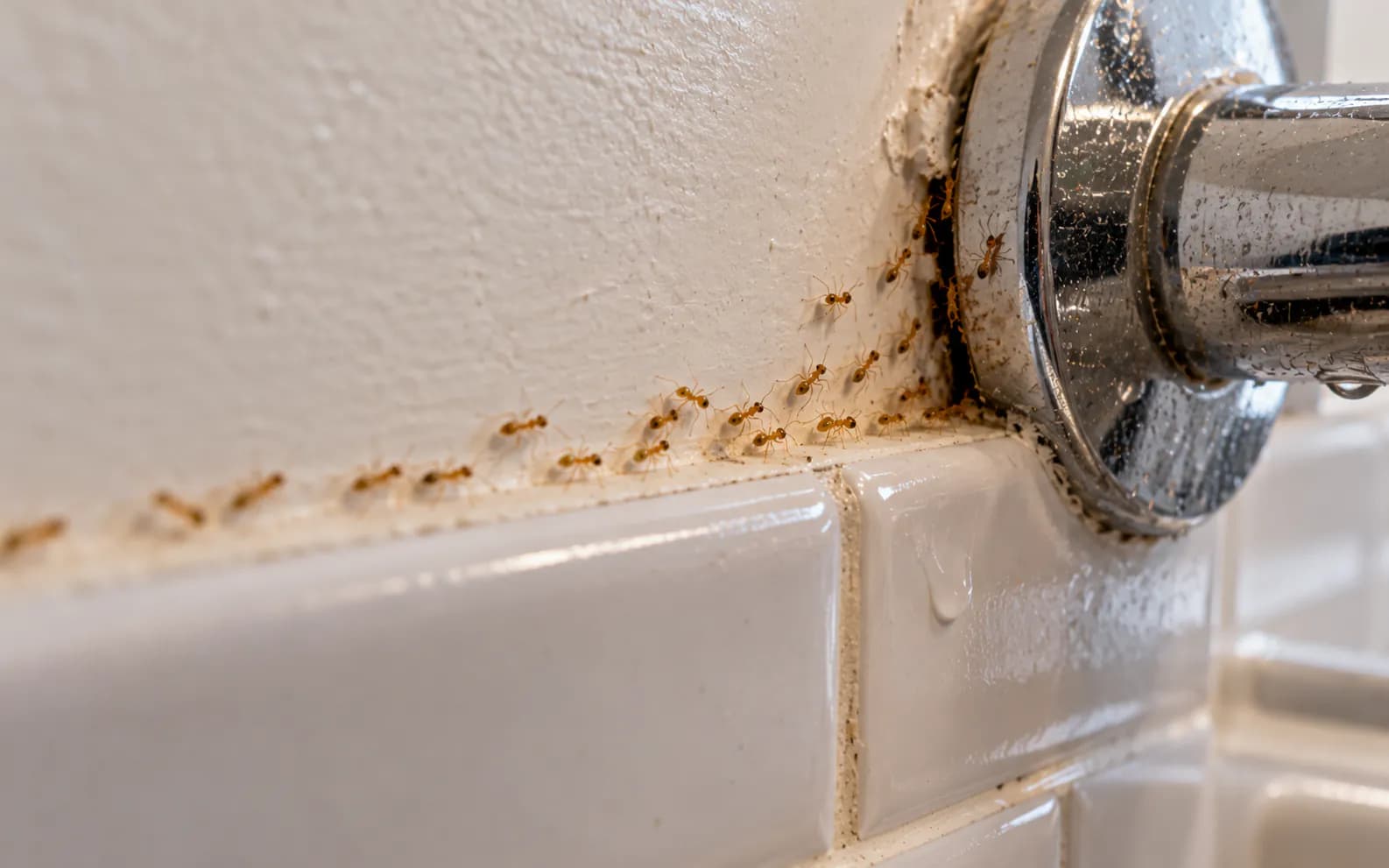
Pharaoh ants are about 2mm long, pale yellow to orange, and seen indoors all year. If you have tiny ants in the house in winter, trailing near warm pipes, they are far more likely to be pharaoh ants than garden ants. Coventry City Council and Bolton both describe them as about 2mm long and transparent yellow or orange, with black eyes.
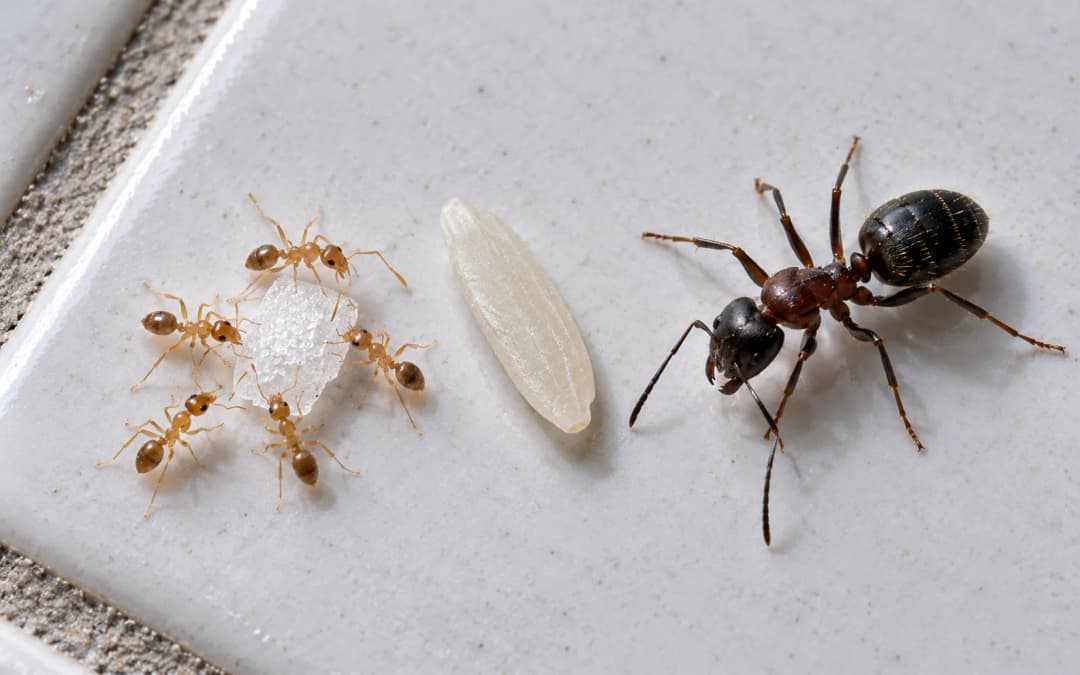
| Clue | Pharaoh ant | Black garden ant |
|---|---|---|
| Size | About 2mm | Larger and easy to see |
| Colour | Transparent yellow to orange, black eyes | Dark brown to black |
| Nest | Inside the building: wall voids, ducts, behind fittings | Outside: under paving, in lawns and walls |
| Season | All year round | Mostly spring and summer |
| Queens | Many per colony | One per colony |
| Response to spray | Colony splits and spreads | Visible workers die; colony carries on |
| Typical buildings | Flats, hospitals, large heated buildings | Houses with gardens |
Bolton notes that the most obvious sign is trailing lines of ants, sometimes resembling moving veins on the walls, and that they often trail to and from pet food and bins. Other places to check are bathrooms, kitchens, around hot-water pipes and anywhere with condensation.
If you see larger, darker ants coming in from the garden, they are almost certainly black garden ants. Our guide to getting rid of ants in the house covers those, and our pest identifier helps if you are unsure.
Why are pharaoh ants so hard to get rid of?
Pharaoh ants are hard to clear because each colony has many queens and can split into new colonies. Bolton Council says colonies "can have many queens and can split into sub colonies extending the infestation to other areas", and that the ant can rapidly infest large buildings because of its reproductive rate. Cherwell adds that each queen produces up to 350 eggs.
That splitting, often called budding, means a colony doesn't have to raise a new queen to spread. A group of workers carrying brood and a queen or two can set up a new nest a few rooms away, or in the flat next door.
They can also be carried between properties: Coventry City Council and Bolton both note that pharaoh ants can be transported from one property to another. The BPCA says that, under threat, workers respond by budding, which spreads the infestation through a building.
Are pharaoh ants a health risk?
Pharaoh ants are mainly a hygiene risk rather than a biting or stinging one. Bolton Council warns that the ant "may carry disease organisms" and, because of its small size, can "penetrate and contaminate foodstuffs and sterile dressings."
That is why the species is taken so seriously in hospitals, care homes, nurseries and food premises. Pharaoh ants forage widely through a building, travelling between drains, bins, bathrooms and kitchens, and they are small enough to get into packaging and sealed-looking containers that would keep larger ants out.
In a home, the practical risks are:
- food in cupboards and on worktops being contaminated by foraging trails;
- ants getting into pet food bowls and kitchen bins, then onto clean surfaces;
- ants around wound dressings, medicines or baby feeding equipment, which should be stored sealed while you wait for treatment.
If anyone in the household is unwell, recovering from surgery or has a weakened immune system, mention it when you call so the treatment can be planned with that in mind.
Why do sprays make pharaoh ants worse?
Spraying kills some foragers and makes the rest move. Bolton Council warns that "the use of traditional insecticides can also encourage the spread of the ants as they will avoid treated areas," and that insecticides used for black ants "can have little effect on a colony." Coventry says the same: treatments used for black ants may not work.
So the first rule with pharaoh ants is: don't spray, and don't use ant powders or strong cleaners on the trails if a bait programme is planned.
How are pharaoh ants treated?
Pharaoh ants are treated with baits that the workers carry back to every nest, so the whole colony and its queens are affected. Bolton says insect growth regulators are usually the most effective treatment and can take some time to reach control, and that good hygiene is essential because other food distracts ants from the bait.
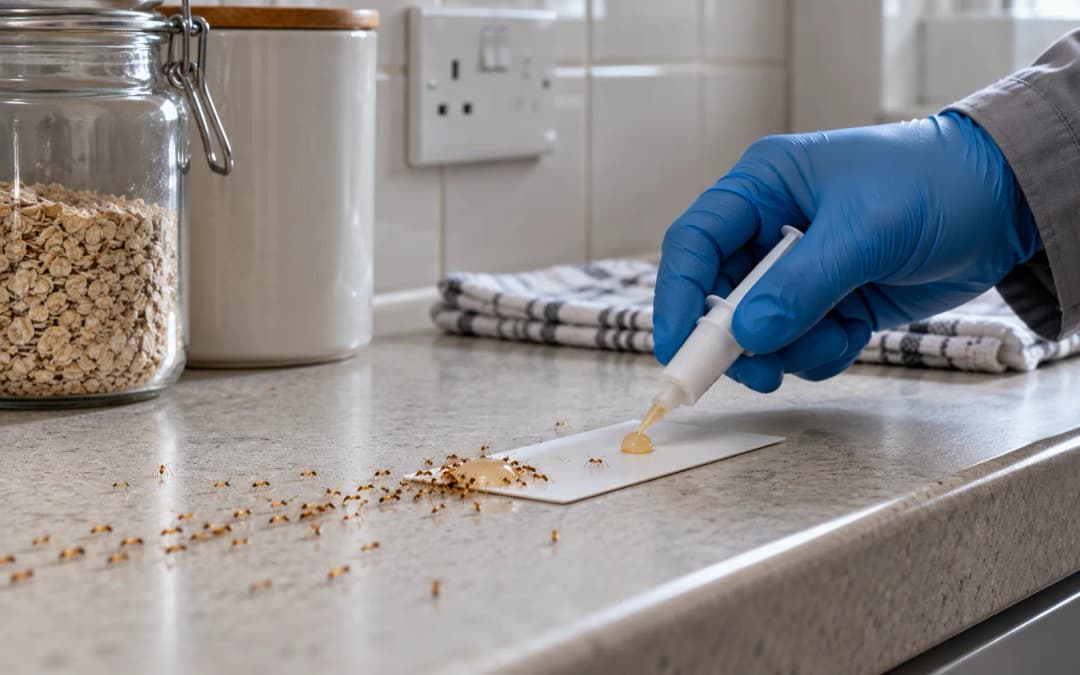
A professional programme normally runs like this:
- Survey. Map where ants are trailing in every room, and in a block, ask neighbours and the managing agent where else they have been seen.
- Remove competing food. Clear crumbs, store food sealed, fix leaks and dry areas of condensation, so the bait is the most attractive food on offer.
- Bait widely. Place bait along trails and near warm, humid harbourages, including areas you might not think of, such as bathroom ducts and boiler cupboards.
- Leave the bait to work. No sprays, powders or wiping down trails during the programme.
- Monitor and re-bait. Return visits check where activity remains and top up bait until trails stop.
We give a timeline after the survey because it depends on how many rooms or properties are affected. Expect activity to look busier for a few days after baiting starts, as foragers find the bait and recruit others to it; that is a sign the programme is working, not failing.
Who deals with pharaoh ants in a block of flats?
In a block, treating one flat alone usually fails, because the colony simply buds into the next flat and comes back later. The managing agent, housing association or freeholder should coordinate treatment of every affected flat and the common parts at the same time.
If you rent, tell your landlord in writing; our guide to whether the landlord or tenant pays for pest control explains who is usually responsible. In England, the Housing Health and Safety Rating System includes domestic hygiene, pests and refuse among the hazards a home is assessed for. Some councils, such as Bolton, offer their own treatment service, sometimes for a charge; others don't treat ants at all, so check your council's website.
For food premises, care homes and similar settings, pharaoh ants should be dealt with as a priority. Our guide to pest control for food businesses explains what inspectors expect to see.
What should you do while you wait for treatment?
Use this short checklist:
- Don't spray, dust or use ant powders.
- Keep food sealed and surfaces clean, and put pet food down only at feeding times.
- Fix dripping taps and wipe up condensation where you can.
- Note every room and spot where you see trails, with dates.
- Take a close-up photo next to a coin for scale.
- Tell neighbours and your landlord or managing agent.
When to call a professional
Call a professional as soon as you suspect pharaoh ants. Councils including Bolton and Cherwell advise getting professional help because ridding a property of pharaoh ants is often difficult, and the wrong product can make the problem bigger.
Urgent Pest Control's ant control service identifies the species first and then plans the right bait programme, with follow-up visits until the trails stop. On the survey we check the warm spots pharaoh ants favour, such as boiler cupboards, bath panels, kitchen plinths and pipe boxing, and ask which neighbouring flats have seen ants. The price depends on how many rooms or properties are affected and the time of the visit (see our pest control prices); we'll explain the likely cost before any work starts. We can work with landlords and managing agents to treat several flats together, and for care homes, kitchens and other premises our commercial pest control service sets up a programme with records. Our vehicles are unmarked.
We work 7 days a week, 6am to 8pm, with emergency call-outs 365 days a year, across Nottingham, Derby, Leicester and Lincoln. Call or WhatsApp 07999 935 929 with a photo, or book online.
Sources
Frequently Asked Questions
About the author
The Urgent Pest Control team
A family-run pest control company based in Southwell, treating homes and businesses across Nottinghamshire, Derbyshire, Leicestershire and Lincolnshire since 2020. Our guides are written from the jobs we do and checked against UK sources. More about us
Cite this guide: “Pharaoh Ants: How to Identify and Get Rid of Them”, Urgent Pest Control, 20 October 2026. https://urgentpestcontrol.uk/blog/pharaoh-ants