How to Get Rid of Flies in the House (and Why They Suddenly Appear)
Lots of flies in the house all of a sudden? How to tell house flies from bluebottles, find where they are breeding and get rid of them properly.

By the Urgent Pest Control team
· 8 min read
The short answer
To get rid of flies in the house, find and remove what they are breeding in. House flies breed in rotting waste; a sudden swarm of bluebottles normally means a small animal such as a mouse or bird has died nearby. Remove the source, cover food and bins, and use screens, fly papers or sprays for the adults.
- Oxford City Council says large numbers of house flies or bluebottles usually mean infested food nearby or a dead animal in which flies have laid eggs.
- A sudden appearance of bluebottles normally indicates a small animal such as a rodent or bird has died, according to Mid and East Antrim Borough Council.
- A female house fly can lay up to 900 eggs in one to three months of adult life, the same council says.
- A bluebottle can lay up to 600 eggs, which hatch in under 48 hours in warm weather, according to the BPCA.
- Finding and removing the source is the main method of control; sprays and traps only deal with the adult flies.
On this page
- Why are there suddenly lots of flies in my house?
- Which fly have you got?
- What does a sudden swarm of bluebottles mean?
- Where do house flies come from?
- Are flies in the house a health risk?
- How do you get rid of flies in the house?
- Do fly sprays, fly papers and UV fly killers work?
- What if you cannot find the source?
- How do you stop flies coming back?
- When to call a professional
To get rid of flies in the house, find and remove whatever they are breeding in; sprays and traps only deal with the adults you can see. House flies breed in rotting food and waste. A sudden swarm of bluebottles normally means a small animal, such as a mouse or a bird, has died somewhere nearby. If you cannot find the source, Urgent Pest Control's fly control service traces it for homes and businesses across Nottinghamshire, Derbyshire, Leicestershire and Lincolnshire.
Different flies point to different causes, so the first job is working out which fly you have.
Why are there suddenly lots of flies in my house?
Because there is a breeding source close by. Oxford City Council says large numbers of house flies or bluebottles usually mean one of two things: infested food nearby, or the carcass of a dead animal, such as a bird or rodent, in which flies have laid their eggs.
Mid and East Antrim Borough Council is more specific about bluebottles: "A sudden appearance of bluebottles in the home normally indicates that a small animal (rodent or bird) has died."
Flies can also simply come in from outside. The same council says house flies have a flight range of several miles and can easily move from breeding grounds to the home, so a farm, stables, a neighbour's bins or a compost heap can be the origin. If the flies arrive in autumn and gather sluggishly at upstairs windows, they are probably cluster flies, which are a separate problem.
Which fly have you got?
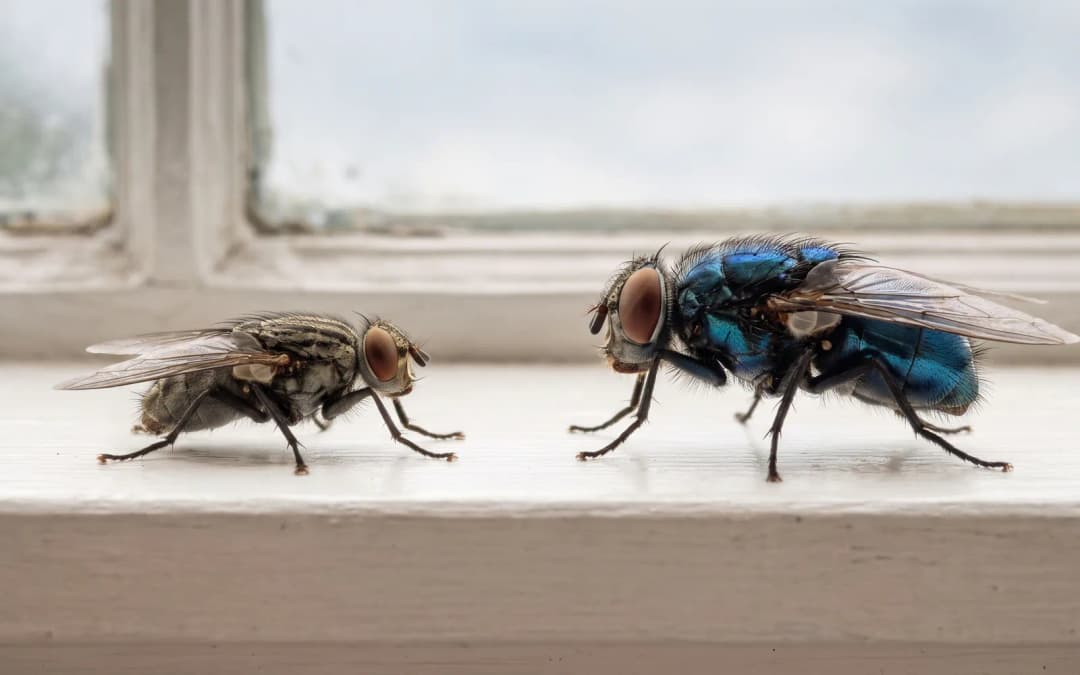
Match the fly to this table before you start looking for the source.
| Fly | What it looks like | Where it breeds | What a lot of them means |
|---|---|---|---|
| House fly | 6–7 mm; smaller than a bluebottle | Moist or rotting matter: household rubbish, compost, manure | Bins, food waste or animal waste nearby |
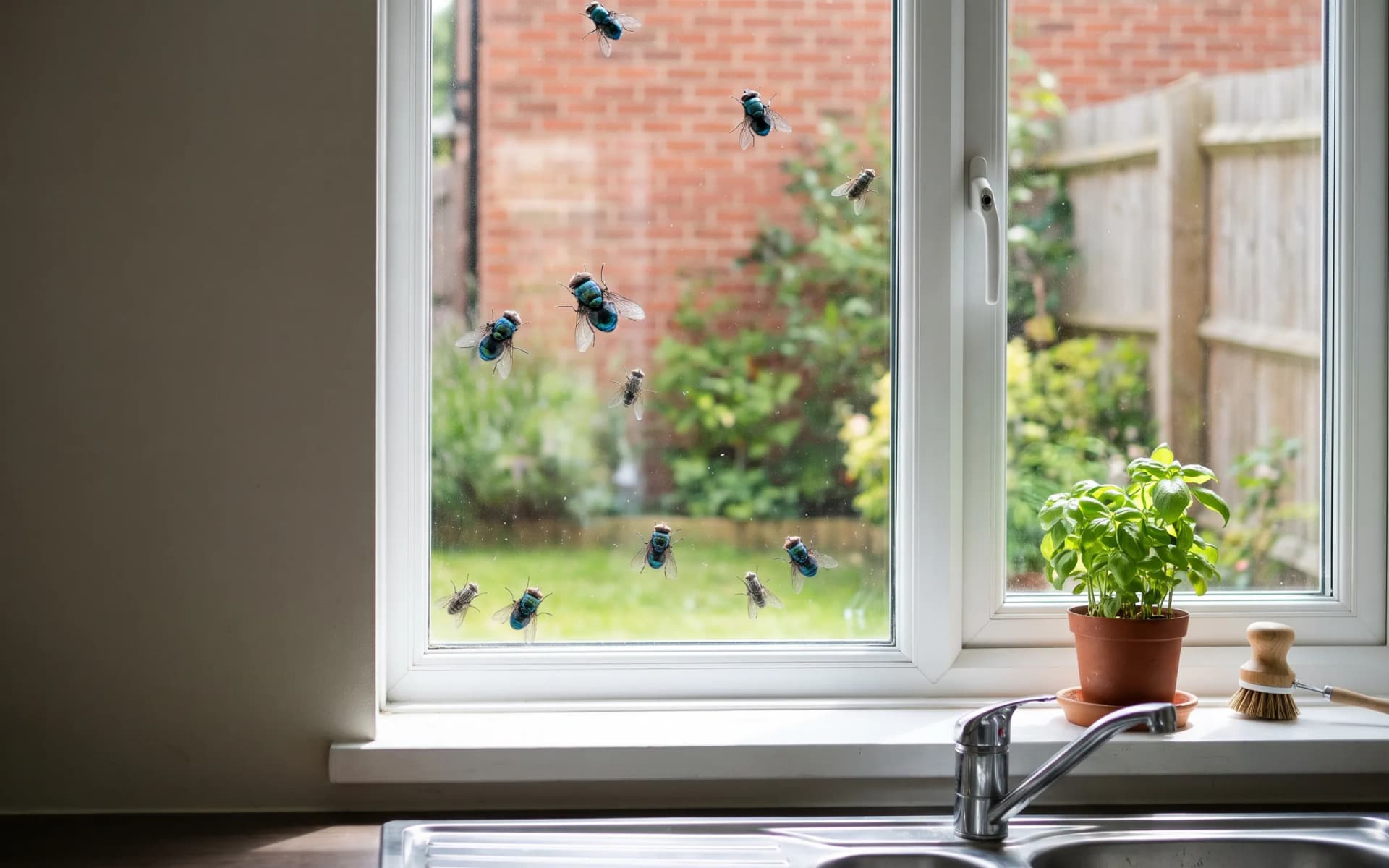
| Bluebottle | 6–12 mm, shiny metallic blue, loud buzz | Meat, carrion and decaying animal matter | Often a dead mouse, rat or bird in a void |
| Cluster fly | About 8 mm, dark, yellow hairs on the thorax, slow | Outdoors, in earthworms | Hibernating in the loft, autumn to spring |
| Fruit fly | Tiny, hovering around fruit | Fermenting fruit and old vegetables | Overripe fruit or old vegetables left out |
| Drain fly | Small, around sinks and drains | Sludge in drains and standing water | A blocked drain, gutter or a small leak |
The house fly details come from Mid and East Antrim Borough Council, the bluebottle size and breeding sites from the BPCA's guide in PPC magazine, and the cluster, fruit and drain fly rows from Oxford City Council. For cluster flies, go straight to our guide to cluster flies. If you are not sure what you have, try the pest identifier.
What does a sudden swarm of bluebottles mean?
Normally, that something has died. Bluebottles lay their eggs on meat and dead animals, and the flies you are seeing are the next generation hatching out.
The BPCA's figures explain the timing. One bluebottle can lay up to 600 eggs. In warm weather they hatch in under 48 hours, the maggots can be fully developed in about a week, and they then pupate for roughly ten days before emerging as adult flies. Add that up and the flies appear two to three weeks after the animal died, often all at once, in one room.
Oxford City Council lists where the source may be hidden: in lofts, behind fireplaces, under floorboards or in appliances. It also admits that a dead animal cannot always be found. In practice the usual suspects are:
- a mouse or rat that has died under the floor, behind kitchen units or in a wall cavity;
- a bird that has fallen down a chimney or died in the loft;
- a dead animal under decking, in a shed or in the garden near a door or window;
- forgotten meat or pet food, including in a bin store or a switched-off freezer.
If you have recently had mice or rats, or have put poison down, that is the likely explanation. English Heritage warns that dead rodent carcasses provide a food source for insects including blowflies. Our guides to mice in walls and the signs of rats in the house explain how to check.
Where do house flies come from?
From rotting organic matter, indoors or out. Mid and East Antrim Borough Council says house fly eggs are laid in moist or rotting matter such as household rubbish, compost or manure, and that a female can lay up to 900 eggs during her one to three months of adult life.
Indoors, check:
- the kitchen bin, the food caddy and the cupboard they sit in;
- recycling that has not been rinsed;
- pet food bowls, litter trays and small-animal cages;
- vegetables forgotten at the back of a cupboard;
- nappy bins;
- the gap behind and under the cooker and fridge.
Outdoors, check wheelie bins, compost heaps, dog mess and anything near the back door. The council says house flies and bluebottles come indoors looking for food, so a bin beside an open kitchen window is an invitation.
Are flies in the house a health risk?
House flies and bluebottles can spread bacteria to food. Mid and East Antrim Borough Council says flies carry bacteria and can transmit diseases via their body hairs, the sticky pads on their feet and through saliva and faeces, and that they "go from filth to food in a short time", carrying illnesses such as gastroenteritis and salmonella. The BPCA says the same of bluebottles: they move from filth to food and carry bacteria on their legs, feet and bodies.
The risk is manageable. Oxford City Council says problems are unlikely if hygiene is good and food is not left out. Cover food, wipe surfaces before preparing meals, and throw away anything flies have been crawling on.
How do you get rid of flies in the house?
Remove the source first, then clear the adults. Oxford City Council says the main method of control is to find and remove the cause of the problem. In order:
- Identify the fly. Use the table above.
- Find the source. Follow the flies: they are thickest in the room nearest the breeding site. Use your nose as well.
- Remove it. Bag and bin rotting food or a dead animal, wearing gloves, and put it straight in the outside bin.
- Clean up. Wash out bins and caddies, and clean the area where the source was. Mid and East Antrim Borough Council advises cleaning drains frequently, particularly near kitchens.
- Clear the adult flies. Open a window, swat or vacuum them, or use fly papers. Remove dead flies promptly.
- Keep new ones out. Keep bin lids closed and food covered. The BPCA recommends fly screens on kitchen and dining room windows and keeping bins away from doors and windows.
- Watch for a week. If numbers do not fall, there is another source.
Do fly sprays, fly papers and UV fly killers work?
They kill adult flies but do not fix the cause. Oxford City Council lists insecticides, traps and UV electric fly killers as extra help alongside removing the source.
Use them with care:
- Fly sprays. Mid and East Antrim Borough Council says not to use insecticide near food and preparation surfaces, not to inhale it, and warns that it may harm household pets and is extremely harmful to fish. Cover or move fish tanks and always read the label.
- Fly papers. Unsightly but effective, the same council says, and free of insecticide.
- UV fly killers. These control flies in kitchens and food businesses, but the council notes their efficiency depends on where they are placed.
- Dustbin powder. The BPCA suggests an insecticidal dustbin powder for bins that keep attracting flies.
What if you cannot find the source?
Work through the hidden places methodically, and accept that a carcass in a void may not be reachable. Check the loft, the chimney and fireplace, under the stairs, behind kickboards and under any floorboards you can lift. Look outside under decking and in sheds. Note which room has the most flies and which window they gather at.
A bluebottle problem from a single dead mouse or bird normally ends when the flies have finished emerging. If flies keep appearing beyond a few weeks, or keep coming back, there is a continuing source: more rodents, a drainage fault or waste you have not found.
How do you stop flies coming back?
Take away the breeding sites and close the easy ways in. Mid and East Antrim Borough Council says the best ways of controlling and avoiding house fly infestations are good hygiene. A short checklist:
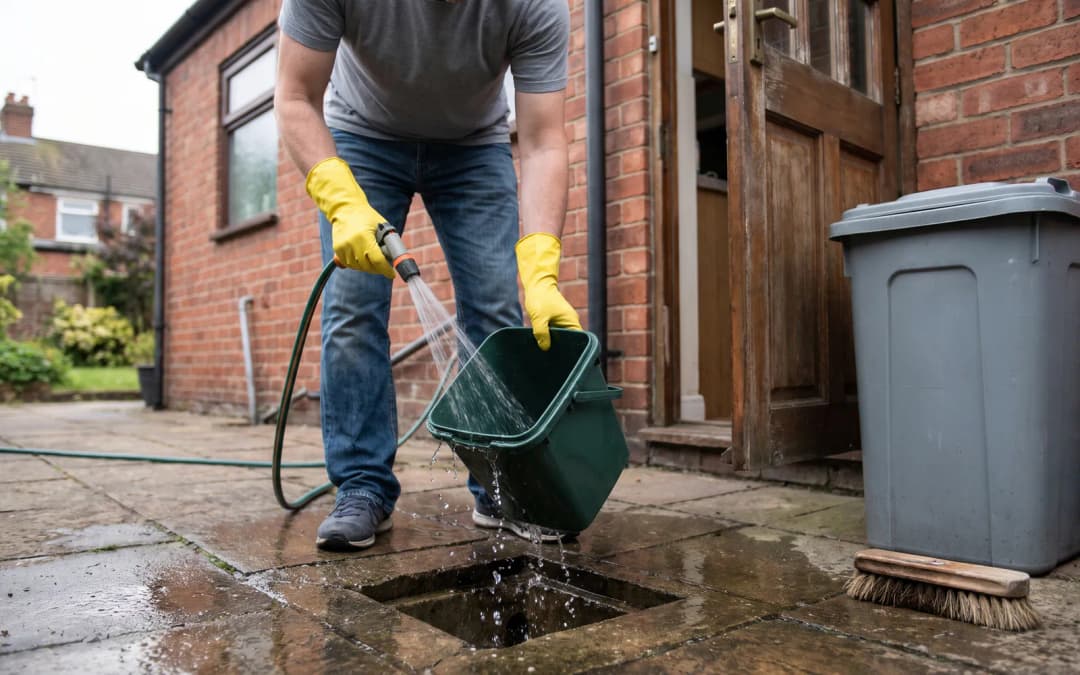
- empty kitchen bins and food caddies often, and wash them out;
- keep wheelie bin lids shut and bins away from doors and windows;
- cover food, and do not leave pet food down all day;
- clear up after pets in the garden;
- rinse recycling;
- keep drains and gullies clean;
- fit fly screens to kitchen windows that are open a lot;
- deal with any mouse or rat problem properly, so nothing dies under the floor.
Food businesses need more than this. Flies in a food area are a hygiene issue, and our guide to pest control for food businesses covers what is expected.
When to call a professional
Call a professional if flies keep appearing and you cannot find the source, if bluebottles return after you thought the problem was over, if you suspect a dead animal in a place you cannot reach, or if flies are in a food business. Repeated bluebottle outbreaks can be the first sign of a rodent problem, and that needs treating at the same time.
A technician identifies the fly, traces the breeding source, treats where needed and tells you plainly if rodents or a drainage fault are behind it. We'll explain the likely cost before any work starts; our pest control prices page shows what affects it.
We cover Nottingham, Derby, Leicester, Lincoln and the rest of Nottinghamshire, Derbyshire, Leicestershire and Lincolnshire, 7 days a week from 6am to 8pm, with emergency call-outs 365 days a year. Book online or call 0330 822 7460.
Sources
Frequently Asked Questions
About the author
The Urgent Pest Control team
A family-run pest control company based in Southwell, treating homes and businesses across Nottinghamshire, Derbyshire, Leicestershire and Lincolnshire since 2020. Our guides are written from the jobs we do and checked against UK sources. More about us
Cite this guide: “How to Get Rid of Flies in the House (and Why They Suddenly Appear)”, Urgent Pest Control, 18 November 2026. https://urgentpestcontrol.uk/blog/how-to-get-rid-of-flies-in-the-house